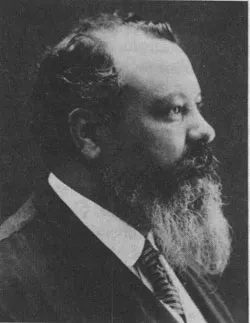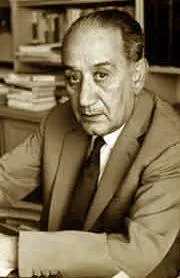
Ignazio Silone
Human Design Chart
Biography
He was a founding member of the breakaway Italian Communist Party (PCI) in 1921, and became one of its covert leaders during the Fascist regime. Ignazio's brother Romolo Tranquilli was arrested in 1928 for being a member of the PCI, and he died in prison in 1931 as a result of the severe beatings he received.
Ignazio Silone left Italy in 1927 on a mission to the Soviet Union, and settled in Switzerland in 1930. While there, he declared his opposition to Joseph Stalin, and the leadership of Comintern; consequently, he was expelled from the PCI. He suffered from tuberculosis and severe clinical depression, and spent nearly a year in Swiss clinics; in Switzerland Aline Valangin helped and played host to him and other migrants. As he recovered, Silone began writing his first novel, Fontamara, published in German translation in 1933. The English edition, first published by Penguin Books in September 1934, went through frequent reprintings during the 1930s, with the events of the Spanish Civil War and the escalation towards the outbreak of World War II increasing attention for its subject material.
The United States Army printed unauthorised versions of Fontamara and Bread and Wine and distributed them to the Italians during the liberation of Italy after 1943. These two books together with The Seed Beneath the Snowform the Abruzzo Trilogy. Silone returned to Italy only in 1944, and two years later he was elected as a PSI deputy.
In the course of World War II, he had become the leader of a clandestine Socialist organization operating from Switzerland to support resistance groups in Nazi Germany-occupied Northern Italy. He also became an Office of Strategic Services (OSS) agent under the pseudonym of Len.
Following his contribution to anti-communist anthology The God That Failed (1949), Silone joined the Congress of Cultural Freedom and edited Tempo Presente.
Ignazio Silone — Manifestor with Profile 3/5
Manifestor 3/5 — Design at a Glance
Ignazio Silone's Human-Design profile marked him as a pioneer and visionary whose nature was to lead the world into a new future. His Human-Design type was that of a Manifestor. This configuration worked similarly to an emperor in ancient Rome: He had the vision of a great empire but did not wage the necessary wars himself; instead, he sent others to conquer foreign lands for him.
This structure brought with it a specific pain point: Ignazio Silone was often misunderstood and polarized his environment. Because he thought further ahead than many others, some people loved his big dreams and followed him, while others disliked or even hated him because of these visions. For the right followers to find him, it was crucial for his design that he informed others in a timely and precise manner about his plans. This formed the ideal strategy for a Manifestor.
If Ignazio Silone lived in accordance with this strategy and his authority, he was rewarded with an inner sense of peace. If he acted against his design, however, he likely felt a persistent, deep anger within himself. His nature was therefore designed to minimize resistance through clear information and to peacefully exercise his pioneering role rather than remaining stuck in conflict due to others' misunderstandings.
Splenic Authority
Ignazio Silone's Human-Design profile established an inclination towards immediate, intuitive decision-making driven by a fine inner voice. His inner authority lay in the Spleen Center, which functioned as a health and alarm system. For this authority to be effective, his Emotional and Sacral Centers were open; this configuration is characteristic of Projectors or Manifestors. The defined Spleen Center endowed him with an acute survival intelligence: a spontaneous inner knowledge about whether situations or people were health-promoting. This impulse was subtle and occurred only once in the moment. It required high vigilance, as it could easily be drowned out by external influences. Decisions had to be made in the moment; the first impulse served his immediate well-being directly and enabled him to rigorously distance himself from harmful environments. Since knowledge of what was right became available only in the present, long-term plans were often difficult to maintain or changed suddenly. His design therefore required a lot of free space and flexibility rather than rigid commitments. A retreat for decision-making could be helpful to not ignore this fine Spleen voice. This mechanism shaped a lifestyle that relied on spontaneous adaptation and the protection of his own health through intuitive boundaries.
The 3/5 Profile — Martyr / Heretic
Ignazio Silone's Human-Design profile was characterized by the dynamics of an experimenter who did not passively accept knowledge but actively and often riskily tested it. As a 3/5 Profile, he sought truth through personal action; initially, he believed little in prescribed doctrines and instead learned from direct experiences as well as resulting setbacks. This line in Gate 24 promoted a stance of trial and error that served to expose false authorities and create new concepts beyond old irrationalities.
At the same time, his design carried the weight of the fifth line connected with Gate 19. Here, there was a deep anchoring in the role of helper or savior, especially during crises. This position called for self-sacrifice for a greater cause, an impulse that was often highly praised in traditional structures. Yet without the right strategy, this inclination towards self-sacrifice could arise from emotional instability and lead to blind action.
The combination of these lines created a person who offered practical insights gained through personal tests and mistakes as solutions to others' problems. This ability to solve other people's issues with self-acquired knowledge gave him a special appeal. Others saw in him someone who had shown the way, which pushed him into the role of a hero or storyteller. This status was central for his design but could be painful if public experiments failed and community trust was shaken.
Single Definition — Defined & Open Centers
Ignazio Silone's Human Design profile points towards a clear, internally guided expression characterized by consistent identity and intuitive presence. His defined G Center provided him with reliable self-awareness and an inherent sense of direction; he intuitively knew where he belonged without having to constantly justify it. This inner orientation directly influenced his communication: The also defined Throat Center served as a reliable channel that translated personal truth, along with impulses from the Heart and Spleen Centers, into words or actions. His voice was thus not an arbitrary expression but rather an expression of his deep identity and will (defined Heart Center), supported by spontaneous, intuitive knowledge in the present moment (defined Spleen).
In contrast, his open Head and Ajna Centers showed a high receptivity to mental stimuli from the environment. Instead of having their own constant stream of concepts or inspiring questions, he absorbed intellectual currents from others. This could make him vulnerable to confusion or pressure to provide answers that were not his own; he tended to get caught up in other people's thought patterns if he did not trust his inner authority. Similarly, his open Solar Plexus and Sacral Centers: They absorbed emotional waves and vital energies of the environment, making him sensitive to the moods and energy balance of his surroundings. Without personalizing these external influences, however, he could function as a sensitive observer – a person with a firm internal axis who was simultaneously open to the collective mental and emotional field without being overwhelmed.
Channels for presence, ambitious action and instinctive devotion.
Ignazio Silone lived his existence through authentic self-assertion. The Awakening Channel 10-20 connected his G Center with the Throat Center, demanding wakefulness in the present moment. Through the Presence Gate (10) and Now Gate (20), he transformed individual knowledge into proper action. His survival depended on accepting himself and carrying this clarity outward, inspiring others to be themselves as well.
Parallel to this, the Life Line Channel 21-45 shaped his approach to material reality by connecting the Heart Center with the Throat Center through the Hunter Gate (21) and Gatherer Gate (45). This gave him the will to take responsibility and exercise control to secure resources. His design required a balance between hard work and the need for independence, as he worked best when determining his own rhythm.
Additionally, the Channel of Devotion 26-44 linked Spleen Center with Heart Center through the Watchfulness Gate (44) and Egoist Gate (26). This connection utilized instinctive intelligence to recognize tribal needs. He had the gift of assessing others and offering appropriate solutions or ideologies driven by an entrepreneurial sense for the market.
Further, prioritized Gates contributed to his inner dynamics: Gate 24 promoted mental mutation and renewal in life's pulse; Gate 19 sought security in resources and community; Gate 33 enabled reflection through withdrawal. On a personality level, Gate 16 with its drive towards experimental mastery, Gate 51 with strong willpower and adaptability, and Gate 12 which translated emotional mood into creative expression were influential. Finally, Gate 35 sought change through interaction and new experiences to derive meaning.
Tribal Circuitry — Circuit Signature
Ignazio Silone's design points toward cooperative action, characterized by the joint creation of resources. As a simply defined type, he directly connected Throat, Heart, and Spleen Centers. This connection created an inner flow between communication (Channel 26-44 'Devotion') and material well-being (Channel 21-45 'The Life Line'). It was less about individual ego but rather tribal dynamics: mutual support in the exchange of giving and taking. Since his design lacked a connection to the Sacral Center, there was no constant life force; instead, his energy required sufficient rest periods for regenerating resources for the tribe. Parallel to this, another flow connected Throat with Identity Center through Channel 20-10 'Awakening'. This part of his design served to secure personal survival through intuition and proper behavior in the present moment. Both streams – one focused on cooperation and resources, the other on individual self-affirmation – existed side by side as separate but equally powerful forces within his structure.
Right Angle Cross of the Four Ways 1
Ignazio Silone's Human Design profile was characterized by a specific configuration known as the right cross of the four pathways. This structure connected various energetic centers and channels within his system to form a closed circuit. As a result, an internal mechanism emerged that created stability and self-reference. Ignazio Silone often operated independently from external environmental influences; his energy circulated within this circle, which could lead to isolation or autarky. He had his own logic and internal reference system that did not necessarily synchronize with the outside world. This configuration promoted a stance of self-sufficiency but also withdrawal into personal thought structures. The four pathways formed a closed space for experience rather than an open interface with the world. Ignazio Silone lived with energy that regulated itself and was often difficult to reach or influence from the outside, shaping his way of perceiving and responding to situations more from an internal perspective than through direct adaptation to external demands. This design's mechanics suggested that his focus was strongly on inner consistency and understanding his own patterns.
Saturn Return · Uranus Opposition · Chiron Return · 2nd Saturn Return — Life Cycles
Ignazio Silone's Human Design profile indicated a tendency towards strategic turning points marked by external crises or new moments of responsibility. In 1930, at the age of 30, he went into exile in Switzerland – coinciding with his first Saturn Return. During this cycle, long-standing internal and external tensions often crystallize into necessary realignment; fleeing Italy was not just a reaction but a structural consequence that shaped his subsequent life.
This development culminated around 1952 (age 52) at the Chiron Return, a fulfillment cycle where one's incarnation cross unfolds and the purpose of life becomes tangible. Silone then took over the newspaper *Tempo presente* and became chairman of the pro-American organization *L’Associazione Italiana per la Libertà della Cultura*. This was no coincidence but the concrete manifestation of his design strategy: after a phase of separation in exile, he now focused on actively shaping cultural structures. The transition from crisis to institutional responsibility shows how his chart described movement from the necessity of withdrawal to public effectiveness, with both phases structured temporally and content-wise by specific planetary cycles.
Manifestor · Splenic Authority — Synthesis
Ignazio Silone lived a life path marked deeply by an inner conviction to initiate something and set it in motion (Manifestor). This power unfolded through spontaneous, instinctive perception of what was right or wrong (Spleen Authority), always urging him to act in the present moment. His Profile Line 3/5 reinforced this tendency: he experimented and gathered experiences that he later made accessible to others – a constant interplay between personal exploration and sharing insights. The Awakening Channel (Gate 10-20) indicates that he intensely experienced the present and translated principles into concrete action.
A central tension lay in Silone's role as an initiator, pursuing visions while basing his decisions on subtle internal impulses that also connected him strongly with a protective boundary against external influences. He was thus oriented towards initiating something new while simultaneously being concerned about preserving personal integrity and well-being – a dynamic balance between the drive for change and the necessity of self-care, evident in crises (exile) as well as phases of departure (newspaper leadership).
3 Defined Channels
Incarnation Cross - Right Angle Cross of the Four Ways 1
Solar Return
The Solar Return shows the moment when the sun returns to its exact birth position - your personal solar year.
Life Cycles
Discover the life cycles with a detailed triple view (birth chart, cycle chart, composite).
Human Design Profile
- Type
- Manifestor
- Strategy
- To inform others before acting
- Authority
- Splenic Authority
- Profile
- 3/5 - Martyr / Heretic
- Definition
- Single Definition
- Incarnation Cross
- Right Angle Cross of the Four Ways 1
- Date of Birth
- 01.05.1900 02:00
- Place of Birth
- Pescina, Italy
Frequently Asked Questions
What was Ignazio Silone's Human Design type?
What profile did Ignazio Silone have?
What authority did Ignazio Silone have?
What incarnation cross did Ignazio Silone have?
When was Ignazio Silone born?
Discover your own Human Design
Are you also a Manifestor? Find out in a personal reading how to use your initiation power peacefully and dissolve resistance.
More Personalities
Back to overviewChristian-Jaque
Kesha

Laurent-Eynac
Lucebert
Masaccio
Papus