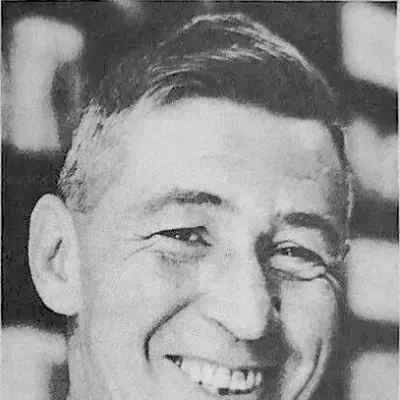
Ingrid Betancourt
Human Design Chart
Biography
Colombian-born politician and ex-hostage, she holds French citizenship as well as Columbian. As she was campaigning for President of Colombia, she was kidnapped by a guerilla group called the Revolutionary Armed Forces of Colombia (FARC) on February 23, 2002. She was held for six years and four months before the Colombian government was able to get secure her release by a covert operation on the morning of July 2, 2008.
She spent much of her early life in France since her father was a UNESCO ambassador stationed there. In 1983 she married French diplomat Fabrice Delloye. They had two children; she returned to Colombia in 1989 and divorced her husband a year later. She sent their children to live with him because of threats on her life. In 1997 she married Juan Carlos Lecomte.
She had been elected to Colombia's senate in 1998 and served until 2002 when she announced her decision to run for President of the country and found herself in the dire situation of being kidnapped. Her campaign manager, also taken hostage, was released in early 2008 but Betancourt was held until a daring rescue mission on July 2nd that year.
Since her release, she has worked for the freedom of other hostages and she has been named a knight of the Legion of Honour of France. She has also released details of her horrific ordeal living in the jungle at the mercy of her abductors.
What does Projector 6/3 mean for Ingrid Betancourt?
Projector 6/3 — Design at a Glance
Ingrid Betancourt's design shows a tendency towards a focusing aura that immediately recognizes system errors and brings 'light into the darkness' for others. As a projector, she acted like a bright flashlight directed right at problematic areas in her surroundings. However, this direct addressing of faults is often perceived as unpleasant, similar to shining a flashlight directly into someone's face.
Instead, her true effectiveness was seen when attracting others through her own harmonious example. When she simply shone pleasantly, people naturally came to her and asked for her insights. Therefore, the strategy did not lie in direct confrontation but rather in waiting for an honest, appreciative invitation from outside.
Since projectors do not have a constant energy center, their powers fluctuated: phases of high activity alternated with necessary rest periods to prevent burnout. If she lived according to this design, she was rewarded with success. However, if she missed this path and ignored the necessity of invitations as well as recovery, it led sooner or later to bitterness as a central non-self-experience. Her nature did not lie in constant pushing but rather in guiding purposefully once the environment was ready to accept this leadership.
Splenic Authority
Ingrid Betancourt's design shows a tendency towards immediate, instinctive orientation. Her inner authority lies in the defined Spleen Center – the body as health and alarm system. With her Emotional and Sacral Centers open, only this specific configuration could be effective; she did not have emotional or generative confirmation but pure survival intelligence.
This system provided spontaneous internal knowledge about whether a situation or environment was right. The first impulse counted as a correct indicator for her well-being and served the rigorous demarcation against harmful influences. However, since this Spleen impulse is extremely fine and only present in the current moment, its use required high vigilance. It could easily be drowned out or ignored by other voices. A short retreat could help to hear these subtle signals clearly.
Long-term commitments fundamentally contradicted this mechanism. Since she could only know what was right at the moment, her needs often changed again shortly thereafter. Spontaneity and flexibility were therefore essential; rigid plans hindered her natural adaptability. She needed room to react to these immediate health and alarm signals without being bound by future obligations. This structure shaped a lifestyle of situational clarity rather than strategic planning.
The 6/3 Profile — Role Model / Martyr
Ingrid Betancourt's design shows a tendency towards intense, often fanatical experimentation in the first three decades of life. This phase was marked by the need to thoroughly break down and reorder structures – a process that not only showed itself materially like in household management but as a profound correction of old forms. She did not seek ordinary perfection but strove for an extraordinary life far from standard patterns.
This behavior is rooted in her 6/3 configuration: The experimenter (Line 3) dominates until about the age of 30. Here, the 'fanatical zeal' of Gate 18 comes into play, breaking and making connections to create order. After this turbulent groundwork, chaos slows down; responsibility becomes natural for Ingrid Betancourt. She uses her unusual experiences to act wisely.
Only after the age of 50 does the phase of authenticity begin. Earlier perfect behavior or felt hypocrisy is then not condemned but understood as individual survival behavior. Ingrid Betancourt thus matured into a wise, humorous role model. The inner restlessness of searching for 'the right thing' remains lifelong preserved, since Line 3 permanently works in her profile, yet it transforms from chaotic tidying to an integrated wisdom that oversees the entire switchboard and resolves old forms at an acceptable price.
Single Definition — Defined & Open Centers
Ingrid Betancourt's Human Design profile indicated a tendency towards intuitive, momentary orientation supported by a constant inner survival pressure. Her defined Spleen Center provided existential intuition and a strong immune system; it allowed her to perceive in the 'now' what was healthy or dangerous without rational analysis. This instinct was her reliable authority that protected her from false decisions as long as she trusted it and did not try to rationalize it. Simultaneously, her defined Root Center served as a source of adrenal energy, driving the pressure to move forward in the world and rise materially. The combination of Spleen intuition and Root stress shaped a lifestyle aimed at survival consciousness and functioning in the here and now.
At the same time, Ingrid Betancourt was characterized by six open centers: Head, Ajna, Throat, G, Heart, Sacral, and Solar Plexus. These open areas made her susceptible to environmental impulses. Her open Head and Ajna Centers tended to pick up mental confusion or other people's questions rather than having consistent thoughts of their own. She could easily get caught in non-self thoughts if she did not listen to her Spleen authority. The open G Center meant that she lacked a fixed identity or direction, instead reflecting it from the environment; she was dependent on finding the right place to feel comfortable and reflect the correct energy. Her open Heart Center led to her not being consistently willful, risking proving her worth through promises, which often ended in frustration. The open Sacral Center caused her energy to fluctuate; she could easily overextend herself by taking up generative power from others without knowing her own limits. Finally, her open Solar Plexus absorbed emotions of the environment, leading to foreign moods or conflicts being felt as her own if she did not distance herself from them. This openness required constant vigilance to avoid conditioning and instead use the wisdom of these centers as a mirror for others.
Channels for logical judgment and correction.
Ingrid Betancourt's Human Design profile indicated a tendency towards an insatiable, logical drive to question and correct patterns. She defined what was 'best' through continuous review against past successes or failures. This attitude was effective through the Judgment Channel 58-18, which connects the life energy of the Root Center with the analytical Spleen. Gate 58, the Gate of Vitality, drives persistence and love for life, while Gate 18, the Gate of Correction, reins in and points out imbalances. This channel nourishes the art of mastery by checking patterns to ensure they are harmonious for the collective.
The danger lies in personal application: If this critical assessment occurs uninvited, an endless stream of data about errors emerges as permanent dissatisfaction or a search for faults in oneself and others. The key for Ingrid Betancourt was restraint – offering solutions and corrections only when explicitly asked ("Is something wrong here?") to conserve energy and find acceptance. This way, she could wisely use her indispensable gifts instead of wasting valuable energy.
Additionally, Gates like Gate 10 (Complexity, Integration), Gate 15 (Collective Behavior, Logical Flow), and Gate 17 (Following, Logical Teaching for the Future) were at work. These gates support the integration process and establish flow in society through adaptation to natural rhythms. Gate 19 (Resources, Territory, Spirituality) required a secure environment while Gate 50 (Protective Reflex, Awareness, Values) as a conservative gate represented tribal rules for traditions. Gate 60 (Accepting Limitations, Genetics) and Gate 44 (Awareness, Transformation through Relationship) rounded out the picture, with the latter requiring willpower to carry out transformations. This configuration described a life task of uncovering hidden connections and passing them on to others, always in service of joy and love.
Collective Circuitry — Circuit Signature
Ingrid Betancourt's Human Design profile indicated a tendency towards strategic clarification driven by the intention to improve societal structures through pure logic. This attitude manifested as 'emotionless ratio' since the Solar Plexus Center was not included in the relevant circuit; decisions thus arose free from conditioned emotions or momentary moods.
The Understanding Circuit shaped this orientation. It focuses on using mind, focus, and structure to optimize things and lead society towards a better future. A central feature is sharing rational insights ideally unburdened by external conditioning. The left side of the chart represents these forward-looking energies.
Within Ingrid Betancourt's circuit, the Judgment Channel (Gates 18 and 58) was active. This connected the Spleen Center with the Root Center. This connection allowed for a visual formatting of energy: Intuition and strategic planning worked together to clearly recognize complex connections and structurally prepare them. It was not an emotional impulse but rather precise, visual analytical capability aimed at making logical conclusions understandable for others. The energy flowed directly between intuitive perception (Spleen) and strategic endurance (Root), which facilitated a consistent implementation of rational concepts. This mechanism underscores the ability to not only understand information but structure it in a way that creates actionability for an improved future.
Left Angle Cross of Prevention 2
Ingrid Betancourt's Human Design profile indicated a tendency towards strategic foresight. She was someone who anticipated problems and developed proactive solutions before they became acute. This impulse came from her inner drive to ensure security and stability through early action.
This character trait is described in the Human Design as the configuration 'The left cross of prevention 2'. This structure does not refer to reactive crisis management, but rather a preventive stance. The focus lies on minimizing risks by recognizing potential dangers early and taking appropriate measures. It's about avoiding damage through preparation instead of subsequent repair.
Ingrid Betancourt therefore did not act impulsively or randomly, but followed the logic of securing herself. Her energy was directed at eliminating uncertainties by creating action spaces in advance. This does not mean that she was free from stress, but rather that her system was designed to generate stability through planning and foresight. The 'prevention' here stands for actively shaping the future to prevent negative developments. It is an energy of control through preparation that allows one to maintain a safe haven in uncertain environments by anticipating misfortune.
Saturn Return · Uranus Opposition · Chiron Return · 2nd Saturn Return — Life Cycles
Ingrid Betancourt's Human Design profile was characterized by a phase of extreme instability, followed by a period of growing recognition. In 2002, at the age of 41, she was kidnapped by rebels from the FARC-EP guerrilla movement. This corresponded to her Uranus opposition cycle: an astrological-HD intersection pattern that often marks sudden breaks and deep crises breaking old structures. This experience was not random but rather an expression of the underlying dynamics of her chart, which in this life phase favored extreme unpredictability and external upheavals.
The subsequent development led to another quality. In 2009, at age 48, Ingrid Betancourt received an honorary doctorate from Université de Montréal in Quebec/Canada. This timing fell into her Chiron return cycle. In Human Design, this is not a healing process in the psychological sense but rather a fulfillment cycle. If someone has previously followed their strategy and authority, their incarnation cross now increasingly unfolds; meaning and life purpose become experiential and visible. The honorary doctorate was therefore not an isolated success, but the concrete result of this inner maturation and increasing unfolding of her true purpose after years of testing.
Projector · Splenic Authority — Synthesis
A central red thread runs through the chart: a pronounced ability to recognize and correct systems (Channel 58-18), coupled with open sensitivity for other people's energies (open centers). This combination allows for a deep understanding of patterns and flaws, but without constant inner authority to immediately translate these insights into action. Instead, there is an adaptability that enables one to react to the environment and align with its energy – like 'bright light' that only unfolds its full effect through invitation (Projector type). The recurring emphasis on conditioning in the open centers suggests that a significant part of life involves distinguishing one's impulses from external influences and making authentic decisions.
The central paradox lies in the interplay between the ability to analyze and correct (logical impulse) and the lack of firm inner direction (open Throat Center). On one hand, there is sharp judgment present that recognizes errors in the system. On the other hand, there is a missing internal compass needle to confidently determine the right path or make decisions from personal strength. This leads to an ongoing search for external confirmation and direction while simultaneously a deep desire for autonomy exists – a tension between the wish to correct and dependence on external validation.
1 Defined Channel
Incarnation Cross - Left Angle Cross of Prevention 2
Solar Return
The Solar Return shows the moment when the sun returns to its exact birth position - your personal solar year.
Life Cycles
Discover the life cycles with a detailed triple view (birth chart, cycle chart, composite).
Human Design Profile
- Type
- Projector
- Strategy
- Wait for the respectful invitation
- Authority
- Splenic Authority
- Profile
- 6/3 - Role Model / Martyr
- Definition
- Single Definition
- Incarnation Cross
- Left Angle Cross of Prevention 2
- Date of Birth
- 25.12.1961 14:15
- Place of Birth
- Bogotá, Colombia
Frequently Asked Questions
What is Ingrid Betancourt's Human Design type?
What Profile does Ingrid Betancourt have in Human Design?
Which authority determines Ingrid Betancourt's decisions?
Which incarnation cross is assigned to Ingrid Betancourt?
When was Ingrid Betancourt born?
Discover your own Human Design
Are you also a Projector? Find out in a personal reading how to unfold your leadership qualities and recognize the right invitations.
More Personalities
Back to overviewSissy Spacek

Alain-Fournier

Anémone

Ann-Margret

Bourvil
Hergé