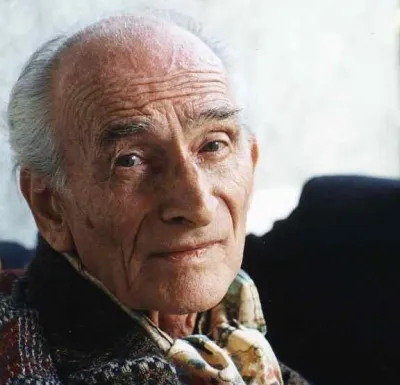
Ira Sachs
Human Design Chart
Biography
Sachs is Jewish and openly gay. He described Keep the Lights On (2012) as a semi-autobiographical film. In January 2012, Sachs married artist Boris Torres in New York city, a few days before their twins were born. Sachs and Torres co-parent the children with documentary cinematographer and filmmaker Kirsten Johnson, who bore them.
What does Manifesting Generator 6/2 mean for Ira Sachs?
Manifesting Generator 6/2 — Design at a Glance
Ira Sachs exhibited a dynamic foundational stance characterized by quick initiatives and the simultaneous pursuit of multiple interests. His design as a Manifesting Generator combined the constant energy source of the sacral center with the ability to skip steps and swiftly draw results into his life. This hybrid nature allowed him not only to react to impulses, typical for generators, but also to reinforce these reactions with manifesting power that propelled projects forward rapidly.
This speed brought specific challenges: The tendency to tackle multiple things at once or miss important stages could lead to frustration if the inner system was out of sync. Therefore, it was crucial to always wait for life impulses and only act when the sacral center gave a clear confirmation. Only through this reaction to an internal “yes” did his creative power become sustainably satisfying. Rather than focusing on one thing alone, Ira Sachs found true satisfaction in a playful switching between various projects. This structure promoted deep joy in creation as long as he sought variety and did not fight against his natural inclination towards it.
Sacral Authority
Ira Sachs demonstrated decision-making that emerged entirely from the body. As a Generator, his strategy was identical to his inner authority: sacral authority. This simplified his process fundamentally since he didn’t have to switch between strategic action and intuitive guidance.
A prerequisite for this clear signal transmission is an open emotional center. Ira Sachs therefore did not react with immediate thinking or planning but responded to external stimuli with an immediate physical reaction. This “gut feeling” manifested as a surge of energy, vitality, or acoustically through sounds like grunting or a confirming “Mhm”. When his sacral motor engaged, he had inexhaustible energy and devoted himself to his tasks with great enthusiasm.
The goal was not external purposefulness but joy in the act itself. Ira Sachs was born to immerse himself in his activities and experience satisfaction. Additionally, his activated spleen center acted as a supportive authority. This gave him quick, instinctive access to his physical well-being. He could react spontaneously and reliably guide himself from this deep perception, which further accelerated and stabilized his decisions.
The 6/2 Profile — Role Model / Hermit
Ira Sachs was someone who shaped his youth through intensive experimentation and the principle of trial and error. This phase served to gather personal life experiences, often leading to a temporary retreat after mistakes. Only upon entering the second decade of life, typically around age thirty, did this dynamic fundamentally shift. Then Ira Sachs metaphorically retreated into an isolated position – comparable to a cave on a mountain – to look back at past experiments with great distance. This period of intense reflection acted as a healing process and promoted deep self-awareness.
This transformation corresponds to Profile 6/2, which acts as an adventurous Three before the return of Saturn but later develops into a wise Six. The underlying energy of Gate 14 in the sixth position emphasized themes such as wealth, power, humility, and spiritual insight that material success can be divine will. Simultaneously, Gate 59 in the second position worked with natural shyness and self-erected walls waiting for the right call to intimacy. This configuration created psychological barriers that Ira Sachs could not resolve alone but only through the right external energy. From this deep introspection emerged Ira Sachs as a wise person whose insights attract others and from whom they can learn.
Triple Split Definition — Defined & Open Centers
Ira Sachs reveals a design marked by constant mental pressure and a clear inner direction. The definition between the Head Center and Ajna Center generated a permanent inspiration to ask questions and form concepts. However, this mental process was not directly connected to energy sources, so attempts to immediately implement ideas often ended in frustration. Instead, Sachs acted as a catalyst: his aura pressured others to think while he himself waited for the right moment to pass on his questions.
This mental structure contrasted with the enormous vital force of his defined Sacral Center. Here lay the source of his endurance and satisfaction. His design demanded that he not initiate but wait until life posed a question that his Sacral could respond to clearly with yes or no. Only then did he have the necessary energy to push projects through and overcome stagnation phases. This was complemented by a defined G Center, which gave him a reliable sense of self-identity and direction, as well as a defined Spleen Center, allowing intuitive, spontaneous judgments in the present moment.
Yet, Ira Sachs was also vulnerable to specific pitfalls. His open Heart Center lacked consistent willpower; he tended to want to prove himself through promises he could not keep, leading to cycles of self-doubt. Additionally, his open Solar Plexus absorbed the emotions of his surroundings. He was programmed to take on and amplify foreign feelings without identifying them as his own. This made him sensitive to emotional confrontations that he often wanted to avoid to prevent stirring up waves. The challenge lay in letting go of these absorbed emotions and not taking them personally to regain inner peace.
Channels for powerful leadership, inspiration and analytical clarity.
Ira Sachs exhibited a fundamental stance based on the tension between individual radiance and the necessity of collective recognition. His design suggested that he drew attention through his blores existence and unique style without actively seeking it out. This stemmed from Channel 1-8, connecting the G Center with the Throat Center. Here, Gate 1 acted as an individual expression of a mutative perspective, while Gate 8 represented the contribution to the group; the effect was not achieved through explanation but by living an exemplary life that inspired others to live their own uniqueness.
Simultaneously, Ira Sachs possessed the capacity for logical leadership within existing structures, carried by Channel 7-31. This also connected G and Throat Centers, with Gate 7 representing the role of logical guidance and Gate 31 collective leadership. Success here depended on being invited by the majority; he could show the way but not take it, meaning leadership through influence and shared responsibility.
Another imprint came from Channel 18-58 (Root to Spleen) between Root and Spleen Centers. Gate 58 drove a desire for vitality and perfection, while Gate 18 corrected. This created an internal watchman questioning patterns and checking if they contributed to the well-being of the collective. Criticism was effective only when requested; otherwise, it risked rejection.
In the realm of energy supply, Channel 20-34 (Sacral to Throat) for charisma played a role. Gate 34 provided raw manifesting power that found expression through Gate 20 in "now." This required a sacral reaction to external stimuli to direct the energy correctly; otherwise, chaotic outbursts were likely.
Mentally, Channel 47-64 (Head to Ajna) shaped his perception. Gate 64 brought mental confusion and searching for possibilities, while Gate 47 sought understanding. The mind served not as an inner authority but filtered experiences through a kaleidoscope of images until over time an inspiring story or clarity emerged.
Additionally, individual gates influenced: Gate 14 (Power and Direction), Gate 59 (genetic strategy for pairing), Gate 55 (emotional awakening) as well as in personality Gate 54 (connection between worldly and spiritual aspects), Gate 15 (collective rhythm), and Gate 43 (breakthrough through spontaneous insight). In the design, Gates 16 (Experimentation), 9 (Detail Work), 28 (Present-Moment Risk Awareness), 12 (Holding Back and Creativity) as well as Gate 63 (Doubt as Motivation for Improvement) complemented this Profile.
Collective Circuitry — Circuit Signature
Ira Sachs is characterized by three distinct, parallel energetic streams that do not merge into one another. The Knowledge Circuit connects his Throat and Identity Centers via Inspiration (Gate 8–1). This promotes the expression of a unique individuality, supported by divergent, mutative impulses. Parallel to this, the Understanding Circuit operates with two isolated segments: One connecting Throat and Identity Centers (Alpha Animal Gate 31–7; Judgment Gate 18–58), the other linking Spleen and Root Centers. Here, logical, emotionless strategy is focused on sharing rational knowledge or establishing intuitive certainty. The Meaning Circuit connects Head and Ajna Centers through Abstraction (Gate 64–47). This energy directs itself toward reflecting past experiences to uncover their emotional meaning and make them visually representable. Finally, the Integration Circuit ensures survival by connecting Throat and Sacral Centers via Charisma (Gate 20–34). This allows for channeling strength from an intuitive reaction to life and expressing it acoustically in the present moment. Since Ira Sachs has a Triple Definition, these four circuits exist as independent, non-directly connected systems. They operate alongside each other: creative identity search, rational structuring, emotional past resolution, and immediate survival assurance are separate pillars of his experiential world, each generating its own logical or emotional waves without merging into one continuous flow.
Left Angle Cross of Uncertainty 2
Ira Sachs revealed himself as someone whose inner disposition accepted uncertainty not as a deficit but as a constitutive state of the creative process. This fundamental attitude stems from the influence of the Left Cross of Uncertainty 2 in his design. In Human Design, this cross marks a specific archetypal path: it is not about achieving final certainty but rather about the ability to remain in doubt and productively utilize this space.
For Ira Sachs, this meant a natural distancing from dogmatic truths or rigid plans. Instead of striving for fixed answers, his attention was on the quality of the process itself – the searching, questioning, and challenging. The 'uncertainty' here is not a lack of knowledge but a conscious openness to the unexpected. It allows him not to prematurely commit himself, thus discovering new perspectives that were hidden in hasty certainty.
This configuration demands patience with one's own path. There is no linear progress towards absolute clarity; rather, constant re-evaluation of the situation forms part of the strategy. Ira Sachs likely used this energy to consider complex human situations without premature judgments. The strength lies in enduring uncertainty until an authentically deeper truth reveals itself – not through coercion but by accepting life's unpredictability.
Saturn Return · Uranus Opposition · Chiron Return · 2nd Saturn Return — Life Cycles
Ira Sachs showed himself as someone whose life path was marked by clear structuring and the search for consistent connection. In 1993, at age 28, his first work, the short film 'Lady', emerged. For his design, this marked the first Saturn Return, a phase where years of internal groundwork often condenses into a tangible external result and lays the foundation for future commitments.
This tendency towards anchoring continued. In 2012, he married artist Boris Torres in New York City. At age 47, Ira Sachs was in the realm of Chiron Return, a fulfillment cycle. During this life phase, one's incarnation cross increasingly unfolds in everyday life; if lived according to one's own strategy and authority, meaning and purpose become experiential. The marriage here was less an event than the concrete manifestation of this blooming process: A deep personal bond became the visible expression of what his design had long prepared internally. Both moments – the professional starting point and the partnership connection – illustrate how abstract energetic patterns can translate into tangible life realities when they follow natural system rhythms.
Manifesting Generator · Sacral Authority — Synthesis
A central red thread runs through the chart: the dynamics between inner drive and external reaction. Sacral authority (sacral center) implies a deep, instinctive joy of life that reacts to immediate stimuli. Simultaneously, the manifesting generator type strengthens this reactivity by skipping steps and quickly initiating changes – a process which also brings a necessity for reflection and correction (definite head center). This combination of impulsive energy and need for inner validation shapes a character that can be both active and reserved.
The central paradox lies in the tension between public expression and personal retreat. The defined channel 1-8 points to a natural ability to inspire through creativity and attract attention – an example (6/2 Profile) that encourages others to find their own path. Yet, cyclical patterns, especially the Saturn Return at age 28 with his first work, as well as the Chiron Return at age 47, point to phases of intense self-reflection and withdrawal to process life experiences and gain wisdom. This sequence of activity and retreat generates a dynamic tension between the desire for influence and the necessity of inner reflection.
5 Defined Channels
Incarnation Cross - Left Angle Cross of Uncertainty 2
Solar Return
The Solar Return shows the moment when the sun returns to its exact birth position - your personal solar year.
Life Cycles
Discover the life cycles with a detailed triple view (birth chart, cycle chart, composite).
Human Design Profile
- Strategy
- To respond - wait for something to respond to
- Authority
- Sacral Authority
- Profile
- 6/2 - Role Model / Hermit
- Definition
- Triple Split
- Incarnation Cross
- Left Angle Cross of Uncertainty 2
- Date of Birth
- 21.11.1965 16:17
- Place of Birth
- Memphis, TN, United States
Frequently Asked Questions
What is Ira Sachs' Human Design type?
What Profile does Ira Sachs have in Human Design?
What Authority does Ira Sachs possess?
What incarnation cross does Ira Sachs have?
When was Ira Sachs born?
Discover your own Human Design
Are you also a Manifesting Generator? Find out in a personal reading how to unfold your multi-talents and direct your energy wisely.
More Personalities
Back to overviewAldair

Alizée

Angeli
Arletty
Artus

Balthus