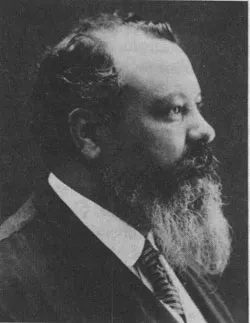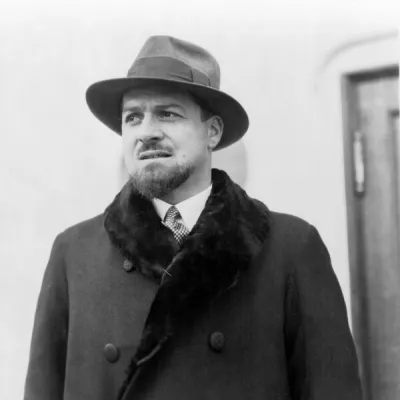
Italo Balbo
Human Design Chart
Biography
What does Manifestor 5/1 mean for Italo Balbo?
Manifestor 5/1 — Design at a Glance
Italo Balbo showed himself to be a pioneer and visionary whose role was to lead the world into a new future. His design matched the metaphor of an emperor in ancient Rome: He possessed the vision of a great empire but did not wage the necessary wars and battles himself. Instead, he sent others to conquer foreign lands for him. This superior perspective inevitably led to misunderstandings because his thoughts often reached further than those around him. This created a strong polarization: While some people loved his big dreams and followed him, others hated him precisely because of these enormous visions. To gain the right following, it was crucial for Italo Balbo to inform others about his plans in good time and accurately. This strategy of informing was the key to his inner balance. If he adhered to this principle, he was rewarded with a feeling of inner peace. However, if he lived against his design and ignored the necessity of communication, he instead felt a persistent, deep-seated anger within himself. His character was thus marked by this tension between leading vision and the resulting division in his environment, where informing paved the way to peace.
Emotional Authority
Italo Balbo demonstrated a decision-making process that was characterized by the necessity of waiting. His design indicated that spontaneous reactions were risky as they often reflected only transient moods. Emotional authority defined his inner orientation: The well-defined Solar Plexus Center carried this authority and always took precedence over all other defined centers in his chart, regardless of further configurations.
This mechanism meant that he was subject to an emotional wave that manifested in a constant up-and-down of feelings. The world appeared colored by his current mood; a moment of enthusiasm could quickly turn into a negative outlook. However, his immediate feeling was merely a snapshot and not necessarily his truth. Quick decisions based on this emotion often had negative consequences.
Instead, clarity required patience and repeatedly "sleeping on" decisions. The more time Italo Balbo took, the deeper he could understand the situation. Over time, intense feelings subsided, emotional distance set in, and calmness replaced initial impulses. This process was particularly important for long-term decisions that significantly influenced his life path. By delaying and waiting, he gained the necessary distance to recognize his true inner truth rather than reacting to fleeting emotional peaks.
The 5/1 Profile — Heretic / Investigator
Italo Balbo revealed himself as someone who exerted a nearly magnetic attraction through deep, private knowledge. His design indicated a tendency to emerge as a hero in crisis moments, providing solutions for others. This dynamic stemmed from his Profile 5/1: Line 1 drove him towards intensive, often isolated research and self-discovery. Through Line 5, however, this acquired knowledge became publicly effective; others instinctively sought answers to their problems from him.
This constellation harboured a structural risk, though. The altruistic urge, particularly shaped by Gate 35, promoted selflessness and the sharing of experiences. Yet without clear boundaries, there was a danger of depleting his own resources. Balbo faced the challenge of protecting his energy in order to be able to have a lasting impact. The tension lay in being willing to serve others while risking dissolution or overextension of himself.
Additionally, Gate 22 with its focus on attention and courtesy came into play. It enabled him to transmit mutations into society often without direct reward. His success depended on whether he could accept a subordinate position or continually strive for the spotlight, which could lead to humiliation. Balbo had to learn to say "no" in order to maintain the balance between his private research work and public service. Only then could he optimally utilise his gifts without depleting himself.
Single Definition — Defined & Open Centers
Italo Balbo was characterized by a persistent willpower and emotional depth, paired with reliable manifestation. His defined Heart Center gave him the strength to determine his own life and consistently keep promises; he enjoyed working independently and sought recognition for his contributions. This energy flowed into his defined Throat Center, which served as a pivot point to transform his messages from the world. Since Throat and Heart were connected, he often spoke from the 'I want' perspective, giving him a clear yet limited way of expression.
At the same time, his defined Solar Plexus acted as an inner authority. He was designed to wait for emotional clarity before acting. This patience allowed him to make decisions once emotional clarity had set in – not impulsively at the peak or trough of his feelings. His defined Root Center provided a constant adrenalized push to move forward and master existential challenges, keeping him grounded in the material world.
In contrast, his undefined centers revealed specific vulnerabilities. His open Head Center made him receptive to external mental inspirations; he tended to engage with others' questions or seek answers that were not his own theme. His open Ajna Center meant that he could take on concepts and theories but did not understand them as his constant truth. He was a mirror for intellectual currents rather than generating them himself.
His open G Center showed that Italo Balbo lacked a fixed identity or direction. His personality adapted to the environment; he found his orientation only through interaction with others and the right places. His open Sacral Center meant that he did not have a constant energy flow. He was prone to absorbing and amplifying the vital energy of others, which could lead him to feel overburdened or exhausted if he was not mindful about his availability. Finally, his open Spleen Center made him sensitive to well-being and fears in the environment; he had intuitive insights into other people's health but did not rely on spontaneous impulses as they were often driven by conditioned survival fears.
Channels for willpower, emotional depth and inner clarity.
Italo Balbo was someone whose actions were shaped by a strong will for control over material resources and hierarchies. This fundamental attitude stemmed from Channel 21-45 in his personality, connecting the Heart Center to the Throat Center through the Gate of the Hunter (21) and the Gate of the Gatherer (45). It signaled a deep need for independence and the ability to master material levels by taking responsibility. Balbo sought to be his own boss to follow his natural rhythm while simultaneously exercising authority necessary for tribal survival.
However, this pressurized aspect of structuring was countered by juxtaposed channels that influenced his emotional landscape. Channel 22-12 (Openness) connected his Solar Plexus Center with the Throat Center through the Gate of Openness (22) and the Gate of Caution (12). This led to moodiness, where social interactions depended on his current mood. Balbo was not consistently sociable but sought receptive environments to unleash his transformative effect. When in the right frame of mind, he could move others with his voice; forced situations often led to harshness or isolation.
Additionally, Channel 30-41 (Recognition) linked the Root Center with the Solar Plexus. Through Gate 41 (Limitation) and Gate 30 (Feeling Recognition), an intense drive for new experiences emerged. This channel generated restlessness and a longing that was amplified by emotional waves. Balbo constantly sought novelty to ward off boredom, often making his decisions seem impulsive.
In the background, other gates like Gate 5 for life rhythm and Gate 47 for meaning from past experiences influenced him. This constellation described someone who oscillated between an authoritative will for structuring in the Heart Center and emotional-driven, often impulsive impulses of Solar Plexus and Root. His energy aimed to maintain control while waiting for his inner wave to act clearly.
Tribal Circuitry — Circuit Signature
Italo Balbo's design inclined towards a pulsating expression that sprang from emotional waves and condensed into cooperative structures. This configuration showed him as someone who combined individual identity with communal resource creation, yet needed phases of rest due to the absence of constant life force.
The Knowledge Circuit in Italo Balbo connected Throat and Solar Plexus Centers through Channel 22-12 (Openness). This allowed him to express unique identity directly through emotional impulses – a pulsating energy that heralded change. Parallel to this, the Meaning Circuit linked Solar Plexus with Root Center (Channel 30-41 Recognition), where past experiences flowed in cyclical waves to be shared and imbued with meaning. Both circuits shared an emotional center, creating a continuous flow from individual transformation towards collective reflection.
The Ego Circuit finally connected Throat and Heart Centers through the Money Line. This promoted cooperation and material resources within the tribe based on mutual support. Since this circuit lacked connection to Sacral Center, constant life force was missing; Italo Balbo needed pauses for regeneration to sustainably carry these cooperative energies. The mechanics thus described a pulse from individual identity and emotional reflection that culminated in communal creation but required phases of stillness due to the absence of continuous power.
Left Angle Cross of Separation 1
Italo Balbo's design inclined towards structural delineation. He was someone who pursued the principle of self-differentiation or separation within a system. This configuration describes the dynamics of division as a fundamental organizing principle.
The left Cross of Separation 1 shaped his inner orientation. It is an archetypal structure that does not seek fusion or harmony in the traditional sense, but rather clarity through distance. The mechanics of this cross indicate that identity and clarity often arise only after boundaries are established. What belongs together must first be separated to find its own form.
For Italo Balbo, this meant that integration or unification did not serve as a primary driver. Instead, the ability to differentiate was central. He lived in a dynamic where breaking away from existing structures or groups was necessary to claim a new independent position. This is not an emotional distance but a functional necessity of his design. The separation here serves the purpose of precision and avoiding mixing.
Without this clear delineation, the structural integrity of his actions would have been at risk. His design called on him to create spaces where things no longer mix but take their specific roles. This was not an act of conscious rejection but a deeply rooted energetic logic that determined his way of dealing with systems and relationships. The separation thus served as the means to establish order and clarity in his environment.
Saturn Return · Uranus Opposition — Life Cycles
Italo Balbo faced strong structural demands in his youth, channeling his actions accordingly. This was evident in 1926 at age 30: His appointment as State Secretary for Aviation marked his first Saturn Return. In Human Design mechanics, this cycle represents the establishment of authority, responsibility, and long-term structure. External circumstances challenged him to assert himself in a position requiring stability and clear hierarchies – a process that combined internal discipline with external expectations.
Later, sudden environmental changes acted as catalysts for new directions. In 1934 at age 38, he was transferred to Italian Libya as Governor-General. This correlated with the Uranus Opposition, a cycle often marked by abrupt shifts, rebellion against old patterns or unexpected upheavals in life circumstances. While Saturn built the framework, Uranus broke existing boundaries and forced adaptation to entirely new, often chaotic conditions. Balbo did not respond passively but took on new leadership roles in a different geographical and political context. These two planetary influences – structuring Saturn and disruptive Uranus – shaped his career as alternating phases of building up and sudden change, always taking the initiative in dealing with external demands.
Manifestor · Emotional Authority — Synthesis
Italo Balbo was a pioneer who radiated clear direction and willpower through his defined Throat Center and Heart Center. This combination with the emotional Solar Plexus Center points to someone who could act impulsively but ultimately needed time to gain clarity and make decisions from deep inner conviction. The Profile of Hero/Researcher (5/1) reinforces this trait: Balbo actively sought solutions for complex challenges and shared his knowledge willingly – a process that also made him vulnerable to the demands of others. The openness of certain centers, particularly the Root, Sacral, and Spleen Centers, indicated high sensitivity to external influences, forcing him constantly to find inner balance and protect himself from overexertion.
A central paradox in Balbo's design lies in the interplay between initiation and reaction. As a Manifestor, he was destined to set things in motion and lead the way, yet open centers made him receptive to other people's energies and forced him to adapt to changing circumstances. This tension between wanting control and needing flexibility shaped his character and may have led to an ongoing balance between assertiveness and adaptability.
3 Defined Channels
Incarnation Cross - Left Angle Cross of Separation 1
Solar Return
The Solar Return shows the moment when the sun returns to its exact birth position - your personal solar year.
Life Cycles
Discover the life cycles with a detailed triple view (birth chart, cycle chart, composite).
Human Design Profile
- Type
- Manifestor
- Strategy
- To inform others before acting
- Authority
- Emotional Authority
- Profile
- 5/1 - Heretic / Investigator
- Definition
- Single Definition
- Incarnation Cross
- Left Angle Cross of Separation 1
- Date of Birth
- 05.06.1896 19:30
- Place of Birth
- Tamara, Italy
Frequently Asked Questions
What was Italo Balbo's Human Design type?
What profile did Italo Balbo have?
What authority did Italo Balbo possess?
What incarnation cross did Italo Balbo have?
When was Italo Balbo born?
Discover your own Human Design
Are you also a Manifestor? Find out in a personal reading how to use your initiation power peacefully and dissolve resistance.
More Personalities
Back to overviewChristian-Jaque
Kesha

Laurent-Eynac
Lucebert
Masaccio
Papus