
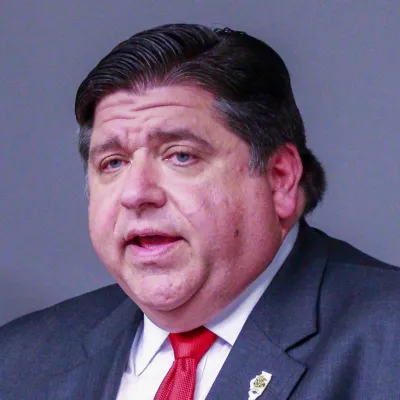
J. B. Pritzker
Human Design Chart
Biography
Pritzker has been a longtime financial supporter and active member of the Democratic Party. He became the Democratic nominee for governor of Illinois in the 2018 gubernatorial election after winning a crowded primary election. He defeated Republican incumbent Bruce Rauner in the general election on 6 November 2018, and took office on 14 January 2019. Pritzker was reelected in 2022.
In 1993, Pritzker married Mary Kathryn "M. K." Muenster, whom he had met in Washington, D.C., when she worked as an aide to U.S. Senator Tom Daschle. She is one of three children of Theodore and Karen Muenster. Her father unsuccessfully ran for the U.S. Senate in 1990. They live in Chicago's Gold Coast neighborhood with their two children.
J. B. Pritzker — Generator with Profile 4/6
Generator 4/6 — Design at a Glance
J.B. Pritzker showed himself to be someone with immense endurance and the ability to carry projects over long periods of time – comparable to a workhorse that provides power as long as it burns for the task. His design as a Generator suggested that this energy does not arise from arbitrary initiative but through reaction to external signals. The mechanics dictate: Do not start things yourself, but wait until life poses a question or an impulse comes, and then respond from the gut.
This approach was crucial for his energy balance. When he responded to such inner 'yes' signals, nothing could stop him; work flowed naturally and led to deep fulfillment. Conversely, frustration or sudden drops in energy levels threatened if he acted against this advice – for example, by compulsively initiating things he actually had no desire for, or being kept away from his heart project while still full of power. The risk thus lay either in wasting strength on unsuitable tasks (burnout risk) or suppressing the natural urge to continue. His path to effectiveness consisted in channeling this sacral energy through reactive action rather than forcing it proactively and often frustratingly. Thus, satisfaction became a reward mechanism for living in harmony with his nature.
Emotional Authority
J.B. Pritzker's design laid a tendency towards emotional wave movement: His perception of the world was always colored by his current mood, leading him to see the same situation as exciting or negative depending on the moment. This dynamic results from his Emotional Authority, anchored in the defined Solar Plexus Center. A central mechanism here is that this authority always takes precedence over all other defined centers – regardless of what else may be activated in the graph. This means that his inner truth did not lie in the first impulse but only became apparent after the initial emotional wave subsided.
Quick, spontaneous decisions based on immediate emotional impulses carried the risk of negative consequences as they reflected only a snapshot moment. Instead, his design required patience and time to gain clarity. By allowing himself to rethink decisions multiple times and let them 'ripen overnight', he could gain the emotional distance needed for deeper understanding. This process of waiting until calm was especially crucial in long-term life decisions, as only then did the true direction become clear, free from distortion by temporary highs and lows.
The 4/6 Profile — Opportunist / Role Model
J.B. Pritzker's design laid a tendency to intensively experiment in the first three decades of life, particularly in the realm of relationships and friendships. This phase often felt like playful trial-and-error before the deeper structure of Profile 4/6 fully unfolded. With maturation, an inner conflict frequently emerged: The strong desire for belonging to a community stood in conflict with the wish to withdraw and ponder the higher meaning of life. This tension between heart and head shaped his development and could be confusing as he sought both connection and distance.
In later years, it was expected that he would take on the role of a wise role model. This did not happen through isolation but primarily through cooperation with other people. Here, a cautious attitude emerged: His big heart opened selectively to avoid being hurt by false bonds.
This dynamic is reinforced by the specific Gates. Gate 60 on Line 4 gives an awareness of limits and constraints. Instead of breaking against them, J.B. Pritzker used this time within the boundaries to enhance his potential and prepare for opportunities for positive change. Simultaneously, Gate 50 on Line 6 brought a clear stance towards values. This was about deciding for or against leadership roles based on consistent principles. Inconsistent values were recognized as risky, while firm convictions formed the basis of his authority and influence. Thus, his design united the network need of Line 4 with the value-based responsibility of Line 6.
Triple Split Definition — Defined & Open Centers
J. B. Pritzker is characterized by a design marked by immense inner dynamism and mental intensity. His defined Head and Ajna Centers generated constant pressure to ask questions and develop concepts, which could often be felt as mental anxiety or restlessness due to the lack of direct energy available for implementing these thoughts. At the same time, he possessed a powerful will through his defined Heart Center, helping him control resources and keep promises, along with a massive vital energy source in his Sacral Center that propelled him to stay active and respond to offers rather than initiate them.
This combination of mental inspiration and physical strength was filtered by his emotional authority in the Solar Plexus Center; he relied on waiting out waves of feelings to gain clarity before acting. His defined Spleen Center provided spontaneous intuition in the moment, while the Root Center delivered a constant pressure to move forward and manage stress.
In contrast stood his open G Center. Here, there was no fixed identity or direction. J. B. Pritzker tended to blend with his environment and was vulnerable to seeking a "borrowed" identity when he found himself in wrong places. The typical trap of this open center is the question: "Who am I?" or the attempt to find love and direction through initiatives, which often resulted in resistance. His strength lay in waiting for correct places and people who showed him his direction rather than forcing it upon himself.
Channels for intimacy, change, curiosity, structure, devotion and abstraction.
J. B. Pritzker showed a fundamental stance based on evolutionary change and the ability to generate innovation through patience and inner resonance. His design was marked by the tension between the pressure for change and the necessity of waiting for emotional clarity before taking action.
Channel 60-3 connected the Root Center with the Sacral Center. Through Gate of Limitation (60) and Gate of Order (3), a pulsating energy emerged that enabled evolutionary change, yet required acceptance of limitation. This mechanism generated internal tension during phases of stillness perceived as melancholy until a new mutation spontaneously reacted from the Sacral Center.
Parallel to this, Channel Pairing 59-6 between the Sacral and Solar Plexus Centers was active. It linked Gate of Sexuality (59) with Gate of Irritation (6), creating intimacy as core power. This connection required waiting for an emotional wave to gain clarity; otherwise confusion threatened in relationships and enterprises. The intensity of this energy fostered deep connections when nurtured patiently.
In the mental realm, Channel Curiosity 11-56 linked Ajna Center with Throat Center via Gate of Ideas (11) and Gate of Stimulation (56). This drove an insatiable urge to tell stories and share new perspectives, less to deliver facts than to inspire others' imagination.
Channel Definition 43-23 also connected Ajna and Throat through Gate of Insight (43) and Gate of Assimilation (23). It enabled clear expression of innovative perspectives and promoted efficiency provided the utterance occurred at the right time.
Channel Devotion 44-26 linked Spleen and Heart Centers via Gate of Alertness (44) and Gate of Egotists (26). This gave an instinctive sense for what the tribe needed, combined with the willpower to sell solutions convincingly.
Additionally, Gates like 50 (Protective Reflex), 45 (tribal hierarchy), and 58 (experimental joy in Root Center) were active. Gate 55 in Solar Plexus promoted emotional awareness, while Gate 12 in Throat Center emphasized mutative creativity. Gate 4 supported logical formulations for future security, and Gate 30 helped recognize feelings and see through illusions.
Tribal Circuitry — Circuit Signature
J. B. Pritzker's Design showed three separate, parallel operating energetic streams. The Knowledge Circuit connected Ajna and Throat Center as well as Sacral and Root Centers as two unconnected parts. This promoted the ability to transform and express new ideas through structuring (Channel 43-23) and mutations (Channel 3-60), driven by impulsive life force.
The Meaning-Maker Circuit connected Head, Ajna, and Throat Center. Here abstraction (Channel 64-47) and curiosity (Channel 11-56) worked to visually reflect past experiences and share emotional insights with the collective.
The Ego Circuit connected Heart and Spleen Centers through the Channel of Devotion (26-44). This supported cooperation and resource management in the tribe based on reciprocity without direct Sacral connection.
The Protector Circuit connected Sacral and Solar Plexus Center through the Pairing Energy (Channel 59-6). This created instinctive protection and care for genetic survival, linked with emotional intensity.
This triple definition meant that these four circuits operated as independent energy fields, not as a cohesive whole. J. B. Pritzker navigated between innovative transformation, reflective meaning-making, cooperative resource building, and instinctive protection.
Right Angle Cross of Laws 4
J. B. Pritzkers Human Design shows a tendency towards deep, often unspoken loyalty to personal values, manifesting in a strong desire for inner integrity. This stance did not arise from external pressure but rather the necessity of protecting one's essence from fragmentation due to conflicting expectations.
This pattern is referred to in Human Design as 'The Right Cross of Law 4'. It describes a specific energetic configuration where the search for truth and authenticity goes hand in hand with a certain isolation or feeling of being different. The person often feels called to set their own standards rather than conforming to existing norms. This can lead to an internal conflict: on one side, there is a desire for connection and understanding from others; on the other, the clear realization that compromising core values would result in a loss of personal identity.
The mechanics of this cross promote a kind of inner discipline aimed at maintaining clarity in chaotic situations. J. B. Pritzker thus showed himself to be someone who often made decisions based on an internal moral compass, regardless of whether it was immediately recognized externally. It was a process of self-protection through the definition of clear boundaries. The energy of this design urges not living for others or fulfilling their expectations but taking an authentic position, even if that means standing alone. This structure thus fostered a stance of quiet persistence and responsibility towards one's own path rather than seeking external validation.
Saturn Return · Uranus Opposition · Chiron Return · 2nd Saturn Return — Life Cycles
J. B. Pritzkers Human Design shows a tendency towards strategic patience and the ability to bring about structural changes over long cycles. This orientation is less characterized by spontaneous impulses but rather through the consistent condensation of experience over years until a moment of maturity is reached, in which actions can have lasting impact.
This process is marked by the second Saturn Return, a life stage where earlier investments in knowledge and relationships often consolidate into a stable foundation for public responsibility. It's a phase of consolidation where inner clarity grows together with outer authority.
In 2019 at age 54, J. B. Pritzker was sworn in as the 43rd Governor of Illinois. This event exemplifies the mechanics of this cycle: after years of preparation and positioning, a new level of leadership took effect based on accumulated life experience. The swearing-in was not a sudden break but the visible result of a long-term maturation process where personal intentions met societal demands. At this age, it often becomes clear how deeply rooted patterns of decision-making can now be effective in a broader role without losing their original orientation.
Generator · Emotional Authority — Synthesis
A central red thread runs through the design: the dynamic tension between inner drive and outer engagement. Sacral energy (Generator Type) seeks fulfilling work, yet emotional authority requires time for decision-making – a process that counters impulsive action. This internal rhythm is reinforced by the Profile as Networker/Role Model, which embodies both the desire for community (Line 4) and independent reflection (Line 6). The defined mental pressure (Head Center) contributes to an ongoing search for understanding and fuels the ability to inspire others – so long as limitations (Gate 60) are accepted.
The central paradox lies in the combination of pulsing energy and emotional depth. The Channel of Mutation (3-60) implies a unpredictable drive towards change, while the emotional wave demands thorough engagement with the consequences of that change. This tension between the desire for innovation and the need for emotional clarity generates an interplay of melancholy and creative power, manifesting in a continuous process of experimenting and reflecting – particularly evident in a documented event marking a career step.
6 Defined Channels
Incarnation Cross - Right Angle Cross of Laws 4
Solar Return
The Solar Return shows the moment when the sun returns to its exact birth position - your personal solar year.
Life Cycles
Discover the life cycles with a detailed triple view (birth chart, cycle chart, composite).
Human Design Profile
- Type
- Generator
- Strategy
- To respond - wait for something to respond to
- Authority
- Emotional Authority
- Profile
- 4/6 - Opportunist / Role Model
- Definition
- Triple Split
- Incarnation Cross
- Right Angle Cross of Laws 4
- Date of Birth
- 19.01.1965 13:01
- Place of Birth
- Palo Alto, CA, United States
Frequently Asked Questions
What is J. B. Pritzker's Human Design type?
What profile does J. B. Pritzker have in Human Design?
What authority does J. B. Pritzker have?
Which incarnation cross is active for J. B. Pritzker?
When was J. B. Pritzker born?
Discover your own Human Design
Are you also a Generator? Find out in a personal reading how to use your sacral energy correctly and discover deep satisfaction.
More Personalities
Back to overviewAaliyah

Alexia

Angèle

Anne-Marie

Arcángel

Arno
