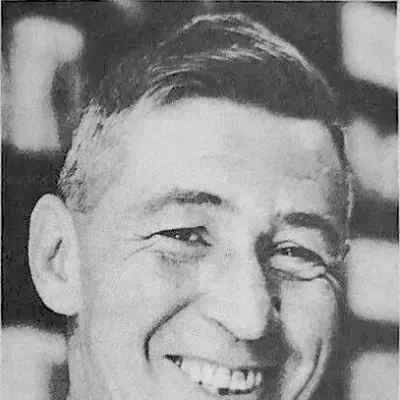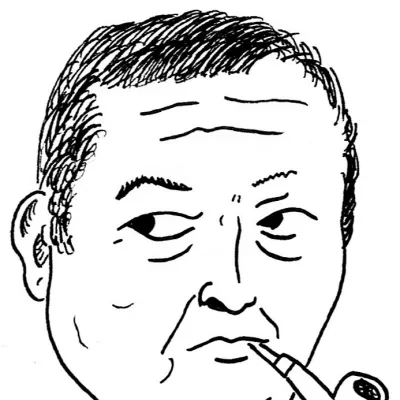
Jacques Le Goff
Human Design Chart
Biography
To compare with Jean-François Revel.
Human Design Analysis: Jacques Le Goff as Projector 1/3
Projector 1/3 — Design at a Glance
Jacques Le Goff's design inclines towards precise, focused perception. As a projector, his aura shone like a bright flashlight, pinpointing weaknesses in systems or others. He immediately saw what wasn't working, yet this direct confrontation would often trigger resistance in others. Instead, his strategy was to attract others through his own harmonious glow. People came to him voluntarily for advice, rather than him imposing his insights. This magnetic pull was the key to his influence.
For Jacques Le Goff, it was crucial to wait for an honest, appreciative invitation. Only then could he effectively fulfill his leadership role without wasting energy. His undefined Sacral Center meant he didn't have a constant, intrinsic life force. He worked in phases of high intensity followed by necessary rest periods to avoid burnout. The conventional work model that demands continuous performance did not suit his rhythm. Living by this design brought him success. Ignoring it led to the non-self theme of bitterness. Thus, his path involved offering his specific perspective when invited and regenerating during breaks to maintain his clarity.
Emotional Authority
Jacques Le Goff's design inclines towards emotional depth and necessary pauses before decisions. His inner authority is Emotional Authority, carried by the defined Emotional Center. According to Human Design mechanics, this center always takes precedence over all other defined areas, regardless of further configurations in the chart. Jacques Le Goff was thus subject to an inner rhythm of feelings that showed in waves of up and down. The world appeared to him always colored by his current mood: a moment of enthusiasm could quickly be replaced by a negative coloring of the same thing.
This mechanism meant that his immediate feeling was often just a snapshot and not a final judgment. Spontaneous decisions that emerged directly from such an emotional peak carried the risk of being later recognized as wrong or inappropriate. Therefore, Jacques Le Goff's strategy was to take his time. He should not make decisions in the first impulse but let them mature, often over several days. Through repeatedly sleeping on questions, the intense feelings gained distance. Only when the emotional wave subsided and calmness set in, true clarity emerged. This process of patience and waiting was essential, especially for long-term life decisions that would significantly shape his further path.
The 1/3 Profile — Investigator / Martyr
Jacques Le Goff's design is characterized by the Profile configuration 1/3, the so-called Researcher and Experimenter. This structure suggests a stance that combines theoretical knowledge with practical application. His life task was to learn through trial and error. Often, he oscillated between the intense search for information and the urge to test it in reality.
Line 1 represents curiosity and the drive to understand fundamentals, while Line 3 symbolizes the necessity of testing and learning from mistakes. For Jacques Le Goff, it was characteristic that his judgment was only trustworthy when he had both intellectually penetrated and practically tested a matter.
Additionally, the energy of Gate 38, Line 1, with its intuitive ability to recognize the life value and intensity of a situation, contrasted with the isolating quality of Gate 48, Line 3, which required a certain detachment from the collective to develop personal depth and discernment. This dynamic created an inner tension between engagement in the 'battle' for knowledge and the necessary withdrawal phase to condense these experiences. His path was marked by the constant back and forth between gathering knowledge and the bold step of practical implementation, where mistakes were seen as indispensable teachers.
Split Definition — Defined & Open Centers
Jacques Le Goff's Human Design profile was characterized by a constant, internal mental pressure. The definition between the Head Center and Ajna Center created a permanent source of inspiration and questioning. He lived with the challenge that this pressure could not be directly converted into energy, as no motor centers were involved. This led him to learn to accept the mental process without prematurely converting it into actions, which would otherwise have led to frustration or inappropriate decisions. His mental activity was always present, a state that made it difficult for him to stop the thought flow, but at the same time gave him a trustworthy form of conceptual thinking.
Parallel to this, he had a defined willpower through the defined Heart Center. This allowed him to keep promises and steer his life independently. He preferred to be his own master to follow his inner mechanisms and used his energy to be successful and recognized. However, this strength required discipline to avoid the temptation to overwhelm others or set unrealistic expectations for their capabilities.
Emotionally, he was marked by the defined Solar Plexus Center, which acted as an inner authority. He was designed to wait for the emotional wave before making decisions. Impulsive reactions to the highs or lows of his feelings would have led to chaos; instead, he gained clarity by practicing patience and exploring his emotional depth. This process gave him a sensitive intelligence that understood connections on a deeper level.
At the same time, his design revealed specific vulnerabilities. The open Throat Center made him vulnerable to the pressure to demand attention or speak to be heard, even though he should wait to be invited. His open G Center led to him not having a fixed identity but reflecting in relationships and environments. He tended to question who he really was or which direction was right, instead of accepting that he was guided by the initiation through others. The open Sacral Center left him easily overwhelmed by the energy of others, which could lead to exhaustion if he did not learn to set boundaries and trust his own authority rather than borrowed vitality. Finally, the open Spleen Center was a source of survival fears, which could lead him to cling to unhealthy situations to simulate a sense of security rather than trusting his own intuition.
Channels for doubt, community and emotional release.
Jacques Le Goff's design tended towards a critical, pattern-recognizing intelligence characterized by logical skepticism and the need for verifiable structures. This attitude was significantly influenced by the Logic Channel 63-4. This channel connected the Head Center with the Ajna Center and ensured that Jacques Le Goff did not blindly accept information but constantly filtered it for consistency. Doubt was not a barrier but the motor of knowledge: Only if a pattern functioned practically and was logically sustainable, it was considered true. This mind always sought answers to provide orientation to the collective, rather than resolving personal uncertainties.
Parallel to this, the Community Channel 37-40, connecting the Solar Plexus Center with the Heart Center, created an emotional basis for cooperative structures. Jacques Le Goff sought his place in larger contexts and understood that sustainable connections must be based on fair agreements. It was not about spontaneous deals but about carefully negotiated agreements that required willpower and mutual recognition to secure a functioning community.
The emotional landscape was shaped by the Channel of Emotional Release 39-55, linking the Root Center with the Solar Plexus Center. Here, a wave of moods oscillated between joy and melancholy. Jacques Le Goff used this energy to provoke and awaken the minds of others, but he had to learn to authentically accept his own moods rather than rationalize them.
Additionally, prioritized Gates like Gate 38 (Integrity under Pressure) and Gate 48 (Deep Pattern Recognition) contributed to Jacques Le Goff's resistance against harmful forces and his ability to penetrate complex connections, while Gates like 21 (Control of Material Things) and 60 (Acceptance of Limitations) made the tension between individual autonomy and collective boundaries palpable.
Individual Circuitry — Circuit Signature
Jacques Le Goff's design tended towards emotional intensity and logical precision, which did not appear as a cohesive flow. With his split definition, two independent energetic blocks existed side by side.
The Knowledge Circuit connected his Solar Plexus Center with the Root Center. This created a pulsating, acoustic energy aimed at releasing emotions. It was about expressing his unique identity through emotional waves that heralded change.
Parallel to this, the Understanding Circuit, connecting the Head Center with the Ajna Center, stood out. Here, focused, visual logic was in the foreground. This connection served to share rational insights free from conditioning and to guide society towards a better future, separate from the emotional impulses of the other block.
Finally, the Ego Circuit connected the Heart Center with the Solar Plexus Center. This Community Channel emphasized a good balance between giving and taking, as well as mutual support. As there was no connection to the Sacral Center, rest periods for resource generation for the tribe were necessary. Jacques Le Goff thus showed separate but strong streams: emotional transformation, cognitive clarity, and cooperative resource building, which acted as parallel forces, not as a unified whole.
Right Angle Cross of Tension 4
Jacques Le Goffs Human-Design legte eine Tendenz zur inneren Spaltung fest. Er zeigte sich als jemand, der zwischen zwei entgegengesetzten Extremen hin- und hergerissen war. Dies entsprach der Mechanik des rechten Spannungskreuzes vier. Diese Konfiguration beschrieb einen ständigen Konflikt zwischen dem Wunsch nach individueller Freiheit und dem Bedürfnis nach sozialer Anpassung. Jacques Le Goff spürte oft den Druck, sich den Erwartungen seiner Umgebung zu beugen, während sein innerer Antrieb nach Unabhängigkeit rief. Diese Spannung prägte seine innere Haltung. Sie führte dazu, dass er sich häufig in Situationen wiederfand, in denen er entweder gegen den Strom schwimmen oder sich unterordnen musste. Für sein Design war dies keine vorübergehende Krise, sondern eine strukturelle Gegebenheit. Die Energie dieses Kreuzes trieb ihn an, diese Gegensätze auszuhalten, ohne sie vollständig auflösen zu können. Es gab ihm eine tiefe Empathie für menschliche Widersprüche, da er sie selbst lebte. Jacques Le Goff trug diese Last nicht als Schwäche, sondern als integralen Bestandteil seiner Existenz. Die ständige Reibung zwischen Autonomie und Konformität formte seine Art, die Welt zu sehen und zu handeln. Er lernte, in der Spannung zu leben, anstatt nach einem endgültigen Frieden zu suchen. Dies verlieh seiner Persönlichkeit eine gewisse Komplexität und Tiefe, die aus dieser spezifischen energetischen Konstellation hervorging.
Saturn Return · Uranus Opposition · Chiron Return · 2nd Saturn Return — Life Cycles
Jacques Le Goffs Human-Design legte eine Tendenz zur strukturellen Verankerung fest, die sich in klaren Lebensphasen zeigte. 1950, im Alter von 26 Jahren, wurde er Lehrer an einem Lycée in Amiens. Dies markierte seinen ersten Saturn-Return, einen Zyklus, in dem sich jahrelange Vorarbeit oft zu einem tragfähigen beruflichen Fundament verdichtet und erste Verantwortung übernommen wird.
Mit 38 Jahren, 1962, heiratete er die Ärztin Hanka Dunin-Wąsowicz. Dieser Schritt fiel in die Uranus-Opposition, eine Phase, die häufig tiefgreifende Veränderungen in der persönlichen Bindung und im Selbstverständnis auslöst, oft verbunden mit dem Wunsch nach neuer Freiheit oder Bestätigung.
1972, im Alter von 48 Jahren, wurde er Präsident der sechsten Sektion der École Pratique des Hautes Études. Dies entsprach dem Chiron-Return, einem Erfüllungszyklus, in dem sich das eigene Inkarnationskreuz entfaltet und der persönliche Lebenszweck zunehmend sinnstiftend und wirksam wird.
Schließlich schrieb er 1983, mit 59 Jahren, einen kurzen Essay, in dem er die verbreitete Definition des Mittelalters in Frage stellte. Dies geschah während seines zweiten Saturn-Returns, einer Zeit, in der sich innere Reife und äußere Autorität oft zu einer kritischen, reifen Perspektive verdichten, die etablierte Strukturen hinterfragt.
Projector · Emotional Authority — Synthesis
Jacques Le Goff war ein Projektor, dessen Leben von einem tiefgreifenden Drang nach Verständnis und der Fähigkeit geprägt war, verborgene Muster aufzudecken (definiertes Head Center und Ajna Center, Channel 63-4). Dieser Fokus auf das Erkennen von Inkonsistenzen und das Formulieren präziser Fragen zog sich als roter Faden durch sein Wirken, insbesondere in der Auseinandersetzung mit etablierten Denkweisen – ein Prozess, der durch die emotionale Welle (emotionale Autorität) und die Notwendigkeit, Erkenntnisse durch Erfahrung zu validieren (Profile 1/3) verstärkt wurde. Er suchte stets nach dem tieferen Verständnis, nicht nur für den eigenen Wissensdurst, sondern auch um dieses Wissen weiterzugeben und andere zu inspirieren (Wissens-Schaltkreis).
Gleichzeitig lebte er in einem Spannungsfeld zwischen dem Wunsch nach Erkenntnis und der damit einhergehenden mentalen Anspannung (Channel 63-4). Die ständige Suche nach Bestätigung und die Skepsis gegenüber unbewiesenen Annahmen führten zu einem inneren Druck, der sich in Zweifeln und Fragen manifestierte. Dies zeigte sich in der Notwendigkeit, Entscheidungen reifen zu lassen (emotionale Autorität) und Erkenntnisse durch jahrelange Forschung und Experimente zu untermauern – ein Prozess, der durch die wiederholten Wendepunkte in seiner Karriere (Saturn-Returns, Uranus-Opposition) und Erfolge (Chiron-Return) belegt wurde.
3 Defined Channels
Incarnation Cross - Right Angle Cross of Tension 4
Solar Return
The Solar Return shows the moment when the sun returns to its exact birth position - your personal solar year.
Life Cycles
Discover the life cycles with a detailed triple view (birth chart, cycle chart, composite).
Human Design Profile
- Type
- Projector
- Strategy
- Wait for the respectful invitation
- Authority
- Emotional Authority
- Profile
- 1/3 - Investigator / Martyr
- Definition
- Split Definition
- Incarnation Cross
- Right Angle Cross of Tension 4
- Date of Birth
- 01.01.1924 07:00
- Place of Birth
- Toulon, France
Frequently Asked Questions
What was Jacques Le Goff's Human Design type?
What Profile did Jacques Le Goff have in Human Design?
What Authority did Jacques Le Goff have?
What incarnation cross was active for Jacques Le Goff?
When was Jacques Le Goff born?
Discover your own Human Design
Are you also a Projector? Find out in a personal reading how to unfold your leadership qualities and recognize the right invitations.
More Personalities
Back to overviewSissy Spacek

Alain-Fournier

Anémone

Ann-Margret

Bourvil
Hergé