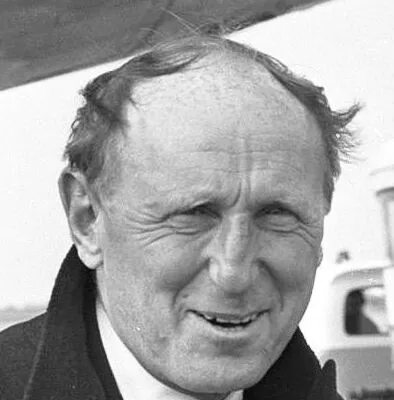
Jan Leeming
Human Design Chart
Biography
What does Projector 6/2 mean for Jan Leeming?
Projector 6/2 — Design at a Glance
Jan Leeming presented himself as someone who influenced his environment with a dense, focused aura – comparable to a bright flashlight that directs its beam precisely onto areas still in darkness in the counterpart. His design allowed him to immediately recognize where errors lay in systems or relationships. However, this direct confrontation was often counterproductive; addressing problems immediately could provoke resistance or anger in the counterpart, as if shining a light directly into their face.
The more effective expression for Jan Leeming was to shine by his own harmonious actions. For example, by maintaining stable relationships himself, he became attractive to others. People would then come to him of their own accord to seek advice, rather than him having to actively offer it. This dynamic underscores the core strategy of the Projector: waiting for an honest, appreciative invitation before bringing in their expertise.
Since Projectors do not have a defined Sacral Center, they lack a constant, intrinsic energy source. Instead, Jan Leeming and other Projectors experienced phases of high efficiency, followed by necessary rest phases for recovery. Ignoring this rhythm quickly leads to burnout. If Jan Leeming lived according to this design, he was rewarded with success. If he deviated from it, sooner or later the non-self theme of 'bitterness' would arise, a sign that his specific way of bringing light into the dark was not appropriately recognized or utilized.
No Inner Authority
Jan Leeming did not have an internal, physical authority, a rare configuration that set him apart from most people. Instead of relying on a defined center like the Belly or Solar Plexus, he found his orientation through exchanges with others. As a mental projector – a group that makes up about 1.7% of humanity and does not have a center activation below the Throat Center – he used his open centers as resonance areas. In dialogue, dormant potentials were activated, allowing him to view issues from multiple perspectives and express them differently.
This high resonance ability served him as a tool to identify the right environment and the right conversation partners. The actual decision-making process, however, was a complex process that required time and solitude. Only in retreat could Jan Leeming see the thread, filter out the essential from a mass of information, and structure it meaningfully. This ability to organize information formed his central capital of success.
A key for him was the choice of an environment in which he felt comfortable. Over time, in trusting relationships, his sense of what belonged to him and what made sense deepened. He learned to distinguish between what truly fit him and external influences by carefully evaluating the collected impressions.
The 6/2 Profile — Role Model / Hermit
Jan Leeming was shown through a design that worked towards a profound wisdom that emerges later in life. Before the age of 30, his Profile 6/2 defined a phase of intense experimentation. Here, the dynamics of Line 3: trial and error, followed by necessary withdrawals to learn from mistakes, dominated. These early years served the collection of raw life experience, not immediate clarity.
With the return cycle of Saturn, around the age of 30, Line 6 is activated. This mechanism requires distance. Jan Leeming metaphorically withdrew into a 'cave' to reflect on the previous experiments with great calm. This phase is not a passive pause, but a time of healing and deep self-knowledge. Line 6 goes through three stages: initially misunderstandings, then an unyielding stance, and finally the mutation that enables the transformation.
At the same time, Line 2 with Gate 57, which clarifies intuition and values, was active. This energy primarily serves survival and inner cleansing, not moral ideals. It requires resolute clarity to acknowledge intuitive value systems. After the long phase of distancing and inner work, Jan Leeming emerged as a role model. The accumulated wisdom then becomes accessible to others who want to partake in his introspective ability and clear value foundation.
Single Definition — Defined & Open Centers
Jan Leeming exhibited a fundamental disposition marked by a constant inner questioning. His design indicated a tendency towards mental pressure, as the Head Center and Ajna Center were defined. This meant that he was repeatedly confronted with inspirations that posed questions without providing immediate answers. This configuration fostered a trustworthy, specific form of conceptual thinking. Jan Leeming processed data and creativity in a consistent manner that allowed him to create concepts and inspire others to reflect through his aura. He was not easily influenced by external factors in his thinking, but offered others a firm mental structure.
At the same time, Jan Leeming was open to external influences and conditioning in many other areas. His Throat Center was open, making him vulnerable to the pressure to gain attention or constantly speak to be heard. Instead, he was designed to speak spontaneously when invited, without building his own pressure. His G Center was also open, meaning he did not have a fixed, unchanging identity or life path. He tended to blend with his environment and learn who he was through interactions with others and the right places. The question “Who am I?” was not a lack for him, but a process of initiation through the world.
His Heart Center was also open. Jan Leeming was not programmed to exert willpower in the sense of assertiveness or competition. He tended to question whether he was valuable enough or to make promises to prove his worth, often leading to frustration as he did not have the constant energy for it. His wisdom lay in not needing to prove himself. His Sacral Center was open, meaning he did not have a constant generative energy. He tended to be energized by others, which could lead to overexertion if he did not pause. He learned to use his energy in bursts and rest, rather than overexert himself.
His Solar Plexus Center was open, making him sensitive to the emotions of his environment. He absorbed the feelings of others and amplified them, which could lead to experiencing emotional waves as his own and feeling uncertain. His task was to not personalize these emotions but use them as information to understand the emotional climate. His Spleen Center was open, making him vulnerable to fears and a need for security from others. He tended to hold onto things that gave him a false sense of well-being rather than listening to his own intuition. Spontaneous decisions were risky for him, as they were often driven by conditioned fears.
Finally, his Root Center was open. Jan Leeming absorbed the stress and adrenalized pressure from his environment. He tended to be overactive to escape this pressure, which could lead to burnout. His wisdom lay in recognizing that this pressure was not his own and finding ways to let it go or use it constructively, rather than being driven by it. Overall, Jan Leemings design was a mix of a firm mental focus and high receptivity to the energetic, emotional, and stress-induced fields of his environment. His challenge was to accept mental pressure without turning it into hasty actions and to use the open centers as windows to the world rather than getting lost in their conditioning.
Channels for skeptical logic and abstract comprehension.
Jan Leemings design indicated a tendency towards analytical skepticism and narrative sense-making. His personality was marked by the Logic Channel 63-4, embodying the doubting mind. This channel constantly filters patterns to test their consistency; only what proves to be consistent and verifiable is considered logically true. This created an attitude that rejected unfounded beliefs and instead sought practical evidence, with mental pressure only easing once an answer was found that stood up to reality.
Simultaneously, the Abstraction Channel 47-64 was at work, sifting experience through a kaleidoscope of mental images. This configuration drove Jan Leeming to weave stories from the chaos of everyday life and develop perspectives that made the mysterious comprehensible. While logic demanded facts, abstraction sought the underlying meaning, often accompanied by mental confusion until a clear picture suddenly emerged. This combination allowed him to not only analyze complex connections but also pour them into a comprehensible narrative form.
Additionally, Gates that involved pressure and inner truth were at play. Gate 38 set boundaries and defended individual integrity through resistance, while Gate 39 stimulated mutation processes through provocation and analysis. Gate 57 promoted intuitive clarity in the here and now, often as a gentle breeze sharpening awareness for survival. Gate 51 responded with willpower to shocks and adapted, with Gate 61 representing the struggle for inner peace and individual knowledge. These elements formed a mind that oscillated between skeptical scrutiny and intuitive insight, always seeking a truth that was both logically defensible and personally significant.
Collective Circuitry — Circuit Signature
Jan Leeming was marked by a design that distinguished logical clarity and emotional reflection as two separate, coexisting forces. His simple definition connected only the Head Center and the Ajna Center. This direct connection created a clear focus on rational structures and strategic thinking, free from emotional influence.
This flow formed the basis of the Understanding Circuit. Here, the energy of logic aimed to improve things through intellect and structure, directed towards the future. Jan Leeming used this channel to clearly formulate visual and logical connections without emotions clouding judgment.
Parallel to this, the Meaning Circuit existed. Although it also used the Head and Ajna Centers, this circuit served a different purpose: processing the past. It was not about cool rationality but reflecting on past events to grasp their meaning. The energies of this circuit flowed in waves, similar to emotions, serving to learn from the past and share these insights with the collective.
While the Understanding Circuit looked towards the future, the Meaning Circuit turned to the past. Both circuits shared the same centers but formed distinct, content-wise and energetically separate parts. Jan Leeming thus moved between the strategic planning of tomorrow and the emotional processing of yesterday, with the direct connection between Head and Ajna always serving as the bridge for these different perspectives.
Left Angle Cross of Individualism 2
Jan Leeming's design points to a strong tendency towards a powerful, often isolated individualism. This is not seen as selfishness, but rather as a deep, inner necessity to walk one's own path, which diverges from societal expectations. The configuration 'The left cross of individualism 2' describes a life task aimed at defining and living one's identity independently of external influences.
For Jan Leeming, this meant a constant struggle with the question of who he truly is, separate from roles or labels. This energy promotes a stance that values autonomy not just as a preference, but as an existential necessity. It's about finding one's truth and consistently upholding it, even if this leads to loneliness or misunderstanding.
The mechanics of this design support a person who is willing to have the courage to be different. Jan Leeming showed himself to be someone who embraced this challenge. The energy of the left cross of individualism 2 acts like an inner compass pointing towards self-determination. It encourages not to blend into the crowd but to live one's singularity. This requires discipline and clarity, as the path of the individual is often less traveled. Jan Leeming's design carried the burden and freedom of this individual destiny.
Saturn Return · Uranus Opposition · Chiron Return · 2nd Saturn Return — Life Cycles
Jan Leeming was someone who was able to assert herself in public with a clear, radiant presence. Her design pointed towards a tendency to attract attention and utilize energy in communication, which was particularly evident in the 1970s. In 1971, at the age of 29, she became known as a television host. This coincided with her first Saturn return. In Human Design mechanics, this cycle often marks the moment when years of inner alignment and groundwork condense into a tangible, visible structure in life. Her career as a host was no coincidence, but the concrete expression of this maturing life task.
Later, in 1982 at the age of 40, she hosted the Eurovision Song Contest. This time corresponds with the Uranus opposition. This mechanical configuration often brings sudden, expansive changes or the liberation from old structures. For Jan Leeming, this meant a further escalation of her public role, a moment when her influence and visibility jumped to a new, broader level. Both events underscore how her energetic configuration resonated with the astrological cycles of her life: first the solidification of her role through the Saturn return, followed by the explosive expansion of this role through the Uranus influence. Her path shows how inner design structures are activated and made visible through outer life phases.
Projector · No Inner Authority — Synthesis
A central red thread in this design is the ability to recognize patterns and shed light on the dark. The projector type paired with the defined Head and Ajna Centers (Logic Channel) creates a sharp, focused perception that uncovers errors and inconsistencies. This ability, combined with the 6/2 profile line, points to a life path initially marked by experiments and experiences, leading later to the ability to impart wisdom and insights. The resonance capability through open centers allows for the intake and formulation of information from various perspectives—a process intensified by mental pressure (Head-Ajna definition) and the constant search for understanding.
The central paradox lies in the tension between the need to share these insights and the way this can happen. The projection wants to 'shed light on the dark,' yet the lack of inner authority and the tendency to question patterns (Logic Channel) can lead to the message being perceived as critical or unpleasant. The design seems to oscillate between the urge to communicate and the necessity to wait for the right time and manner of delivery—a dynamic emphasized by the phases of the 6/2 profile (Experimenting to Reflecting).
2 Defined Channels
Incarnation Cross - Left Angle Cross of Individualism 2
Solar Return
The Solar Return shows the moment when the sun returns to its exact birth position - your personal solar year.
Life Cycles
Discover the life cycles with a detailed triple view (birth chart, cycle chart, composite).
Human Design Profile
- Type
- Projector
- Strategy
- Wait for the respectful invitation
- Authority
- No inner authority - learn more
- Profile
- 6/2 - Role Model / Hermit
- Definition
- Single Definition
- Incarnation Cross
- Left Angle Cross of Individualism 2
- Date of Birth
- 05.01.1942 20:20
- Place of Birth
- Kent, United Kingdom
Frequently Asked Questions
What is Jan Leeming's Human Design type?
What Profiles does Jan Leeming have?
What authority does Jan Leeming have?
What is Jan Leeming's incarnation cross?
When was Jan Leeming born?
Discover your own Human Design
Are you also a Projector? Find out in a personal reading how to unfold your leadership qualities and recognize the right invitations.
More Personalities
Back to overviewSissy Spacek

Alain-Fournier

Anémone

Angeli

Ann-Margret

Bourvil