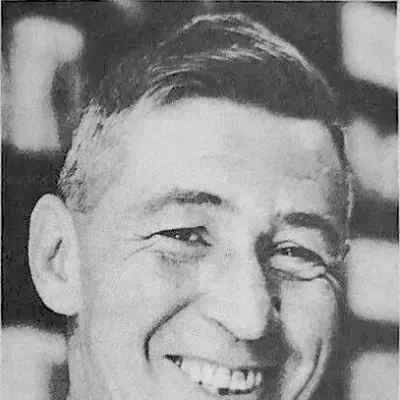
Jan Palach
Human Design Chart
Biography
The Human Design of Jan Palach: Projector 6/2
Projector 6/2 — Design at a Glance
Jan Palach's design inclined towards focused, intense perception. As a projector, he did not have a constant, intrinsic source of life energy but worked in phases of high activity, followed by necessary rest periods to avoid burnout. His aura acted like a bright flashlight, directly illuminating areas in the environment that were still in darkness. He immediately saw what was wrong in systems and had the ability to bring 'light into the dark' for others.
However, this mechanism also meant that a direct approach to errors in the environment was often perceived as unpleasant or aggressive, similar to a light beam directly in the face. The optimal strategy for his design was to wait for a respectful and sincerely meant invitation from others rather than initiating himself. If a projector lives according to this principle, he is rewarded with success. Deviating from it leads to the non-self theme of 'bitterness'. Jan Palach's structure thus showed the tension between the ability to identify systemic errors immediately and the necessity to share these insights only when invited to do so to avoid resistance and conserve energy. His undefined Sacral Center required these pauses, as societal structures often did not understand this rhythm.
Splenic Authority
Jan Palach possessed authority in the Spleen. This configuration required both his Emotional and his Sacral Centers to be open, which identified him as a projector or manifestor. His inner guidance came from the Spleen Center, his biological alarm system and the source of his survival intelligence. This gave him a spontaneous, intuitive knowledge of whether a situation or environment was right for him. His physical well-being and intuition served as reliable indicators of his health and safety.
Decisions had to be made in the immediate moment for him. The first, spontaneous impulse was the correct path, as it directly served the protection of the self. This ability allowed him to rigorously distance himself from harmful influences and take care of himself. However, this impulse was very subtle and only appeared once in the moment. It could easily be overshadowed or ignored by other influences, requiring high vigilance. A temporary withdrawal could be helpful in decision-making.
Since the rightness was only recognizable in the current moment, plans were often subject to short-term changes. Long-term commitments were therefore difficult. His design required a lot of free space and flexibility rather than rigid obligations. Spontaneous action was prioritized to not block the intuitive guidance of the Spleen.
The 6/2 Profile — Role Model / Hermit
Jan Palach's design inclined towards deep introspection and the protection of individuality. As a person of Profile 6/2, the role model, he went through a phase of experimentation and trial-and-error learning in his youth. This was the time of the 3-line, in which he tried out various roles before withdrawing to reflect from a distance. This need for withdrawal served healing and the gaining of wisdom that he could later share as a role model.
Parallel to this, the mechanism of self-defense was at work. His design emphasized the necessity of protecting his individuality when it was threatened by interference. This was not about physical survival in a narrower sense, but about the survival of personal truth. Jan Palach showed himself to be someone who knew that expressing new truths could be dangerous. His configuration required the ability to distribute and delegate power rather than holding it alone. This was the learning theme of the 6-line: leadership through recognizing the role of each individual. In his youth, before the full activation of the 6-line, he faced the challenge of giving up tolerance when his survival as an individual was threatened. He projected knowledge outward, which often met with interference, as he knew what others had not yet seen.
Split Definition — Defined & Open Centers
Jan Palach's Human Design profile indicated a tendency towards consequent, strong-willed communication. His defined Heart Center provided him with consistent willpower and a drive to keep promises, while his defined Ajna Center fostered clear, independent thinking. These concepts flowed directly into his defined Throat Center, enabling him to speak what he thought and articulate his convictions with a clear voice. Supported by his defined G Center, he had a firm identity and inner direction, independent of external validation. His defined Spleen Center allowed for intuitive, spontaneous judgments in the present moment, which could not be rationalized.
At the same time, he was vulnerable to external influences through his open centers. His open Head Center tended to absorb mental pressure and questions from others, leading to confusion if he did not trust his inner authority. His open Sacral Center lacked a constant energy flow; he absorbed the vital energy of his environment, which could lead to exhaustion if he neglected his boundaries. His open Solar Plexus Center amplified foreign emotions, making him feel emotionally overwhelmed without recognizing these feelings as his own. Additionally, his open Root Center absorbed external stress and adrenaline, leading to a feeling of pressure and chaos if he did not recognize that this stress did not originate from him. This combination of a firm inner structure and high sensitivity to external fields shaped his way of engaging with the world.
Channels for devotion, reflection and structured insight.
Jan Palach was someone who gathered experiences to translate them later into a deeper truth. This attitude resulted from the Lost Son Channel 13-33. He listened, stored information, and then withdrew to reflect. This process served the maturation and filing of memories to establish continuity.
At the same time, he had the ability to articulate innovative perspectives clearly. The Channel of Structuring 23-43 connected his mind with the expression center. Spontaneous insights were assimilated and formulated, allowing new ways of thinking to emerge. The challenge lay in the timing: His unique thoughts needed the right moment to be understood and recognized, rather than being dismissed as foreign.
Another influence came from the Channel of Devotion 26-44. Here, an instinctive awareness worked together with the power of the ego. Jan Palach could intuitively assess what society or the 'tribe' was missing and used his willpower to promote solutions or ideologies that were seen as improvements. This gave him the role of a messenger, convincing through his sense of needs.
Additionally, individual gates contributed to complexity: Gate 7 projected leadership patterns and future perspectives. Gate 24 fostered mental mutations and renewal at his own rhythm. Gate 1 emphasized uniqueness in the present moment, while Gate 35 demanded change through interaction. Gate 20 anchored the authentic self in the present, Gate 11 used visual memories for situational assessment, and Gate 12 brought poetic restraint into expression. Gate 48 recognized deep patterns, even if the implementation could be frustrating, and Gate 15 adapted to the collective rhythm. This constellation shaped a person who navigated between inner reflection, innovative expression, and instinctive conviction.
Tribal Circuitry — Circuit Signature
Jan Palach's design inclined towards structured expression and emotional reflection. His Knowledge Circuit connected the Ajna with the Throat Center via the Structuring Channel. This promoted the ability to pour mental concepts into clear, audible forms and transform new insights through speech. Simultaneously, his Meaning Circuit connected the Throat with the Identity Center via the Lost Son Channel. This was about sharing emotional waves and finding meaning in past experiences to communicate them to others. Both circuits used the Throat Center as a common expression channel but remained energetically separate, as there was no direct connection between Ajna and Identity. A third aspect was seen in the Ego Circuit, which linked the Heart and Spleen Centers. The Devotion Channel emphasized cooperation, giving and taking, and resource creation through mutual support, without the constant life force of the Sacral Center. Jan Palach thus moved between structured knowledge, emotional meaning-making, and cooperative resource-building. This shared definition meant that these areas worked as separate, parallel existing forces, not as a continuous flow. His energy was pulsing and cyclical, marked by the need to take pauses for regeneration, as his Sacral Center was not defined.
Left Angle Cross of Masks 2
Jan Palach's design tended towards a specific kind of self-presentation that was less based on genuine self-expression and more on the assumption of roles expected from the outside. This configuration, the left cross of masks, described a life task where the true identity often remained hidden behind a facade. It was not about conscious deception in the everyday sense, but rather a deep inner compulsion to present oneself as the environment or situation seemed to require, rather than acting from one's own, unclouded center.
This mechanism worked as a constant inner pressure to adapt or hide one's personality. Jan Palach was thus marked by a discrepancy between what he presented outwardly and what he actually felt or thought. The energy of this cross challenged him to clothe himself in masks to interact with the world, which often led to a feeling of estrangement from his essence. His actions and demeanor were often reactions to external expectations he internalized, rather than expressions of a free, unadulterated will. This created a dynamic in which authenticity constantly yielded to the necessity of adaptation.
Projector · Splenic Authority — Synthesis
Jan Palach was a projector whose life was characterized by a deep recognition of patterns and a capacity to illuminate what was hidden or flawed in his environment (Gate 13/33). This inner compass, fueled by the Spleen Authority, provided spontaneous, instinctive clues about rightness and wrongness, and demanded a clear demarcation from harmful influences. The defined Ajna Center amplified his ability to form concepts and influence others through his mental clarity, while his Profile as a role model and natural talent suggested that he gained wisdom through intense self-experience, which he could later impart.
A central paradox in his design lay in the combination of his projector nature and his ability to develop and disseminate concepts through the defined Ajna Center. As a projector, he was designed to act upon invitation and lead others by recognizing their potentials. Simultaneously, the Knowledge Circuit pointed to a drive to generate and propagate his own insights. This tension between waiting for recognition and the inner need to initiate and transform created a dynamic field in which wisdom and the pointing out of errors were inseparable.
3 Defined Channels
Incarnation Cross - Left Angle Cross of Masks 2
Solar Return
The Solar Return shows the moment when the sun returns to its exact birth position - your personal solar year.
Life Cycles
Discover the life cycles with a detailed triple view (birth chart, cycle chart, composite).
Human Design Profile
- Type
- Projector
- Strategy
- Wait for the respectful invitation
- Authority
- Splenic Authority
- Profile
- 6/2 - Role Model / Hermit
- Definition
- Split Definition
- Incarnation Cross
- Left Angle Cross of Masks 2
- Date of Birth
- 11.08.1948 03:27
- Place of Birth
- Prague, Czech Republic
Frequently Asked Questions
Which Human Design Type was Jan Palach?
Which profile did Jan Palach have in Human Design?
What authority did Jan Palach have?
Which incarnation cross was active for Jan Palach?
When was Jan Palach born?
Discover your own Human Design
Are you also a Projector? Find out in a personal reading how to unfold your leadership qualities and recognize the right invitations.
More Personalities
Back to overviewSissy Spacek

Alain-Fournier

Anémone

Ann-Margret

Bourvil

Hergé