
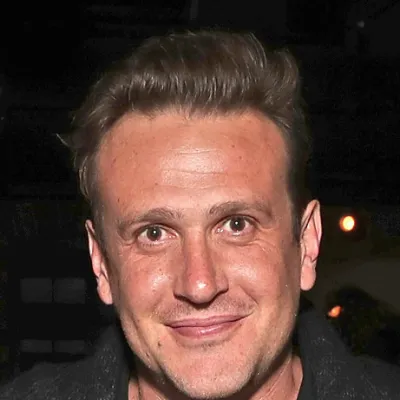
Jason Segel
Human Design Chart
Biography
In Forgetting Sarah Marshall, a 2008 film he wrote and Apatow produced, Segel's lead character writes a "Dracula" musical performed by puppets. He also appeared in the most prominent scene containing full frontal nudity in the film, a rare display by an American Hollywood actor.
Segel dated his Freaks and Geeks co-star Linda Cardellini for five years following the show's cancellation. He dated Michelle Williams from 2012 to 2013. From December 2013 to April 2021, Segel dated photographer Alexis Mixter.
What does Generator 3/5 mean for Jason Segel?
Generator 3/5 — Design at a Glance
Jason Segel's design points to a tendency towards great endurance and high energy potential, comparable to a workhorse that provides power when it burns for the task. As a Generator, he had a lot of sacral energy, but it was unleashed not through self-initiative, but through reaction to external impulses. The motto was clear: don't initiate, but wait until life sends a signal and the sacral center responds with an inner 'yes'.
This mechanism contained two essential stumbling blocks. On the one hand, there was the risk of energy waste and burnout if he engaged in things that did not intrinsically bring him joy. On the other hand, there was the danger of being held back from his heart project, even though the inner motivation was still fully present. If he lived in harmony with this strategy – that is, through reactive action based on his gut feelings – his design rewarded him with deep satisfaction and fulfillment. If he, however, constantly initiated himself without waiting for these inner responses, it inevitably led to lasting frustration and a noticeable lack of energy. His path to effectiveness therefore lay not in pushing forward, but in precisely reacting to what really spoke to him.
Emotional Authority
Jason Segel's design points to emotional wave movements that made his perception of the world strongly dependent on his current mood. For him, the inner authority was the defined Emotional Center. In Human Design mechanics, this authority is considered prioritized: whenever the Emotional Center is activated, it takes the lead in decision-making, regardless of which other centers may be defined. This meant for Jason Segel that he was subject to a permanent fluctuation of feelings. At one moment, he could be totally enthusiastic about something, in the next moment the same situation felt negative. His immediate feeling was, however, only a snapshot, a first impression that did not necessarily correspond to the deeper truth. Quick, spontaneous decisions out of this emotional heat would often have had negative consequences for him. Instead, his design required patience. The more time he took to let a decision mature, the deeper and more comprehensive he could perceive the situation. This meant letting himself be properly delayed, thinking decisions over multiple times, and letting them sleep. Over time, the intense feelings subsided, he gained emotional distance, and clarity and calmness set in. Only then was he through the process and could make a well-founded choice that positively influenced his life path.
The 3/5 Profile — Martyr / Heretic
Jason Segel's design is characterized by the Profile 3/5, which marks him as a heroic adventurer and humorous rebel. He fits the image of a cool storyteller who possesses a rich treasure of practical life experiences and enjoys presenting them. The Line 3, the line of the experimenter, causes him to initially give little credence to predefined beliefs; instead, he must try things out himself. He learns from these experiments and the associated failures. This self-acquired knowledge he later uses to solve problems of others – the task of Line 5, the Hero Line.
This combination of practical experience and problem-solving orientation makes him attractive to others who want to learn from his insights. The role of the Helper naturally flatters him, but can be painful if he fails in front of an audience. Line 3 knows only its own process of trial and error under imposed limitations. It works with constraints and releases bindings without achieving transcendence. Line 5, on the other hand, represents universality and discipline. It makes a strong impression because it knows the entire process and protects or rebels against values. Continuity is maintained as long as it has been successful, but the fifth line knows that what works does not have to last forever.
Split Definition — Defined & Open Centers
Jason Segel's Human Design profile suggests a tendency towards constant mental pressure, paired with a strong, available willpower. His defined Head and Ajna Centers generate a perpetual impulse to question and form concepts – an energy that cannot be directly put into action but serves as inspiration. This mental process contrasts with his defined Heart Center, which grants him a clear willpower and a desire for control over resources. He was someone who wanted to determine his own life, keep promises, and seek recognition for his contributions.
At the same time, he had a defined Sacral Center, indicating a vast source of vital energy. However, this energy was only available through reactions to external stimuli, not through mental initiatives. His defined Solar Plexus Center acted as an inner authority: He was designed to wait out emotional waves before making decisions to gain clarity. His defined Root Center provided a constant adrenergic pressure to move forward in the world and survive.
The open centers shaped his vulnerabilities. His open Throat Center led to a tendency to seek attention or speak up when not invited properly. He tended to question whether he was noticed, rather than trusting that the open throat would attract attention on its own. His open G Center meant he lacked a fixed identity or direction. He relied on others to initiate him to find the right place and love, rather than seeking these things himself. His open Spleen Center made him vulnerable to survival fears and the temptation to cling to uncertain things to simulate a sense of well-being he could not generate himself.
Channels for change, intimacy, community and mental clarity.
Jason Segel's Human Design profile suggests a tendency towards unexpected, profound transformation processes, paired with a strong drive for intimacy and the need to tell complex stories. This configuration is marked by someone who is characterized by inner tension and emotional wave movements.
The Channel of Mutation 60-3 connects the Root Center with the Sacral Center. It brings a pulsating, often melancholic energy that works towards evolutionary change. Jason Segel had to learn to accept limitations and wait patiently for new mutations to set in, rather than rationalizing moods. This energy is conditioning on his environment and forces adaptation or transformation.
Parallel to this, the Channel of Union 59-6, which connects the Sacral Center with the Solar Plexus Center, roots itself in the power of intimacy, a blend of sexuality and emotional waves of pleasure and pain. Jason Segel sought relationships that were personal and fruitful. However, his desire to merge required patience, as the emotional wave needed time to find clarity before deep connections could stabilize.
The Channel of Community 37-40 connects the Solar Plexus Center with the Heart Center. It emphasizes the importance of friendship and the feeling of belonging. Jason Segel sought his place in the whole and understood the necessity of making good deals and agreements that benefit all parties. This energy promoted the understanding of how to build bridges between individuals to create a harmonious community.
Additionally, the Channel of Abstraction 64-47 shaped his mental experience. It connects the Head Center with the Ajna Center and ensures that every experience is filtered through a kaleidoscope of mental images. Jason Segel was under the pressure to find a story that made sense, and his reward was uncovering inspiring perspectives that he could share with others, although his mind could never offer absolute certainty.
Individual Gates like Gate 56 (Inspiration, Storytelling) and Gate 50 (Protective Reflex, Tradition) supported these patterns by promoting the expression of mental processes through vivid representation and providing a conservative, value-oriented protective reflex.
Tribal Circuitry — Circuit Signature
Jason Segel's Human Design profile suggests a tendency towards impulsive, mutative impulses that flow directly from life force into root energy. The Knowledge Circuit connected his Sacral and Root Centers through the Channel of Mutation. This generated a pulsating, acoustic energy that promoted deviations from the known and brought forth new expression from his individuality. Parallel to this, a separate, visual dimension was evident: The Meaning Circuit connected his Head and Ajna Centers through the Channel of Abstraction. Here, it was about reflecting on the past and finding meaning in past events, driven by cyclical, wave-like emotional patterns. These two areas did not form a direct connection but existed as adjacent forces. Another aspect involved cooperation: The Ego Circuit connected his Heart and Solar Plexus Centers through the Channel of Community. This promoted a give-and-take relationship and mutual support, but required pauses for resource regeneration. Finally, the Hunter Circuit connected his Sacral and Solar Plexus Centers through the Channel of Union. This brought in primal energies of protection, care, and preservation of the family. Overall, these four circuits shaped a pattern of innovative mutation, emotional meaning-making, cooperative support, and instinctive protection, with the shared definition ensuring that these energies worked as separate, not directly connected streams.
Right Angle Cross of Laws 4
Jason Segel's Human Design suggests a tendency towards a deep, often unspoken connection to higher principles. His inner orientation was less about loudly proclaiming truths and more about a quiet, almost fated commitment to what he felt was essential. This aligns with the mechanics of the right cross of Laws 4: It describes a personality that does not actively seek answers but receives them in moments of inner stillness and surrender. The energy of this cross acts like an anchor, stabilizing the person in times of confusion or change by binding them to unchanging, deeper laws. Jason Segel showed himself to be someone who did not intellectually analyze these principles but simply lived them – often intuitively, sometimes unconsciously. His strength lay in the ability to radiate this quiet certainty without needing to explain it. It was a kind of inner peace that others perceived as trustworthy and grounded, even if they themselves could not always articulate the exact reason. This configuration shaped him as someone who found his greatest strength in the simplicity and commitment to the essential, far from external noise or complex justifications.
Saturn Return · Uranus Opposition — Life Cycles
Jason Segel's Human Design suggests a tendency towards sudden, disruptive turning points that require deep reorientations. This structure is evident in the Uranus opposition, a cycle that challenges established bonds and routines to enforce individual freedom and authenticity. In 2021, at the age of 41, he separated from Alexis Mixter. This event marked not only a private end but a necessary break in his design, clearing the path for a new, more independent life phase. The mechanics of this opposition often require breaking free from structures that limit the true self, even if the process is painful.
Parallel to this, his chart shows the dynamics of the first Saturn return. This cycle condenses years of groundwork into a stable, public identity. In 2005, at 25 years old, Jason Segel began his role as Marshall Eriksen in “How I Met Your Mother”. For his design, this was the moment when inner potentials manifested in a stable, long-term career form – here meaning “solidified” or “became visible”. While the Uranus cycle later stood for flexibility and separation, the Saturn return created the necessary foundation and recognition. Both cycles work together: one builds the foundation of the public persona, the other secures inner integrity through regular, necessary changes. This interaction shapes his life as a balance between stable projection and dynamic adaptation.
Generator · Emotional Authority — Synthesis
A central red thread in this design is the dynamic interaction between inner drive and the need to channel it. Sacral energy (Generator type) seeks tasks that truly inspire, while the defined Head Center (and the associated knowledge circuit) constantly generates pressure to understand, question, and find new ways. This interplay leads to a deep need to learn through practical experimentation (Line 3) and then share this knowledge (Line 5), which in turn nourishes the sacral energy and continues the cycle. Emotional authority demands patience and allowing a maturation process to find the right direction for this energy flow.
The central paradox lies in the tension between the mutative potential (Channel 3-60) and the need to give in to one's emotional waves (emotional authority). The channel of mutation suggests a drive for change and trying new things, while the emotional wave requires pausing and waiting for clarity. This leads to an inner tension field where the desire for innovation meets the necessity of not rushing decisions – a give-and-take that is reflected in the documented events, where career successes (2005) and personal turning points (2021) stand in the sign of transformation and emotional processing.
4 Defined Channels
Incarnation Cross - Right Angle Cross of Laws 4
Solar Return
The Solar Return shows the moment when the sun returns to its exact birth position - your personal solar year.
Life Cycles
Discover the life cycles with a detailed triple view (birth chart, cycle chart, composite).
Human Design Profile
- Type
- Generator
- Strategy
- To respond - wait for something to respond to
- Authority
- Emotional Authority
- Profile
- 3/5 - Martyr / Heretic
- Definition
- Split Definition
- Incarnation Cross
- Right Angle Cross of Laws 4
- Date of Birth
- 18.01.1980 21:33
- Place of Birth
- Santa Monica, CA, United States
Frequently Asked Questions
What is Jason Segel's Human Design type?
What Profile does Jason Segel have in Human Design?
What Authority guides Jason Segel?
What is Jason Segel's incarnation cross?
When was Jason Segel born?
Discover your own Human Design
Are you also a Generator? Find out in a personal reading how to use your sacral energy correctly and discover deep satisfaction.
More Personalities
Back to overviewSissy Spacek

Aaliyah

Alexia

Anémone

Angèle

Ann-Margret
