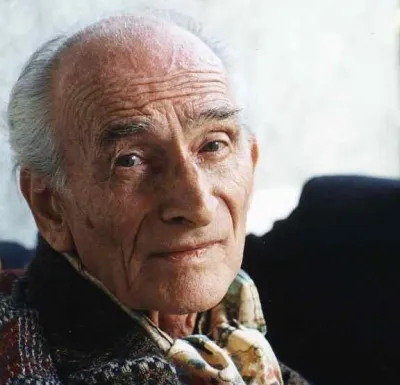
Jean-Baptiste Baudin
Human Design Chart
Biography
Human Design Analysis: Jean-Baptiste Baudin as Manifesting Generator 3/5
Manifesting Generator 3/5 — Design at a Glance
Jean-Baptiste Baudin revealed himself as a person with a unique hybrid energy configuration. As an Manifesting Generator, he possessed the constant, sacral life force of Generators paired with the lightning-fast action capability of a Manifestor. This combination allowed him to skip steps and quickly draw things into his life.
His strategy involved not initiating but reacting to external impulses. Only when his Sacral Center signaled a clear "yes" did he act. Without this inner confirmation, his nature tended to omit important stages or get distracted by too many parallel projects. Such behavior often led to frustration as the speed without strategic alignment hit its limits.
With correct application – that is, waiting for the reaction and ensuring the approval of his internal compass – Jean-Baptiste Baudin found deep satisfaction in creation. He benefited from a playful mode where he could work on multiple tasks simultaneously without feeling overwhelmed. The requirement to finish one thing before starting another stood against his natural way of parallel working. His true strength unfolded when seeking variety and channeling his energy through playing with various impulses, always guided by the confirmation of his Sacral Center.
Emotional Authority
Jean-Baptiste Baudin's decision-making followed a compelling rhythm of delay. His design required that he did not orient himself to the first impulses but instead let patience prevail until emotional waves subsided. This structure resulted from his emotional authority, carried by the defined Solar Plexus Center. In Human Design mechanics, this authority always takes precedence over other defined centers; it determines how clarity emerges.
The Solar Plexus Center was subject to a constant up and down of feelings. Jean-Baptiste Baudin saw the world always colored by his current mood: in one moment he could be enthusiastic about something, in the next he might negatively evaluate the same situation. His immediate feeling was merely a snapshot, not a reliable compass for long-term direction setting. Quick, spontaneous decisions made from this emotional heat often proved unreliable or even harmful.
The truth of his authority only revealed itself with time delay. Jean-Baptiste Baudin had to let decisions "sleep on" in order to gain distance from the initial charge. This process of stepping back and rethinking multiple times was not a weakness but rather the necessary method to achieve clarity. Only when intense feelings subsided and calmness set in could he recognize what truly mattered. This mechanism secured his ability to gain deep insights by bleeding off the noise of passing emotions and waiting for the essential truth to emerge.
The 3/5 Profile — Martyr / Heretic
Jean-Baptiste Baudin revealed himself as someone who acquired knowledge not from books but through personal experimentation and the associated failures. His design laid a foundational attitude of the skeptical experimenter: He initially believed nothing until he had tested it himself. This attitude stemmed from his third Profile line, which demanded adaptability and often required breaking laws or norms to release old bindings. Support from others was essential for him to hold onto his own values.
From these practical experiences, however, he created something new: He became a storyteller. His fifth Profile line used the accumulated insights to solve other people's problems and attract attention. Through his storytelling skills, Baudin was attractive to those around him who wanted to learn from his life experiences. He embodied the image of the heroic adventurer or humorous rebel. Yet this role carried an internal tension: While the world projected him as a rescuer inspiring with unconventional solutions, he had to be able to fail publicly in order to learn. This public failure could be painful but was necessary for building the treasure trove of practical experience that he then passed on. His nature was marked by this interplay between private experimentation and public presentation of results.
Split Definition — Defined & Open Centers
Jean-Baptiste Baudin was someone who operated under constant mental pressure, asking questions and formulating answers. His design indicated a tendency to generate inspiration continuously: The defined Head and Ajna centers created a permanent inner drive for thinking and understanding. This mental impulse flowed directly into his defined Throat Center, allowing him to express his thoughts and concepts reliably. He was a source of mental clarity for others, as his aura encouraged those around him to think along with him.
This communicative strength was supported by his sacral energy. As a Generator, Jean-Baptiste Baudin possessed vital life force that, however, functioned reactively. His strategy involved waiting and reacting to life rather than initiating it himself. Only through this reaction could he fully utilize his energy for tasks that fulfilled him. Yet, his decision-making was more complex: The defined Solar Plexus Center as an emotional authority demanded patience. Truth did not reveal itself in the moment but only after navigating the emotional wave. He had to learn to control impulses and wait for clarity to avoid false conclusions based on transient feelings.
At the same time, his open centers shaped his vulnerabilities. His open G Center meant he lacked a fixed identity or direction, adapting situatively to his environment. He tended to seek external validation for his path and could feel lost in inappropriate contexts. Similarly, his open Heart Center was lacking persistent willpower, making him susceptible to pressure to prove himself through promises or competition – often leading to frustration. Additionally, his open Spleen Center was sensitive to health and safety; he easily absorbed the fears of others and tended to make spontaneous decisions to enforce a sense of control or well-being, which could leave him uncertain in the long run. His path involved using these open fields not as deficits but as spaces for wisdom through observation.
Channels for change, focus, curiosity, feeling and abstraction.
Jean-Baptiste Baudin was characterized by a fundamental tension between impulsive change and calm analysis. His design was marked by two massive format energies in the Root-Sacral Switch, determining his entire aura. The Channel of Mutation 60-3 connected the Gate of Limitation with that of Ordering. This configuration generated a pulsating rhythm of melancholy and evolutionary drive. Baudin had to learn to accept limitations and endure the confusion of a new beginning to create order from chaos. This energy was unpredictable; it only worked when he did not argue against inner pressure but patiently waited for his sacral reaction.
Simultaneously, the Channel of Concentration 52-9 shaped his essence. Through the Gate of Non-action and that of Focusing, this channel promoted silent intensity and logical refinement. Here, it was about analyzing details step by step and filtering out distractions. This duality led to Baudin acting either in a state of active pulsing or focused stillness. A standstill of both processes resulted in melancholy.
In the mental realm, the Channel of Abstraction 64-47 influenced him. It connected the Gate of Confusion with that of Understanding, causing Baudin to filter experiences through kaleidoscopic images. This mental unrest served not problem-solving but searching for an inspiring perspective or story that only became clear in retrospect.
Socially, the Channel of Openness 22-12 determined his interactions. Through the Gate of Openness and that of Caution, his communication depended on emotional waves. He spoke only when his mood allowed it; otherwise, he withdrew to avoid misunderstandings. This was complemented by the Channel of Curiosity 11-56, which marked him as a storyteller. It linked ideas into narrative parables less for self-reflection but to inspire others and offer new perspectives. Additional influences like Gate 50 (Tradition) or Gate 14 (Power) followed this overarching rhythm of mutation and concentration.
Collective Circuitry — Circuit Signature
Jean-Baptiste Baudin's design was a split configuration where two independent energetic blocks existed parallel to each other. The first block connected the Sacral with the Root Center, forming the basis for endurance and survival instincts. This flow worked in the Knowledge Switch through the Channel of Openness, linking Throat and Solar Plexus Centers. Here it was about expressing one's identity via emotional waves and pulsing creativity. Parallel to this, mutations from the 3-60 channel activated the ability to transform and deviate from the known. In the Understanding Switch, the same Sacral-Root connection manifested through the Concentration Channel (9-52), enabling focused, logical strategies for the future – free of emotional influence.
The second, completely separate block included Head, Ajna, Throat, and Solar Plexus Centers as well as the Head Center in the Meaning-Finding Switch. Here, the Abstraction Channel (64-47) linked mental impulses with expression while Curiosity (11-56) drove the search for hidden connections. This area served reflection on past experiences and cyclical sharing of insights from the past. Since these two groups were not directly connected, Jean-Baptiste Baudin experienced rational future planning and emotional past reflection as separate, parallel forces rather than a continuous flow. The consciousness stream of meaning-finding in the Ajna Center underscored the collective dimension of these mental processes.
Right Angle Cross of Laws 3
Jean-Baptiste Baudin's Human Design configuration bore the imprint of the right cross of laws. This arrangement combined a deep, often unconscious search for inner order and spiritual understanding with practical, sometimes stubborn perseverance in everyday life. It was not merely an academic interest but a path aimed at integrating higher truths into material reality.
The mechanics of this cross describe a tension between the need for transcendence and the demands of daily existence. Jean-Baptiste Baudin showed himself to be someone who did not separate these two poles, but rather tried to unite them. His energy was directed towards recognizing patterns – whether in social interactions or personal relationships – and turning these insights into concrete action. This required patience and the ability to accept setbacks as part of a larger learning process.
It was about gradual, steady deepening, not quick success. Jean-Baptiste Baudin learned through experience by confronting recurring patterns and drawing from them. The challenge lay in trusting his own intuition without being distracted by external expectations. His path was marked by the realization that true freedom did not lie in withdrawing from the world but in consciously shaping his actions within it. This attitude significantly influenced his interactions and decisions.
Saturn Return · Uranus Opposition — Life Cycles
Jean-Baptiste Baudin's life ended abruptly and violently, a fate closely linked to the dynamics of his Uranus opposition. This astrological configuration marks a profound turning point in the life cycle where old structures are often broken by sudden, unexpected events. For Jean-Baptiste Baudin, this upheaval occurred in 1851 when he was forty years old and killed on a barricade during Prince Louis Napoleon Bonaparte's coup d'état.
The Uranus opposition acts as a catalyst for radical changes; it demands detachment from the known and can lead to extreme situations where individuals are confronted with societal upheavals. In Jean-Baptiste Baudin's case, this energy manifested not as an internal transformation but as an external, fatal clash with the political turmoil of his time. His death on the barricade stands exemplary for the destructive power of this phase: established order was attacked, and Jean-Baptiste Baudin found himself amidst this conflict without surviving it.
This event underscores the intensity of Uranus' influence. It was not a gradual change but an abrupt end conditioned by historical circumstances. The opposition of Uranus shows here its dark side: it can lead to isolation or even loss when external conditions become too strong. Jean-Baptiste Baudin's biography ends at this point of highest tension where personal stances met political violence and his life was abruptly cut short.
Manifesting Generator · Emotional Authority — Synthesis
Jean-Baptiste Baudin lived a life deeply marked by the tension between inner exploration and outer expression. His Manifesting Generator design, fueled by defined sacral energy and connected to the Throat Center, points to someone capable of quickly initiating things – yet with the inherent risk of skipping steps or getting lost in too many projects at once. The openness of his centers for identity (G Center) and well-being (Spleen Center) intensified this dynamic by making him vulnerable to external influences and emphasizing the need to heed his inner authority – the emotional center. The connection between Head and Ajna Centers generated a constant mental pressure to understand and question things, which was further amplified through the channels of abstraction and curiosity.
A central paradox in Jean-Baptiste Baudin's design lies in the interplay between his potential for action and his open emotional wave. He possessed the energy to initiate things but was also dependent on reacting to life and making decisions only after waiting for emotional clarity. This tension led him into a constant process of experimenting and reflecting – a cycle of quick action followed by review, ensuring that his deeds aligned with his inner truth. His death during a political uprising underscores this dynamic: a person ready to act quickly (manifesting) but ultimately at the mercy of circumstances (open centers).
5 Defined Channels
Incarnation Cross - Right Angle Cross of Laws 3
Solar Return
The Solar Return shows the moment when the sun returns to its exact birth position - your personal solar year.
Life Cycles
Discover the life cycles with a detailed triple view (birth chart, cycle chart, composite).
Human Design Profile
- Strategy
- To respond - wait for something to respond to
- Authority
- Emotional Authority
- Profile
- 3/5 - Martyr / Heretic
- Definition
- Split Definition
- Incarnation Cross
- Right Angle Cross of Laws 3
- Date of Birth
- 23.10.1811 06:00
- Place of Birth
- Nantua, France
Frequently Asked Questions
What is Jean-Baptiste Baudin's Human Design type?
What Profile did Jean-Baptiste Baudin have in Human Design?
Which authority guided the decisions of Jean-Baptiste Baudin?
Which incarnation cross determined the life path of Jean-Baptiste Baudin?
When was Jean-Baptiste Baudin born?
Discover your own Human Design
Are you also a Manifesting Generator? Find out in a personal reading how to unfold your multi-talents and direct your energy wisely.
More Personalities
Back to overviewAldair

Alizée

Angeli

Arletty
Artus

Balthus