
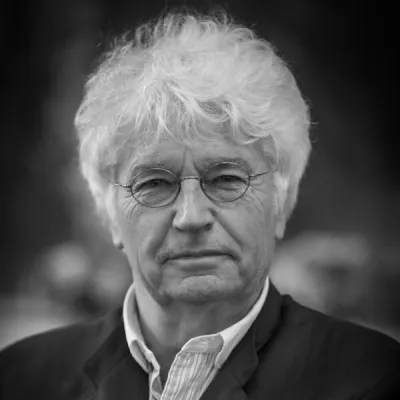
Jean-Jacques Annaud
Human Design Chart
Biography
His work includes his feature debut, "Black and White in Color," 1977, for which he earned an Oscar for Best Foreign Language Film. Establishing his talent for making period pieces, Annaud subsequently made "Quest for Fire," 1981, "The Name of the Rose," 1986 and "The Bear," 1988, his most successful film, "Seven Years in Tibet," 1997, was his first full-length American feature.
Human Design Analysis: Jean-Jacques Annaud as Manifesting Generator 5/1
Manifesting Generator 5/1 — Design at a Glance
Jean-Jacques Annaud's design featured a hybrid energy structure: the constant power of a Generator paired with the lightning-fast implementation speed of a Manifestor. This configuration allowed him to leapfrog steps at opportune moments and quickly draw results into his reality. However, this efficiency carried a specific risk. Without prior confirmation from his Sacral Center – the inner 'Yes!' – he tended to rush ahead or start multiple projects simultaneously. Such an approach often led to overlooking crucial intermediate steps, ultimately resulting in frustration, the typical non-self theme of this type.
The underlying mechanics strictly required the strategy of responding rather than initiating. Only when he waited for external impulses and his Sacral Center clearly confirmed action could his speed be productive. In this state of proper alignment, his work style shifted into a playful mode. Here, multitasking was no obstacle but a source of deep satisfaction. The ability to act quickly while seeking variety became a strength only when it wasn't initiated by his own will but rather as a response to life.
Emotional Authority
Jean-Jacques Annaud's design inclined towards emotional detachment in decision-making. Spontaneous impulses often appeared misleading in his configuration, colored by the wave movement in the defined Emotional Center. This center served as his inner authority – a mechanism that always took precedence over other defined centers.
The emotional wave generated a constant up and down of feelings. In one moment something could be totally inspiring, in the next the same situation seemed negative. Such an initial impression was merely a snapshot, not necessarily the truth. Quick decisions based on this immediate emotion risked having negative consequences.
Instead, his design required patience and time. By hesitating and reconsidering decisions multiple times, Jean-Jacques Annaud allowed intense feelings to subside. This process gained emotional distance. Only when clarity and calm entered was the ripening process complete. This approach was especially essential for long-term, life-defining decisions to ensure that the choice was based on a stable inner truth rather than a fleeting mood.
The 5/1 Profile — Heretic / Investigator
Jean-Jacques Annaud's design created tension between his magnetic appeal as a problem solver (Line 5) and his deep need for isolated research and privacy (Line 1). He tended to attract others through his profound knowledge, who sought solutions from him. This projection risked an energetic overflow if clear boundaries were lacking.
Profile 5/1 describes heroes who use their knowledge base to serve others. Line 5 ensures that people want to know what a 5/1 has to offer. Without protective mechanisms, this quickly leads to exhaustion, akin to an expert drained after hours of conferences and finding an overflowing inbox.
To preserve this energy, it was essential for Jean-Jacques Annaud to learn to say 'No'. Only then could he maintain the balance between the benefit of study (Line 1) and problem-solving for others. Line 1 requires security and study to avoid negative reactions and enable positive mutations. Gate 39 supports this through analyzing obstacles and selecting negative relationships. Long-term isolation can indeed be destabilizing, but collective exchange must be dosed so that inner stability is not compromised. Through conscious boundary setting, he could optimally utilize his gifts without exhausting himself in the role of an all-knowing savior.
Split Definition — Defined & Open Centers
Jean-Jacques Annaud's Human Design configuration established a tendency towards immense internal structure and consistent radiance. His strength lay in the ability to translate vital energy through emotional depth and existential intuition into clear communication, supported by a firm identity. Defined centers like Sacral, Root, Solar Plexus, G Center, Spleen, and Throat created this foundation. The defined Sacral Center generated a constant energy source that only became effective through reactions to life – not through initiatives. Waiting strategically was essential to avoid frustration.
The defined Solar Plexus Center functioned as an emotional authority: truth revealed itself only after the emotional wave had passed, not in impulsive moments. The defined Spleen Center provided spontaneous, intuitive judgments at the moment of survival and well-being, while the defined G Center guaranteed a reliable self-identity and inner direction. The defined Throat enabled these internal processes – whether from the Sacral, Emotional, or Intuitive – to be carried outward as a consistent voice.
Simultaneously, open centers like Head, Ajna, and Heart showed flexibility that excluded mental fixation or ego-driven will. The open Head Center tended to be distracted by doubts or foreign questions if not anchored in inner authority. The open Ajna Center allowed for open, flexible thinking without the burden of defending concepts as absolute truth. Particularly, the open Heart Center meant Jean-Jacques Annaud was not defined by constant willpower or the pressure to keep promises and prove his worth. This openness protected against exhaustion from constant proving but required discipline to avoid getting entangled in commitments that did not support his energy base. The tension lay between powerful inner strength and the need for patience, rather than impulsively or consciously fighting against the current.
Channels for intimacy, leadership, reflection, meaning and determination.
Jean-Jacques Annaud's Human Design configuration established a persistent, deep yearning for intimacy and merging. This setup allowed him to quickly enable confidentiality through his aura and promote fertility in relationships, but required specific timing: waiting until emotional clarity was achieved. This contrasted with other energies of his design that were more situational.
The Pairing Channel 59-6 was the dominant element as a Personality Marker. It connected the Sacral Center to the Solar Plexus Center through Gate of Sexuality (59) and Gate of Friction (6). This tribal channel rooted in powerful Quantum Energy called Intimacy. The sexuality of Gate 59 and the emotional wave from pleasure and pain at Gate 6 brought people into relationships that were very personal, penetrating, and potentially fruitful. Since a defined Solar Plexus always represents inner authority, this emotional wave required patience. Waiting for the wave cycle allowed Jean-Jacques Annaud to perceive over time if a genuine connection had formed and avoid confusion. His constant availability of intimacy paved the way for creative endeavors but required him to build friendship before delving deeper.
Alongside this persistent internal presence, juxtaposed channels worked situationally. The Alpha Animal Channel 7-31 connected G Center with Throat Center through Gate of Self Role (7) and Gate of Leading (31). It described logical, collective leadership looking towards the future that only became effective when invited by a majority. The Lost Son Channel 13-33 also connected G Center and Throat Center through Gate of Listener (13) and Gate of Withdrawal (33). Here it was about reflection, gathering memories, and patiently waiting for deeper truths beneath the surface. The Life Struggle Channel 28-38 connected Root Center with Spleen Center through Gate of Fighter (38) and Gate of Player (28). It drove the search for meaning in life and helped recognize the value of struggles. Finally, the Discovery Channel 29-46 connected Sacral Center to G Center through Gate of Saying Yes (29) and Gate of Self Determination (46). It promoted persistence in experiences where the significance only revealed itself at the end of the process.
Collective Circuitry — Circuit Signature
Jean-Jacques Annaud's Human Design configuration showed two isolated, parallel operating energy systems. The Knowledge Circuit connected Spleen Center and Root Center through the Life Struggle Channel (28-38). This generated a pulsating, acoustic creativity with the drive to go on one's own path and forge new ways. The energy was individualistic and pushed towards transformation.
Simultaneously, the Archer Circuit linked Sacral Center and Solar Plexus Center via the Pairing Channel (59-6). Here, timeless instinctive power for protecting genetics and family dominated. Themes like preservation and defense characterized this system.
Since there was no connection between these two circuits, Jean-Jacques Annaud had to learn not to mix different formats: the pressing impulse of the Knowledge Circuit versus the conservative instinct of the Archer Circuit. The tension lay in coordinating these separate forces – on one hand innovative going, on the other hand preserving staying. This separation required a clear distinction of energy sources in everyday life.
Left Angle Cross of Upheaval 2
Jean-Jacques Annaud's Human Design configuration established a foundational structure that defined transitions and structural changes as central life frameworks. His inner programming was set to experience phases of upheaval not as disturbances but as necessary processes of realignment. This configuration acts like an architectural plan for transformation: it creates the space where old must give way to make room for new.
The left cross of Reformation 2 describes this dynamic precisely. It is not a passive stance, but an active mechanism of change. Those with this design often move through periods in which fixed structures need to be dissolved to create space for new realities. This is not about chaos, but the orderly sequence of endings and beginnings. The energy of this cross supports breaking down resistance against necessary transformations and focusing on what's essential when circumstances change.
For Jean-Jacques Annaud, this meant an inner disposition that did not seek stability in immutability, but rather in the ability to handle change. His design provided him structural support precisely when external conditions dissolved or reformed. It was a deeply rooted competence of navigating transitions while maintaining personal integrity. This mechanism shaped his way of dealing with life phases: not through rigid adherence, but by skillfully guiding within the flow of change.
Saturn Return · Uranus Opposition · Chiron Return · 2nd Saturn Return — Life Cycles
Jean-Jacques Annaud's Human Design configuration established a tendency towards deep consolidation and confirmation of inner authority. This stance was evident in 1997 at age 54: The release of the film 'Seven Years in Tibet' and the Oscar for Best Foreign Language Film marked the peak of this phase.
This corresponds to the mechanics of the second Saturn Return. While the first return often leads to foundation or initial major tests, the second – typically between ages 42 and 56 – serves to structure what was previously built. It is a time of maturation where one's life structure densifies and stabilizes. External success here not only confirms ability but anchors inner authority sustainably.
For Jean-Jacques Annaud, this moment was no coincidence, but an expression of his energetic architecture: The ability to bring complex themes into tangible form reached full strength through this saturnine consolidation. The Oscar served as an external mirror for the internal legitimacy that had developed over years of work and loyalty to one's own process. In this phase, it is less about starting anew than solidifying one's position in life and establishing mastery achieved. Energy becomes focused, the foundation strengthened so future steps can rest on a stable base.
Manifesting Generator · Emotional Authority — Synthesis
Jean-Jacques Annaud navigates life with a deeply rooted inner dynamic arising from the combination of Manifestation and Sacral reaction. He is destined to respond to impulses (Sacral), but also possesses the ability to quickly push things forward and initiate change (Manifesting Generator). This constellation drives him into deep immersion in creative processes – intensified by his emotional authority, which requires careful weighing and maturation of decisions. He is a collector of experiences (Channel 13-33) who reflects on them and transforms them into creative works (Knowledge Circuit). The focus lies on finding meaning in action, underscored by the connection between Root and Spleen Centers – an ongoing navigation between survival instinct and search for purpose.
A central paradox in Annaud's design lies in the tension field between his ability to quickly manifest and the need for emotional clarity. He can get things moving fast but must also wait out the emotional wave to ensure decisions are authentic. This tension manifests as a constant interplay of action and reflection, initiation and waiting. The urge to act is tempered by the necessity of inner consent, forcing him to find his own rhythm and consciously apply his energy.
5 Defined Channels
Incarnation Cross - Left Angle Cross of Upheaval 2
Solar Return
The Solar Return shows the moment when the sun returns to its exact birth position - your personal solar year.
Life Cycles
Discover the life cycles with a detailed triple view (birth chart, cycle chart, composite).
Human Design Profile
- Strategy
- To respond - wait for something to respond to
- Authority
- Emotional Authority
- Profile
- 5/1 - Heretic / Investigator
- Definition
- Split Definition
- Incarnation Cross
- Left Angle Cross of Upheaval 2
- Date of Birth
- 01.10.1943 21:40
- Place of Birth
- Juvisy sur Orge, France
Frequently Asked Questions
What is Jean-Jacques Annaud's Human Design type?
What Profile does Jean-Jacques Annaud have in Human Design?
What Authority governs Jean-Jacques Annaud's decision-making?
What incarnation cross is Jean-Jacques Annaud associated with?
When was Jean-Jacques Annaud born?
Discover your own Human Design
Are you also a Manifesting Generator? Find out in a personal reading how to unfold your multi-talents and direct your energy wisely.
More Personalities
Back to overviewAldair

Alizée

Angeli

Arletty

Artus

Balthus
