
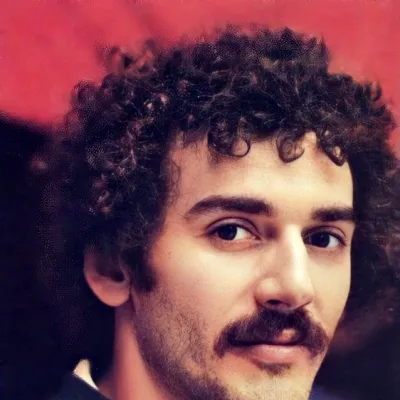
Jean-Luc Rougé
Human Design Chart
Biography
A Harai goshi specialist, Rougé wrote a comprehensive book on the technique.
Jean-Luc Rougé — Generator with Profile 4/6
Generator 4/6 — Design at a Glance
Jean-Luc Rougé possessed considerable and enduring strength that made him an energetic actor – comparable to a workhorse that unleashes its power as long as it is fueled by the task. However, his design carried two specific risks: First, there was a risk of energy collapse if he engaged in tasks for prolonged periods that did not bring him inner joy and thus wasted his potential. Second, he suffered from the feeling of being held back from his true heart project despite still being full of drive.
The functioning of his energy depended crucially on how he dealt with external stimuli. In contrast to initiating, responding was at the center. His sacral energy was primarily released when he responded to impulses from the environment. The motto was not “push forward,” but rather “respond.”
His most successful strategy involved waiting for signals of life and then acting only when his inner self gave a clear “yes.” If Jean-Luc Rougé lived in harmony with this gut reaction, his design rewarded him with deep feelings of fulfillment. However, if he constantly initiated independently or ignored his internal signals, sooner or later he would encounter persistent frustration and a noticeable lack of energy. His satisfaction was thus directly linked to the ability to respond authentically rather than fighting against the current of his own nature.
Emotional Authority
Jean-Luc Rougé’s design exhibited a tendency towards emotional volatility: his perception of the world was strongly colored by his current mood state. In one moment, he could show himself totally enthusiastic; in the next, the same situation would be completely negative. These fluctuations were not signs of unreliability but expressions of his inner authority – the defined Emotional Center.
This center is subject to a natural wave of ups and downs in emotions. The first emotional impulse is merely a snapshot, not yet the final truth. Quick, spontaneous decisions made directly from this initial reaction often have negative consequences because they are based on transient waves.
The mechanics of his design demanded patience and conscious hesitation. Jean-Luc Rougé was most clear when he did not make immediate decisions but allowed time for emotional waves to subside. Through multiple nights’ reflection, he gained the necessary distance. Only when intense feelings subsided and calmness set in would true clarity emerge for him. This process was especially crucial for long-term life decisions as it revealed deeper truths beneath the surface of transient emotions.
The 4/6 Profile — Opportunist / Role Model
Jean-Luc Rougé was marked by a profile that appeared more experimental and relationship-centered during his first three decades of life. This early phase resembled the behavior of Line 3, characterized by curiosity and trying out various roles in social settings. With maturation, however, an internal conflict emerged: the deep need for belonging and connection to others stood in tension with the desire for distance to contemplate the meaning of life. This struggle between the heart seeking community and the mind striving for wisdom significantly shaped his development.
His energy was determined by the leadership personality of Line 4. This position demands more than just personal initiative; it requires a transpersonal awareness and the ability to recognize and value talents in others. Jean-Luc Rougé had to learn to wait for the right opportunity to bring forth his leadership qualities rather than acting prematurely. Simultaneously, through Line 6, there developed an ambitious search for life’s meaning that transcends the material realm. This process unfolds in phases and marks the transition from family bonds to responsibility within the collective. His task was to unite these two strands: serving as a role model that helps others recognize their individual purpose through cooperation and genuine appreciation of people without compromising his own integrity or big heart.
Split Definition — Defined & Open Centers
Jean-Luc Rougé was characterized by a consistent and reliable way of communication and a strong desire for control over his own resources. His defined Throat Center ensured that he articulated his messages clearly and authentically from his inner sources, while the equally defined Heart Center gave him the willpower to keep promises and be recognized for his contributions. This combination marked him as someone who knew what they wanted and expressed it.
His driving force was his defined Sacral Center, which provided immense vital energy. Jean-Luc Rougé relied on responding to questions or offers rather than initiating actions himself to avoid frustration and exhaustion. His inner authority lay in the emotional Solar Plexus Center; he needed time to wait out the waves of his feelings before making decisions, as immediate reactions were often impulsive. Additionally, his defined Spleen Center supported him through spontaneous intuition and a strong body awareness for health and well-being in the present moment. The constant pressure of his defined Root Center propelled him forward while also helping him manage stress and material advancement.
In contrast, his Head, Ajna, and G Centers were open. This meant that he did not have a fixed mental inspiration or a rigid identity. He tended to lose himself in others' thoughts or seek answers that weren't his own, which could confuse him. Furthermore, he was prone to getting lost in relationships or environments if they didn't suit him properly due to the lack of a firm direction. Instead, he had to learn to be initiated by others and wait for the right places and people rather than actively seeking identity or love. This openness allowed him flexibility and the ability to adopt various perspectives as long as he did not identify with foreign opinions.
Channels for focus, intuition, emotions and community.
Jean-Luc Rougé was someone who could focus his attention with almost physical intensity. His design featured the Concentration Channel 52-9, a format energy between Root and Sacral Centers. This connection generated a calm pressure towards silence; he held back body and senses to logically examine details and perfect patterns rather than act impulsively.
Parallel to this, the Wave Length Channel 48-16, connecting Spleen with Throat, was active. Here intuitive depth (Gate 48) merged with technical skillfulness (Gate 16). Jean-Luc Rougé sought life-critical information and honed it through repetition into a talent. This combination allowed him to not only understand complex skills but also communicate and refine them precisely.
Emotionally, he was marked by the Recognition Channel 30-41 linking Root with Solar Plexus. A constant drive for new experiences (Gate 41) met emotional waves (Gate 30). This created restlessness that was tempered through patience: He waited until his feelings were clear before jumping into new situations.
Socially, Jean-Luc Rougé oriented himself towards the Community Channel 37-40 between Solar Plexus and Heart. He sought his place in the whole through fair agreements and mutual benefit. Rather than hierarchically dominating, he built bridges between individuals to form a loyal group where everyone contributed respected roles. His personality was also influenced by Gates like 35 (Change Through Interaction) and 45 (Tribe Energy and Willpower), underlining his ability to steer collective dynamics and secure material stability for the tribe.
Collective Circuitry — Circuit Signature
Jean-Luc Rougé's design inclined towards structured logic, but this tendency manifested in two separate energetic blocks. The Understanding Circuit connected his Throat with Spleen Centers as well as Sacral with Root Centers. This configuration promoted sharing rational insights and strategic focus energy free from emotional influence since the Solar Plexus Center was not involved here. Parallel to this, the Meaning Finding Circuit worked through the connection of Solar Plexus and Root Centers. Here it revolved around cyclical emotional waves and reflecting past experiences to learn collectively – a process that played out in waves distinctly different from the cool rationalism of the first circuit. The third active circuit, the Ego Circuit, connected Heart with Solar Plexus Centers. This supported cooperation and mutual giving within a community or tribe, where pauses for resource regeneration were necessary as there was no direct connection to the Sacral Center. Due to Shared Definition, these forces existed side by side: The block from Throat and Spleen Centers stood energetically isolated from the larger network of Sacral, Root, Solar Plexus, and Heart Centers. Jean-Luc Rougé therefore had to learn to consciously integrate these different energy fields – rational strategy on one hand, emotional past and social cooperation on the other – rather than experiencing them as a single continuous flow.
Right Angle Cross of Planning 2
Jean-Luc Rougé's Human Design shows a tendency towards structured and forward-looking organization. His chart displays the right cross of Planning 2, a pattern that suggests methodical approach and strategic patience. Instead of acting impulsively, he tended to carefully prepare actions and create conditions in which ideas could flourish safely. This configuration describes an inner logic that loves order and tames chaos through clear plans.
The mechanics of this cross emphasize the importance of preparation and context. It's not about spontaneous inspiration but rather building systems consciously to ensure long-term stability. Jean-Luc Rougé thus appeared as someone who valued reliability, always considering the future implications of decisions. His energy was focused on minimizing uncertainties through detailed considerations.
This approach does not imply rigidity but a conscious control of resources and time. The right cross of Planning 2 helps to break down complex tasks into manageable steps. For Jean-Luc Rougé, this was a natural way to achieve efficiency and avoid frustration due to unclear goals. His design promoted an attitude of patient implementation where the result came from the quality of preparation. He sought ways to translate visions into concrete, stable structures without losing the original spirit of the idea.
Saturn Return · Uranus Opposition · Chiron Return · 2nd Saturn Return — Life Cycles
Jean-Luc Rougé demonstrated exceptional performance through extreme physical discipline and focused effort. This mindset crystallized in 1975 at age 26 when he won the Judo World Championship – a success typical for his design: The first Saturn return often marks the point where years of groundwork and structural maturity lead to tangible, visible results.
During this period, the internal architecture of Human Design is often solidified. It's no longer about merely testing possibilities but consolidating what truly holds. The Saturn cycle brings a certain weight and responsibility; it demands clearly defining one's resources and using them sustainably. For Jean-Luc Rougé, this meant bringing his physical presence and mental concentration to the highest level.
The title win was no coincidence but the result of long-term development. The mechanics of the first Saturn return support creating structures that last beyond the moment. It's a phase of maturation where it becomes clear what one can build their further life on. Jean-Luc Rougé used this energetic constellation to perfect his skills and gain international recognition. This success laid the foundation for his career and confirmed the effectiveness of his specific approach in sports.
Generator · Emotional Authority — Synthesis
Jean-Luc Rougé seems marked by a deep inner dynamism that manifests in the connection between energy and emotional maturation process. As a Generator with defined sacral authority, he possesses immense work capacity (Sacral Center), yet this is contingent upon authentic resonance with the project at hand – genuine alignment is crucial. This ability to generate and sustain energy is complemented by the Profile of Networker/Role Model, suggesting an evolution from experimental exploration to wise, cooperative roles. The focus on details and concentration (Channel 52-9) support endurance and a drive for improvement but are bound to silence and boundaries.
A central paradox lies in the tension between the need for community (Line 4 in Profile) and the desire for inner reflection and wisdom (Line 6). This field of tension is further strengthened by emotional authority, which requires time maturity for decisions – a process that can collide with an impulsive urge to interact. His early success in Judo (1975) indicates his ability to focus this energy into concrete goals, yet the design suggests authentic fulfillment lies in aligning this power with inner clarity.
4 Defined Channels
Incarnation Cross - Right Angle Cross of Planning 2
Solar Return
The Solar Return shows the moment when the sun returns to its exact birth position - your personal solar year.
Life Cycles
Discover the life cycles with a detailed triple view (birth chart, cycle chart, composite).
Human Design Profile
- Type
- Generator
- Strategy
- To respond - wait for something to respond to
- Authority
- Emotional Authority
- Profile
- 4/6 - Opportunist / Role Model
- Definition
- Split Definition
- Incarnation Cross
- Right Angle Cross of Planning 2
- Date of Birth
- 30.05.1949 11:35
- Place of Birth
- Clichy, France
Frequently Asked Questions
What is Jean-Luc Rougé's Human Design type?
What Profiles does Jean-Luc Rougé have?
What Authority does Jean-Luc Rougé have?
What incarnation cross is Jean-Luc Rougé associated with?
When was Jean-Luc Rougé born?
Discover your own Human Design
Are you also a Generator? Find out in a personal reading how to use your sacral energy correctly and discover deep satisfaction.
More Personalities
Back to overviewAaliyah

Aldair

Alexia

Angèle

Anne-Marie

Arcángel
