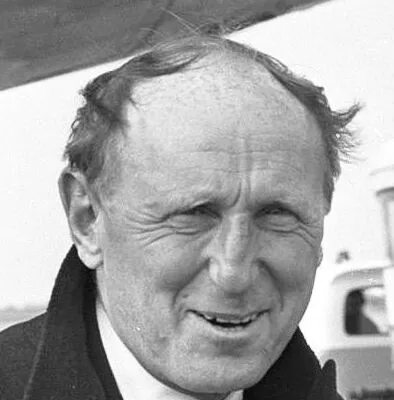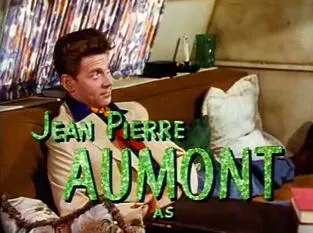
Jean-Pierre Aumont
Human Design Chart
Biography
Aumont died on January 30, 2001, just a few weeks after celebrating his 90th birthday.
Human Design Analysis: Jean-Pierre Aumont as Projector 6/2
Projector 6/2 — Design at a Glance
Jean-Pierre Aumont's design marked him as a Projector, whose nature was geared towards immediately recognizing systemic inconsistencies in his environment. His aura acted like a focused guiding light that directed itself to the places where others were stumbling around in the dark or making mistakes. This intense perception could be perceived as intrusive without invitation, similar to a bright beam of light into someone's face.
His chart indicated the need not to actively use this sharp observational skill to correct others. Instead, he thrived best by shining harmoniously himself. By being in balance, he attracted people who then asked for his insights on their own accord. The central strategy was to wait for an honest and respectful invitation before sharing knowledge or taking leadership.
Since Jean-Pierre Aumont did not have a defined Sacral center, he lacked a constant intrinsic energy source. He experienced phases of high activity followed by the imperative need for rest periods to prevent burnout. Ignoring this rhythm would have exhausted him. However, if he waited on his invitations and protected himself, his life was marked by success. Deviations from this tended towards bitterness as an expression of his non-self. His design thus required patience and selective engagement rather than constant presence.
Splenic Authority
Jean-Pierre Aumont's design inclined toward immediate intuitive orientation. His inner authority lay in the defined Spleen center while the Emotional and Sacral centers were open – a configuration only Projectors or Manifestors can have. This imparted him with pronounced survival intelligence: his physical well-being and instinct served as an immediate compass for whether a situation or environment was healthy.
Decisions had to be made in the moment; the first spontaneous impulse was considered correct and directly protected his health. This allowed him rigorous demarcation against harmful influences of all kinds. However, since this Spleen impulse was very subtle and only occurred once, there was a risk of missing it or having external advice drown it out. Therefore, high vigilance was necessary to do justice to these subtle signals.
Since his perception of what was right could change in the short term, long-term commitments proved difficult. His design required much freedom and flexibility; spontaneous agreements suited his nature better than rigid plans. A temporary retreat could be helpful to hear one's own voice more clearly, yet the actual answer always lay in the immediate reaction of the moment.
The 6/2 Profile — Role Model / Hermit
Jean-Pierre Aumont's design was characterized by a clear two-phase life path. In the first three decades, intense experimentation dominated. His Profile 6/2, the role model and natural talent, acted like a pure Three-line during this early period: He learned through trial and error, gathered diverse experiences, and accepted setbacks as necessary parts of the process. This phase was marked by tenacity and running through misunderstandings that ultimately led to an inner mutation.
After about thirty years, his dynamics changed fundamentally. The Six line became active, leading to a withdrawal. Jean-Pierre Aumont metaphorically retreated into a 'cave on the mountain.' This distancing served not for isolation in the negative sense but for deep introspection and healing. He reflected from afar over his earlier experiments. Simultaneously, the Two line supported this process with intuitive clarity regarding his values. These values primarily served survival and were characterized by resolute determination to complete inner purification.
From this phase of distancing and self-awareness, Jean-Pierre Aumont developed a wise authority. He eventually re-emerged not as an inquisitive experimenter but as an acknowledged role model. Others could recognize his life wisdoms and came to him to learn from his ability for deep introspection. His path led from chaotic experience gathering through necessary distancing to clear communication of worked-out insights.
Split Definition — Defined & Open Centers
Jean-Pierre Aumont's Human Design profile was characterized by a consistent, trustworthy mental structure that he translated into clear communication. His defined Ajna Center fostered an independent, constant thought process; he processed data and concepts in the same way every time and was hardly influenced from outside. These thoughts seamlessly flowed into his defined Throat Center, which served as a pivot point to make these insights effective in the world as clear messages or actions. His voice was reliable but limited to topics that aligned with his definition.
Parallel to this, he had a firm inner identity and direction through his defined G Center. This gave him a stable sense of Higher Self and the ability to show others new perspectives without being dependent on their expectations. This stability was complemented by a defined Spleen Center, which provided spontaneous intuitive body intelligence. He had a reliable instinct for what was healthy and correct in the present moment and could make existential judgments that protected his well-being.
In contrast, his vulnerability showed in the undefined centers. His open Head Center made him susceptible to external mental pressure; he tended to identify with others' questions or doubts rather than observing them as separate fields. The open Heart Center often led to attempts to prove his worth through willpower or making promises that he could not keep due to a lack of consistent energy. His open Sacral Center absorbed the vital energy from the environment, which could lead to exhaustion if boundaries were neglected. Additionally, his open Solar Plexus took on and amplified others' emotions while his open Root Center had to absorb external stress and adrenaline from the environment rather than generating it itself.
Channels for intuitive elegance and structured insight.
Jean-Pierre Aumont's Human Design profile revealed a deep intuitive adaptability paired with the ability to clearly articulate innovative structures. This configuration created a backdrop of spontaneous self-perfection and efficiency-enhancing thinking.
The Channel Perfect Form 57-10 connected his Spleen Center with his G Center through Gate 57 (intuitive insight) and Gate 10 (self behavior). This channel projected a quality of conduct guided by intuitive awareness based on love for oneself. It enabled Jean-Pierre Aumont to let go of unfounded future fears and move existentially through the world. By listening with his body's ears rather than just his mind, he acted spontaneously appropriately, securing his survival in the present moment and creating rare clarity.
Parallel to this, Channel Structuring 23-43 connected his Ajna Center with his Throat Center. It used Gate 43 (insight) for spontaneous breakthroughs and Gate 23 (assimilation) to process and express these insights. This promoted a mutative, metaphorical thinking that reinforced efficiency. Jean-Pierre Aumont had the ability to explain unique perspectives so clearly that they could change collective understanding. Timing was key; only when he waited for confirmation and expressed his knowledge in the flow of his design did it get accepted rather than rejected.
Additionally, Gates like 38 (integrity through resistance) and 51 (willpower during shocks) shaped his approach to preserving identity. Gate 2 emphasized receptivity to evolutionary directions while Gate 46 promoted dedication to the process in the here and now. These elements together formed a person who could impact through authentic presence and precise communication.
Individual Circuitry — Circuit Signature
Jean-Pierre Aumont's Human Design profile showed a tendency towards highest individuality, which was reflected in two separate yet parallel operating energetic streams due to his Split Definition. These forces did not exist as one continuous flow but rather as independent areas.
The Knowledge Circuit connected his Ajna and Throat Centers through the Channel of Structuring (Gates 43 and 23). This created a pulsating, acoustic mechanism aimed at following an original path. Through this channel, new knowledge could be structured and transformed by expression. It was about reinforcing one's identity through creative impulses, with emotional waves from the Solar Plexus Center supporting the process even though the Solar Plexus itself did not directly connect in this circuit. This circuit served to initiate change through the expression of new knowledge structures and strengthen individuality.
Parallel to this, the Integration Circuit connected his Identity Center with his Spleen Center via the Channel of Perfect Form (Gates 10 and 57). This area ensured survival through intuitive reactions in the present moment. It was about gaining strength from reacting to life and guiding it through proper behavior as well as intuitive knowledge. This connection emphasized highest individuality by ensuring that inner impulses were effective at the right time.
Both circuits worked independently: one drove the urge to create new identity through expression, while the other ensured intuitive survival in the present moment. Jean-Pierre Aumont thus showed himself as someone who needed both transformation through structured knowledge and security through intuitive presence in the now without these two aspects merging energetically.
Left Angle Cross of Individualism 2
Jean-Pierre Aumont's Human Design profile revealed a tendency towards a deeply rooted, archetypal structure: the Individualism 2 Left Cross. This configuration acted as an overarching strategic framework that shaped his entire life pattern and extended far beyond individual, transient activations. It defined the inner logic of his existence by understanding life as an expression of a specific personal strategy.
This cross did not describe random occurrences but rather a carefully thought-out destiny pattern. It offered a stable archetypal frame that helped Jean-Pierre Aumont integrate his individual nature into a larger order. The mechanics of this design emphasized the necessity to recognize and live by the deep meaning of this structure, instead of being swayed by external circumstances. Rather than letting himself be buffeted about by outside events, the Individualism 2 Left Cross served as a compass for authentic action. It promoted an attitude of self-determination within a prescribed pattern.
For Jean-Pierre Aumont, this meant that his actions and reactions could not be viewed in isolation but always stood in the context of this comprehensive design. The energy of the cross supported him in expressing his individuality without struggling against the natural flow of his nature. It was an invitation to accept his unique qualities as part of a greater whole. This perspective gave coherence and direction to his life, allowing him to see challenges not as obstacles but as integral parts of his personal journey. Thus, the Individualism 2 Left Cross became the foundation of his personal development and his work in the world.
Saturn Return · Uranus Opposition · Chiron Return · 2nd Saturn Return — Life Cycles
Jean-Pierre Aumont's life showed a clear cyclical structure marked by sudden breaks followed by reconciliation. This dynamic was shaped by two specific astrological-human-design cycles that structured crises not as endings but as turning points.
In 1951, at age 40, he experienced the death of his wife Maria Montez, who likely drowned after a heart attack. This marked the Uranus Opposition, a cycle often bringing unexpected shocks or fundamental losses that shake the existing foundation. For Jean-Pierre Aumont, this was a moment of profound instability and an abrupt rupture in his life order.
Yet his design also contained the mechanism for restoration. The Chiron Return, which occurred around age 51, served as a phase of integration and new beginning after such injuries. This was reflected in 1962: Jean-Pierre Aumont divorced from his then-wife but later reunited with her. This cycle described not just repair but deepening the relationship on a new basis. The initial separation was part of the process leading to later reunification. His design suggested that he went through crises to arrive at a more stable, conscious form of connection, where the gravity of the past was released and transformed into a new quality.
Projector · Splenic Authority — Synthesis
Jean-Pierre Aumont's life was marked by deep inner clarity and the need to express this authentically. As a Projector with defined mental authority (Ajna Center), his design points to a natural ability to recognize patterns and generate insights (Channel 43/23). This gift combined with a defined G-Center, which gave him strong self-awareness – an inner compass guiding him in his individual expression. The connection through the channel of perfected form (Gate 10/57) suggests that he drew wisdom and behavior from a deep intuitive source to live an authentic life and inspire others on this path. His way of living was thus characterized by an internal drive for authenticity and the ability to bring light into darkness for others.
A central tension in Jean-Pierre Aumont's design lies between his mental sharpness and open Solar Plexus Center. While his defined mind allowed him to grasp complex connections and find innovative solutions, he was also vulnerable to the emotions of others. This openness could draw him into emotional currents, yet his inner authority (Spleen Center) served as an anchor for making the right choices in the present moment. This interplay between analytical distance and emotional sensitivity shaped his character and led to a unique ability to think deeply while acting with empathy.
2 Defined Channels
Incarnation Cross - Left Angle Cross of Individualism 2
Solar Return
The Solar Return shows the moment when the sun returns to its exact birth position - your personal solar year.
Life Cycles
Discover the life cycles with a detailed triple view (birth chart, cycle chart, composite).
Human Design Profile
- Type
- Projector
- Strategy
- Wait for the respectful invitation
- Authority
- Splenic Authority
- Profile
- 6/2 - Role Model / Hermit
- Definition
- Split Definition
- Incarnation Cross
- Left Angle Cross of Individualism 2
- Date of Birth
- 05.01.1911 15:30
- Place of Birth
- Paris, France
Frequently Asked Questions
What is Jean-Pierre Aumont's Human Design type?
Which Profile did Jean-Pierre Aumont have?
What Authority did Jean-Pierre Aumont have?
What incarnation cross did Jean-Pierre Aumont have?
When was Jean-Pierre Aumont born?
Discover your own Human Design
Are you also a Projector? Find out in a personal reading how to unfold your leadership qualities and recognize the right invitations.
More Personalities
Back to overviewSissy Spacek

Alain-Fournier

Anémone

Angeli

Ann-Margret

Bourvil