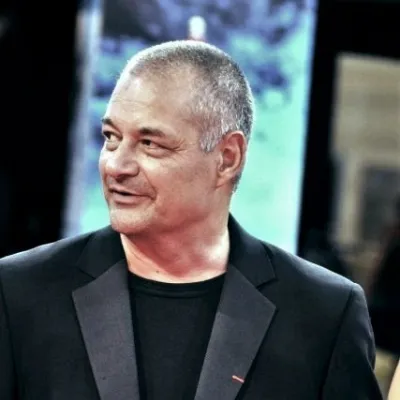
Jean-Pierre Jeunet
Human Design Chart
Biography
He had been married to Liza Sullivan since 1997
The Human Design of Jean-Pierre Jeunet: Projector 6/2
Projector 6/2 — Design at a Glance
Jean-Pierre Jeunet's design tends towards precise, focused perception. As a projector, his energy acts like a bright flashlight, directing itself to areas in his surroundings that are still in the dark. This configuration grants the ability to immediately identify a flaw in the system. However, directly addressing these flaws would often be counterproductive, as it could trigger resistance in others. Instead, the more effective strategy was to attract others through his own harmonious radiance. People would then come to him of their own accord and seek advice, drawn to his radiant presence. The central life task was to wait for a respectful and sincerely meant invitation before sharing his insights. Without this invitation, he risked being perceived as unpleasant or intrusive. Additionally, due to his undefined sacral center, he lacked a constant, intrinsic source of life energy. This led to phases of high productivity, followed by necessary rest periods to prevent burnout. The modern system, which often demands continuous performance, ignores this need for regeneration. Living according to this design rewarded him with success. Ignoring this dynamic and trying to swim against the current or act without an invitation led to his non-self theme: bitterness.
Emotional Authority
Jean-Pierre Jeunet's design tends towards a deep, wave-like emotional perception. He experienced the world always through the coloring of his current mood – one moment totally enthusiastic, the next moment viewing the same thing negatively. This configuration arises from his Emotional Authority, carried by the defined Emotional Center. A central mechanism here is that this center always represents inner authority, regardless of which other centers are defined in the graph.
Since his feeling in the moment is merely a snapshot and not a final truth, spontaneous decisions based on acute emotion often resulted in negative consequences. Therefore, his design required patience: decisions needed to mature, ideally over several nights. Only when the intense feelings subsided and emotional distance was gained, the necessary clarity and calmness set in. This process of 'polishing' and multiple reconsiderations was crucial for long-term life decisions, as only then the deeper, comprehensive insight, lying beneath the surface of the first emotional wave, became accessible.
The 6/2 Profile — Role Model / Hermit
Jean-Pierre Jeunet's design tends towards a two-phase life path: initially characterized by experimental action, later by wise distance. Before the age of 30, the 6/2 line functioned as a 3-line. This meant that trial and error were the driving principles. Mistakes were made to learn from them, followed by necessary withdrawals for integration. This phase served the accumulation of personal life experiences through active experimentation.
Around the age of 30, the 6-line activated. Then there was a need to metaphorically retreat into a cave on a mountain. This retreat served intensive reflection on the earlier experiments. It was a time of healing and deep self-awareness, in which the collected experiences were viewed and understood from a distance.
From this phase of introspection, Jean-Pierre Jeunet emerged as a wise person. Others recognized this wisdom and sought contact to partake in life wisdoms. They learned from him the ability for deep self-reflection.
The underlying mechanism connects the willpower of the 6-line with the blocked creative power of the 2-line. The 6-line goes through phases of authority and identifies inferior forces in the community. It is resistant to unfair demands. The 2-line, on the other hand, shows an aura of boredom and a strong desire for new experiences to avoid stagnation. Creativity and progress here depend on phases of ebb and flow. The combination leads to early experimentation later resulting in a stable, wise stance that serves as an example for others.
Single Definition — Defined & Open Centers
Jean-Pierre Jeunet's Human Design profile points towards a tendency towards independent will formation and emotional depth. His defined Heart Center provided him with a constant source of willpower and self-worth, allowing him to take control of his life and resources. He tended to keep his promises and establish his own authority in the material world, seeking recognition for his contributions. However, this inner strength often clashed with his emotional nature.
His defined Solar Plexus Center acted as an internal authority that made decisions not in the moment but after experiencing an emotional wave. Jean-Pierre Jeunet showed himself to be someone who needed patience to achieve emotional clarity rather than reacting impulsively to the highs and lows of his mood. This combination of firm will and fluctuating emotional wave required a conscious balance to avoid overburdening others or overworking himself.
At the same time, his design was marked by several open centers, making him susceptible to external influences. His open Head Center meant that he did not have a constant mental inspiration but could easily get caught up in the whirlwind of foreign questions and doubts if he did not trust his emotional authority. He tended to question whether he had the right answers, which could confuse him.
His open Ajna Center allowed for a flexible mind that absorbed concepts and ideas from the environment without identifying them as his own truth. He could go through myriad possibilities but struggled with the pressure to be sure to be accepted. His open Throat Center attracted attention without him actively seeking it; the attempt to control his communication often led to stress, while waiting for the right invitation led to authentic expression.
His open G Center lacked a firm identity and direction. Jean-Pierre Jeunet was dependent on initiation by others and choosing the right places to learn who he is and where he is going. The wrong environment could tempt him to seek an imaginary identity, while the right environment allowed him to flourish.
Finally, his open Sacral Center was vulnerable to taking on the energy of others, which could lead to exhaustion if he did not learn to set healthy boundaries and respect his unstable energy. His open Spleen Center carried a fundamental fear of survival, which made him tend to cling to things that were not good for him to gain a sense of security. The wisdom of his design lay in accepting these fears and avoiding spontaneous decisions to protect his intuitive health.
Channels for community, emotional clarity and inner restlessness.
Jean-Pierre Jeunet's Human Design profile points towards a tendency towards intense emotional curiosity and the building of stable, reciprocal bonds. This configuration is evident through two central channels that shape his experience of the world.
The Channel of Recognition 41-30 connects the Root Drive with the Emotional Wave. Gate 41 generates a constant desire for new experiences to ward off boredom, while Gate 30 loads this desire with emotional depth. This leads to a strong need to feel life deeply and turn fantasies into reality, with emotional authority needing to be waited upon to gain clarity.
Parallel to this, the Channel of Community 37-40 links the Solar Plexus Center with the Heart Center. Here it's about finding the right place in the whole. Gate 40 works for the provision of the beloved but needs breaks, while Gate 37 seeks recognition and belonging. This channel emphasizes that true connections do not arise spontaneously but through careful, time-intensive agreements based on mutual benefit and respect.
Additionally, prioritized gates contribute to the basic disposition: Gate 35 calls for change through interaction to draw meaning from experiences. Gate 5 emphasizes the need to follow one's own rhythm and build energy through habits. Gate 53 represents the pioneer joy at the beginning of new cycles but warns of depression if these remain unfinished. Together, these elements form a profile that oscillates between the urge for new experiences and the depth of stable community agreements.
Tribal Circuitry — Circuit Signature
Jean-Pierre Jeunet's Human Design profile points towards a tendency towards emotional processing of past experiences, which showed in clearly defined cycles. This structure was created by the Sense-Finding Circuit, which in him connected the Solar Plexus Center with the Root Center. Instead of rational analysis, here a wave-like emotion dominated, coming from the past and only calming down after running a full cycle. The insights gained served not only the self but were meant to be shared with others to learn from history together.
Parallel to this, the Ego Circuit, which linked the Heart and Solar Plexus Centers, emphasized the principle of reciprocity: 'Today I give, tomorrow you take.' It was about cooperation and building shared resources through support. Since this energy was not supplied by the Sacral Center, there was no constant life force. Instead, the design required necessary rest periods to regenerate the power for giving and taking within the group. Both circuits, together with the Heart Center, formed a single, cohesive energetic group, in which emotional waves from the past were directly intertwined with the ability for mutual support and resource creation.
Left Angle Cross of Migration 2
Jean-Pierre Jeunet's Human Design chart features a left-hand Moving Forward Cross at 2. This configuration describes a process that is not characterized by sudden insights or quick breakthroughs, but rather by consistent, often invisible progress. It is an energy that requires patience and the ability to work towards a goal over long periods without being distracted by external setbacks.
The mechanics of this cross indicate that progress is understood as a continuous, almost mechanical movement forward. It is less about spontaneous creativity and more about the discipline to take the next small step, even if the end result is not yet visible. This structure supports a work style based on accumulation and refinement. Jean-Pierre Jeunet was shown to drive his projects forward through perseverance and methodical approach in this context. The energy of this design stabilizes and prevents one from being distracted too early from the actual task. It fosters a deep connection with the process itself, independent of immediate recognition or success. This creates an inner stability that enables one to navigate difficult phases by focusing on the long-term perspective.
Saturn Return · Uranus Opposition · Chiron Return · 2nd Saturn Return — Life Cycles
Jean-Pierre Jeunet's design shows a structure that is marked by a Uranus Retrograde aspect around the age of 38. This aspect often marks a point where long-held visions suddenly solidify in reality. In 1991, at the age of 38, Jean-Pierre Jeunet made his feature film debut with “Delicatessen”. This was not a random start, but an expression of inner maturity that now pushed to the outside. The mechanics of this aspect describe a transition from private development to public effectiveness.
Another central rhythm is the Chiron Return, which occurs between the ages of 49 and 51. In Human Design mechanics, this is not a healing process in a psychological sense, but a fulfillment cycle. Here it becomes visible whether life has been lived in harmony with one's own strategy and authority. It is the time of bloom when personal meaning and purpose unfold clearly. For Jean-Pierre Jeunet, this phase was in 2001, at the age of 48, with the success of “The Fabulous World of Amélie”. This success confirmed a long-term alignment. The design indicated that the inner work in this life phase condensed into a sustainable and visible result that confirmed his path.
Projector · Emotional Authority — Synthesis
A central red thread runs through the design: the ability to recognize patterns and bring light into the dark (Channel of Recognition, Projector Type). This, however, always occurs filtered through a deep emotional wave (Emotional Authority), which requires a thorough maturation of insights. The initial experimental joy (6/2 Profile) gives way to a phase of intense reflection, from which wisdom emerges that attracts others. The defined willpower (Heart Center) underscores the ability to recognize one's own values and consciously use resources, always in harmony with the emotional cycle.
The design reveals a central paradox between the drive to recognize and highlight potential in others (Projector) and the necessity to first emotionally digest and mature these insights (Emotional Authority, Meaning-Finding Circuit). The quick perception of errors and opportunities (Gate 41) stands in tension with the cyclical nature of emotional processing, which requires patience and distance. This alternation between uncovering potentials and withdrawing for inner reflection shapes the overall picture.
2 Defined Channels
Incarnation Cross - Left Angle Cross of Migration 2
Solar Return
The Solar Return shows the moment when the sun returns to its exact birth position - your personal solar year.
Life Cycles
Discover the life cycles with a detailed triple view (birth chart, cycle chart, composite).
Human Design Profile
- Type
- Projector
- Strategy
- Wait for the respectful invitation
- Authority
- Emotional Authority
- Profile
- 6/2 - Role Model / Hermit
- Definition
- Single Definition
- Incarnation Cross
- Left Angle Cross of Migration 2
- Date of Birth
- 03.09.1953 12:20
- Place of Birth
- Roanne, France
Frequently Asked Questions
What is Jean-Pierre Jeunet's Human Design type?
What is Jean-Pierre Jeunet's Profile in Human Design?
What is Jean-Pierre Jeunet's Authority?
What incarnation cross does Jean-Pierre Jeunet have?
When was Jean-Pierre Jeunet born?
Discover your own Human Design
Are you also a Projector? Find out in a personal reading how to unfold your leadership qualities and recognize the right invitations.
More Personalities
Back to overviewSissy Spacek

Alain-Fournier

Anémone

Ann-Margret

Bourvil
Christian-Jaque