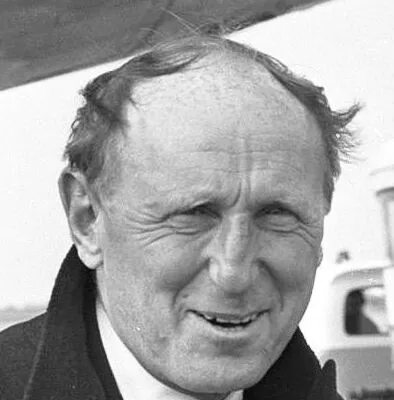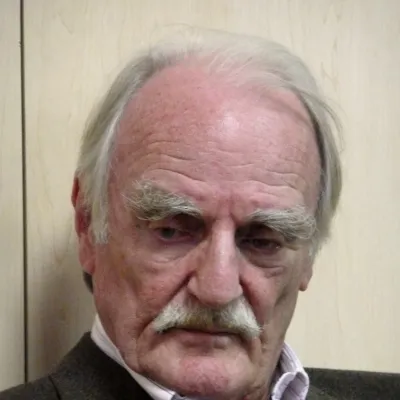
Jean Raspail
Human Design Chart
Biography
During the first twenty years of his career, he traveled the world to discover populations threatened by the confrontation with modernity. In 1950–52, he led the Tierra del Fuego–Alaska car trek and in 1954, the French research expedition to the land of the Incas. In 1981, his novel, Moi, Antoine de Tounens, roi de Patagonie ('I, Antoine of Tounens, King of Patagonia'), won the Grand Prix du Roman (award for a novel) of the Académie française.
His traditional Catholicism serves as an inspiration for many of his utopian works, in which the ideologies of Communism and Liberalism are shown to fail, and a Catholic monarchy is restored. In the novel Sire, a French king is crowned in Reims in February 1999, the 18-year-old Philippe Pharamond de Bourbon, a direct descendant of the last French kings.
Raspail's seminal work is The Camp of the Saints (1973). In it, he predicted the overwhelming collapse of Western civilization in a 'tidal wave' of Third World immigration. Today, the book is popular among immigration reductionists, and has been reprinted by John Tanton's The Social Contract Press. After Camp of the Saints, Raspail wrote many successful novels, including North, Sire and The Fisher's Ring. He fits into the family of novelists like Roger Nimier, Dino Buzzati and Michel Déon.
An article which he wrote in Le Figaro on 17 June 2004, entitled "The Fatherland Betrayed by the Republic", in which he criticized the French immigration policy, was sued by International League against Racism and Anti-Semitism on the grounds of "incitement to racial hatred", but the action was turned down by the court on 28 October.
Jean Raspail as a Projector 4/6 in Human Design
Projector 4/6 — Design at a Glance
Jean Raspail lived as a Projector, whose design had a specific, focused radiance. His aura acted like a bright flashlight, directing itself precisely towards weaknesses in the environment or in others. This configuration gave him the ability to immediately recognize systemic errors and inefficient processes. However, directly addressing these flaws often triggered resistance, as the intense light would shine directly into the eyes of others. Instead, his effectiveness was shown through an elegant, attractive presence. By embodying harmony and clarity himself, he became a natural authority, whose advice was sought after.
The central strategy of his design was to wait for an honest, appreciative invitation before bringing in his knowledge or leadership. Without this recognition, his energy would quickly be exhausted. Since Projectors do not have a defined Sacral Center, they do not have a constant, intrinsic life force. Jean Raspail therefore went through phases of high productivity that had to be balanced with rest periods to prevent burnout. The conventional work life, which demands constant availability, often stood in opposition to this natural rhythm. If he lived according to the strategy of invitation and withdrawal, he was rewarded with success. Ignoring this structure led to his non-self theme: bitterness. His design therefore required not constant action, but targeted, permitted guidance.
Splenic Authority
Jean Raspail showed himself to be someone who did not make decisions through prolonged deliberation, but trusted in an immediate, physical impulse. His inner authority lay in the Spleen, a center that functions as a health and alarm system. This configuration gave him a pronounced survival intelligence: a spontaneous inner knowledge of whether a situation, environment, or society was right for him. His instinct and physical well-being served as reliable indicators.
For the Spleen to carry this authority, Jean Raspail's Emotional and Sacral Centers were open. This is a specific requirement fulfilled only by Projectors or Manifestors. The crucial mechanism was that the first, spontaneous impulse was the right one and immediately served the protection of his health. This impulse was, however, subtle and appeared only once in the moment. It could easily be ignored or drowned out by other influences, requiring high vigilance. A short withdrawal often helped to clearly hear this subtle signal tone.
Since Jean Raspail could only know what was right for him in the moment, his short-term plans often changed. Long-term commitments were difficult; he needed a lot of space and flexibility. Through this ability to rigorously distance himself from harmful influences, he effectively cared for himself. The strategy was to commit little and act spontaneously, rather than follow rigid future plans.
The 4/6 Profile — Opportunist / Role Model
Jean Raspail's design was marked by an inner conflict between the need for belonging and the urge for detached reflection. In the first thirty years of his life, before the Saturn Return, his Profile Line six was similar to a Line three. This led to intense experimentation in his youth, particularly in the areas of relationships and friendships.
With the activation of Line six, a tension field emerged: the desire to be part of a community was in conflict with the impulse to withdraw to think about the meaning of life. His entire life revolved around this confrontation between heart and head. In his later years, it was expected of him to take on the role of a wise exemplar and stand out through cooperation with others. His heart, typical for Line four, remained cautious to avoid opening up to the wrong people and to prevent injuries.
This dynamic was shaped by specific Torkonfigurations. The fourth Line of Gate 39 promoted moderation and careful judgment before action, although the Sun in this position represented a strongly fixed character that could provoke. At the same time, the sixth Line of Gate 21 described three life phases marked by a withdrawal in the middle and a later re-entry into life. This Line taught that ineffective action leads to disorder, while correct action brings inner order and success. Jean Raspail therefore had to learn to find wisdom in chaos and discover effective action to master the transition to spiritual ego.
Single Definition — Defined & Open Centers
Jean Raspail's design was characterized by a consistent, reliable expression and a deep, intuitive body awareness. His defined Throat Center ensured that his communication was clear and authentic, independent of external influences. Simultaneously, his defined Spleen Center gave him a spontaneous, intuitive sense of the present moment, enabling him to make decisions based on an inner instinct for health and well-being without overthinking.
At the same time, Jean Raspail was strongly influenced by several open centers, making him susceptible to his environment. His open Head Center made him receptive to mental inspirations but also prone to confusion when trying to solve others' questions. He tended to get caught up in intellectual whirlpools rather than trusting his inner authority. The open Ajna Center amplified this mental flexibility, often leaving him uncertain because he lacked firm conceptual answers.
His open G Center meant he did not have a fixed identity or direction but took them from relationships and places. This led him to often seek love and orientation rather than defining them himself. The open Heart Center hindered him from consistently applying willpower; he avoided making promises he could not keep and learned not to prove his worth through achievement.
Furthermore, his open Sacral Center was vulnerable to overloading from others' energy, leading to exhaustion if he did not pause. The open Solar Plexus Center made him absorb and amplify the emotions of his surroundings, making him emotionally vulnerable. Finally, his open Root Center absorbed stress from the environment, causing him to often try to release this pressure through action, even though it was not his own. These open centers required him to always trust his inner guidance rather than being led by external expectations.
Channels for deep knowledge and perfect execution.
Jean Raspail demonstrated a deeply rooted intuition that he translated into concrete mastery through continuous, precise experimentation. His design was marked by Channel 48-16, connecting the Spleen Center with the Throat Center. Gate 48, the Gate of Depth, always sought out vital information that the rational mind could not grasp. This inner intelligence flowed into Gate 16, the Gate of Dexterity, which drew new possibilities for experimentation and gradually perfected skills. Through this connection, raw dexterity was transformed into a talent that matured into excellence through repetition and engagement.
This process of refinement stood in tension with his stance on resistance and integrity. Gate 38 in his cross expressed the struggle for life's meaning and set boundaries to defend individual identity. It showed a necessary aggression to ward off harmful forces, while Gate 21 regulated control over material things and overcoming obstacles through power. These gates required respect and recognition in service to the community to secure the material resources needed for his ongoing refinement.
Additionally, Gate 39 with its selective analysis and provocation, released adrenaline to trigger mutations. This connected with the mental process of Gate 56, which translated abstract ideas into vivid narratives. Gate 33 promoted withdrawal for reflection and memory, ensuring that experiences were not simply repeated but processed. Finally, Gate 44 ensured vigilance and transformation through proper interaction, storing cellular memory of these changes. Jean Raspail's design thus combined intuitive depth with technical precision, protected by clear boundaries and driven by the will for mastery.
Collective Circuitry — Circuit Signature
Jean Raspail's design inclined towards precise, structured communication based on logical analysis. He was someone who not only kept insights to himself but actively shared them with others. This attitude resulted from his simple circuit, where the Throat and Spleen Centers were directly connected by the Understanding Circuit.
This circuit connected his Throat Center with the Spleen. The energy flowed through the Channel 'The Wave Length' (Gates 16 and 48). This channel helped to focus complex information and shape it into a form others could absorb. It was about sharing rational insights, free from emotional baggage or conditioning. The Spleen provided the intuitive selection of the essential, the Throat Center the articulation.
As Jean Raspail had a simple circuit, these centers formed a continuous energetic flow. There were no separate groups within this circuit. His energy was directed towards the future and improving structures through clear-mindedness. He used this connection to make logical connections visible and strategically communicate them. The combination of focus and sharing shaped his way of processing and disseminating knowledge. It was pure reason aimed at improving things and guiding society towards a better future.
Right Angle Cross of Tension 2
Jean Raspail carried the design of the right cross of tension two, which shaped a fundamental stance of unwavering loyalty and protection of his own circle. His Human Design marked him as someone who did not invest his energy in wide, diffuse networks but instead gathered intensely around a close group of trusted individuals. This configuration signaled a deep inner commitment to preserving his own identity and that of his family members, protecting them from external influences.
The mechanics of this cross describe a dynamic tension between the necessity of maintaining one's integrity and the urge to defend others. It is a structure that gains strength through cohesion. In this context, Jean Raspail was shown to draw clear boundaries to ensure the purity and safety of his inner circle. The energy of this design did not act as an expansive force outward but as a centripetal attraction that strengthened bonds.
Those who carry this cross often live with the challenge of balancing the duty of loyalty and their own autonomy. For Jean Raspail, this meant that his actions and decisions were strongly influenced by his perception of his responsibility towards those he saw as "his." It was an energy of the guardian, seeking stability through clear hierarchies and loyal commitment. His design suggested that in moments of threat or uncertainty, he acted particularly resolute to secure the integrity of his community, rather than retreating. This loyal devotion formed the foundation of his existential orientation.
Saturn Return · Uranus Opposition · Chiron Return · 2nd Saturn Return — Life Cycles
Jean Raspail's design pointed strongly towards fulfilling a deep, inner purpose, which intensified in his later life phase. This configuration described a life task where meaning and action increasingly intertwined if he followed his inner authority. The Chiron Return, a cycle between the ages of 49 and 51, did not mark healing of old wounds in Human Design mechanics but rather a blooming period. During this phase, one's incarnation cross unfolds visibly; what previously existed only as potential or inner logic became tangible reality. It was a time when the life task was not just mentally but existentially confirmed. Jean Raspail experienced this transition concretely: in 1973, at the age of 48, shortly before the actual center of this cycle, his most successful work "The Holy Camp" appeared. This success was no coincidence but the external confirmation of what his design carried internally. The work stood for the realization of a long-held vision that now reached its full extent. The Chiron Return functioned here as a catalyst, carrying the inner structure outward. Jean Raspail showed himself in this time as someone whose inner truth now also became publicly effective. The mechanics of the Chiron Return emphasized continuity: those who had previously lived according to their strategy now found a reflection of their inner integrity in the outer world. It was a moment of completion, in which life itself became confirmation of one's own design.
Projector · Splenic Authority — Synthesis
Jean Raspail was a Projector who took on the role of an observer and potential advisor through his ability to precisely identify the potential and weaknesses in his environment (Gate 16 & 48). This sharp perception, fueled by the defined Spleen Center authority, allowed him to instinctively grasp what was right or wrong and communicate this perception through the channel of wavelength. The Profile as a Networker/Role Model suggests that he sought connections throughout his life and ultimately took a position where he shared his insights, with the early years marked by a spirit of experimentation. This tendency towards connection and recognizing patterns in his environment, combined with the ability to filter deep, intuitive information, formed a thread through his work.
Raspail's design showed a central paradox between the desire for belonging (Line 4) and the need for detached reflection (Line 6). This led to an internal tension between engaging in communities and withdrawing for contemplative engagement. This was reinforced by his affiliation with the Mind Circuit, which focused on logical analysis and future orientation, while the Spleen authority simultaneously drew him into the present moment and bodily intuition. The success of a documented event in 1973 indicates that he was able to use this tension to create something valuable.
1 Defined Channel
Incarnation Cross - Right Angle Cross of Tension 2
Solar Return
The Solar Return shows the moment when the sun returns to its exact birth position - your personal solar year.
Life Cycles
Discover the life cycles with a detailed triple view (birth chart, cycle chart, composite).
Human Design Profile
- Type
- Projector
- Strategy
- Wait for the respectful invitation
- Authority
- Splenic Authority
- Profile
- 4/6 - Opportunist / Role Model
- Definition
- Single Definition
- Incarnation Cross
- Right Angle Cross of Tension 2
- Date of Birth
- 05.07.1925 11:40
- Place of Birth
- Chemillé-sur-Dême, France
Frequently Asked Questions
What was Jean Raspail's Human Design type?
What Profile did Jean Raspail have in Human Design?
What Authority guided Jean Raspail?
What incarnation cross did Jean Raspail have?
When was Jean Raspail born?
Discover your own Human Design
Are you also a Projector? Find out in a personal reading how to unfold your leadership qualities and recognize the right invitations.
More Personalities
Back to overviewSissy Spacek

Alain-Fournier
Anémone

Angeli

Ann-Margret

Bourvil