
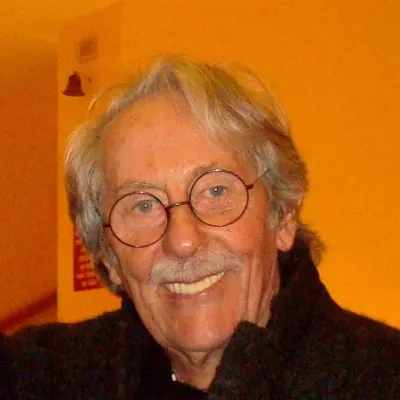
Jean Rochefort
Human Design Chart
Biography
Married twice (5 children, among them Pierre with actress Nicole Garcia)
Jean Rochefort — Projector with Profile 1/3
Projector 1/3 — Design at a Glance
Jean Rochefort's Human Design shows a tendency towards precise system analysis. As a Projector, he did not have an intrinsic energy source like a Generator but had phases of high activity that needed to be separated by necessary rest periods to prevent exhaustion. His aura felt focused and dense, comparable to a bright light beam directed at weaknesses in his surroundings. This mechanism allowed him to immediately recognize errors in other people's or structures' systems.
The challenge was not to let this perception come across as a direct attack. Directly addressing deficiencies would often trigger resistance from those around him, similar to shining light directly into someone's eyes. Instead, his strategy involved attracting others through his own harmony and competence. When he acted on an appreciative invitation, he could effectively bring 'light into the darkness' for others and show them ways forward without being perceived as preachy.
If he did not live up to this orientation, the theme of bitterness in non-self would manifest. This feeling resulted from his specific ability for leadership and analysis not being recognized or misused. In alignment with his design, however, he was rewarded successfully because his insights were then felt as valuable resources rather than criticism. His life path thus illustrated the dynamics between the necessity of invitation and the potential to initiate positive change through targeted focus.
Emotional Authority
Jean Rochefort appeared as someone who did not find his deepest truths in fleeting moments but through a patient maturation of his feelings. His inner authority lay in the defined Emotional Center, meaning he was subject to a natural emotional wave that moved his seeing and feeling in constant ups and downs. The world always seemed colored by his current mood; what one moment felt inspiring could turn negative the next.
This configuration taught him that an immediate emotional impression was only a snapshot, not yet the final truth. Quick, spontaneous decisions based on such emotion often had negative consequences. Instead, his design required patience and conscious hesitation at important crossroads. He needed to take time for decision-making, ideally by sleeping on it multiple times.
Over time, intense feelings subsided, allowing him emotional distance. Only then did the necessary clarity and calm set in, marking the process as complete. This mechanism was particularly crucial for long-term decisions that could profoundly shape his life path. By waiting for this inner tranquility, he avoided misjudgments and acted from a deeper, more comprehensive understanding.
The 1/3 Profile — Investigator / Martyr
Jean Rochefort's design is characterized by Profile 1/3, marking him as an explorer and experimenter. His life followed the logic of learning through trial and error. Line 1 drove him to gather knowledge and critically examine inspirations, while Line 3 compelled him to test these theories in practice. Often, an inner conflict arose: The desire for complete theoretical security clashed with the urgent need for concrete experience. Only by actually trying things out and learning from mistakes could he reach solid conclusions.
This process was supported by specific energies. The energy of Gate 24 (Line 1) demanded a constant review of the quality of his inspirations, ensuring that new ideas were distinguished from old concepts to protect his individuality in creating something truly new. Simultaneously, the energy of Gate 19 (Line 3), touching on themes like dedication, vigilance, and resource management, involved carefully examining relationships and territory to understand who contributes productively to a common good.
The combination of these forces meant that Jean Rochefort did not make judgments lightly. If he deemed something as good or right, he had thoroughly examined it both theoretically and practically. His design suggested that his value lay in validating complex connections through personal experience and drawing trustworthy conclusions based on this.
Split Definition — Defined & Open Centers
Jean Rochefort revealed himself as someone who stood under a constant internal pressure to ask questions and understand connections. His defined Head and Ajna Centers created a permanent mental activity; he was unable to simply switch off this thought process. This configuration generated inspiration, but also confusion or doubt, since there was no direct energy available for implementing these thoughts. He had to learn to accept the mental pressure and wait for the right moment rather than acting hastily.
His defined Solar Plexus Center functioned as an inner authority. This meant that he did not make decisions in impulsive moments but waited for the emotional wave to subside. Only when his feelings calmed down and clarity emerged, would he act. This patience was essential to avoid impulsiveness and gain deep insights. Additionally, his defined Spleen and Root Centers provided a firm existential foundation. He had a reliable instinct for "now" and possessed the physical drive to move forward in the world and master material challenges.
At the same time, Jean Rochefort was vulnerable to conditioning through several open centers. His open Throat Center often put him under pressure to gain attention or feel compelled to speak up, even though his communication was spontaneous and context-dependent. The open G Center meant a lack of firm identity; he adapted to his environment and sought the right direction through external initiation. Furthermore, his open Heart Center tended to want to prove value through promises or competition, which could lead him into spirals of self-doubt if he failed. Finally, his open Sacral Center left him without constant vital energy, putting him at risk of overextending himself by borrowing the energy of others until exhaustion rather than trusting in his own rhythms of recovery.
Channels for synthesis, awareness and life struggle.
Jean Rochefort revealed himself through a deep emotional sensitivity for belonging and loyalty. The Synthesis Channel 19-49 connected his Root Center with the Solar Plexus, making him experience the cohesion of his "tribal members" – whether family or closest circle – as a central life drive. This energy determined who was allowed to sit at his table; it was the emotional glue for bonds and traditions, driven by a need for protection and mutual support.
Parallel to this, he possessed a mind that relied not on logical analysis but on spontaneous inspiration. The Awareness Channel 61-24 connected his Head Center with the Ajna Center. Here, his spirit waited in silence for knowledge to reveal itself – a mutative process of "satori," where new insights appeared suddenly and unbidden. He did not actively control this thinking; it happened when inner truth was ripe, often calmed by music or quiet breaks from mental noise.
A third imprint formed his unwavering will towards individualization. The Life Struggle Channel 38-28 connected the Root Center with the Spleen and gave him the determination to fight for his own integrity. He sought not only survival but a deep meaning in his struggles. Through this connection, he intuitively recognized which confrontations were worth engaging in to remain authentic. This stubborn fighting spirit served to mutate the status quo and serve as an example for others to realize their unique selves.
Additionally, Gates like 44 (Transformation through Relationship), 33 (Reflection in Withdrawal), 58 (Experimental Joy for Pattern Perfection), 17 (Logical Teaching for Future Generations), and 53 (Pioneer Spirit for New Cycles) were at work. These configurations underscored his ability to transform both himself and his surroundings through personal experience and steadfast dedication to his path.
Individual Circuitry — Circuit Signature
Jean Rochefort revealed himself through his split definition as someone who carried two parallel but not directly connected energy focal points. A power line linked his Spleen Center with the Root Center, while another connected the Head Center to the Ajna Center. This separation meant that spontaneous intuition and mental impulses did not automatically flow into one another, existing instead as separate experiential fields.
In the Knowledge Circuit, two distinct segments were at work: The connection between Head and Ajna Centers promoted innovative flashes of insight and creative awareness (Channel 24-61). Parallel to this, the Life Struggle Channel (28-38) linked Spleen with Root Center, creating a pulsating energy for his unique path. This configuration supported transformation through new knowledge acquisition and individual expression without both aspects forming a common flow.
The Ego Circuit presented itself in Jean Rochefort through the synthesis (Channel 49-19), which connected Solar Plexus Center to the Root Center. This fostered a good balance between giving and taking, as well as mutual support within social contexts. Since this circuit did not connect to the Sacral Center, rest periods were essential for generating resources for the community. The emotional wave of this area operated conservatively and traditionally, with Jean Rochefort living his unique identity through these separate yet complementary energy streams.
Right Angle Cross of the Four Ways 1
Jean Rochefort's Human Design suggested a tendency towards deep inner work that manifested not in external fame but in personal transformation. This configuration corresponds to the right cross of the four paths, a specific pattern within Human Design indicating intensive internal processes and spiritual growth. It was a life task focused more on developing a profound understanding of oneself and the world rather than achieving outward accomplishments.
This design encouraged a stance of reflection and learning from experiences. Jean Rochefort was someone who continually sought deeper truths through his life stations. The mechanics of this pattern emphasized the importance of inner stillness and contemplation as means to gain insight. It required patience and endurance, as results often emerged slowly and subtly.
Without explicit events in raw content, the description remains confined to these fundamental character traits. Jean Rochefort's life thus reflected a continuous search for meaning and connection, driven by an internal compass that spurred ongoing growth.
Saturn Return · Uranus Opposition · Chiron Return · 2nd Saturn Return — Life Cycles
Jean Rochefort's Human Design indicated a tendency towards profound transformation processes that crystallized into clear life phases. This configuration described a mechanism where inner maturity and external validation were intertwined. In 1971, at the age of 41, he played a theater role in Harold Pinter’s “Old Times”. For his design, this was a typical moment: The Uranus opposition often marked a point where long-term groundwork coalesced into a solid result and new perspectives emerged.
Later, this development manifested during the Chiron Return, a fulfillment cycle of blooming. Here, one's incarnation cross increasingly unfolds in life if lived according to strategy and authority; meaning and purpose become experiential. In 1978, at age 48, Jean Rochefort received the César as best actor for his role in the war drama “The Man in the Iron Mask”. This event underscored the mechanics of Chiron Return: A phase of validation where inner alignment manifests outwardly and one's personal path is experienced as meaningful.
Projector · Emotional Authority — Synthesis
Jean Rochefort was a Projector whose life seemed marked by a deep need to recognize patterns and illuminate darkness for others. His defined Head Center (with Synthesis Channel) indicates a persistent mental pressure to understand things and formulate principles – an ability amplified by the Investigator/Experiment profile. He sought insights through thorough examination and practical experience, then rendered well-founded judgments. This combination points to someone who not only observed but actively tried to deconstruct and reconstruct the world, always searching for the true essence of things.
Simultaneously, he lived in an emotional wave (emotional authority), creating an internal tension field. The ability to quickly identify system errors (Projector design) clashed with the necessity to let decisions mature to find one's truth. Rapid problem identification contrasted with slow emotional processing, potentially leading to inner conflict and forcing him to navigate between the urge for immediate analysis and patience for deeper insights. A documented event in 1971 and success in 1978 illustrated this process in action.
3 Defined Channels
Incarnation Cross - Right Angle Cross of the Four Ways 1
Solar Return
The Solar Return shows the moment when the sun returns to its exact birth position - your personal solar year.
Life Cycles
Discover the life cycles with a detailed triple view (birth chart, cycle chart, composite).
Human Design Profile
- Type
- Projector
- Strategy
- Wait for the respectful invitation
- Authority
- Emotional Authority
- Profile
- 1/3 - Investigator / Martyr
- Definition
- Split Definition
- Incarnation Cross
- Right Angle Cross of the Four Ways 1
- Date of Birth
- 29.04.1930 11:00
- Place of Birth
- Paris Arrondissement 20, France
Frequently Asked Questions
What was Jean Rochefort's Human Design type?
What Profile did Jean Rochefort have in Human Design?
What Authority determined Jean Rochefort's decisions?
What incarnation cross did Jean Rochefort have?
When was Jean Rochefort born?
Discover your own Human Design
Are you also a Projector? Find out in a personal reading how to unfold your leadership qualities and recognize the right invitations.
More Personalities
Back to overviewSissy Spacek

Alain-Fournier

Anémone

Ann-Margret

Arletty

Arno
