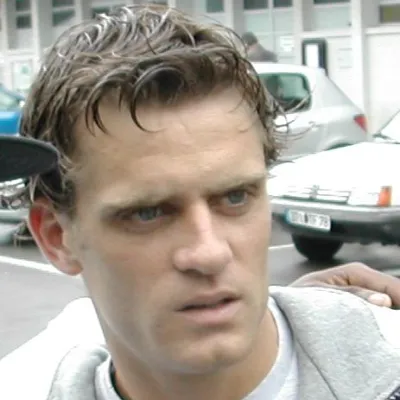
Jérôme Rothen
Human Design Chart
Biography
Jérôme Rothen as a Generator 2/4 in Human Design
Generator 2/4 — Design at a Glance
Jérôme Rothen revealed himself as someone with remarkable inner endurance, comparable to an energy-charged workhorse. His design indicated a high level of sacral energy that was released not through sheer willpower but through a specific interaction with his environment. The central mechanism of his Generator type lay in responding rather than initiating. Only when Jérôme Rothen responded to a clear signal from his surroundings and his Sacral Center instinctively said "yes" could he unleash his full power.
This principle was crucial for his well-being: Acting in harmony with these inner impulses rewarded him with a deep sense of fulfillment and satisfaction. Conversely, two specific risks loomed. On one hand, tackling tasks without inner resonance led to energy waste and potential burnout. On the other hand, stifling his work on passionate projects while still full of power was another stumbling block. By learning to wait for life impulses and then acting from the gut, Jérôme Rothen avoided frustration and effectively harnessed his enormous potential for sustainable results.
Sacral Authority
Jérôme Rothens design inclines towards not making decisions through intellectual deliberation but instead waiting for an immediate physical impulse. His inner authority is the Sacral Authority, which is accessible only to Generator types and whose strategy involves responding rather than initiating. This mechanism manifests as a kind of "gut feeling": Jérôme Rothen reacts to external stimuli with physical signals such as grunting, humming, or a palpable surge of energy. Such signals marked the moment when his inner motor engaged, providing him with vitality and inexhaustible energy, enabling him to carry out tasks with great enthusiasm.
Additionally, an activated Spleen Center supported this sacral leadership. This configuration allowed Jérôme Rothen quick, spontaneous reactions and direct access to his instinctive perception. He could reliably orient himself by his physical well-being to distinguish between true resonance – which is lively and powerful – and false reactions. The defined Sacral Center carried the decisive authority; it took precedence over other centers regardless of which additional areas were defined in his design. This significantly simplified his decision-making process, as he was not torn between conflicting inner voices but could wait for a clear, body-based confirmation before acting.
The 2/4 Profile — Hermit / Opportunist
Jérôme Rothen is characterized by a fundamental rhythm between the deep need for withdrawal and the desire for community. His design provides an operational strength to build networks and then strategically withdraw to reflect on and evaluate information. This required him to clearly communicate his availability limits: he had to actively signal when he sought company and when he needed undisturbed time for inner clarity.
This dynamic results from his Profile 2/4, the "Natural Talent/Networker." Here, the person constantly fluctuates between Line 2 (Hermit) and Line 4 (Community). During his alone time, Jérôme Rothen delves into internal processes, finds peace, and creates clarity. Once this need is satisfied, he returns from his "cave" to spend time with his favorite people. He can thus brilliantly process the knowledge of his network in isolation.
Line 2 brings an extreme reactive mechanism ("Violence before Justice"). When disturbed intrusion occurs in his private sphere, this mechanism activates, often followed by Neptunian regret over the harshness of the defense. At the same time, Line 4 focuses on analysis and waiting for the right opportunity. Aggressiveness is seen here as hindering the building of trusting alliances. The balance between isolated analysis and social engagement was therefore crucial: without withdrawal, he lost the depth of his ideas; without a network, he lacked input.
Split Definition — Defined & Open Centers
Jérôme Rothen revealed himself as someone with a stable inner identity and constant endurance. His defined G Center provided him with reliable self-perception and a clear sense of direction, without being dependent on others. This internal security served as the foundation while his also defined Sacral Center supplied an enormous source of vital energy – a constant hum that required activity and satisfaction through reaction.
This massive energy base was complemented by his defined Spleen and Root Centers. The Spleen Center fostered spontaneous intuition and health awareness in the present moment, while the Root Center provided a solid mechanism for dealing with stress and pressure. Together, these four centers formed a robust structure that allowed Jérôme Rothen to stay on his path and endure obstacles.
In contrast, Head, Ajna, Throat, Heart, and Solar Plexus Centers were open. This meant that mental inspiration, communication, willpower, and emotions were not continuous personal traits but situational characteristics influenced by the environment. Jérôme Rothen tended to question whether he was inspiring enough or needed to find answers that belonged to others – a typical pattern of open Head and Ajna Centers. The open Heart Center also led him to not be consistently willful, risking making promises to prove his worth, although this was not mechanically his task.
The open Solar Plexus Center absorbed emotional moods from others, making him vulnerable to foreign whims, while the open Throat Center inclined him towards seeking attention or feeling pressure to speak without having a constant voice of their own. This openness allowed him to act as a mirror for the thoughts and feelings of his environment, so long as he did not identify with them. The tension lay in balancing the secure, defined core with the flexible, reflective periphery.
Channels for rituals, extremes and logical judgment.
Jéröme Rothen was marked by a synthesis of natural life flow and analytical precision. His design inclined him to move forward through a living rhythm that was constantly checked by an internal sentry. The Rhythm Channel 5-15 connected his Sacral Center with the G Center. Gate 5 held onto fixed habits, while Gate 15 integrated the diversity of society into this flow. This generated a magnetic life current and intuitive timing that drew others in. Jéröme Rothen was perpetually carried forward by the stream of life; his Sacral Center fine-tuned this timing. When aligned with this inner rhythm, everything seemed effortless and beneficial to those around him, bringing them into their own flow.
Parallel to this, the Judgment Channel 58-18 acted as an internal mechanism for pattern recognition. It connected the Root Center with the Spleen Center. Gate 58 drove a desire for vitality and constancy, while Gate 18, the Correction Gate, assessed what was healthy or balanced. This channel functioned as a sentry evaluating whether patterns were correct. Jéröme Rothen carried the potential to critique or correct errors. This ability worked effectively only when invited; uninvited, it could be perceived as an endless stream of data on mistakes. His forward movement was thus not blind flowing but a process where the natural magnetism of rhythm was channeled through logical scrutiny for perfection and correctness. He drew people into his flow while ensuring that structures remained healthy.
Collective Circuitry — Circuit Signature
Jéröme Rothen's design inclined him towards strategic structuring, driven by the intention to improve the future through logic. His Mind Circuit promoted the sharing of rational insights consciously free from emotional coloring, as the Solar Plexus Center is not involved here – it was 'emotionless ratio'.
This mechanism reflected in two separate energetic strands. First, the Rhythm Channel (Gates 15 and 5) connected the Identity with the Sacral Center. This generated a powerful rhythmic emanation that enabled Jéröme Rothen to consistently and authentically carry his strategic visions outward. The energy flowed directly between the source of life force (Sacral) and personal identity (G), promoting actions in alignment with true self.
Second, parallel to this, the Judgment Channel (Gates 18 and 58) connected the Spleen with the Root Center. This strand operated independently from the first and provided quick intuitive assessments of dangers or opportunities that were immediately translated into impulsive action. As it is a Split Definition, these two systems – Identity/Sacral on one hand and Spleen/Root on the other – were not directly connected to each other. Jéröme Rothen thus carried two coexisting forces: a slow, strategic transmission of future visions and a quick, instinctive responsiveness to immediate surroundings.
Right Angle Cross of Tension 1
Jérôme Rothen was marked by a specific energetic dynamic known as the 'Right Cross of Tension 1'. This configuration set a tone that relied less on harmonious balance and more on the presence of internal or external tensions. For Jérôme Rothen, this meant his design contained a tendency to engage with friction points rather than avoiding them.
The term 'Tension' in this context does not refer to everyday stress but describes a structural property of Human Design: energy is defined here by resistance and difference. The 'Right Cross' aspect indicates that this tension formed a specific direction or pattern in Jérôme Rothens experience world. It was a constant part of his energetic architecture, making certain situations appear challenging or tense where others might feel neutral.
As no further details such as defined centers or channels are specified in the raw content provided, the analysis remains on this abstract level. Jérôme Rothens design carried this tension as a constant element within him. It shaped his interaction with the environment not through loud dominance but through a subtler yet persistent presence of friction and difference. This mechanism created a backdrop against which Jérôme Rothen learned to deal with imbalances without necessarily resolving them. The tension was thus not an error in the system, but a defining characteristic of his individual energetic signature.
Saturn Return · Uranus Opposition — Life Cycles
Jérôme Rothen emerged around his first Saturn Return as someone whose years of groundwork and discipline led to a concrete, recognized triumph. This cycle marks in Human Design the transition from youth into established adulthood, characterized by structuring and achieving the first major success.
In 2004, at age 26, Jérôme Rothen became known beyond France. His breakthrough came through precise flank runs in the Champions League, where he had to settle for a loss only in the final with AS Monaco. This event stands exemplary for the dynamics of the first Saturn Return: it is not a fluke but the result of a phase of maturation, in which internal attitudes and skills condense into a tangible, visible outcome. The Saturn Return acts here as a catalyst that translates previously accomplished work into public validation. Jérôme Rothens design thus shows how this astrologically specific cycle serves to strengthen personal identity through measurable success and lay the groundwork for further developments. International recognition confirms the value of previous developmental steps.
Generator · Sacral Authority — Synthesis
Jérôme Rothen seems driven by a deep inner force that arises from the interplay between sacral energy (Generator Type) and a firmly established sense of direction (defined G Center). This drive manifests in endurance and the ability to feel joy in work as long as it aligns with the inner voice. The Rhythm Channel (Gate 5/15) underscores this natural anchoring in life flow, while the Profile as Natural Talent/Networker emphasizes the swing between individual withdrawal and the need for community - a pendulum that nourishes inner clarity.
A central tension field lies in the balance between the deep desire for autonomy (Line 2) and the wish for connection (Line 4). This is further reinforced by the shared definition of the switch circuit: sacral energy and identity center form their own, powerful unit, while spleen and root centers act parallel. This constellation points to an internal conflict between holding onto firm rhythms (Gate 5) and openness to life's diversity - a dynamic interplay that allows both stability and adaptability.
2 Defined Channels
Incarnation Cross - Right Angle Cross of Tension 1
Solar Return
The Solar Return shows the moment when the sun returns to its exact birth position - your personal solar year.
Life Cycles
Discover the life cycles with a detailed triple view (birth chart, cycle chart, composite).
Human Design Profile
- Type
- Generator
- Strategy
- To respond - wait for something to respond to
- Authority
- Sacral Authority
- Profile
- 2/4 - Hermit / Opportunist
- Definition
- Split Definition
- Incarnation Cross
- Right Angle Cross of Tension 1
- Date of Birth
- 31.03.1978 17:30
- Place of Birth
- Châtenay Malabry, France
Frequently Asked Questions
What is Jérôme Rothen's Human Design type?
What profile does Jérôme Rothen have in Human Design?
What authority guides Jérôme Rothen?
What incarnation cross does Jérôme Rothen have?
When was Jérôme Rothen born?
Discover your own Human Design
Are you also a Generator? Find out in a personal reading how to use your sacral energy correctly and discover deep satisfaction.
More Personalities
Back to overviewAaliyah

Aldair

Alexia

Angèle

Anne-Marie

Arcángel