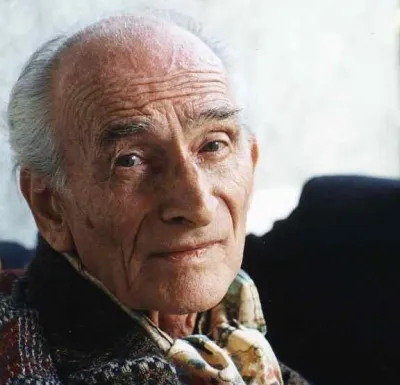
Jim Baxter
Human Design Chart
Biography
Baxter was a gambler and heavy drinker, he was disinclined to submit to the normal training discipline. However, his natural brilliance often resulted in victory for his team.
In later life, he became a publican. His drinking problems necessitated a liver transplant in 1991.
Human Design Analysis: Jim Baxter as Manifesting Generator 2/4
Manifesting Generator 2/4 — Design at a Glance
Jim Baxter revealed himself as someone who possessed hybrid energy: the constant power of a Generator paired with the lightning-fast execution of an Manifestor. His design suggested that he could skip steps and pull things into his life quickly. This speed, however, was a double-edged sword. Often it led to important stages being skipped, forcing him to backtrack and make up for lost ground – a source of deep frustration that aligned with the Non-Self theme of his configuration.
Furthermore, Jim Baxter tended to juggle multiple projects simultaneously, driven by various impulses. Without inner consent, his creative drive quickly turned into exhaustion. The solution did not lie in linear task completion but in the strategy of responding. He needed to answer life and check if his Sacral Center – the source of his energy – agreed with each step with a clear “Yes”.
If this inner confirmation was present, a play mode would kick in. In this state, parallel work was no burden but a source of deep satisfaction. The advice to finish one thing before starting another did not suit his nature. Instead, his creativity flourished through variety and the joy of the process itself, provided he acted always in alignment with his inner authority and responded rather than initiated.
Sacral Authority
Jim Baxter revealed himself as a Generator whose decision-making was shaped by sacral authority. This internal instance served him not only as a strategy but fundamentally simplified the process of choice. His responses to external stimuli arose physically: through a specific gut feeling or a noticeable surge of energy. Jim Baxter learned to listen to these inner signals – manifested in sounds like grunts, hums, or simply an “Hmm” – to give the right reaction.
When his sacral motor activated a task, he felt vital and alive. He possessed seemingly inexhaustible energy and tackled his work with great enthusiasm. Jim Baxter was born to walk through life with joy and satisfaction, fully immersed in his activities without them needing to serve an external purpose.
Moreover, the Spleen Center acted as supporting authority for his Sacral Center. This connection enabled quick, spontaneous reactions. Jim Baxter made decisions based on immediate access to his physical well-being and instinctive perception. He reliably followed these inner impulses, which strengthened his ability for rapid adaptation and reaction. The combination of sacral energy and spleen-supported intuition formed the foundation of his actions.
The 2/4 Profile — Hermit / Opportunist
Jim Baxter revealed himself as someone who oscillated between a deep need for withdrawal and a drive towards community. His Human Design Profile 2/4, the Natural Talent Networker Profile, laid out a fundamental tension: Line 2 conveyed the desire for solitude, while Line 4 promoted the wish to connect with familiar people. This duality required him to set clear boundaries and communicate transparently when he sought company or wanted isolation. During his “Me-Time,” Jim Baxter immersed himself in internal processes to find calm and clarity. Here, the themes of Line 2: correction, acceptance, and renewal came into play. Once this inner work was completed, he emerged from his retreat to reflect on the collected knowledge of his network. Line 4 brought self-discipline and concentration even if doubts arose. Through this sequence – withdrawal for integration, then exchange in the circle – Jim Baxter could evaluate information from his community and develop new, brilliant ideas from it. It was not a static state but a rhythmic shift that required a safe environment where he could openly express his needs for quiet or interaction without being misunderstood.
Split Definition — Defined & Open Centers
Jim Baxter revealed himself as someone with a massive, constant energy base. His design indicated a tendency towards reliable vitality that he could only use correctly by reacting to external impulses – his strategy of waiting and responding. This power came from his defined Sacral Center, which provided him with an enormous reserve of generative energy if he did not initiate but waited until his inner "yes" or "no" responded.
This endurance was supported by his defined Heart Center, which gave him the willpower and desire to determine his own life as well as fulfill promises. Additionally, his defined Root Center supplied a steady pressure that propelled him forward and helped manage stress in a specific way to survive in the material world. His defined Throat enabled him to communicate this energy clearly and follow through with actions consistently if he followed his inner authority. Also, his open Spleen Center marked him: It gave him an intuitive sense of health and safety in the present moment that allowed for spontaneous judgments about what was necessary.
At the same time, Jim Baxter was vulnerable to conditioning due to several open centers. His open Head Center meant that he did not have a fixed mental strategy; he tended to identify with questions or doubts from others and often sought external inspiration rather than trusting his inner knowledge. The open Ajna Center amplified this: He absorbed concepts and opinions from the environment without considering them as his own truth, which could lead him to pretend to be more certain about things than he actually was.
His open G Center meant that he did not have a stable identity or fixed direction. Instead, he adapted himself to people and places in search of love and belonging, making him vulnerable to false relationships. Finally, his open Solar Plexus absorbed the emotions from his surroundings. He tended to experience other people's moods as his own and avoided confrontation out of fear of rejection or emotional overload. The challenge lay in not personalizing these open areas but strictly trusting his strong energy from the defined centers to rely on the sacral response and spleen feeling.
Channels for change, logic, leadership and care.
Jim Baxters Design set a tendency towards evolutionary change driven by accepted limitations and cyclical energy pulses. The Mutation Channel 60-3 connected his Root Center with the Sacral Center, creating a pulsing rhythm of on-off states accompanied by melancholy as a precursor to new impulses. Jim Baxter exhibited phases of inner stillness in which he patiently waited for the right moment for innovation rather than arguing against this mechanical moodiness.
Parallel to this, the Judgment Channel 58-18 connected his Root Center with the Spleen Center, driving a logical urge towards pattern correction and perfectionism. It functioned as a watchman for the collective but was only effective when Jim Baxter was asked for advice. His ability to question and correct patterns protected his energy and made solutions practical by avoiding unwelcome criticism.
Additionally, other channels shaped his existence: The Line of Money Channel 21-45 connected Heart and Throat Centers, emphasizing material responsibility and the will to control resources. The Preservation Channel 27-50 linked Sacral and Spleen Centers, serving care and traditional values for the preservation of the tribe. Individual Gates like Gate 52 promoted concentration through self-imposed pauses while Gate 17 supported logical teaching for the future. Jim Baxter lived these mechanisms by navigating between impulsive change and reflective correction.
Tribal Circuitry — Circuit Signature
Jim Baxter's Human Design unfolds as two independent, timeless energy systems. One system governs resource management and cooperation within the tribe; the other ensures biological survival through instinctive protection. These separate forces work in parallel without connecting logical strategy or individual knowledge mutation.
Jim Baxter’s Ego Circuit connects Throat Center and Heart. This creates a conservative energy for material well-being and mutual support. Since there is no connection to the Sacral Center, this structure requires necessary rest periods for resource regeneration. Parallel to this, the Hunter Circuit secures genetic survival through the linkage of Sacral and Spleen Centers. Here, ancient energies of protection, care, and family preservation are at work.
Additionally, Jim Baxter displays the Knowledge Circuit with Channel 3-60 between Sacral and Root Centers. This promotes mutation, meaning deviation from the known to find new expression. In the Understanding Circuit, he links Spleen and Root Centers through Channel 18-58. This gives a focused, visual energy of judgment for improving the future.
This configuration describes a person whose actions are driven by two separate engines: the social exchange of resources and the instinctive preservation of what exists. The missing connection between these systems means that rational planning or emotional identity finding do not draw from the same sources as an integrated flow but rather experience them as separate, coexisting realities.
Right Angle Cross of Service 3
Jim Baxter's design established a profound, often unspoken motivation to support and serve others as the central expression of his existence. This configuration marked him with the archetypal pattern of helper or servant, which gave him a sense of purpose and belonging. Central for Jim Baxter was the fundamental need to be needed; his identity found its confirmation not primarily in self-expression but in concrete usefulness to his environment.
This orientation corresponds to the mechanics of the right service cross 3. In this Human Design context, this structure describes a life energy that discharges itself through sacrifice and care. It gives the individual a strong sense of belonging to a community or group by taking responsibility and carrying others. Jim Baxter thus showed himself as someone whose inner compass was directed towards the well-being of others. His actions served less for personal satisfaction in a narrower sense, but rather for securing the whole. Through this dedication he gained his own meaning. The energy of this cross acts stabilizing and connecting; it requires, however, also the recognition of this service to not fall into self-forgetfulness. For Jim Baxter, serving was no afterthought, but the core of his way of being. It defined his role in social structures and gave his life a clear, though burdensome, direction. His presence thus always worked supportively, anchored in the knowledge that his value was measured by his contribution to others.
Saturn Return · Uranus Opposition · Chiron Return · 2nd Saturn Return — Life Cycles
Jim Baxter's design was characterized by striking cyclical turning points that formed the transition from professional establishment to existential health crises. These phases served as catalytic moments for deep transformation or survival struggle.
In 1967, at age 28 during his first Saturn return, he switched for £100,000 to Nottingham Forest and returned to Rangers after 18 months. This point marked the condensation of years of groundwork into a viable career result, typical for this phase of financial security and professional confirmation.
Years later another dynamic came to light. The Chiron return around age 50 is in Human Design a fulfillment cycle where one's incarnation cross unfolds and meaning becomes experiential – provided one has lived according to strategy and authority. For Jim Baxter, however, this cycle showed a hard test: In 1991 at the age of 52, he underwent a liver transplant due to drinking problems. This was not a moment of mythical healing of old wounds but a confrontational encounter with the limits of his physical body and life task.
The second Saturn return around age 59 confirmed this intensity. In 1994 at the age of 55 – shortly before the actual return center – he experienced two life-saving liver transplants. These events underscore how cyclical mechanisms in his life not only worked as professional milestones but also as extreme tests of resilience and will to survive, with physical health being the focus.
Manifesting Generator · Sacral Authority — Synthesis
Jim Baxter was a person marked by an inner dynamic that manifested in his design as a Manifesting Generator. This combination of generative endurance and manifestor speed led to a life characterized by constant activity and pursuing new possibilities. His defined Sacral Center provided a constant energy source, but through its connection to the Throat Center it was also associated with a tendency to act quickly – sometimes so fast that important steps were skipped. This ability to move impulsively into action was strengthened by his profile as a natural talent and networker, which implied a play between the need for solitude for reflection and the search for connection and exchange with others. He thus moved constantly between inner depth and outer engagement.
Central for Jim Baxter, however, was a paradox: the tension between his urge to initiate and the necessity of reacting to impulses. While his design allowed him to bring things into the world, this simultaneously required constant adaptation to life itself. The open centers – Head, Ajna, and G Center – intensified this ambivalence by making him receptive to external influences and requiring a sense of identity that constantly developed through interaction with his environment. The right service cross indicates that his energy flowed strongest when he was in the service of others.
4 Defined Channels
Incarnation Cross - Right Angle Cross of Service 3
Solar Return
The Solar Return shows the moment when the sun returns to its exact birth position - your personal solar year.
Life Cycles
Discover the life cycles with a detailed triple view (birth chart, cycle chart, composite).
Human Design Profile
- Strategy
- To respond - wait for something to respond to
- Authority
- Sacral Authority
- Profile
- 2/4 - Hermit / Opportunist
- Definition
- Split Definition
- Incarnation Cross
- Right Angle Cross of Service 3
- Date of Birth
- 29.09.1939 03:30
- Place of Birth
- Kirkcaldy, United Kingdom
Frequently Asked Questions
What was Jim Baxter's Human Design type?
What Profile did Jim Baxter have in Human Design?
What authority did Jim Baxter have?
What incarnation cross did Jim Baxter have?
When was Jim Baxter born?
Discover your own Human Design
Are you also a Manifesting Generator? Find out in a personal reading how to unfold your multi-talents and direct your energy wisely.
More Personalities
Back to overviewAldair

Alizée

Angeli

Arletty

Artus

Balthus