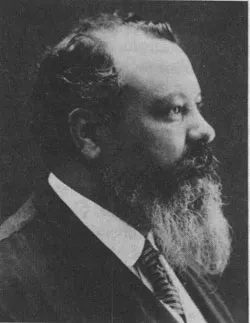
Jim Lovell
Human Design Chart
Biography
On 21 December 1968, as command module pilot of Apollo 8, he (along with Frank Borman and William Anders), became one of the first three astronauts to fly around the Moon. He then commanded the Apollo 13 lunar mission in 1970 which, after a critical failure en route, looped around the Moon and returned safely to Earth, the capsule splashing down in the Pacific on 17 April 1970.
A space buff from childhood, Lovell always dreamed of landing on the moon. He was selected as an astronaut in September 1962 after being a test pilot and Navy Captain for four years. He left the space program in 1973, having logged more hours in space than any other astronaut of his time. Moving into the business world, he ran a telephone-equipment business until retiring in 1991.
Feeling an obligation to tell the entire Apollo 13 story, Lovell worked on an outline written by fellow astronaut, Jack Swigert, and in 1994 the details of the trip came out in the book Lost Moon. Lovell was a technical adviser for the filming of the 1995 movie Apollo 13, which is based on the book. Lovell was featured in a cameo appearance in the film.
Married to Marilyn in 1953, they had four children: the oldest, Barbara, became a housewife, then Susan, also a housewife, son, James Jr., a chef and the youngest, Jeff, a pharmaceutical salesman.
In 1999, the Lovell family opened a restaurant in Lake Forest, Illinois, "Lovell's of Lake Forest". The restaurant displayed memorabilia from Lovell's time with NASA and the filming of Apollo 13. The restaurant was sold to son and executive chef James ("Jay") in 2006 and closed in 2015.
What does Manifestor 1/3 mean for Jim Lovell?
Manifestor 1/3 — Design at a Glance
Jim Lovell presented himself as a pioneer and visionary whose life path was marked by the necessity to lead the world into new directions. His design as a Manifestor endowed him with an energetic quality that aimed less at collaboration with others but rather at initiating his own projects and inspiring others to implement them. Similar to a ruler who devises strategies without personally being in the front line, he used his energy to drive change.
However, this way of operating inevitably led to polarization. Since his thinking often surpassed that of his surroundings in speed and scope, he was frequently misunderstood. Some people followed him enthusiastically due to his clear visions, while others rejected or even opposed him because they could not relate to his grand goals. This split effect was a central aspect of his experiential world.
To minimize this resistance and find the right support, his design required a specific strategy: informing. By enlightening others about his intentions and visions in good time, he reduced misunderstandings and created acceptance. If Jim Lovell followed this principle of communication, his system rewarded him with an inner sense of peace. Acting against this guideline without informing led to persistent anger and frustration. His life thus clearly showed how the balance between self-motivation and clear information determined his emotional state.
Emotional Authority
Jim Lovell was someone who never made decisions in a moment of passion. His design carried Emotional Authority, meaning that his defined Emotional Center served as the internal control instance – regardless of which other Centers were active in his graph. This configuration subjected him to a constant wave of emotional ups and downs. The world appeared to him always colored by his current mood: enthusiastic about something one moment, completely negative about the same situation the next.
For Jim Lovell, however, this immediate feeling was only a snapshot, a first impression that did not necessarily reflect the truth yet. Quick, spontaneous decisions based on such an emotion often had negative consequences for him. Instead, his system required patience and time. He let decisions mature, slept over them multiple times, and consciously delayed action. Only when intense feelings subsided and emotional distance emerged, clarity and calmness set in. This process was crucial for long-term life decisions. Only through this waiting could he discern whether an option truly suited him or if it was driven by a passing mood. His strategy consisted of trusting the emotional flood but not reacting immediately until the waves had smoothed out and the deeper truth surfaced.
The 1/3 Profile — Investigator / Martyr
Jim Lovell's design leaned towards a dual approach: he relied on theoretical foundations while simultaneously seeking practical confirmation through personal action. As a 1/3 Profile – the Researcher and Experimenter – his nature was in constant oscillation between gathering knowledge and bold experimentation. The first line of his profile, marked by Gate 17, conveyed an inner openness to various perspectives and theories. This formed the foundation of his perceptive thinking; he took on many opinions to grasp reality more precisely and predict future possibilities. Often this tendency led him to hesitate before acting, driven by a feeling that he had not yet gathered enough information.
Simultaneously, the third line, embodied through Gate 58, acted as a powerful counterbalance. This energy was independent and self-stimulating, urging on individual experiments and learning directly from experience – even and especially from mistakes. For Jim Lovell, this meant that his judgment only became absolutely trustworthy when he had both intellectually penetrated an issue and practically tested it thoroughly. His life revolved around the process of learning through trial and error; he combined the analytical depth of a scientist with the hands-on attitude of an adventurer, where only the connection between theory and practice led to his characteristic reliability.
Split Definition — Defined & Open Centers
Jim Lovell's Human Design profile points towards a tendency for consequent, willful action. His defined Heart Center gave him the energy to keep promises and actively steer his own life, while his also defined Throat Center ensured that these intentions were always translated into clear communication and visible actions. This combination created a reliable structure: He did not just think but spoke out and acted.
His mental consciousness was marked by a defined Ajna Center, giving him a constant, specific way of conceptualizing data. He processed information continuously and could inspire or pressure others to think. This directly affected his emotional authority: The defined Solar Plexus Center made him an emotional source in his environment. His inner truth did not reveal itself in the moment but only after going through the emotional wave. Patience was essential here to avoid impulses and gain clarity.
At the same time, he possessed a defined Spleen Center, giving him spontaneous, intuitive warning signals in the present – a body intelligence that protected and made him feel well. The also defined Root Center provided the necessary adrenaline-driven pressure to move forward and transform stress into productive energy.
In contrast, his Head, G, and Sacral Centers were open. His open Head Center made him vulnerable to mental confusion or the pressure of having to answer questions that weren't his own. His open G Center meant he did not carry a fixed identity but had to be initiated by right places and relationships; at the wrong place, he felt lost. The open Sacral Center lacked consistent generative energy. He was dependent on reacting to the life force of others without producing this power permanently himself, making him vulnerable to exhaustion if he didn't respect when his energy was depleted.
Channels for judgment, structure, emotion and material values.
Jim Lovell's Human Design profile points towards a tendency for precise pattern correction and strategic action. The Judgment Channel 58-18 connects the Root Center with the Spleen Center, creating an insatiable drive for perfectionism. Logic had to prove it provided the best answers; Gate 58 drove the love of life forward while Gate 18 corrected what was out of balance. This acted like a sentry judging whether patterns were harmonious for the collective.
Parallel to this, the Line of Wealth Channel 21-45 shaped his attitude towards the material plane. It connected Heart and Throat Centers via Gate 21 (Hunter) and Gate 45 (Collector). Here lay the responsibility to take control or not. Gate 45 demanded the last word on resources while Gate 21 had to serve but retain control to ensure calmness. This created a tension between authority and service to the tribe, with independence being crucial.
Cognitive processes were shaped by the Channel of Structuring 23-43. It connected Ajna and Throat Centers via Gate 43 (Insight) and Gate 23 (Assimilation). Spontaneous breakthroughs were processed and clearly expressed to strengthen efficiency. Jim Lovell had to learn to let go of control so that his innovative thinking was accepted as a mutative process rather than rejected.
Emotional drivers came from the Channel of Transience 36-35 between Solar Plexus and Throat Centers. Gate 36 (Crisis) and Gate 35 (Change) sought new experiences, often by creating crises to set movement in motion. This was an emotional manifesting channel that resisted restrictive patterns and gained wisdom through lived experience.
Additionally, Gates like 17 (Succession/Logic), 52 (Concentration/Silence), and 49 (Principles/Revolution) played a role. Gate 39 (Provocation/Mutation) activated the Solar Plexus Center through analysis while Gate 53 (Freedom/Pioneer) initiated new cycles. Gates 37 (Community/Friendship) and 26 (Innovation/Ego) rounded out his profile, with the latter convincing the tribe to innovate.
Collective Circuitry — Circuit Signature
Jim Lovell's Human Design profile points towards a tendency for structured communication and resource-oriented collaboration. As someone with split definition, his energetic profile consisted of two clearly separated, not directly connected blocks: one focusing on intuition and stress management as well as a more complex network involving Heart, Mind, Voice, and Emotion.
In the Knowledge Circuit, Channel 43-23 connects Ajna Center to Throat Center. This marked an ability to articulate mental concepts in clear, structured words – the energy of structuring. Parallel to this, in the Understanding Circuit, Channel 18-58 between Spleen and Root Centers acted. This Judgment Channel linked intuitive insights with the ability to focus under pressure or stress, fostering pragmatic, future-oriented rationality.
The second main block united Throat, Solar Plexus, and Heart Centers. In the Meaning Circuit, Channel 35-36 connects Throat Center to Solar Plexus. This allowed for emotional waves and past experiences to be poured into words – the energy of transience. Additionally, in the Ego Circuit, Channel 45-21 between Heart and Throat Centers acted. This connection, the Line of Wealth, linked willpower and commitment with expression, serving as a driving force for resource creation through collective effort. Together, these channels formed a system where emotional depth, willing dedication, and clear articulation intertwined while intuitive stress management existed as a separate, independent competence.
Right Angle Cross of Service 1
Jim Lovell's design featured a specific orientation known as the Right Service Cross. This configuration established a foundational approach where serving others was not seen as a burden but rather as a central life purpose. In Human Design, this pattern describes a deep connection to the well-being of the community or specific groups, often with one's own actions remaining in the background to focus on the needs of others.
This was not a conscious moral imperative but an energetic structure that encouraged Jim Lovell to be nurturing and supportive. The energy of this cross acted as a quiet flow stabilizing relationships and providing security without seeking recognition. For his design, it was characteristic that he found his greatest balance in situations where he served others. This tendency shaped the way he moved through social structures: less by dominant leadership than by reliable presence and provision of resources or emotional stability. The Right Service Cross thus created an inner logic linking self-actualization with contribution to the whole, so his actions always took place within a context of mutual interdependence and care.
Saturn Return · Uranus Opposition · Chiron Return · 2nd Saturn Return — Life Cycles
Jim Lovell operated during a phase of intense internal upheavals and societal tensions. His design featured a Uranus opposition, a configuration often associated with the pressure to break old structures or position oneself against the mainstream. This mechanical tension created a backdrop of friction and change in which he worked. In 1968, at age 40, Jim Lovell flew Apollo 8 to the moon – a success that channeled this dynamic energy. The Uranus aspect described not a smooth development but a time of sudden transformation and challenge to established boundaries. For his design, this moment was no isolated stroke of luck but the result of a configuration making him particularly reactive in times of collective uncertainty or technological revolution. The opposition signaled an internal conflict between the desire for individual freedom and group or institutional demands. Jim Lovell's flight marked the point where these tensions condensed into concrete achievement. He used the turbulent energy of his Uranus position to act decisively during a historically significant moment when the world itself was in upheaval. His design required clear action in such crisis moments rather than passive submission to change. The success of Apollo 8 thus aligned with a configuration predisposing him for pioneering work in turbulent times.
Manifestor · Emotional Authority — Synthesis
Jim Lovell, as a Generator, lived a life deeply marked by a profound drive for knowledge and relentless testing of new paths. The combination of emotional authority and the Profile of Researcher/Experimentor (1/3) points to a process where experiences were carefully lived through and tested before being formulated as judgment – an ongoing balance between enthusiasm and critical evaluation (Channel 58-18). The Defined Mental Center strengthened his drive for understanding and ability to develop concepts, while the Knowledge Circuit urged him constantly to seek new perspectives and initiate transformation.
Central to Jim Lovell was the tension field between the inner need for emotional maturity and the impulsive energy of the Generator. The emotional wave required time for decision-making, while Generator energy pushed towards action. This paradox manifested in a life marked by careful preparation (Line 1) but also defined by courage to experiment and seek new experiences (Line 3) – an interplay between weighing options and trying out, culminating in the documented event of a successful flight.
4 Defined Channels
Incarnation Cross - Right Angle Cross of Service 1
Solar Return
The Solar Return shows the moment when the sun returns to its exact birth position - your personal solar year.
Life Cycles
Discover the life cycles with a detailed triple view (birth chart, cycle chart, composite).
Human Design Profile
- Type
- Manifestor
- Strategy
- To inform others before acting
- Authority
- Emotional Authority
- Profile
- 1/3 - Investigator / Martyr
- Definition
- Split Definition
- Incarnation Cross
- Right Angle Cross of Service 1
- Date of Birth
- 25.03.1928 02:10
- Place of Birth
- Cleveland, OH, United States
Frequently Asked Questions
What was Jim Lovell's Human Design type?
What Profile did Jim Lovell have in Human Design?
What authority did Jim Lovell possess?
What incarnation cross did Jim Lovell have?
When was Jim Lovell born?
Discover your own Human Design
Are you also a Manifestor? Find out in a personal reading how to use your initiation power peacefully and dissolve resistance.
More Personalities
Back to overviewChristian-Jaque
Kesha

Lucebert

Marilyn

Masaccio

Papus