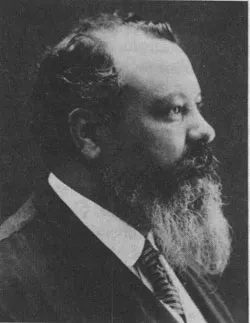
Jordan Peterson
Human Design Chart
Biography
Peterson's first book, Maps of Meaning: The Architecture of Belief (1999), examined several academic fields to describe the structure of systems of beliefs and myths, their role in the regulation of emotion, creation of meaning, and several other topics such as motivation for genocide. His second book, 12 Rules for Life: An Antidote to Chaos, was released in January 2018.
In 2016 Peterson released a series of YouTube videos criticizing political correctness and the Canadian government's Bill C-16, "An Act to amend the Canadian Human Rights Act and the Criminal Code". The Act added "gender identity and expression" as a prohibited ground of discrimination, which Peterson characterised as an introduction of compelled speech into law, although legal experts have disagreed. He subsequently received significant media coverage, attracting both support and criticism. Peterson is associated with the "Intellectual Dark Web".
Peterson married Tammy Roberts in 1989. They have one daughter and one son.
Starting around 2000, Peterson began collecting Soviet-era paintings, displayed in his house as a reminder of, he argues, the relationship between totalitarian propaganda and art, and as examples of how idealistic visions can become totalitarian oppression and horror.
In late 2016, Peterson went on a strict diet consisting only of meat and some vegetables to control severe depression and an auto-immune disorder, including psoriasis and uveitis. He stopped eating any vegetables in mid-2018.
The Human Design of Jordan Peterson: Manifestor 4/6
Manifestor 4/6 — Design at a Glance
Jordan Peterson's Human Design established a foundational stance as a pioneer and visionary. He was predisposed to lead the world in a new direction, much like an emperor in ancient Rome: With the vision of a great empire, he sent others out to achieve goals rather than fighting every battle himself. This role inevitably polarized him. Because his thinking often surpassed that of his surroundings, he was misunderstood. Some followed him enthusiastically because of his big dreams, while others rejected or even hated him.
This split effect is a central pain point for this type. To find the right following and minimize resistance, it was crucial to inform others about his plans in a timely and precise manner. This strategy of informing served to create clarity before actions were taken.
If he lived according to this strategy and his inner authority, his design rewarded him with a sense of internal peace. If he went against his natural pattern, however, an enduring deep anger arose instead. So his path was to clearly communicate his vision in order to attract the right people and reduce conflicts through transparency rather than provoking them by keeping secrets.
Emotional Authority
Jordan Peterson's Human Design established a tendency towards emotional turbulence during decision-making processes. He showed himself as someone who did not find his inner truth immediately but in the waves of his feelings. This results from his Emotional Authority: The Solar Plexus Center is defined and carries this authority. In Human Design, Emotional Authority always takes precedence over all other defined centers, regardless of overall configuration.
This mechanism means that Jordan Peterson's perception was colored by his current mood. What seemed absolutely right in one moment could turn negative the next. So the first emotional impression was not a final truth but only a snapshot. Quick, spontaneous decisions based on this immediate feeling state carried the risk of being proven wrong later.
His design strategy required patience and time. Jordan Peterson had to let decisions mature, often over several days. Through this process of distancing, intense emotional waves subsided. Only when feelings died down did clarity and calm set in. This mechanism served to gain deeper insights before acting. It was not about delaying out of uncertainty but waiting for the complete emotional cycle to recognize the true reality behind the temporary mood state. This necessity for delay fundamentally shaped his approach to long-term life decisions.
The 4/6 Profile — Opportunist / Role Model
Jordan Peterson's Human Design is characterized by a deep inner conflict between the need for belonging and the call to isolated wisdom. In the first three decades of his life, his Line 6 still acted like a Line 3, driving him into intense experiments in relationships and friendships. With the activation of the sixth line, however, a tension field emerged: The Heart (Line 4) sought community, while the Head (Line 6) climbed the mountain to ponder the meaning of life. This contradiction between heart and head shaped his development significantly.
His effectiveness rested on the ability to make material actions useful for the tribe (Gate 45). It was not about self-interest but using favorable opportunities for collection in service of higher principles. At the same time, he brought a mutation into life: The sixth line promoted nonconformist openness and the creation of new societal models through metamorphosis. Social interactions became a magnifying glass in which leadership qualities emerged.
In later years, it was expected that he would meet the high standards of a wise role model. His big heart remained cautious all along; it did not open to everyone to avoid being hurt by false people. His task was to embody maturity as congruence between form and content and make these insights effective through cooperation with others.
Split Definition — Defined & Open Centers
Jordan Peterson's Human Design profile was characterized by a powerful, reliable voice that spoke directly from his willpower and emotional core. His defined Throat Center, connected to the Heart and Solar Plexus Centers, ensured that he didn't just think conceptually but also conveyed his messages with the energy of 'I want' and the depth of his feelings. This configuration gave him a magnetic presence: He knew who he was (defined G Center), possessed the willpower to keep promises (defined Heart Center) and used his emotional wave as authority for decisions. His intuition (defined Spleen Center) protected him in the moment, while his open Head and Ajna Centers allowed him to flexibly take on ideas without having to adhere to rigid concepts. However, he tended to interpret external mental pressure as his own or seek answers that weren't his. His open Sacral and Root Centers made him vulnerable to overloading from foreign energies; he could absorb the stress of the environment and overextend himself since he lacked an internal boundary for generative energy. This led him to learn how to distinguish between his impulses and external pressure to prevent burnout.
Channels for instinctive devotion, emotional openness and reflective distance.
Jordan Peterson's design showed a tendency towards emotional wave and patient reflection. He presented as someone whose social presence wasn't constant but depended on his inner mood. This was marked by the Openness Channel 22-12: Here, Gate 22 connects the emotional depth of the Solar Plexus with the articulatory power of the Throat Center (Gate 12). His ability to move people through voice and expression relied on whether he was in the right emotional state; he needed patience until his inner wave carried him to unleash his transformative effect.
Parallel to this, the Lost Son Channel 13-33 had an impact. This connects the G Center (Identity) with the Throat Center. Through Gate 13, he gathered information and secrets, while Gate 33 prompted withdrawal for processing these experiences. He was a natural listener who stored life stories before sharing them as wisdom. This process required time; he shared his insights only after reflection had concluded and deeper truth emerged.
Additionally, the Channel of Devotion 44-26 shaped his instinctive sense. It connected the Spleen Center (Instinct) with the Heart Center (Will). Through Gate 44, he could intuitively recognize what a tribe or group needed – often before people knew it themselves. Gate 26 gave him the willpower to convincingly communicate and 'sell' these insights. He acted as an intermediary who used historical patterns to offer improvements, waiting for recognition from his audience to use his platform.
Individual Gates like Gate 45 (Tribe level) or Gate 62 (Logic/Details) supported these dynamics by bundling energy for the tribe or creating logical frameworks, but the channels determined the primary action paths: emotional articulation, reflective wisdom, and instinctive conviction.
Tribal Circuitry — Circuit Signature
Jordan Peterson's design inclined towards emotional openness and resource-oriented cooperation. His Knowledge Circuit connected the Throat with the Solar Plexus Center (Channel 'Openness'). This created a direct flow between feelings and expression: Emotional waves from the Solar Plexus were articulated through the throat, fostering pulsating, acoustic creativity. Parallel to this, his Meaning Circuit linked the Throat with the Identity Center (Channel 'The Lost Son'). Here it was about sharing felt insights from the past; cyclical emotional experiences were processed and passed on to the collective for learning together.
A third, separate aspect was his Ego Circuit, which connected Heart and Spleen Centers (Channel 'Devotion'). As Jordan Peterson has a Split Definition, these circuits existed as parallel standing forces, not as a continuous flow. The Ego Circuit focused on tribe dynamics: cooperation and the joint creation of resources through mutual support. Without direct connection to the Sacral Center, this area required quiet pauses for regeneration of material basis. The combination of open emotional expression, reflective sharing of past experiences and traditional supportive collaboration shaped his energetic baseline.
Right Angle Cross of Rulership 2
Jordan Peterson's Human Design shows a tendency towards clear and often authoritative expression. This attitude was shaped by the so-called right-hand Authority 2 cross. It is not a biographical fact in the narrow sense, but an archetypal energy anchored in his chart.
This configuration describes an impulse to establish order and clarity. The person tends to reduce complex situations to their essentials while showing a certain toughness or determination. This is not about arbitrariness, but rather the necessity of making structures visible so that others can orient themselves.
The mechanics behind this are simple: When this energy becomes active, there's a pressure to get to the point. It can be perceived as direct or even demanding, but it serves the goal of transparency. Jordan Peterson was influenced by this force to seek out clear definitions of reality and not tolerate half-truths.
It is important to understand that this is not a character flaw, but a specific way of perceiving and acting. The energy demands that boundaries be drawn and responsibilities clearly assigned. Without this structure, the system would fall out of balance. Therefore, his influence often appears determined and unmistakable.
Saturn Return · Uranus Opposition · Chiron Return · 2nd Saturn Return — Life Cycles
Jordan Peterson's Human Design shows a clear structure where scientific work and personal crises align with planetary cycles. In 1990 at age 28 during his first Saturn Return, he published significant articles in the *Journal of Studies on Alcohol* and *Journal of Abnormal Psychology*. This cycle often marks the condensation of years of groundwork into solid results.
Ten years later in 2002 at age 40 during the Uranus Opposition, further works appeared in *Personality and Individual Differences*. This phase brings new impulses and breaks that challenge and expand the existing foundation.
The Chiron Return around 2010 (age 48) coincided with significant publications in *Personality and Social Psychology Bulletin* and *Journal of Applied Psychology*. In Human Design, this cycle is not a healing period but a blooming time: The individual's Inkarnation Cross unfolds increasingly so that meaning and purpose become experiential – provided one lives according to strategy and authority.
The second Saturn Return in 2019 (age 57) brought a deep crisis: He entered a coma for nine days at a detox clinic in Moscow under Propofol. The second Saturn Return often tests the stability of structures built during the first cycle, demanding a new consolidation.
Manifestor · Emotional Authority — Synthesis
A central red thread runs through his design: the dynamic interaction between inner preservation and outer expression. Emotional authority (Authority) demands time for decision-making, while the Manifestor type (Design View) tends towards action and initiation – a tension amplified by the open Channel 22/12 (Channels/Gates), which channels moodiness and emotional expression in communication. The Profile as Networker/Roles Model (Profile Role) points to a development from experimental search for belonging to a position of influence and wisdom, aligning with the Knowledge Circuit – a striving for transformation through new insights. Repeated career events (Cycles) underscore this process of continuous development and adaptation to one's inner rhythms.
The central paradox lies in the tension between the desire for autonomy and the need to gain emotional clarity. The defined Communication and Manifestation Centers (Centers) point to a drive to convey messages and initiate change, while emotional authority requires an internal wave that delays and nuances this expression. This discrepancy between the impulsive action of the Manifestor and the emotional maturity of the Profile leads to an inner conflict – a constant weighing between one's own will and shifting feelings, further intensified by the right-hand Authority cross (Cross).
3 Defined Channels
Incarnation Cross - Right Angle Cross of Rulership 2
Solar Return
The Solar Return shows the moment when the sun returns to its exact birth position - your personal solar year.
Life Cycles
Discover the life cycles with a detailed triple view (birth chart, cycle chart, composite).
Human Design Profile
- Type
- Manifestor
- Strategy
- To inform others before acting
- Authority
- Emotional Authority
- Profile
- 4/6 - Opportunist / Role Model
- Definition
- Split Definition
- Incarnation Cross
- Right Angle Cross of Rulership 2
- Date of Birth
- 12.06.1962 02:49
- Place of Birth
- Edmonton, CAN
Frequently Asked Questions
What is Jordan Peterson's Human Design type?
What Profile does Jordan Peterson have in Human Design?
What Authority does Jordan Peterson possess?
What is Jordan Peterson's incarnation cross?
When was Jordan Peterson born?
Discover your own Human Design
Are you also a Manifestor? Find out in a personal reading how to use your initiation power peacefully and dissolve resistance.
More Personalities
Back to overviewChristian-Jaque
Kesha

Laurent-Eynac
Lucebert
Masaccio
Papus