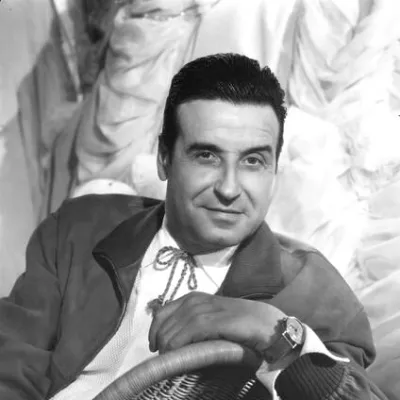
Joseph L. Mankiewicz
Human Design Chart
Biography
Mankiewicz arrived in Hollywood after his brother Herman helped pave the way for intellectual East Coast writers to earn high salaries in the Hollywood screen-writing departments. Joseph Mankiewicz wrote screenplays and produced and directed star features as studios vied for his talents.
Throughout his years in Hollywood, he sported a rivalry with his older brother who earned an Oscar for writing the screenplay of Citizen Kane in 1941. Joseph once said, "Everyone else has a mother or father complex, but I have a Herman complex!" Despite his many box office success stories, Mankiewicz was in charge of one of the biggest film flops of all time, Cleopatra, in 1963.
Joseph's father, Franz, emigrated to New York from Germany in 1892. A German-Jewish news reporter and editor, his dad prized education over everything. He went back to school in his forties and later earned his PhD to became a professor at New York City College. Joseph was the middle child between his older brother Herman and his sister Erna. Artists, intellectuals, and scientists were invited to dinner at the Mankiewicz household.
The boys grew up with heady, intellectual dinner conversations. Their tyrannical father made life a misery for the reckless and irresponsible Herman in spite of his "A" grades in school. Joseph was more disciplined than his brother and was determined to make his father proud of him. Both Herman and Joseph entered Columbia University at age of 15 and graduated at 26. Joseph went to school at the University of Berlin where he studied literature and languages. He wanted to follow in his father's footsteps and join the teaching profession as an academic scholar.
What does Projector 4/6 mean for Joseph L. Mankiewicz?
Projector 4/6 — Design at a Glance
Joseph L. Mankiewicz had an intense and focused presence that often directly impacted his surroundings in both attractive and challenging ways. His Projector design indicated that he did not have a constant, intrinsic energy flow but rather operated in phases of high intensity followed by necessary rest periods for regeneration. This structure meant that a steady, consistent work rhythm as expected in many conventional systems would be unsustainable for him and could lead to burnout.
His nature was to quickly identify systemic errors or inconsistencies in others. However, direct confrontation with these insights often felt like glaring light to the other person, causing resistance. His impact was more effective when he shone through his own harmony and clarity; this naturally drew others who then sought his guidance. The optimal strategy for him was to wait for honest invitations before offering his knowledge or leadership. If he followed this pattern, he was rewarded with success. Deviating from it by trying to push against resistance or being constantly available without taking necessary rest led sooner or later to feelings of bitterness as an expression of his non-self.
Splenic Authority
Joseph L. Mankiewicz demonstrated decision-making based on a fine, spontaneous impulse. His design indicated that in the exact moment of occurrence he knew what was right for him. This ability stemmed from his authority in the Spleen Center, which functions as a health and alarm system. Since both his Emotional and Sacral Centers were open – a prerequisite for this specific form of authority – he could rely on intuitive survival intelligence. His physical well-being and intuition served as reliable indicators whether a situation or environment was healthy.
This inner impulse was only effective once at the moment and very subtle. It could easily be overshadowed by external influences, which required Joseph L. Mankiewicz to maintain high vigilance. Often he withdrew to clearly perceive this first, decisive spark. As his knowledge was situational, his preferences changed short-term; long-term commitments were difficult and often counterproductive for him. Instead, he sought flexibility and freedom to react spontaneously to the situation at hand. This mechanism allowed him to rigorously shield against harmful influences and protect himself effectively by following the initial instinct rather than diluting it through reflection.
The 4/6 Profile — Opportunist / Role Model
Joseph L. Mankiewicz exhibited a fundamental disposition marked by an internal conflict between the desire for community and the longing for wise distance. In his first thirty years, he appeared experimental, intensely seeking connections in relationships and friendships, similar to someone with a pure Line 3. With the activation of Line 6, however, a contradiction emerged: The Heart yearned for belonging while the Head focused on the higher purpose of life.
This Profile 4/6, described as 'Networker and Role Model', indicated that his life revolved around balancing emotional engagement with intellectual reflection. The fourth line of his design drove him to carry revolutionary principles outward and find support for a party program emphasizing human rights. Simultaneously, the sixth line demanded a breakthrough through new knowledge enabling transformation towards a new order. He only engaged where he sensed this mutation was supported.
In later years, his design expected him to act as a wise role model and stand out through cooperation. However, the great heart of Line 4 remained cautious; it did not open up indiscriminately to avoid injury. This configuration described a life task aimed at establishing a connection between revolutionary ideas and community despite the potential danger of losing ground due to excessive intellectualism.
Split Definition — Defined & Open Centers
Joseph L. Mankiewicz stood out for his constant, trustworthy mental function. His defined Ajna Center ensured that he created concepts and theories in the same way consistently, making him hard to influence by others. This mind served as an external authority for those around him; it conditioned the mental field of people in his aura. Since his definition lay between Ajna and the also defined Throat Center, he was always able to express what he thought. The throat acted as a pivot point that transformed these mental processes into clear communication and action.
Additionally, Mankiewicz had a defined Spleen Center, which allowed him spontaneous, intuitive judgments in the "now." This existential awareness provided him with a protective mechanism based on instinct and well-being, independent of rational analysis. His defined Root Center supplied the necessary adrenalized pressure to move forward in the material world and process stress in a set way.
At the same time, he was strongly influenced by several open centers. The open Head Center made him vulnerable to mental pressure; he tended to engage with others' questions or seek inspiration to alleviate confusion rather than trusting his inner authority. His open G Center meant a lack of firm identity and direction. He often adapted to the people around him and searched for the right place to find love and clarity instead of generating it himself.
The open Heart Center made him sensitive to the need to prove his worth. He risked making promises he could not keep to gain recognition, which could spiral into self-doubt. Furthermore, his Sacral Center was open, leaving him without a constant vital energy. He absorbed the generative power of others and amplified it, making him vulnerable to overexertion since he did not always know when enough was enough. Finally, his open Solar Plexus absorbed the emotions of his surroundings, leading him to personalize feelings that belonged to others rather than remaining an objective observer.
Channels for insight, life purpose and ambitious transformation.
Joseph L. Mankiewicz revealed himself as someone whose thinking often seemed light-years ahead, coupled with a stubborn determination to follow his own path. His design indicated a tendency to develop unique perspectives and express them in ways that changed how others saw and thought.
This ability was rooted in the Channel of Structuring 43-23. He received inspired knowledge as spontaneous insights (Gate 43) and processed it through assimilation (Gate 23), before clearly articulating it. To have his innovative thinking accepted, he had to wait for the right timing; otherwise, he risked rejection. Parallel to this, the Channel of Life Struggle 38-28 propelled him forward. He actively sought meaning in conflicts (Gate 38) and intuitively evaluated which struggles were worthwhile (Gate 28). This energy gave him the courage to resist external forces to preserve his individual integrity.
Additionally, the Channel of Transformation 54-32 influenced him. Driven by ambition (Gate 54) and an instinct for continuity (Gate 32), he aimed to improve his position through talent and consistency while securing the welfare of his "tribe." His ambitions were always tied to the necessity of receiving support from others.
Individual Gates rounded out this picture: Gate 49 demanded sacrifice for principles, while Gate 4 developed logical formulas for future security. Gate 50 preserved conservative values and traditions, and Gate 41 propelled him through emotional crises towards evolutionary development. Gate 17 organized succession based on readiness to serve, while Gate 39 triggered mutation through provocation. Intuitive clarity (Gate 57) and the pioneer spirit for new cycles (Gate 53) supported his individual alignment. Caution in temptations (Gate 12) and a harmonious assessment of ideas before action (Gate 11) completed his strategic approach.
Individual Circuitry — Circuit Signature
Joseph L. Mankiewicz revealed himself as someone who processed structure and emotional intensity in two separate areas of his life. His design featured a Split Definition, meaning he was not consistently driven by a single continuous energy source but had to switch between various independent fields of energy.
The Mental Circuit appeared in him as two isolated segments. On one hand, Channel 43-23 connected the Ajna Center with the Throat Center. This gave him the ability to clearly structure internal concepts and ideas and convey them outwardly through speech or writing. On the other hand, Channel 28-38 operated between the Spleen and Root Centers. This area provided an intuitive perception of dangers or necessities that manifested as acute survival struggles or urgent action requirements. These two aspects – articulating ideas clearly and intuitively responding to internal urges – were not energetically directly connected.
Additionally active was the Ego Circuit, also represented solely by Channel 32-54 between Spleen and Root Centers. This part of his design concerned the transformation of resources and creating material security within a community or family context. Since this channel utilized the same centers as the second part of the Mental Circuit, overlapping forces of intuition and survival instincts formed here. Joseph L. Mankiewicz had to learn to integrate these different adjacent energy fields, as his system did not offer a continuous connection between thinking (Ajna) and deep instincts (Spleen/Root). He often acted out of necessity either to articulate an idea or respond to an internal impulse for securing his foundation.
Right Angle Cross of Explanation 1
Joseph L. Mankiewicz lived with a profound, often painful ambivalence between the drive for clear understanding and the fear of its consequences. His design was shaped by two contradictory forces: the right cross of knowledge and the right cross of explanation. This created an inner tension that drove him to penetrate truths while simultaneously hesitating to fully disclose or articulate them.
The right cross of knowledge endowed him with a sharp intuition for hidden connections and a deep curiosity about the essence of things. He sought the core of truth, often driven by a near compulsive need to unravel reality. Yet this insight was frequently confined within, as the right cross of explanation built a strong resistance against openly communicating these insights.
This configuration did not mean ignorance but rather selective disclosure. Joseph L. Mankiewicz often knew more than he spoke. The fear of misunderstanding or the consequences of his words led him to withhold his deepest insights or share them only in fragments. This resulted in a life characterized by inner clarity but outward restraint and caution. He carried the weight of knowledge alone, while the world often saw only the surface of his thoughts. This dynamic created a unique yet isolating perspective on his environment and his own work.
Saturn Return · Uranus Opposition · Chiron Return · 2nd Saturn Return — Life Cycles
Joseph L. Mankiewicz showed himself to be someone capable of translating profound inner tensions into visible, formal results. His design inclined him towards not eliminating conflicts or opposites but using them as driving forces for creative processes. This dynamic is described by the Uranus opposition: an aspect often associated with a need to challenge established structures or break old patterns radically to allow new things to emerge. It is not about arbitrary destruction but a necessary process of freeing outdated forms so that authentic expressions can take place.
In 1949, at age 40, Joseph L. Mankiewicz received the Oscar for best direction and best adapted screenplay for “A Letter to Three Wives.” This success occurred precisely during a phase marked by this planetary configuration. The event served as concrete evidence of how the transformative power from his design expressed itself in converting tension into creative achievement. Rather than avoiding the pressure of opposition, he used it to complete work that was formally recognized and thematically addressed breaks. Here, the mechanics show that overcoming inner resistance and accepting opposites were prerequisites for his visions becoming effective in the outside world.
Projector · Splenic Authority — Synthesis
Joseph L. Mankiewicz was a projector defined by his clear mental center (Ajna) and the channel of structuring (61/23), destined to recognize patterns and translate this knowledge into understandable forms. He possessed the ability to identify “errors in the system” and spontaneously grasp this insight – a gift that came with the risk of irritating others through direct communication. Instead, he sought ways to offer his understanding to shed light on darkness and illuminate paths for others. This tendency towards analysis and structuring was combined with an inner authority in the spleen, giving him a fine sense for timing and appropriate surroundings.
A central paradox in his design lay in the interplay between heart (line 4 in profile) and head (line 6). He aspired both to belonging and deep connections as well as the distance needed to reflect on larger contexts. This inner conflict led him, in later years, to take on a role of mentorship, always trying to share his insights with others and find reinforcement through cooperation – a process further fueled by the knowledge circuit. A documented event showed how his talent for structuring and expression found recognition in an Oscar win in 1949.
3 Defined Channels
Incarnation Cross - Right Angle Cross of Explanation 1
Solar Return
The Solar Return shows the moment when the sun returns to its exact birth position - your personal solar year.
Life Cycles
Discover the life cycles with a detailed triple view (birth chart, cycle chart, composite).
Human Design Profile
- Type
- Projector
- Strategy
- Wait for the respectful invitation
- Authority
- Splenic Authority
- Profile
- 4/6 - Opportunist / Role Model
- Definition
- Split Definition
- Incarnation Cross
- Right Angle Cross of Explanation 1
- Date of Birth
- 11.02.1909 04:00
- Place of Birth
- Wilkes-Barre, PA, United States
Frequently Asked Questions
What was Joseph L. Mankiewicz's Human Design type?
What Profiles did Joseph L. Mankiewicz have?
What Authority did Joseph L. Mankiewicz have?
What incarnation cross did Joseph L. Mankiewicz have?
When was Joseph L. Mankiewicz born?
Discover your own Human Design
Are you also a Projector? Find out in a personal reading how to unfold your leadership qualities and recognize the right invitations.
More Personalities
Back to overviewSissy Spacek

Alain-Fournier

Anémone

Ann-Margret

Bourvil
Christian-Jaque