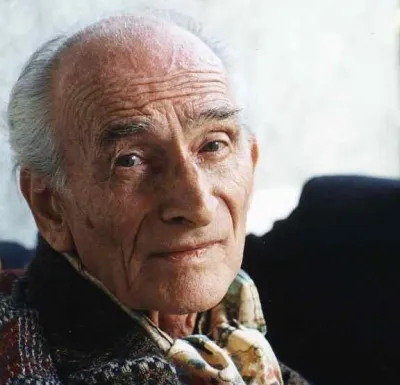
Karl Pribram
Human Design Chart
Biography
Human Design Analysis: Karl Pribram as Manifesting Generator 1/3
Manifesting Generator 1/3 — Design at a Glance
Karl Pribram's design featured a tendency towards hybrid energy: He combined the constant power of a Generator with the lightning-fast action of a Manifestor. As a Manifesting Generator, he had defined sacral energy, which gave him a steady foundation. However, unlike a pure Generator, he could skip steps and quickly draw things into his life. This speed carried risks: Often, he was too fast, neglecting important intermediate steps and later having to backtrack to fill in gaps – a source of frustration. Additionally, he tended to juggle multiple projects simultaneously, driven by various impulses. Without the inner approval of his authority, this creative drive quickly turned into overwhelm. His strategy involved not initiating but reacting to life. Only when his sacral center clearly said "Yes" and his authority agreed could he proceed. Under these conditions, Karl Pribram drew deep satisfaction from his work. Parallel working was no obstacle for him; rather, it was necessary; the compulsion to finish one thing before another hindered access to his power. In a playful mode, with variety and fun, his speed served constructively instead of destructively. His design demanded constant re-evaluation: Was there still inner approval? Only then did the energy flow smoothly and satisfyingly.
Emotional Authority
Karl Pribram's design inclines towards deep emotional reflection. His inner authority stems from the defined Emotional Center. In Human Design mechanics, this source is considered primary: Whenever the Emotional Center is activated, it serves as the decisive authority, regardless of other defined centers in the chart.
This configuration shaped a specific internal dynamic. Karl Pribram was subject to an emotional wave that manifested in constant ups and downs of his feelings. His perception of the world was always colored by his current mood. At one moment, he could be totally enthusiastic about something, only to view it negatively in the next instant. However, this immediate feeling formed merely a snapshot, a first impression, which did not necessarily represent the deeper truth.
Quick, spontaneous decisions based on such emotion carried the risk of negative consequences. The mechanics of his authority required patience and time. By allowing himself to let decisions mature and letting them go overnight multiple times, he gained emotional distance. Over time, intense feelings subsided. Clarity and calmness set in. Only then was the process complete. This approach was particularly crucial for long-term decisions that could have a significant impact on his life course.
The 1/3 Profile — Investigator / Martyr
Karl Pribram's design inclined him towards being both a researcher and an experimenter. His Profile 1/3 marked him as someone who found his truth through personal action and learning from mistakes. Line 1 drove him to theoretical depth; he sought guidelines and foundations before acting. Often, this led to hesitation, as he felt he did not yet have enough knowledge to proceed with implementation. Yet, Line 3 urged him to overcome exactly this inhibition. It forced him to try things out, even if errors were inevitable. For Karl Pribram, a mistake was not failure but an essential source of information. Only through practical testing and the resulting setbacks could he solidify his insights. His judgments were therefore particularly trustworthy: when he deemed something correct, he had understood it not just theoretically but also practically tested it to the core. This combination of Line 1's learning approach and Line 3's experimental spirit created a person who did not seek security in pre-fabricated dogmas but in self-earned experience. His path was marked by trial and error, where each failure served to lower the tolerance level for future errors and thereby increase the precision of his conclusions.
Split Definition — Defined & Open Centers
Karl Pribram's design established a tendency towards persistent and willful expressive ability. His defined centers – Throat, Heart, and Sacral Centers – formed a robust energy foundation: The Throat Center enabled clear communication, the Heart Center bestowed strength of will for self-determination, while the Sacral Center generated vital force for sustainable action. Complemented by a defined Solar Plexus Center, whose emotional wave required patient waiting, and a defined Root Center, which provided physical pressure for forward movement, Karl Pribram appeared as someone with inner stability and endurance.
At the same time, his undefined centers revealed specific vulnerabilities. The open Head and Ajna Centers made him mentally flexible but also susceptible to external inspirations or confusion; he tended to adopt questions from others. His open G Center meant a lack of fixed identity – he often sought direction through environmental influences rather than inner certainty. An undefined Spleen Center made him sensitive to health and survival fears, which could lead to impulsive decisions if he did not follow his strategy. This constellation shaped his life: Strengths in endurance and expression stood in tension with the need to actively maintain mental clarity and inner peace.
Channels for community, focus and emotional change.
Karl Pribram's design inclines towards extreme focus paired with a deep need for emotional experience and the building of stable community structures. This configuration marks him as someone who seeks logical precision but truly comes alive when he senses new feelings or anchors himself in a familiar group.
The Channel of Concentration 52-9 connects his Root Center to his Sacral Center. This creates a calm, passive pressure (Gate 52) that keeps him still while he evaluates details and facts precisely (Gate 9). He gathers his energy like in a yoga pose to concentrate on one activity and perfect patterns. Without such focus, he feels restless; with it, he can confirm or refute logical processes step by step.
At the same time, the Channel of Transience 35-36 drives him, connecting his Solar Plexus Center to his Throat Center. This emotional channel seeks adventures and new experiences (Gate 35), often motivated by a feeling of inner inadequacy or crisis (Gate 36). He learned wisdom through these emotional highs and lows and inspired others with his "hero stories." His advice was based on using the moment since feelings are transient.
The Channel of Community 37-40 connects his Solar Plexus Center to his Heart Center. He seeks recognition and his place in the whole (Gate 37), but is willing to work for the sustenance of those he loves, as long as he gets breaks (Gate 40). For him, relationships are not spontaneous closures but carefully weighed contracts based on mutual benefit and loyalty.
Additionally, Gates like Gate 16 (Experimenting), Gate 58 (Pattern Recognition), and Gate 30 (Feeling Awareness) influence his personality. In the design, Gates such as Gate 5 (Rhythm) and Gate 29 (Persistence) support his ability to build energy and master challenges.
Collective Circuitry — Circuit Signature
Karl Pribram's design shows a tendency towards structured concentration and the exchange of emotional experiences. In his split definition, there were two energetically separate systems that did not directly flow into each other. The first system connected the Sacral with the Root Center through the Understanding Circuit. Here, Channel Concentration (9-52) was active, describing a capacity for focused, logical analysis without emotional influence. This energy directed itself towards the future and sharing rational insights.
The second system included Throat, Solar Plexus, and Heart Centers, also not connected to the first system. In the Meaning Circuit, Channel Transience (35-36) linked the Throat with the Solar Plexus Center. This showed a cyclical, wave-like emotional processing of past events that served for sharing and learning collectively from history. Parallel to this, in the Ego Circuit, Channel Community (40-37) worked between Heart and Solar Plexus Centers. It promoted cooperative resource creation through balanced giving and taking within social groups without direct connection to the constant life force of the Sacral Center. Both systems shaped Karl Pribram as separate forces: on one hand, cool, future-oriented logic; on the other, emotional reflection of the past along with traditional social support.
Right Angle Cross of Planning 1
Karl Pribram's design established a tendency towards a very specific kind of strategic approach. His chart contained the right cross of planning, a configuration that pointed to a deep need for structured preparation and clear direction. This mechanism did not simply mean a love for order but the necessity to think through the exact path before acting or diving into new ventures, logically sequencing necessary steps. It was an inner compass signaling that spontaneous impulses without prior planning often led nowhere. Instead, he showed himself most effective when first keeping the big picture in mind and then methodically arranging the details. This ability for detailed preparation protected him from missteps and gave him confidence that his actions rested on solid ground. The right cross of planning thus served as a tool to break down complex situations into manageable segments. Karl Pribram utilized this inner structuring power to reduce uncertainties and focus on what was essential. His strength lay not only in planning but also in rigorously following through with these plans until the goal was reached, lending his undertakings a particular stability and reliability stemming from this specific energetic alignment.
Saturn Return · Uranus Opposition · Chiron Return · 2nd Saturn Return — Life Cycles
Karl Pribram's design established a tendency towards profound structural upheavals often accompanied by an expansion of collective consciousness. This configuration marked him as someone who questioned established paradigms and brought new perspectives into the mainstream.
In 1956, at age 37, he was elected to the American Academy of Arts and Sciences. This aligned with the Uranus opposition cycle, a phase where internal tensions between individual autonomy and societal expectations often culminate in a decisive career step. Here, his design enabled him to find recognition within elite structures through innovative approaches.
Later, in 1971 at age 52, he published 'Languages of the Brain.' This fell during the Chiron return, an approximately 49-51 year fulfillment cycle (with tolerance), considered a peak period. During this life phase, one's incarnation cross increasingly unfolds; if lived according to strategy and authority, its purpose becomes experiential. Pribram's publication marked this pinnacle where his lifelong work matured into a coherent, publicly visible achievement carrying his inner mission outward.
Manifesting Generator · Emotional Authority — Synthesis
Karl Pribram was an Manifesting Generator whose life was characterized by a constant interplay between the urge for rapid implementation and the necessity of emotional maturation. His defined sacral center supplied him with constant energy, yet the connection to the throat center also endowed him with Manifestor qualities – the ability to push initiatives forward and spark things quickly (Concentration Channel). This interplay was evident in a pattern of action driven by the search for new insights through experimentation (Profile 1/3), but always requiring time to process emotions and make decisions from deep inner authority.
A central paradox lay in Pribram's possession of Forma-Energy oriented towards structure and logical understanding (Understanding Circuit) while also being subject to emotional waves. This tension was revealed in the evidence for professional success and recognition (1956, 1971), often following intense internal struggles. Thus, he lived a dynamic of swift action coupled with the need to validate insights through emotional depth.
3 Defined Channels
Incarnation Cross - Right Angle Cross of Planning 1
Solar Return
The Solar Return shows the moment when the sun returns to its exact birth position - your personal solar year.
Life Cycles
Discover the life cycles with a detailed triple view (birth chart, cycle chart, composite).
Human Design Profile
- Strategy
- To respond - wait for something to respond to
- Authority
- Emotional Authority
- Profile
- 1/3 - Investigator / Martyr
- Definition
- Split Definition
- Incarnation Cross
- Right Angle Cross of Planning 1
- Date of Birth
- 25.02.1919 20:00
- Place of Birth
- Vienna, AUS
Frequently Asked Questions
What was Karl Pribram's Human Design type?
What Profile did Karl Pribram have in Human Design?
What Authority did Karl Pribram have?
What incarnation cross did Karl Pribram have?
When was Karl Pribram born?
Discover your own Human Design
Are you also a Manifesting Generator? Find out in a personal reading how to unfold your multi-talents and direct your energy wisely.
More Personalities
Back to overviewAldair

Alizée

Angeli

Arletty
Artus

Balthus