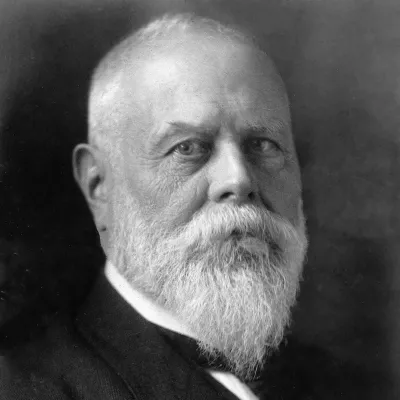
Karl Sudhoff
Human Design Chart
Biography
Sudhoff taught for years at the University of Leipzig, where he founded the Institute for the History of Medicine (Institut für Geschichte der Medizin) and exercised strong control over the direction of German medical history. He also established the journal Archiv für Geschichte der Medizin, later renamed Sudhoffs Archiv, and the monograph series Studien zur Geschichte der Medizin. As a researcher, he had a reputation for strength in archival research, and made a particular contribution to the revival of interest in Paracelsus and Constantine the African. He retired in 1925, and was succeeded in his position at Leipzig by Henry E. Sigerist.
In 1933 Sudhoff joined the Nazi Party (NSDAP), to the great dismay of many of his peers, maintaining his membership for the rest of his life. After Sigerist's 1932 departure for Johns Hopkins University, Sudhoff again headed the Institute at Leipzig before turning the position over to Walter von Brunn in November 1934. He died in Salzwedel on 8 October 1938, aged 84.
The Human Design of Karl Sudhoff: Manifesting Generator 5/1
Manifesting Generator 5/1 — Design at a Glance
Karl Sudhoffs design points to a tendency towards great speed and parallel activity. As an Manifesting Generator, he had constant sacral energy serving as his powerful foundation. However, he also possessed manifestor traits, allowing him to skip steps and quickly pull things into his life. This hybrid configuration created a tension: On one hand, he could move forward efficiently; on the other, there was a risk of missing important stages. When this happened, he often had to backtrack and make up for missed steps, which could lead to frustration – the specific non-self theme of this type.
Furthermore, his design tended to react simultaneously to many different impulses and handle multiple projects in parallel. Without clear inner guidance, this creative drive could turn negative. Crucial for his satisfaction was the strategy of not initiating himself but responding to life. Only when his sacral center gave a clear yes after an 'antest' and he entered a playful mode could he effectively use his energy. In this state, variety was no obstacle but rather the source of deep satisfaction from creation.
Emotional Authority
Karl Sudhoffs design points towards emotional depth and wave-like decision-making. He appeared as someone who did not find his inner truth in the first impulse but gained it through experiencing an emotional curve. His inner authority was Emotional Authority, carried by the defined Emotional Center. In Human Design mechanics, this center is always prioritized for decision-making regardless of other defined centers.
Sudhoff was subject to an emotional wave that showed itself as a permanent up and down in his feelings. He saw the world colored through his current mood: excited about something one moment, then negatively evaluating it the next. However, his feeling at any given moment was just a snapshot, a first impression not necessarily representing his truth yet. Quick, spontaneous decisions based on such emotion could have negative consequences.
The more time he took to let a decision mature, the deeper and more comprehensive he could understand the situation. This required patience and multiple rounds of reflection. He should take his time and ask himself several times over. Over time, intense feelings subsided, emotional distance was gained, clarity and calm set in. Only then had he gone through the process. This mechanism particularly shaped long-term decisions that could have a significant impact on his life course.
The 5/1 Profile — Heretic / Investigator
Karl Sudhoffs design points towards appearing as an authoritative figure whose deep knowledge magnetically attracted others. As Profile 5/1 (Hero/Researcher), he combined a tendency for intense, private research with the role of problem solver for the outside world. This configuration created dynamic tension: His expertise acted like a magnet attracting others to find solutions. Without clear boundaries, this attraction could overwhelm him, similar to a scientist left exhausted after hours of consultation and faced with a flood of further inquiries.
His inner rhythm was shaped by Lines 5 and 1. The fifth line brought projected power presence that was especially effective in crisis times but also triggered resistance and discomfort when questioned. Simultaneously, the first line demanded strict rest phases to regenerate willpower – comparable to moon phases or digestion where calm must precede new performance. Sudhoff had to learn to differentiate between his private research work and public problem-solving. Only by setting boundaries could he maintain this balance: optimally using his gifts without exhausting himself through constant inquiries from others or suffering in isolation due to ego.
Triple Split Definition — Defined & Open Centers
Karl Sudhoffs design tends towards a constant mental pressure and deeply rooted willpower. The definition between Head Center and Ajna Center creates a permanent impulse to ask questions and logically organize connections. However, this mental process is not directly connected to energy sources; fighting against this inspiration often leads to frustration, while waiting for the right moment brings clarity. Additionally, his defined G-, Heart, and Sacral Centers shape his structure: He has a firm self-identity and direction (G), reliable willpower for promises (Heart), and generates daily vital energy activated by external stimuli (Sacral). His open Spleen Center makes him vulnerable to survival fears and the temptation to make spontaneous decisions to simulate security. This can lead to clinging to situations that do not serve his well-being or acting impulsively instead of waiting for clear answers from his inner authority. The combination of defined mental structure and open intuitive basis means that his strength lies in consistently applying his willpower and sacral energy, while he needs to learn not to compensate the uncertainties of the open Spleen Center with hasty actions but wait patiently for clear responses from his center.
Channels for authentic action, logic, focus, presence and community.
Karl Sudhoffs design tends towards analytical skepticism. The Logic Channel 63-4 connects Head and Ajna Centers, making doubt an essential filter for patterns; only verifiable connections are considered true. This attitude requires logical experimentation rather than blind belief.
Parallel to this, the Concentration Channel 52-9 between Root and Sacral Centers operates as format energy, carrying qualities of the Understanding Circuit by connecting passive non-action at Gate 52 with focused detail vision from Gate 9. This creates potential for calm endurance activated through sacral reaction to perfect patterns and avoid distractions.
In the realm of self-expression and survival energies, additional channels shape his essence. The Awakening Channel 10-20 connects G and Throat Centers, making individual principles visible in the present moment; this promotes self-confidence through authentic action. Additionally, the Exploration Channel 34-10 between Sacral and G Centers supports inner strength (Gate 34) to live one's convictions, establishing self-love as a basis for interactive behavior.
The Charisma Channel 34-20 channels this generative force directly into manifestation through the Throat Center, making quick actions guided by sacral reaction possible. Finally, the Community Channel 37-40 between Solar Plexus and Heart Centers provides emotional clarity for agreements; it seeks recognition (Gate 37) and guarantees stable connections within a group through willpower (Gate 40), requiring time to seal fair deals.
Additionally, priorities like Gate 16 (Experimenting), Gate 59 (genetic pairing strategy), and Gate 3 (mutation through order creation) contribute to the complex energetic landscape aimed at adaptation and collective progress.
Individual Circuitry — Circuit Signature
Karl Sudhoffs design tends towards a solid individuality structured by separate energy blocks. As a Triple Defined, he has three independent power centers that do not flow into each other. The Centering Circuit connects Identity and Sacral Centers through the Exploration Channel (10-34). This creates pulsating energy to strengthen personal identity but lacks connection to Throat Center for its expression. Parallel exists the Understanding Circuit with two isolated parts: Head and Ajna (Logic 63-4) as well as Sacral and Root (Concentration 9-52). This allows focused, emotionless rationality for future planning separate from individual identity. A third block forms the Ego Circuit: Heart and Solar Plexus are connected through the Community Channel (40-37). This promotes traditional cooperation and mutual support without direct life force from Sacral Center, requiring rest periods. Finally, the Integration Circuit connects Throat, Sacral, and Identity Centers via Awakening (20-10) and Charisma (20-34), integrating intuitive power and correct behavior in the present for self-strengthening. Sudhoffs character thus shows a mix of strong but unspoken individuality, clear rational strategy, and cooperative tradition, with these areas energetically separate yet standing side by side.
Left Angle Cross of Duality 2
Karl Sudhoffs design points to a tendency towards a deep, often unspoken connection. He was someone who did not primarily influence through active leadership or loud initiative but rather through the quiet power of presence and resonance. This attitude stems from the influence of the left side of the Duality 2 cross in his system.
This configuration does not describe a dynamic drive to change the external world, but rather static, anchored energy. It acts like a magnetic field: Karl Sudhoff did not attract others through instructions, but created a space of stability and trust. In relationships or groups, he was the constant element that provided support without drawing attention to himself. His strength lay in his ability to reflect the essence of others, thereby establishing a deep intuitive connection – not through words, but through his mere presence.
This mechanism means that his impact often happened behind the scenes. He was the rock on which others could orient themselves without him actively steering them. Duality 2 emphasizes the polarity between active and passive; on the left side, in his orientation, the passive, receptive quality dominated. Karl Sudhoff lived this role by creating space for others rather than taking it up himself. His presence offered a sense of security that allowed others to open up and be themselves. It was an energy of holding and anchoring that stabilized relationships through quiet reliability without having to stand in the spotlight or exercise control.
Saturn Return · Uranus Opposition · Chiron Return · 2nd Saturn Return — Life Cycles
Karl Sudhoffs design points towards a late but profound confirmation of his life mission. His Chiron Return, the cycle between the ages of 49 and 51, marks in Human Design the point where one's incarnation cross – if lived according to strategy and authority – increasingly unfolds and becomes experiential. This fulfillment cycle does not describe healing old wounds but rather a bloom period when inner structure manifests outwardly. In 1904, at age 51, Karl Sudhoff was appointed an unscheduled extraordinary professor. This career event aligned with the Chiron Return: The appointment was no random success but the concrete result of a long-term process of self-actualization. His design showed how years of inner work condensed into an external position that reflected his personal purpose. The focus lay on manifesting one's essence in public space, not overcoming deficits. Through this appointment, it became evident that Karl Sudhoff had followed his path without working against his nature. The mechanics of the Chiron Return emphasized the authenticity of actions: Only when life is lived in harmony with inner logic does such confirmation occur. It was a phase of integration where theoretical life purpose took practical form and thus became tangible for Karl Sudhoff and those around him.
Manifesting Generator · Emotional Authority — Synthesis
Karl Sudhoffs life path was marked by a deep inner drive towards understanding and the desire to share this knowledge. His design as an Manifesting Generator (MG) with sacral energy pointed to someone who could quickly set things in motion but primarily waited to respond to opportunities – a dynamic interplay of initiation and readiness for response. The Line 5/1 in his profile strengthened this aspect: he was destined to accumulate knowledge and make it available to others, a role that magnetically aligned him with problem-solving requests from others. The defined Head and Ajna channel (Logic) provided constant mental pressure to formulate questions and filter patterns, which promoted his deep engagement with complex topics.
A central paradox in Karl Sudhoffs design lay in the tension between the speed of the Manifesting Generator and emotional authority. While he could potentially act quickly, his Emotional Center required time to let decisions mature and grasp the true essence of a situation. This may have led him to struggle between the impulse to act immediately and the necessity to wait for clear emotional direction – an internal resistance between quick reaction and deep consideration.
6 Defined Channels
Incarnation Cross - Left Angle Cross of Duality 2
Solar Return
The Solar Return shows the moment when the sun returns to its exact birth position - your personal solar year.
Life Cycles
Discover the life cycles with a detailed triple view (birth chart, cycle chart, composite).
Human Design Profile
- Strategy
- To respond - wait for something to respond to
- Authority
- Emotional Authority
- Profile
- 5/1 - Heretic / Investigator
- Definition
- Triple Split
- Incarnation Cross
- Left Angle Cross of Duality 2
- Date of Birth
- 26.11.1853 08:00
- Place of Birth
- Frankfurt am Main, GER
Frequently Asked Questions
What was Karl Sudhoff's Human Design type?
What Profile did Karl Sudhoff have in Human Design?
Which Authority guided Karl Sudhoff's decisions?
What incarnation cross was assigned to Karl Sudhoff?
When was Karl Sudhoff born?
Discover your own Human Design
Are you also a Manifesting Generator? Find out in a personal reading how to unfold your multi-talents and direct your energy wisely.
More Personalities
Back to overviewAldair

Alizée
Angeli
Arletty
Artus

Balthus