
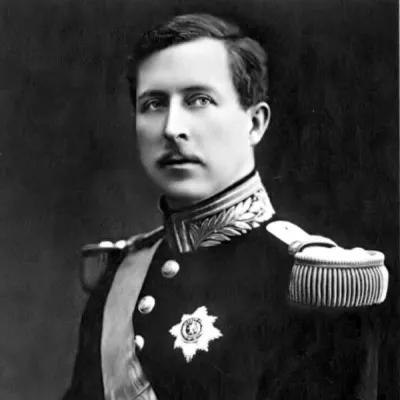
King of Belgium Albert I
Human Design Chart
Biography
What does Generator 4/6 mean for King of Belgium Albert I?
Generator 4/6 — Design at a Glance
King of Belgium Albert I possessed fundamental endurance and materialization power, which was not unleashed through spontaneous initiative but rather in response to external impulses. His design suggested that his true strength as a 'workhorse' only became effective when he responded to signals from his environment instead of taking the first step himself. This dynamic originated from his sacral center, the motor of his system, providing energy once an internal 'yes' signal was received.
The strategy of reacting rather than initiating was key for him in avoiding burnout. King of Belgium Albert I faced two specific risks: either he wasted his considerable strength on tasks that did not provide inner satisfaction, leading to burnout, or he was actively prevented from continuing work on his heart project despite still being full of energy. Only by aligning with this reactive principle could he experience deep contentment and a sense of fulfillment. Acting against this nature by constantly initiating led to frustration or a lack of energy. His life task consisted in responding instinctively to what spoke to him, ensuring no one could stop him.
Sacral Authority
King of Belgium Albert I had decision-making based on sacral authority. As a Generator, his strategy was also his inner compass, simplifying the process of orientation. He did not act through pre-planned intellectualization but responded to external stimuli with a physical reaction. This manifested as an internal resonance: a grunt, hum or a noticeable surge of energy in the lower abdomen. Only upon positive energetic feedback – experienced as vitality and inexhaustible energy – would he deploy his strength. This allowed him to perform tasks with great enthusiasm and without compulsive purposefulness; he immersed himself entirely in what made him alive.
Additionally, spleen authority acted as a supportive instance. With the spleen center activated, King of Belgium Albert I had rapid, instinctive access to his physical well-being. This enabled spontaneous reactions and immediate decisions stemming from deep perception of his own state. The combination of sacral confirmation and spleen-based intuition created a reliable system: he waited for the trigger, checked the bodily response, and acted only when both centers gave positive signals. Thus, he remained energetically preserved and worked with joy on his tasks, guided by direct experience of his life force rather than external expectations or rational considerations.
The 4/6 Profile — Opportunist / Role Model
King of Belgium Albert I moved within an inner tension field between a deep need for emotional connection and the strict demand for strategic distance. In the first three decades of his life, before Saturn's return, his design showed an experimental attitude: he extensively tested boundaries in relationships and friendships, driven by almost childlike curiosity about life. This phase was marked by Line 4, which uses shocks and competition as catalysts to develop inventiveness and recognize opportunities in crisis situations.
With the maturation of Line 6, this dynamic fundamentally changed. The conflict between heart and head became central: while the heart sought belonging, the head demanded selective weighing. King of Belgium Albert I learned to carefully gather information to make wise decisions and avoid energy waste through excessive openness. Saturn anchored a strong sense of responsibility that led to conscious restrictions on relationships impeding higher ambition. This development culminated in a role as a wise mentor who no longer just reacted but acted through cooperation and selective wisdom – always cautious about opening up to the wrong people, yet ready to carry the burden of responsibility for others.
Split Definition — Defined & Open Centers
King of Belgium Albert I revealed himself through a reliable voice and a firm inner direction. His defined G Center gave him a clear sense of self and an understanding of his life mission, while the connection to the defined Throat Center ensured that he carried this identity authentically outward. He did not speak from fleeting concepts or emotions but from the depth of his Higher Self. This combination created a presence that could calm others and give them orientation, as he himself knew where he stood.
The energy for his actions came from the defined Sacral Center, a source of constant vitality. However, this power was made available correctly through reaction rather than initiation. King of Belgium Albert I had the endurance to master tasks while waiting for life and responding to it, rather than impulsively taking the first step. His defined Spleen Center complemented this with a sharp instinct for "now." It provided spontaneous warning signals to protect his health and well-being, which he intuitively perceived without needing to rationalize them. The also defined Root Center gave him a steady inner drive that propelled him forward in the material world and helped him manage stress situationally.
In contrast, his Heart Center was open. King of Belgium Albert I tended to overextend himself in competition or by keeping promises due to lacking consistent willpower. His strength did not lie in asserting his ego but rather in avoiding the pressure to prove his worth. Similarly, his Solar Plexus Center was open and functioned as an emotional barometer. He absorbed the moods of his surroundings, making him vulnerable to foreign whims. Instead of personalizing these feelings as his own, this open center allowed him to perceive the emotional climate of others and withdraw when necessary to restore his inner clarity. The open Head and Ajna Centers kept him free from fixed mental dogmas; he tended to engage with questions that were not his own but could also remain open to new inspirations without solidifying them as absolute truth.
Channels for reflection, ambition and mature growth.
King of Belgium Albert I exhibited a paradoxical dynamic: his core energy, marked by the Sun in Gate 51 (Line 4), gave him an isolated, shock-resistant willpower without social ties. This inner hardness was in tension with his design's ambition. The Transformation Channel 54-32 drove him to solidify his status through constant effort and a desire for social recognition; here, the fear of failing the "tribe" acted as a motor for advancement and change. At the same time, the Lost Son Channel 13-33 required patience and reflection from him. As a listener, he gathered life stories and secrets to withdraw and uncover deeper truths before sharing them – a process that brought continuity to civilization. The necessity of fully experiencing situations was underscored by the Ripe Fruit Channel 53-42. It connected the start of new cycles with growth, so wisdom could only be gained through enduring the entire process without premature expectations. His additional gates added further nuances: Gate 57 promoted intuitive clarity and self-awareness in the here and now, while Gate 5 set the fundamental rhythm of all life processes, requiring firm habits. Alertness and responsiveness (Gate 44) as well as a natural leadership with an eye on hierarchies (Gate 7) rounded out the profile. The deeper level touched upon themes of communication and assimilation (Gate 23), the protection of traditions and values (Gate 50), and the necessity of mutation and change to create new orders (Gate 3). Overall, a picture emerged of a person who was internally strong and adaptable, whose external actions were nonetheless shaped by a complex interplay of ambitious striving for validation and a deep need for reflective maturation.
Collective Circuitry — Circuit Signature
King of Belgium Albert I showed a split definition: two energetic islands existed in parallel without direct exchange. One group connected the Throat Center with the Identity Center; the other connected the Sacral, Root, and Spleen Centers. This created tension between emotional reflection and pragmatic resource creation.
The Meaning-Finding Circuit processed emotions from the past in wave-like cycles. Here, two separate segments were active: The Throat and Identity Center allowed for sharing felt insights with the collective to learn together. Parallel to this, Sacral and Root Centers connected the emotional wave with physical endurance. This configuration promoted a cyclical form of understanding where inner maturity (Channel 42-53) and finding meaning in past experiences (Channel 33-13) were central.
In stark contrast, the Ego Circuit, which belongs to the Family Group, focused on cooperation and traditional resources. Here, King of Belgium Albert I connected only the Spleen with the Root Center (Channel 32-54). This connection supported transformation through intuitive perception and survival energy but without direct access to the constant life force of the Sacral Center. Therefore, pauses for regeneration were necessary to maintain energy for mutual support and material well-being in the family context. The separation of these circuits highlighted the difference between the private, emotional meaning-finding process and the external, cooperative duty fulfillment.
Right Angle Cross of Penetration 1
King of Belgium Albert I. demonstrated a fundamental disposition geared towards strategic penetration and the unveiling of hidden truths through intuitive analysis. His design inclined him to penetrate complex situations and reveal underlying realities – often described as an 'X-Ray' vision. This ability stemmed from the configuration of his right Channel of Penetration 1, which endows its carrier with a sharp, penetrating awareness for what lies behind facades. It is an intuitive gift that allows one to look beyond superficial appearances and immediately grasp the structural dynamics of an event. King of Belgium Albert I thus possessed a natural tool to not only observe visible aspects in strategic questions but also identify deeper motives and mechanisms. This energy acted as an inner compass for clarity in confusing situations, helping him navigate through information overload or deceptive maneuvers. The effect of this design was that he had access to insights hidden from others who focused on the obvious. For King of Belgium Albert I, this penetrating power was not merely an intellectual game but a central component of his perception of the world. It shaped his approach to problem-solving and decision-making by allowing him to quickly isolate the core truth of any matter.
Saturn Return · Uranus Opposition · Chiron Return · 2nd Saturn Return — Life Cycles
In his later years, King of Belgium Albert I showed a tendency towards final rooting and reduction of life to its essential truth. This phase corresponds to the second Saturn Return cycle, often seen as a time for letting go of illusions. Here, life is distilled down to what truly matters; superficial structures give way to deeper authenticity. For King of Belgium Albert I, this process began in 1934 at age 59 when he died during a mountain climbing excursion. His death marked the abrupt end of this phase of condensation. The second Saturn Return demands a clear confrontation with what remains true and what was merely an illusion. In King of Belgium Albert I's case, this confrontation with ultimate reality – symbolized by the physical boundary of the mountain and death itself – led to an immediate confirmation of this dynamic. It was not a gradual fading but a definitive break. The mechanics of this cycle show how the pursuit of truth can be driven to its final consequences. King of Belgium Albert I's design suggested that this phase of rooting would come with high intensity, which in extreme cases could transcend physical boundaries. His death in 1934 thus stands as evidence for the radical seriousness of this astrological and Human-Design mechanical transition.
Generator · Sacral Authority — Synthesis
The red thread in this design is a deep, cyclical processing of experiences and their transmission. The definition in the G Center and the Channel of the Lost Son (13/33) show a person who gathers information, reflects on it, and then communicates it as wisdom – a recurring pattern of absorption, digestion, and communication. This is reinforced by a strong connection to the Sacral Center, which serves as an enduring energy source for this process. The open definitions in several centers point towards high adaptability and the ability to integrate other people's experiences and learn from them, enriching the transmission of knowledge.
A central paradox lies in the interplay between the defined G Center identity and the open emotional and mental centers. While the G Center suggests a clear direction and strong self-awareness, the openness of other centers allows for deep resonance with the environment and its influences. This leads to a tension between the need for inner clarity and the ability to be swept away by external stimuli and emotions – an ongoing navigation between personal identity and collective consciousness.
3 Defined Channels
Incarnation Cross - Right Angle Cross of Penetration 1
Solar Return
The Solar Return shows the moment when the sun returns to its exact birth position - your personal solar year.
Life Cycles
Discover the life cycles with a detailed triple view (birth chart, cycle chart, composite).
Human Design Profile
- Type
- Generator
- Strategy
- To respond - wait for something to respond to
- Authority
- Sacral Authority
- Profile
- 4/6 - Opportunist / Role Model
- Definition
- Split Definition
- Incarnation Cross
- Right Angle Cross of Penetration 1
- Date of Birth
- 08.04.1875 16:50
- Place of Birth
- Brussels, Belgium
Frequently Asked Questions
What is King Albert I. of Belgium's Human Design type?
What are the Profiles of King Albert I. of Belgium?
What Authority does King Albert I. of Belgium have?
Which incarnation cross is active for King Albert I of Belgium?
When was King of Belgium Albert I born?
Discover your own Human Design
Are you also a Generator? Find out in a personal reading how to use your sacral energy correctly and discover deep satisfaction.
More Personalities
Back to overviewAaliyah

Aldair

Alexia

Angèle

Anne-Marie

Arcángel
