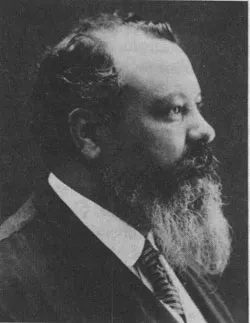
King of Belgium Albert II
Human Design Chart
Biography
Married on 2 July 1959 to Italian Donna Paola Ruffo di Calabria, they had three children, Philippe, Astrid and Laurent. In 1993 he was reported to have Parkinson's Disease. He abdicated on 21 July 2013, in favour of his son Philippe.
The results of DNA samples released on 27 January 2020 confirmed that Albert II has a daughter Delphine Boël (born in 1968 to Baroness Sybille de Selys Longchamps), a fact that Albert II confirmed the same day in a press release. "The king will treat all his children as equal," a spokesperson said. "King Albert now has four children." Her legal status as a daughter was not recognized until a 1 October 2020 ruling of the Brussels Court of Appeal, which also recognized Boël as a princess of Belgium and granted her the new surname of Saxe-Coburg.
The Human Design of King of Belgium Albert II: Manifestor 5/1
Manifestor 5/1 — Design at a Glance
King of Belgium Albert II emerged as someone who propelled the world forward without personally executing every detail – much like a Roman emperor who envisioned grand visions and sent others to implement them. This role of trailblazer, however, comes with a specific pain: misunderstandings and polarization. Because his thinking often surpassed that of his surroundings, he was enthusiastically followed by some while being rejected or even hated by others due to this superior perspective.
To minimize friction and find the right followership, it was crucial for him to communicate his intentions early and precisely. This strategy of information not only served clarity but also created the space in which others could voluntarily follow him. If he walked this path and adhered to his inner authority, his design rewarded him with a profound sense of internal peace. Conversely, if he acted against this nature by taking action without informing or ignoring resistance, he instead felt persistent, deep anger. Thus, his Human Design shows a clear mechanism: through transparent communication, he gains support and avoids the conflict arising from lack of understanding.
Emotional Authority
King of Belgium Albert II displayed an inner architecture that marked spontaneous impulses as misleading and instead required time and emotional distance for well-founded judgments. His design indicated that his clarity did not reveal itself in the first moment of excitement or rejection but only after the initial wave subsided. This resulted from his emotional authority, carried by the defined Solar Plexus Center. In Human Design mechanics, this means that inner truth does not lie in the current mood – whether high or low – but within the cycle of these feelings themselves.
Emotional authority is subject to constant ups and downs; the world appears colored through the filter of present emotions. Immediate action based on this first impression risks elevating a snapshot as the only truth, often leading to negative consequences. The mechanism demands patience: decisions must be 'slept on.' Only when intense feelings subside and emotional distance is gained does deeper clarity emerge. For King of Belgium Albert II, this process of deliberation and repeated review was not a weakness but the necessary path to calmness. Especially for long-term, life-defining steps, this delay helped distinguish between temporary mood swings and true inner direction, thereby proving his decisions as stable and well-considered.
The 5/1 Profile — Heretic / Investigator
King of Belgium Albert II showed himself through Profile 5/1 as someone who shares profound knowledge with others. This design bestows almost magnetic attraction: people actively seek him out for solutions to their problems. Line 5 stands for altruistic sharing of experiences and crisis resolution, while Line 1 focuses on intensive individual research work.
The challenge lies in the dynamic between these two poles. As a perceived hero who offers answers, this can lead to rapid exhaustion if clear boundaries are not set. Similar to a scientist answering questions for hours until exhausted, King of Belgium Albert II risks draining his energy through constant demand from others.
Gate 35 emphasizes this altruistic drive towards selflessness in the context of experience exchange. Simultaneously, Gate 22 contributes aspects of self-awareness and attention, where there is also potential for humiliation if one tries to assume an inappropriate role or fails to be rewarded.
Split Definition — Defined & Open Centers
King Albert II of Belgium was characterized by a constant mental pressure that generated continuous questions and inspiration. His design featured defined Head and Ajna Centers along with a similarly defined Throat Center, creating an enduring ability to communicate conceptual content despite the lack of direct energy for immediate implementation of these thoughts. The challenge lay in not transforming this pressure into hasty actions but rather using it as a source for others.
Central to his decision-making was the defined Solar Plexus Center as emotional authority. Truth revealed itself here only at the end of the emotional wave cycle. Impulsive action during highs or lows led to chaos; patience and waiting for clarity were essential to gain deep insights. A fixed Root Center provided a steady forward momentum in dealing with stress.
In contrast, Identity (G Center), Willpower (Heart Center), generative energy (Sacral) and intuitive security (Spleen) remained open. These open centers made King Albert II of Belgium vulnerable to external influences. He tended to question whether he needed to prove his worth or where the right direction lay instead of possessing these internally. The open G Center sought borrowed identity from the environment, while the open Heart Center might have tried to give promises to gain appreciation. Open Sacral and Spleen Centers meant that energy levels and intuitive security were situationally taken over by others, requiring careful selection of surroundings to avoid exhaustion or false conditioning.
Channels for doubt, mystical principles and emotional change.
King Albert II of Belgium was characterized by a mind shaped by healthy skepticism and the drive for verifiable patterns. This attitude stemmed from logic using doubt as an essential filter. Channel of Logic 63-4 connects Head with Ajna Center: The doubting mind constantly checks if patterns are consistent. Only consistent, practical results count as logical; unfounded belief finds little room. This pressure to transform questions into verified answers served the collective through well-founded predictions.
Additionally, there was an emotional search for belonging and principles. Channel of Synthesis 19-49 connects Root with Solar Plexus Center. Here it was about tribal forms of mysticism: The need for food, protection, and a shared belief. Gate 19 pushed towards approach while Gate 49 rejected anything not meeting the highest ideals. This emotional frequency determined who belonged to the tribe based on loyalty and exchange of basic needs for support.
Simultaneously, the desire for new experiences drove King Albert II of Belgium. Channel of Transience 36-35 connects Solar Plexus with Throat Center. As an emotional manifestor resisting restrictive patterns, he sought adventures to set things in motion. Gate 35 demanded change while Gate 36 perceived unfamiliarity as crisis to enforce experience. This restless search for the new served to expand the gene pool and collective progress through lived wisdom.
Additionally, individual gates shaped the picture: Gate 5 emphasized rhythm and habits for energy buildup; Gate 22 promoted openness and calm listening for individual mutations. Gate 47 helped recognize collective meaning from past confusion. Gate 33 required reflection and withdrawal to process experiences. Gate 52 used self-imposed pauses for pattern correction; Gate 20 focused on the here-and-now for authentic action. Gate 30 explored the illusion of freedom through emotional longing, while Gate 62 with patience logically ordered details and facts to convincingly present truths.
Collective Circuitry — Circuit Signature
King Albert II of Belgium displayed a structure where cool future solutions and wave-like past feelings existed as separate, parallel forces. The Split Definition separates here the logical processing group (Head/Ajna) from the emotional-energetic group (Root/Solar Plexus/Throat).
The Understanding Circuit connected his Head and Ajna Centers via the Logic Channel. This promoted sharing rational, structured insights to improve future states free of emotional influence.
Parallel to this, the Meaning Circuit worked through the connection between Solar Plexus and Throat via Transience Channel. Here emotional energy flowed from past experiences in waves to enable collective learning success – a process with clear beginning, middle, and end.
The Ego Circuit connected Solar Plexus and Root Center via the Synthesis Channel. This regulated giving and taking in resource context without constant Sacral energy input, requiring necessary rest periods for regeneration.
Together, this configuration shaped a dynamic: Rational future visions stood alongside emotional past processing, embedded within a cooperative framework of exchange. The energies did not flow as a closed loop between all centers but rather as two distinct systems – one of clear logic and one of feeling reflection and resource coordination.
Left Angle Cross of Separation 1
King of Belgium Albert II carried the left Separation Cross. This configuration characterizes his design with a profound, often fateful dynamic of separation. It is not an isolated trait but rather an overarching theme of his identity and life path structure.
His life was marked by recurring phases of separation – whether from people, ideas, or earlier self-images. These separations were not losses in the negative sense but necessary steps toward clarification and definition of his own existence. The central challenge lay in not perceiving this distance as rejection but rather as a necessary space for individual maturation.
The left Separation Cross thus describes a mechanism where detachment becomes an instrument of self-discovery. Instead of holding on, the structure was defined by letting go. Each step away from old references served to sharpen his own core. This dynamic acted as a fundamental force driving his development by helping him clearly separate himself from external influences and thereby assume an autonomous position.
Saturn Return · Uranus Opposition · Chiron Return · 2nd Saturn Return — Life Cycles
King of Belgium Albert II showed a clear structuring of his life phases through Saturn Return cycles, which marked significant turning points between private commitment and public responsibility. These cycles functioned as structural pillars that oriented his life.
The first Saturn return occurred in 1959 when he was 25 years old. During this period, King of Belgium Albert II married Donna Paola Ruffo di Calabria. This cycle often marks the transition from youth to adult responsibility in interpersonal bonds. The marriage condensed private living into a stable foundation before larger public duties followed.
The second Saturn return took place in 1993 when he was 59 years old. King of Belgium Albert II ascended to the throne after his brother Baudouin's death. This later cycle signals the consolidation of the public role and the assumption of highest responsibility. While the first return solidified the private sphere, the second established the official position as ruler. The sequence of these two events illustrates how King of Belgium Albert II applied his strategy: First secure the private framework, then fulfill the public duty. The Saturn cycles do not act as random time markers but as structural necessities that affirm and stabilize maturity for each new life phase.
Manifestor · Emotional Authority — Synthesis
A central red thread in this design is the dynamic balance between inner understanding and outer manifestation. The defined mental authority (Head Center and Ajna Center) generates a steady stream of questions and inspiration, which is filtered through the emotional center – a process requiring time and patience. This internal maturation process culminates in clear, authentic communication via the defined Throat Center. The profile as Hero/Researcher (5/1) amplifies this cycle from deep knowledge acquisition to the need to make this knowledge accessible to others, which is promoted through channels of logic and synthesis.
The central paradox lies in the tension between the inner need for emotional clarity and the drive toward outer manifestation. While the design is geared towards deep understanding, the open Sacral, Root, and G Centers make it vulnerable to conditioning and external energies. This leads to an internal conflict: the desire for authentic expression collides with the necessity of protecting oneself from overwhelming external influences and maintaining one's own boundaries.
3 Defined Channels
Incarnation Cross - Left Angle Cross of Separation 1
Solar Return
The Solar Return shows the moment when the sun returns to its exact birth position - your personal solar year.
Life Cycles
Discover the life cycles with a detailed triple view (birth chart, cycle chart, composite).
Human Design Profile
- Type
- Manifestor
- Strategy
- To inform others before acting
- Authority
- Emotional Authority
- Profile
- 5/1 - Heretic / Investigator
- Definition
- Split Definition
- Incarnation Cross
- Left Angle Cross of Separation 1
- Date of Birth
- 06.06.1934 23:35
- Place of Birth
- Brussels, Belgium
Frequently Asked Questions
What is the Human Design type of King Albert II. of Belgium?
What Profiles does King Albert II. of Belgium have?
What Authority does King Albert II. of Belgium have?
What is King Albert II of Belgium's incarnation cross?
When was King of Belgium Albert II born?
Discover your own Human Design
Are you also a Manifestor? Find out in a personal reading how to use your initiation power peacefully and dissolve resistance.
More Personalities
Back to overviewChristian-Jaque
Kesha

Lucebert
Marilyn

Masaccio
Papus