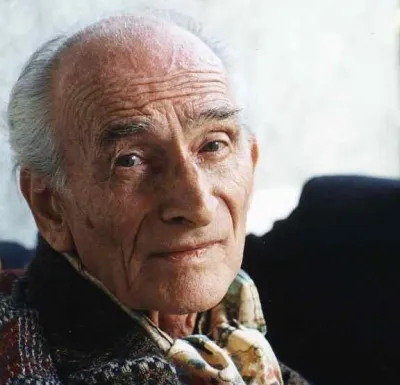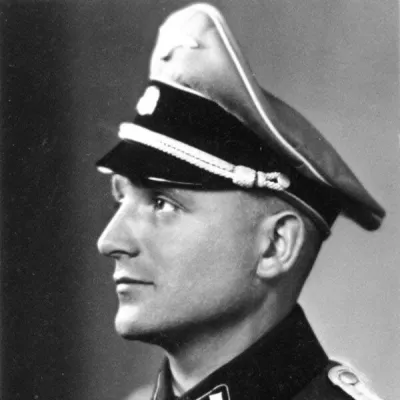
Klaus Barbie
Human Design Chart
Biography
The son of a school teacher, Barbie was born in the village of Bad Godesberg, near Bonn, Germany. While completing his studies at the Friedrich-Wilhelm Institute, he became a member of Hitler’s youth brigades. The year after receiving his degree in 1934, he joined the Security Service, a special branch of the SS under Himmler, the head of the Gestapo. In 1937 Barbie became a member of the Nazi party.
After noteworthy service in Amsterdam, Netherlands, Barbie was made chief of the Gestapo, Department Four, in Lyon, France in 1942, which became the scene of his most horrible crimes. A dedicated sadist who personally tortured those prisoners who came under his interrogation, Barbie was charged with ordering the arrest and torture of the French Resistance leader, Jean Moulin, which resulted in Moulin’s death.
Barbie was also responsible for arranging the capture of 44 Jewish children and their five teachers, which ultimately resulted in their deportation to the Auschwitz extermination camp. Hitler himself awarded Barbie the "First Class Iron Cross with Swords" in recognition of his cruel, merciless treatment of the French partisans and the Jewish people.
When the war ended, Barbie escaped capture and went underground. Although wanted by the authorities in France, he was quickly recruited by the American Intelligence Service, which wanted to make use of his special "police skills" and his extreme zeal against anti-Communists.
The Human Design of Klaus Barbie: Manifesting Generator 6/2
Manifesting Generator 6/2 — Design at a Glance
Klaus Barbie revealed himself as a person with a hybrid energy structure: He possessed the constant power of a Generator combined with the direct radiance of a Manifestor. This design allowed him to act swiftly and often skip intermediate steps, leading to rapid pulling things into his life. This speed characterized his way of working on multiple activities simultaneously and responding to various impulses at once.
The mechanics of the manifesting generator describe exactly this dynamics: Through the connection of motor centers to the Throat Center, Barbie could take initiative but had the sacral energy that actually waits for responses to life impulses. The risk lay in his speed causing him to miss important steps or spread himself too thin across many projects. If he did not react strategically – waiting until his inner center gave a clear „yes“ – this imbalance quickly led to frustration. His design required a playful mode and constant reevaluation of his own satisfaction with the paths he had started; only when he listened to his inner authority could he use his immense creative power without internal resistance; otherwise, parallel multiple activities would stall and create unrest instead of satisfaction.
Emotional Authority
Klaus Barbie showed a decision-making structure that required time and did not rely on immediate reactions. His design carried Emotional Authority, meaning the defined Emotional Center took over his inner guidance – regardless of which other centers were also defined. This configuration was subject to a permanent emotional wave with strong ups and downs in feelings. The world appeared colored by the current mood: one moment totally excited about something, the next completely negative about the same thing.
This feeling in the moment was, however, only a snapshot, not an ultimate truth. Quick, spontaneous decisions based on such emotion often had negative consequences as they ignored the fleeting nature of the mood. The mechanics required patience: The more time Klaus Barbie took to let a decision mature, the deeper and more comprehensive he could see. This meant literally having to sleep on decisions multiple times. Only after intense feelings subsided and emotional distance was gained did clarity and calm set in. This process of enduring the waves was essential for long-term orientation shifts that influenced his life course. Immediate action was marked as risky by the design; true orientation only emerged after the initial emotional charge had dissipated.
The 6/2 Profile — Role Model / Hermit
Klaus Barbie showed a two-phase life dynamics: Before the age of 30, experiments, trial and error, and withdrawal after mistakes dominated. This early phase was characterized by seeking personal experiences through direct action. Around age 30, his profile's sixth line (6/2) activated. Then he metaphorically retreated into a „cave on the mountain“ to look back at his past experiments with great distance. This period served for intense reflection, healing, and deep self-awareness.
This mechanism connects the natural leadership ability of the second line with the value consequence of the sixth line. The second line in Gate 31 grants an innate authority but can be perceived as arrogance without development or lead to corruption if it does not address collective needs. The sixth line decides for or against leadership based on the importance of its values. Only after the introspective phase did Klaus Barbie emerge from his isolation as a wise person. Others then recognized his life wisdom and sought his advice to learn from his deep introspection ability. His authority arose not through external pressure but through consistent alignment with inner values after a long period of self-examination.
Single Definition — Defined & Open Centers
Klaus Barbie was characterized by a design with a strong, defined inner structure: Sacral Center (Energy), Solar Plexus (emotional authority), G-Center (Identity) and Throat (Manifestation). These four centers formed his constant foundation. He had a reliable energy source, clear emotional clarity, and firm identity. His actions sprang from this mechanical base: he reacted to impulses with sacral power, filtered decisions through the emotional wave of the Solar Plexus, and acted out of his personal direction in the G-Center. The defined Throat allowed him a consistent expression; he communicated and manifested his truth with ease as long as he trusted his inner authority.
In contrast stood the open centers Head, Ajna, Heart, Spleen, and Root. These were not part of his stable identity but situational activatable through the environment. The open Head Center made him vulnerable to mental pressure and confusion; he tended to get entangled in questions that weren't his own or sought external inspiration to find focus. The open Ajna Center meant a flexible yet unstable mind; he could adopt others' opinions and interpret them as his own truth, leading to intellectual insecurity.
The open Heart Center shaped a tendency to prove willpower and worth through performance. He often felt driven to make and keep promises to gain recognition, though he didn't have the consistent energy for it. This led to a cycle of self-disapproval when not fulfilled. The open Spleen Center caused fundamental survival anxiety; he instinctively sought safety and comfort in his environment, making him vulnerable to unhealthy dependencies as he clung to things that did not serve him just to feel secure.
The open Root Center absorbed stress from the environment. He was exposed to adrenalized pressure from others and often tried to release it through hyperactivity or quick actions, which made him susceptible to burnout and accidents. These open centers meant mental inspiration, willpower, spontaneous intuition, and stress reactions were not constant but absorbed or provoked by the environment. His defined column offered action capability, yet the open centers made him conditionable through external pressure, mental confusion, and false identification with others' will.
Channels for intimacy, logical leadership and emotional change.
Klaus Barbie was characterized by a dynamic that aimed at deep emotional connections while being marked by logical patterns and an impulse for constant renewal. His design suggested leadership not primarily through authority but through gaining trust and sharing collective patterns.
The Channel of Union 59-6 connected his Sacral Center with the Solar Plexus. Through the sexuality of Gate 59 and the emotional wave from pleasure and pain of Gate 6, a powerful energy emerged called intimacy. This urge for merging allowed him to quickly penetrate others' aura and ease confidentiality. The emotional wave determined the timing of each release; only over time could clarity arise whether a connection was truly fruitful or not.
Parallel to this, the Channel of Alpha Animal 7-31 between G-Center and Throat Center worked. It represented logical, collective leadership. Gate Role (7) provided the necessary logical structure while Gate Leading (31) acted as a collective leader. This configuration required him first to gain trust and be invited by the majority for his voice to become effective. It was less about absolute rule than showing the way from an influential position based on tested patterns.
Additionally, the Channel of Transience 36-35 shaped his actions. It connected Solar Plexus Center with Throat Center and drove him through the crisis of Gate 36 and the desire for change in Gate 35. This restless search for new experiences served to explore emotional depth. Often a crisis was generated just to set things in motion and overcome feelings of inadequacy. This led to constant development through experience, where the transience of emotions had to be accepted to gain wisdom.
Collective Circuitry — Circuit Signature
Klaus Barbie was marked by a cold, strategic intelligence aimed at improving structures. His design connected Throat and Identity Center via the Understanding Circuit (Channel 31-7). This generated an 'emotionless ratio' that shared logical insights free from conditioning and formed future-oriented strategies. Parallel to this worked the Meaning Circuit (Channel 35-36), which linked Throat with Solar Plexus Center. Here flowed emotional waves from the past, cycling and being shared for collective learning. A third aspect was the Archer Circuit (Channel 59-6), connecting Sacral and Solar Plexus Centers. This connection emphasized primal survival energies, protection, and genetic preservation through pairing. Though all these centers were defined, they formed a single cohesive group due to simple definition. The energy-saving logic of understanding thus stood in direct exchange with the emotional waves of the past as well as instinctive survival impulses. Klaus Barbie did not live solely by cold reason but connected this with deep emotional patterns and biological protective drives into a complex whole that integrated rational future visions, past experiences, and genetic imperatives.
Left Angle Cross of Wishes 2
Klaus Barbie's design carried the signature of the left Desire 2 Cross. This configuration was a structural marker but did not provide specific mechanical details in the available data. There were no activated gates, channels or centers that would have allowed for a detailed behavioral analysis. The description of this element remained empty, meaning that no substantive core could be derived to characterize it. Without these mechanical building blocks, it was impossible to read out specific drives, strategies or internal conflicts from his chart. Therefore, the chapter limited itself to naming this structure as a pure name within the Human-Design mechanics system. There were no documented events illustrating this configuration in Klaus Barbie's life. As such, no connection could be established between this design element and his actual actions or decisions. The analysis remained at the level of labeling without offering deeper insights into his psychological state or fate. This was a direct consequence of the lack of data in the raw content which did not allow for further conclusions.
Saturn Return · Uranus Opposition · Chiron Return · 2nd Saturn Return — Life Cycles
Klaus Barbie's life was marked by Saturn Returns, acting as structuring turning points. His first Saturn Return around age 27 signaled a transition into a phase of binding and responsibility. In 1940 this became concrete: He married Regine Willis and had with her the daughter Ute. This step anchored him in a new, stable life order.
The disruptive power of the Uranus Opposition later manifested as a crisis rupture. At age 39, in 1952, he was sentenced to death for a second time in absentia. This event violently interrupted his previous life rhythm and forced a radical realignment of existential conditions.
His second Saturn Return around age 59 brought another confrontation with external limits. In 1972 an abduction attempt on him failed. This incident signaled the impossibility to evade the structural demands of this phase or circumvent them through flight. Thus, Saturn Returns not only formed private milestones such as family foundation but also the harsh realities of condemnation and failed escape attempts. They showed themselves as moments when life changed its form – whether by binding or by the collapse of old structures. These cycles shaped his life path with clear, often fateful incisions that did not allow a return to the status quo.
Manifesting Generator · Emotional Authority — Synthesis
Klaus Barbie lived a life marked by a deep inner tension between the desire for control and the necessity to respond to external impulses. His design as an Manifesting Generator points towards someone who can both initiate and respond, yet tends to get lost in too many projects at once (Sacral Center connected with Throat Center). This dynamic was intensified through his emotional authority (Solar Plexus), which required a waiting and maturing process while he simultaneously was driven by an inner urge for action. The undefined Root Center indicates that he absorbed stress from his environment, intensifying his natural impulse towards activity but also making him vulnerable to overburdening.
A central paradox in his design lies in the combination of the need for leadership (Gate 7 in the Alpha Animal Channel) and an open heart (undefined Heart Center). He was destined to guide and influence others yet simultaneously lacked the inner constancy to fulfill this role authentically. Instead, he seems to have lost himself in the search for recognition and control, which was reinforced by his undefined Ajna Center's constant quest for answers. The repeated crises (documented events) reflect this internal conflict – the attempt to maintain control while being overwhelmed by external circumstances.
3 Defined Channels
Incarnation Cross - Left Angle Cross of Wishes 2
Solar Return
The Solar Return shows the moment when the sun returns to its exact birth position - your personal solar year.
Life Cycles
Discover the life cycles with a detailed triple view (birth chart, cycle chart, composite).
Human Design Profile
- Strategy
- To respond - wait for something to respond to
- Authority
- Emotional Authority
- Profile
- 6/2 - Role Model / Hermit
- Definition
- Single Definition
- Incarnation Cross
- Left Angle Cross of Wishes 2
- Date of Birth
- 25.10.1913 07:00
- Place of Birth
- Bad Godesberg, Germany
Frequently Asked Questions
What was Klaus Barbie's Human Design type?
What profile did Klaus Barbie have in Human Design?
What authority did Klaus Barbie have?
What incarnation cross did Klaus Barbie have?
When was Klaus Barbie born?
Discover your own Human Design
Are you also a Manifesting Generator? Find out in a personal reading how to unfold your multi-talents and direct your energy wisely.
More Personalities
Back to overviewAldair

Alizée

Angeli

Arletty

Artus

Balthus