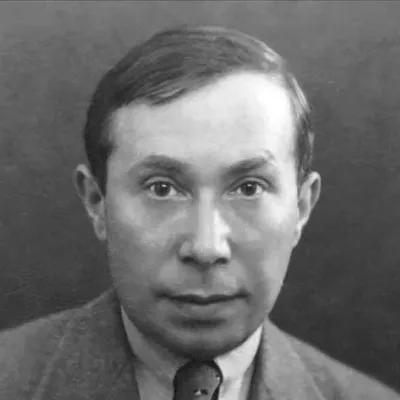
Leo Strauss
Human Design Chart
Biography
Trained in the neo-Kantian tradition with Ernst Cassirer and immersed in the work of the phenomenologists Edmund Husserl and Martin Heidegger, Strauss later focused his research on the Greek texts of Plato and Aristotle, retracing their interpretation through medieval Islamic and Jewish philosophy and encouraging the application of those ideas to contemporary political theory.
He became a U.S. citizen in 1944. In 1951, Strauss apparently coined the phrase "reductio ad Hitlerum", when he used it in an article he wrote.
He died from pneumonia on 18 October 1973, aged 74, in Annapolis, Maryland.
Human Design Analysis: Leo Strauss as Manifesting Generator 5/1
Manifesting Generator 5/1 — Design at a Glance
Leo Strauss revealed himself as someone who possessed hybrid energy: the constant power of a Generator paired with the lightning-fast effectiveness of a Manifestor. His design suggested that he could draw things into his life by skipping steps and acting quickly. This speed, however, was a double-edged sword. If he moved too fast, he risked missing important stages, forcing him to backtrack and fill in gaps – a potential source of frustration. Additionally, his system tended to respond simultaneously to many different impulses. He often started several projects at once rather than focusing on one.
Leo Strauss’s strategy was not to initiate himself but to respond to external stimuli. Only when his sacral center gave a clear “yes,” should he act. This inner confirmation was crucial for avoiding frustration and finding satisfaction. By correctly applying this strategy – that is, by constantly checking whether the projects still brought joy – Leo Strauss could fully utilize his creative power. He benefited from variety and an approach to work that was playful in nature. The compulsion to finish one thing before starting another did not fit his nature; instead, parallel processing of various tasks while maintaining interest provided deep fulfillment. His life was characterized by this dance between rapid implementation and the necessity of waiting for inner resonance.
Emotional Authority
Leo Strauss showed decision-making that did not come to completion in the first impulse. His design carried emotional authority, meaning that his defined Solar Plexus Center always took precedence over all other defined areas – regardless of which additional centers were active in his chart. This configuration marked him by a constant wave of emotional movements: His perception of the world was always colored by his current mood. What seemed highly relevant or inspiring at one moment could appear negative or unimportant in the next.
For Leo Strauss, however, this first emotional impression was only a snapshot, not the final truth. Quick, spontaneous decisions from such an emotional state often proved to be wrong. Instead, his inner mechanism required patience and time. He had to let decisions mature, sleep on them multiple times, giving space for intense feelings to subside. Only when this emotional distance was gained did clarity and calm set in. This process of delay was not a lack of resolve but an essential strategy of his design: Only by working through the emotional waves could he reach a deep, comprehensive understanding that profoundly and correctly shaped his life path.
The 5/1 Profile — Heretic / Investigator
Leo Strauss revealed himself as someone who used profound knowledge to offer concrete solutions to others. His design carried Profile 5/1, the combination of Hero and Explorer. Line 5 gave him almost magnetic charisma: Others actively sought out his insights to solve their own problems. This role as a problem solver in crisis times contrasted with Line 1, which represents conscientiousness and the need for harmonious relationships without constant interference.
This duality created a specific tension. Strauss loved the process of learning and research (Line 1), yet his ability to provide practical answers (Line 5) continually drew new requests from others. Without clear boundaries, there was a risk that he would feel drained by this constant demand, similar to an expert who feels exhausted after long consultations and is confronted with further demands. The challenge lay in choosing the timing of his interventions – crucial for Line 5 – to avoid conflicts and maintain harmony. By learning to also say no, he could preserve the balance between deep research for himself and helpful problem-solving for others. Thus, he used his gifts optimally without falling into alienation through excessive demands from others.
Split Definition — Defined & Open Centers
Leo Strauss revealed himself through a design that anchored willpower and self-identity firmly. His defined Heart Center gave him a stable ego structure; he knew what he wanted and kept his promises. This worked together with his defined G Center, which provided him with a clear sense of personal direction and love. He possessed the inner security to walk his own path without having to rely on others.
As a Generator, Strauss had a defined Sacral Center, his primary energy source. His strategy was not to initiate but to react to life. Only when he felt an instinctive “yes” response from his gut did he deploy his vital force. This guaranteed him satisfaction and prevented frustration through excessive effort.
His communication was characterized by a defined Throat Center that was directly connected to his Heart. Therefore, he always spoke from the perspective of “I want” or “I have.” His words were expressions of his will and identity, clear and steady, not mere contemplation. Additionally, he had a defined Spleen Center for intuition in the moment as well as a defined Solar Plexus Center. The latter required patience: He waited out the emotional wave to find clarity before acting.
In contrast, Head, Ajna, and Root Centers were open. His open Head Center made him vulnerable to mental pressure and seeking inspiration from outside; he tended to get entangled in other people’s questions. The open Ajna Center meant that his conceptual thinking was flexible but lacked a firm truth – he took on ideas without solidifying them as personal dogmas. The open Root Center allowed him to absorb external stress; he felt the adrenaline surge of the environment, yet did not interpret this pressure as his own drive but could observe or avoid it.
Channels for intimacy, self-expression, instinct and emotional change.
Leo Strauss revealed himself as someone whose inner drive was strongly focused on seeking intimacy and the need to act through authentic self-being. His design was characterized by a deep connection between physical energy and emotional depth. The Channel of Union 59-6 connected his sacral life force with the Solar Plexus. This created an electromagnetic foundation for relationships based on trust and temporal maturation. His emotional wave from Gate 6 determined the timing of his openness; he needed time to gain clarity before fully engaging. Simultaneously, the Channel of Exploration 34-10 enhanced his ability to assert personal convictions with inner strength. Through the connection of sacral reaction (Gate 34) and self-behavior (Gate 10), he learned to accept himself and live this attitude through action rather than imposing it.
This foundation of self-love culminated in the Channel of Awakening 10-20. Here, individual knowledge transformed into clear action in the present moment (Gate 20). Strauss lived this truth “I am,” allowing him to act as an inspiring voice for individual leadership. His presence was not aggressive but influenced his surroundings through quiet alertness and self-confidence.
In addition to this centered stance, there was a strong drive towards experience and change. The Channel of Transience 36-35 urged him to explore new horizons. Emotional restlessness from Gate 36 combined with the desire for manifestation of something new (Gate 35). This often led him to take crises or uncertainties as opportunities to set things in motion and gain wisdom through direct experience.
Additionally, the Channel of Charisma 34-20 projected his generative power directly into the world. This energy allowed him to act quickly and effectively when responding to correct stimuli. The Channel of Devotion 44-26 rounded out the picture: He had an instinctive sense for what his environment needed and could convincingly sell his ideas. His alertness (Gate 44) served to protect the tribe and use resources efficiently.
Individual Gates like Gate 15 underscored his adaptability to collective rhythms, while Gate 12 gave him a mutative, poetic quality that worked beneath the surface. Gate 50 ensured the protection of traditional values and acted as a filter for what was truly important. Overall, Strauss lived from a combination of deep self-confidence, the drive for genuine connection, and the willingness to continuously develop through experience.
Individual Circuitry — Circuit Signature
Leo Strauss revealed himself through his design as someone who combined inner strength with a strong orientation towards personal convictions. The Centering Circuit linked his Sacral Center – the source of constant life energy – directly to the Identity Center, the seat of self-worth and personal essence. This connection fostered a fortified, courageous personality that clearly perceived and lived its individuality. However, without a link to the Throat Center, these deep inner convictions often remained hard to put into words or communicate outwardly; the energy worked more individually than expressively.
Parallel to this, the Meaning Circuit connected his Solar Plexus Center – the place of emotional waves and past experiences – with the Throat Center, the center of expression. Here lay a tendency to reflect on emotional insights and feelings from the past and verbally convey these shared experiences. It was less about cold logic but finding meaning behind experienced emotions and sharing this with others to learn together.
Another aspect was the Ego Circuit, which linked Heart and Spleen Centers. The Heart Center steered questions of appreciation and self-worth, while the Spleen Center stood for instinctive security and resources. This configuration promoted a stance of mutual support and cooperation within the tribe principle: giving and taking to secure common resources, with rest periods necessary for regeneration as there was no direct connection to the Sacral Center.
Furthermore, the Protector Circuit linked Sacral and Solar Plexus Centers. This connected constant life force with the emotional waves of the Solar Plexus. It was a primal energy serving protection, preservation, and care – fundamental for survival and nurturing the close ones.
Finally, the Integration Circuit connected Throat, Sacral, and Identity Centers. This integrated expression (Throat) with life force (Sacral) and self-worth (Identity). Through channels like “Awakening” and “Charisma,” Leo Strauss could draw strength from reactions to life, channel this through intuitive knowledge, and express it in the present moment. This configuration strengthened his ability to reinforce himself and effectively use his individual presence.
As a person with split definition, his energy field consisted of two separate groups: One group included Solar Plexus, Sacral, G-, and Throat Centers, while the other comprised Heart and Spleen. These were not directly energetically connected but existed as parallel side-by-side power fields.
Left Angle Cross of the Plane 2
Leo Strauss revealed himself as someone who questioned deeply rooted traditions and established orders. His design indicated a tendency to examine the foundation of what exists rather than accepting it blindly. This attitude stemmed from the 'left cross of level 2', a configuration that describes the urge to rebel against outdated structures. It was not destructive chaos but a necessary process of breaking free from bonds that hinder growth. Strauss lived this mechanism by seeking new paths where others remained in habit. Level 2 marks the beginning of a profound change, requiring the abandonment of old securities to make room for more authentic expressions. For him, this search for originality and truth was a central driving force. He did not let external expectations guide him but followed an inner compass that drove him to uncover hidden truths. This tendency towards critical distance shaped his entire work. By questioning dogmas, he created space for a deeper understanding of complex interconnections. His path was thus characterized by constant change based on the readiness to break away from the known in order to get closer to the essential.
Saturn Return · Uranus Opposition · Chiron Return · 2nd Saturn Return — Life Cycles
Leo Strauss revealed himself as someone who examined intellectual structures and transferred them onto new foundations. His design indicated a tendency to question established orders and reposition them within change. In 1927, at age 28, he dedicated himself to Carl Schmitt's work 'The Concept of the Political'. This marked his first Saturn Return: a time when years of groundwork often condenses into a solid result and sharpens one's positioning. The following Uranus Opposition in 1938, at age 39, brought a radical shift. Strauss moved to the United States and taught at the New School for Social Research in New York City. This cycle often demands a break with the familiar to adapt to a new reality. At age 49 in 1948, his Chiron Return occurred. The publication of 'On Tyranny' signaled the bloom of his incarnation purpose: if he had followed his strategy, his life's meaning was now experiential and effective. His second Saturn Return followed in 1954 at age 55. Strauss traveled to Heidelberg and gave a lecture on Socrates there. This cycle solidifies the achieved maturity and integrates past experiences into a stable, long-term structure. Thus, his life path followed the rhythmic phases of Human Design: from examining foundations through necessary change to full realization of his purpose and final consolidation of his intellectual identity.
Manifesting Generator · Emotional Authority — Synthesis
He was an Manifesting Generator whose life was marked by a deep inner drive (Sacral Center), which unfolded in unstoppable energy. The connection to Throat Center indicates that he not only felt this energy but also had to express it – a voice filtered through intense emotional processes (Emotional Authority). His profile as Hero and Researcher (5/1) reinforced this trait: He sought deep knowledge and felt obligated to make it available to others, with the process of learning itself being a central part of his lifestyle. This combination of sacral reaction, emotional maturation, and intellectual curiosity formed the red thread of his work.
Simultaneously, an inner tension revealed itself between the urge for rapid initiation – a characteristic of Manifesting Generators – and the necessity to let decisions ripen through the emotional wave. The cycles showed that although he quickly took on new intellectual challenges (Saturn Return 1, Uranus Opposition), these were always connected with a profound engagement requiring time and reflection (Chiron Return, Saturn Return 2). This interaction between the need for rapid progress and the inner commitment to thorough examination shaped his work style.
6 Defined Channels
Incarnation Cross - Left Angle Cross of the Plane 2
Solar Return
The Solar Return shows the moment when the sun returns to its exact birth position - your personal solar year.
Life Cycles
Discover the life cycles with a detailed triple view (birth chart, cycle chart, composite).
Human Design Profile
- Strategy
- To respond - wait for something to respond to
- Authority
- Emotional Authority
- Profile
- 5/1 - Heretic / Investigator
- Definition
- Split Definition
- Incarnation Cross
- Left Angle Cross of the Plane 2
- Date of Birth
- 20.09.1899 08:00
- Place of Birth
- Kirchhain, GER
Frequently Asked Questions
What was Leo Strauss's Human Design type?
What profile did Leo Strauss have in Human Design?
What authority did Leo Strauss have?
What incarnation cross did Leo Strauss have?
When was Leo Strauss born?
Discover your own Human Design
Are you also a Manifesting Generator? Find out in a personal reading how to unfold your multi-talents and direct your energy wisely.
More Personalities
Back to overviewAlain-Fournier

Aldair

Alizée

Angeli

Arletty

Artus