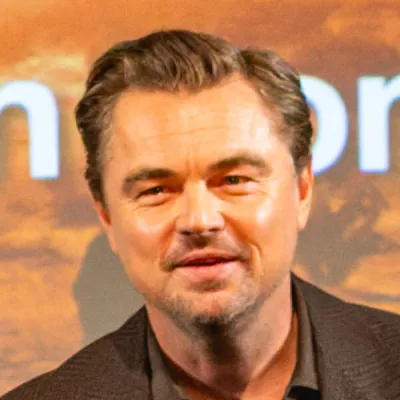
Leonardo Dicaprio
Human Design Chart
Biography
Born in Los Angeles, DiCaprio began his career in the late 1980s by appearing in television commercials. He had a recurring role in the sitcom Parenthood (1990–1991), and had his first major film part as author Tobias Wolff in This Boy's Life (1993). He received critical acclaim and his first Academy Award nomination for playing a developmentally disabled boy in What's Eating Gilbert Grape (1993). DiCaprio achieved international stardom with the star-crossed romances Romeo + Juliet (1996) and Titanic (1997). After the latter became the highest-grossing film in the world at the time, he reduced his workload for a few years. In an attempt to shed his image of a romantic hero, DiCaprio sought roles in other genres, including the 2002 crime dramas Catch Me If You Can and Gangs of New York; the latter marked the first of his many successful collaborations with director Martin Scorsese.
Leonardo Dicaprio — Manifestor with Profile 6/2
Manifestor 6/2 — Design at a Glance
Leonardo DiCaprio's Human Design shows a foundational stance as a pioneer and visionary. He tends to design large future plans similar to a Roman emperor, without needing to fight every battle himself. However, this configuration brought with it a specific conflict: His superior way of thinking often led to misunderstandings in his environment. As a result, he polarized – some loved and followed his vision because of its grandeur, while others hated or rejected him for the same reason.
To navigate this dynamic, informing was key. By communicating his intentions clearly and early on, he could win over the right followers and minimize friction. If Leonardo DiCaprio followed this path of information, he was rewarded with inner peace. Conversely, if he acted against this design without prior communication, persistent deep anger would follow as an immediate consequence. This mechanism underscores the necessity of not only having visions but also setting them in the world through clear communication to stabilize one's internal state.
Emotional Authority
Leonardo DiCaprio's Human Design shows a tendency to avoid making decisions based on first impulses and instead subject them to scrutiny by the ups and downs of his emotions. His inner authority is Emotional Authority, carried by the defined Emotional Center. This means that his perception of the world is always colored by current mood: What seems absolutely right in one moment can appear negative in another. This emotional wave does not create a static truth but rather a dynamic landscape of impressions.
Therefore, strict avoidance of spontaneous actions is required. Since feelings in the moment are just a snapshot and not the final reality, quick decisions based on temporary emotions can have negative consequences. Instead, his design requires patience and time. Leonardo DiCaprio was marked by the process of 'sleeping on it' in decision-making: By hesitating and asking questions multiple times, intense feelings subsided. Only when this wave movement had died down did he gain emotional distance. Then clarity and calmness set in – a signal that the emotional process is complete and a well-founded decision can be made. This approach ensures long-term orientation by ensuring that not fleeting moods but deeper emotional truth guide the way.
The 6/2 Profile — Role Model / Hermit
Leonardo DiCaprio's Human Design shows a tendency towards a two-phase development: initially intense experimentation, later distanced wisdom. Before his 30th year of life, the sixth line of his 6/2 profile acted like a third line. This meant that his early life was marked by the principle 'trial and error'. He gathered experiences through direct action and withdrew after setbacks to learn.
After turning 30, this dynamic fundamentally changed. The sixth line became active, initiating a phase of deep introspection. The design describes this as retreating into a 'cave on the mountain'. During this time, he reflected on his past experiments with great distance. This process was also a period of healing and self-discovery.
Gate 1, which influenced Line 6, promoted objectivity in dealing with creativity. It allowed him to distinguish the true value of his work from mere fashion trends. However, this could also bring disappointment if subjective assessments were not confirmed. The wisdom of this design lies in recognizing that innovations need time to prove their worth.
The second line of his profile complemented this through tolerance and acceptance of limits. It taught him that misunderstandings often arise due to wrong timing, not lack of understanding. Finally, he emerged from his reflective phase as a wise teacher, ready to share introspective insights with others seeking such depth.
Split Definition — Defined & Open Centers
Leonardo DiCaprio's design established a massive, constant presence: persistent mental pressure from the Head Center and Ajna Center drove him to question and understand. This inspiration was, however, not directly actionable; it required patience to gain clarity. His defined Throat allowed for the manifestation of these thoughts through communication while the Heart Center steered willpower and ego – he liked to determine his life himself and keep promises.
As inner authority, the Solar Plexus played a role. DiCaprio was designed to wait out the emotional wave before acting or speaking. Impulsive decisions at the peaks or troughs of this wave led to chaos; true clarity emerged only after traversing the emotional cycle. This depth cultivated an intense sensitivity for relationships and environments.
Simultaneously, his open centers G, Sacral, and Root shaped his experience world. The open G Center meant no fixed identity; DiCaprio tended to blend with his environment and sought direction through external initiation. The Self-Trap lay in constant questioning “Who am I?” or trying to use love as an anchor for identity. Instead, he had to wait until the environment led him to a place where identity naturally crystallized.
The open Sacral Center made his energy availability appear unstable. He was vulnerable to conditioning by others' generative fields, which could lead to overexertion and exhaustion if he did not learn to set boundaries and rest before fatigue set in. The open Root Center absorbed external stress; DiCaprio was the target of environmental pressure and tended to amplify this adrenalized pressure through hyperactivity rather than recognizing it as an external influence and letting go.
Channels for intuition, logic, devotion and community.
Leonardo DiCaprio's design established a tendency towards a permanently active, skeptical mental attitude. Channel Logic 63-4 in his design ensures a mind that filters patterns and seeks logical proof. This flow connects the Gate of Doubt (63) with the Gate of Formulation (4). Doubt is essential here: logic can be formally correct but still wrong. Channel 63-4 intensifies pressure as soon as patterns appear unstable, demanding an answer to a question. There is little room for unfounded belief; an answer only counts if it proves itself as a consistent, verifiable pattern. This collective channel serves to leverage the environment through well-founded predictions.
Parallel to this, Channel Wavelength 48-16 in his personality drives intuitive search for depth. It connects Gate of Depth (48) with Gate of Skillfulness (16). Gate 48 looks out for life-critical information while Gate 16 perfects skills through repetition. This combination requires engagement and identification with an activity to achieve mastery. By refining skillfulness, it becomes talent; mastering the pattern can eventually lead to freedom in expressing a unique wavelength.
The mechanics show tension between the collective, doubting mind (Logic), which filters patterns, and the individual, intuitive mastery (Wavelength), which sharpens excellent skills through engagement. The mind must prove; the talent must be practiced.
Collective Circuitry — Circuit Signature
Leonardo DiCaprio's design established a tendency towards tension between individual future-oriented rationality and collective traditional resource security. These two complementary circuits did not act as a unified flow but as separate, parallel existing forces since no channels directly connected them.
The Understanding Circuit focused on emotionless logic and strategy. In Leonardo DiCaprio’s case, two components were active here: the Head Center and Ajna Center (mind) along with Throat Center and Spleen Center. This allowed him to visually grasp logical insights and pass them on free from conditioning to lead society into a better future.
Parallel to this, the Ego Circuit, belonging to the Root Group, promoted cooperation and resource management. Here Heart Center, Solar Plexus Center, and Spleen Center were connected. This created a system of giving and taking (“Today I give, tomorrow you give”) as well as an emotional wave that acted like a ratchet – it collected energy in quiet phases since no constant life force was present from the Sacral Center.
The open Spleen served as an interface between these separate systems. It took situational information on board and thus connected the future-oriented logic of the mind with the traditional, conservative values of Root support. This configuration shaped a lifestyle that linked rational-strategic thinking with the need for communal resource care and necessary pauses for regeneration.
Left Angle Cross of Defiance 2
Leonardo DiCaprio's Human Design shows a tendency towards development marked by resistance. His chart displays the 'left cross of challenge', meaning that his evolutionary focus is not on effortless confirmation but rather on actively overcoming obstacles. This structure defines the fundamental life dynamics: growth primarily arises through confrontation with difficulties, which serve as the central driver for personal maturation.
The challenge here is no coincidence or negative fate, but the intended path to self-discovery. By facing these barriers, Leonardo DiCaprio shapes his understanding of himself. The mechanics of this cross emphasize that true development and clarity about one's role in life are often only achieved through enduring and mastering conflicts or complex situations. It is less about avoiding pain than it is about how this process is utilized to gain inner strength and definition. Energy flows into the resolution, thereby gradually strengthening and differentiating the personality. This archetypal framework presupposes that obstacles are an integral part of the growth process and cannot be dismissed as disruptive factors.
Saturn Return · Uranus Opposition · Chiron Return — Life Cycles
Leonardo DiCaprio's Human Design reveals recurring phases of confirmation and the assumption of public responsibility. This was evident in his career: In 2005, at age 31, he received a Golden Globe for his role as Howard Hughes. This marked his first Saturn Return, a phase where years of groundwork often condenses into a solid result and internal structures become visible externally.
The dynamics continued: In 2014, at age 40, he was appointed UN Peace Ambassador and gave the opening speech at the Climate Summit in New York. This coincided with his Uranus Opposition, a cycle that triggers deep changes and often leads to established roles being redefined or expanded – here through the step towards global advocacy.
The peak of this development occurred in 2022 when an asteroid (251642) was named Leonardodicaprio. At age 48, he was experiencing his Chiron Return, a fulfillment cycle of blossoming. During this period, one's incarnation cross unfolds increasingly; if the person has lived according to their strategy, the meaning and purpose of their life become tangible. The naming of the asteroid symbolically represented anchoring his life mission in the cosmos – not as healing old wounds but as confirmation of the identity he had worked towards and its lasting influence.
Manifestor · Emotional Authority — Synthesis
A central red thread runs through the design: a deep, persistent engagement with the world and one's understanding of it (defined Head and Ajna Centers, Logic Channel). This manifests in constant questioning, filtering patterns, and the need for clarity – a process that can lead to inspiring insights but also generates inner tension. Emotional authority strengthens this internal process by requiring decisions to mature through the emotional landscape. The profile as role model indicates that this intense engagement later in life culminates in wisdom and inspires others.
Simultaneously, there is a central paradox between the drive to move forward and develop visions (Manifestor type) and the necessity for emotions to fully ripen before making decisions. The quick inspiration of the Head Center stands in tension with the slow, wave-like processing through the emotional center. This likely leads to inner conflict as the energy to initiate things is dependent on time to ensure that the path is truly right – a dance between initiation and waiting.
4 Defined Channels
Incarnation Cross - Left Angle Cross of Defiance 2
Solar Return
The Solar Return shows the moment when the sun returns to its exact birth position - your personal solar year.
Life Cycles
Discover the life cycles with a detailed triple view (birth chart, cycle chart, composite).
Human Design Profile
- Type
- Manifestor
- Strategy
- To inform others before acting
- Authority
- Emotional Authority
- Profile
- 6/2 - Role Model / Hermit
- Definition
- Split Definition
- Incarnation Cross
- Left Angle Cross of Defiance 2
- Date of Birth
- 11.11.1974 02:47
- Place of Birth
- Los Angeles, Chile
Frequently Asked Questions
What is Leonardo DiCaprio's Human Design type?
What profile does Leonardo DiCaprio have?
What authority does Leonardo DiCaprio have?
What incarnation cross is assigned to Leonardo DiCaprio?
When was Leonardo DiCaprio born?
Discover your own Human Design
Are you also a Manifestor? Find out in a personal reading how to use your initiation power peacefully and dissolve resistance.
More Personalities
Back to overviewSissy Spacek
Anémone
Ann-Margret
Arletty
Arno
Artus