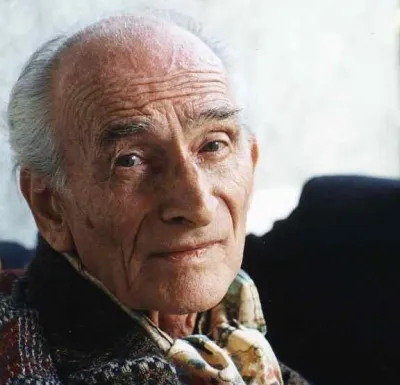
M. Rainer Lepsius
Human Design Chart
Biography
A particular interest was in the work of Max Weber: he was prominent among the co-compilers of the (eventually) 47 volume edition of the Max-Weber-Gesamtausgabe (Complete Works of Max Weber). His research work also embraced both historical and contemporary social structure analyses. He also worked extensively on political sociology and on the European Union. Lepsius powerfully influenced the political culture through his work on the social environment.
M. Rainer Lepsius died on 2 October 2014, aged 86, in Weinheim, Baden-Württemberg, Germany.
M. Rainer Lepsius as a Manifesting Generator 6/2 in Human Design
Manifesting Generator 6/2 — Design at a Glance
M. Rainer Lepsius revealed himself as someone who possessed hybrid energy: the constant power of a Generator combined with the lightning-fast execution power of a Manifestor. His design tended to draw things extremely quickly into his life and skip steps, which allowed him to work efficiently but also carried risks.
As a Manifesting Generator, he had a defined Sacral Center that provided him with continuous life energy. The central advice for him was therefore not to initiate himself but to respond to inner impulses. Once the Sacral Center gave a clear "yes," he could proceed. His special ability lay in connecting this reaction with high speed, thereby advancing projects quickly.
This speed, however, brought two specific challenges. First, he tended to skip important intermediate steps, which sometimes meant he had to return later and redo work. This could lead to frustration, as the non-self theme of the Manifesting Generator is often associated with impatience and a sense of failure. Second, his responsiveness to many impulses led him to prefer handling multiple things simultaneously.
As long as he maintained his strategy—responding to life and regularly checking whether his inner authority and Sacral Center still supported his projects—he could use this multitasking ability. In this state, a so-called "play mode," he found deep satisfaction. The demand to focus on only one thing would have hindered rather than promoted his creative power, as variety and fun were essential for him to maintain his energy.
Emotional Authority
M. Rainer Lepsius showed himself to be someone who did not make decisions on the spot but consciously allowed them to mature. His design indicated a tendency to initially be guided by the current mood without immediately accepting it as the final truth. This resulted from his emotional authority, carried by the defined Solar Plexus Center. This center was subject to a constant wave of ups and downs in feelings, coloring the perception of the world through the momentary mood. What appeared inspiring in one moment could seem negative in the next. Since these feelings were only snapshots, spontaneous reactions would often lead to misjudgments. Instead, M. Rainer Lepsius gained clarity through patience and repeatedly sleeping on questions. Over time, the intense emotions subsided, emotional distance emerged, and calmness set in. This process of distancing was central to long-term, life-defining decisions. The emotional authority always took precedence over other defined centers, regardless of further configurations in the graph. It dictated the necessity of taking time to reach the deeper, more comprehensive understanding that lay hidden behind the initial emotional waves.
The 6/2 Profile — Role Model / Hermit
M. Rainer Lepsius revealed himself in his youth as someone who learned through trial and error, with retreats after mistakes being the driving principle. His design as a 6/2 line established that before the age of 30, the energy of the 3-line dominated: experimenting, gathering personal experiences, and not committing. Only after around 30 years, with the activation of the 6-line, did this dynamic fundamentally change.
Then M. Rainer Lepsius metaphorically retreated into a "cave" to look back on his earlier experiments with distance. This phase of intensive reflection served for healing and deep self-knowledge. The 6-line aimed for an overview and the whole picture, which was often difficult. Here rationalization played a role, connected with the question of readiness for change. At the same time, there was a strong desire for security and fixation on material aspects, which served as a negative learning experience for preserving individuality.
The 2-line in his profile emphasized selectivity and the examination of every possibility before making a decision. It represented the last exit and preparation for possible revolutions, where sacrifices were seen as inevitable. M. Rainer Lepsius lived this mechanism by first experimenting and later emerging from his reflective phase as a wise person. Other people recognized his life wisdom and came to him to learn from his ability for deep introspection. His development thus followed the pattern of rigidity and rationalization leading to an integrated, selective wisdom.
Split Definition — Defined & Open Centers
M. Rainer Lepsius was characterized by a reliable and consistent way of communicating and acting, emanating from his defined Throat Center. This energy source acted as a pivot point, translating messages from the body into the world. His vital energy came from his defined Sacral Center, which provided him with an enormous energy source that was, however, dependent on reaction. He had the ability to engage in tasks that brought him satisfaction, with his defined Solar Plexus Center acting as an inner authority. This meant that he did not make decisions in the moment but waited for the emotional wave to gain clarity. His defined Root Center provided the necessary pressure and endurance to advance in the material world and master existential challenges.
At the same time, M. Rainer Lepsius was marked by several open centers, making him vulnerable to certain conditioning. His open Head Center had no consistent way of processing mental information; he tended to get stuck in doubts or the search for inspiration if he did not trust his authority. His open Ajna Center allowed for a flexible mind open to various concepts, but it also led him to interpret others' opinions as his own truth or feel uncertain if he did not have clear answers. His open G Center meant that he did not have a fixed identity or direction but discovered these through interaction with his environment and the right places. He relied on others to initiate him to find his direction. His open Heart Center made him vulnerable to the pressure of proving his worth through willpower or promises, although he did not consistently possess this energy. Finally, his open Spleen Center was marked by a fundamental survival fear that led him to cling to situations or people that gave a false sense of security and well-being rather than trusting spontaneous intuition.
Channels for emotional transformation and cyclical maturation.
M. Rainer Lepsius was characterized by emotional depth and cyclical experiential values. His design inclined him towards seeking new experiences, coupled with the ability to transform these into wise reflections.
The Channel of Transience 36-35 connected his Solar Plexus Center with his Throat Center. This channel drove him to break through cautious logical patterns and actively seek change. Through the Gate of Crisis (36) and the Gate of Change (35), he often sought adventures to gain emotional clarity. This restless desire for experience served to gather wisdom that he could later pass on as advice. He learned to use his emotional waves to make decisions and encouraged others to seize the moment rather than suffocate in the fear of transience.
Parallel to this, the Channel of Maturation 53-42, connecting his Root Center with his Sacral Center, emphasized the necessity of completing each life cycle, whether a project or a relationship, before starting a new one. Through the Gate of Beginnings (53) and the Gate of Growth (42), he gathered empirical history. He understood that early termination of cycles leads to repetition. His task was to reflect on experiences and make the wisdom gained useful for the collective. This process endowed his life with a deep connection to history and the natural rhythms of existence.
Additionally, Gates like Gate 2 (Receptivity) and Gate 1 (Uniqueness) shaped his attitude. Gate 2 allowed him to transform external changes into new evolutionary directions, while Gate 1 inspired creative mutation in the here and now. Gate 49 (Revolution) demanded obedience to principles in the familial context, and Gate 4 (Formulation) helped him clarify suspicious patterns logically to ensure future security.
In his personality, Gates 16 (Experimentation), 9 (Detail Work), and 23 (Communication) were at play. Gate 16 promoted his mastery through constant experimentation, Gate 9 allowed him to focus on details without logical constraints, and Gate 23 helped him translate inner sound into language to explain otherness. Gate 27 (Care) rounded this off by filling his activities with altruistic warmth that supported both self-preservation and species preservation.
In his design, Gates 5 (Rhythm), 37 (Friendship), 38 (Pressure), and 54 (Ambition) contributed. Gate 5 set the basic rhythm for his energy, Gate 37 connected him with organic communities, Gate 38 set boundaries to preserve his integrity, and Gate 54 linked worldly success with spiritual development. Gate 29 (Yes) in the Sacral Center underscored the importance of persistence and affirmative action, with the reward for correct action being inevitable.
Collective Circuitry — Circuit Signature
M. Rainer Lepsius was characterized by drawing meaning from past experiences and sharing these emotional insights with others. His design was marked by a shared definition, meaning that two energetically independent systems existed in parallel without directly flowing into one another.
The first area connected the Throat Center with the Solar Plexus Center. Here, the energy of the Perceiving Circuit operated, moving in wave-like and cyclical patterns. M. Rainer Lepsius reflected on the past to understand the meaning behind events. These felt insights served to share them with the collective and learn from them together. The Channel of Transience (Gates 35-36) supported this process of emotional processing and expression.
Completely independent of this, a second, separate system existed: the connection between the Sacral and Root Centers. Here, the Channel of Maturation (Gates 42-53) operated. This area provided the basic life energy and endurance potential but stood in no direct exchange with the emotional-intellectual area of Throat and Solar Plexus. M. Rainer Lepsius had to experience and integrate these two energy fields – the emotional reflecting on one side and the purely physical endurance on the other – as separate, parallel realities rather than as a single continuous flow.
Left Angle Cross of Defiance 1
M. Rainer Lepsius revealed his design through the imprint of the left cross of challenge 1. This configuration established a fundamental attitude characterized by a deep, often unconscious confrontation with inner and outer tensions. It was a life task that focused less on harmonious adaptation and more on enduring and understanding conflicts.
The mechanics of this cross describe a path where challenges are not seen as obstacles but as essential teachers. M. Rainer Lepsius was called to engage with his own resistance and the ability to transform under pressure. It was about developing a deeper wisdom from the friction between personal convictions and reality. This energy promoted an honest, though sometimes painful, confrontation with the truth, both in personal and professional contexts.
The structure of this design supported a development driven forward by crises and turning points. M. Rainer Lepsius learned that true strength lies not in avoiding difficulties but in consciously navigating through them. The challenge was to recognize and expand personal limits without losing integrity. This process required patience and the willingness to repeatedly reorient oneself. Through overcoming these specific dynamic tensions, M. Rainer Lepsius developed a unique perspective based on experience rather than theory alone. The energy of the left cross of challenge 1 thus marked a life path characterized by continuous growth from necessity, engaging with the uncomfortable and complex to gain clear, action-relevant insights.
Saturn Return · Uranus Opposition · Chiron Return · 2nd Saturn Return — Life Cycles
M. Rainer Lepsius was someone whose professional development was marked by clear, cyclical milestones that each indicated new levels of responsibility. His design laid out a structure where external recognition and institutional anchoring naturally followed internal maturation processes.
In 1956, at the age of 28, he received a Fulbright Scholarship at Columbia University. This corresponded to the first Saturn return, a time when years of groundwork often condensed into a solid, internationally visible result. The mechanics of this cycle promoted the consolidation of professional identity and a step into a broader, global perspective.
Twenty years later, in 1970 at the age of 42, he took over the chair of the German Sociological Society. This coincided with the Uranus opposition. This cycle often brought a phase of breaking free from earlier structures and assuming a leading, reforming role within one's field. Lepsius used this energy to represent and lead the discipline at an institutional level.
In 1977, at the age of 49, he became a regular member of the Heidelberg Academy of Sciences. This marked the Chiron return, a fulfillment cycle in which the incarnation cross unfolds and the life purpose becomes experiential. Here, the bloom of his work was evident: the final anchoring in the highest scientific community, a sign that his strategy and authority had been consistently lived out over the years and were now fully unfolding their effect.
Manifesting Generator · Emotional Authority — Synthesis
M. Rainer Lepsius lived a life marked by a profound inner process of transformation. The combination of sacral energy (Manifesting Generator) and emotional authority points to a personality that reacts quickly to opportunities but always filters them through intense emotional processing. This dynamic was evident in a constant interplay between the desire for rapid progress and the necessity to let decisions mature over longer periods. The profile as a role model and natural talent, combined with an early phase of experimentation and a later period of reflection, underscores this process of self-discovery and the passing on of wisdom. The channel of Transience (35/36) reinforced the tendency to constantly seek new experiences, while the defined Throat Center emphasized the ability to communicate these experiences and bring them into the world.
Central to M. Rainer Lepsius was the tension field between the impulse for quick action and deep emotional processing. He was able to seize opportunities immediately, yet the emotional wave required careful consideration to avoid rash steps. This inner conflict between the manifesting and generative aspects of his design led to a lifestyle marked by phases of intense activity followed by withdrawal and reflection – a constant oscillation between the outside and the inside, doing and being.
2 Defined Channels
Incarnation Cross - Left Angle Cross of Defiance 1
Solar Return
The Solar Return shows the moment when the sun returns to its exact birth position - your personal solar year.
Life Cycles
Discover the life cycles with a detailed triple view (birth chart, cycle chart, composite).
Human Design Profile
- Strategy
- To respond - wait for something to respond to
- Authority
- Emotional Authority
- Profile
- 6/2 - Role Model / Hermit
- Definition
- Split Definition
- Incarnation Cross
- Left Angle Cross of Defiance 1
- Date of Birth
- 08.05.1928 18:05
- Place of Birth
- Rio De Janeiro, Brazil
Frequently Asked Questions
What was M. Rainer Lepsius' Human Design type?
What Profile did M. Rainer Lepsius have in Human Design?
What Authority did M. Rainer Lepsius have?
What incarnation cross did M. Rainer Lepsius have?
When was M. Rainer Lepsius born?
Discover your own Human Design
Are you also a Manifesting Generator? Find out in a personal reading how to unfold your multi-talents and direct your energy wisely.
More Personalities
Back to overviewAldair

Alizée

Angeli

Arletty

Artus

Balthus