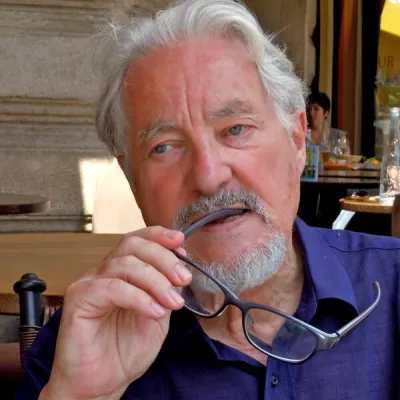
Marc Augé
Human Design Chart
Biography
Marc Augé died in Paris on 24 July 2023 at the age of 87.
What does Generator 4/6 mean for Marc Augé?
Generator 4/6 — Design at a Glance
Marc Augé revealed himself as someone with high sacral endurance who channeled his strength not through self-initiated actions but by responding to inner impulses. His design established a basic stance: he was not a starter, bringing projects into existence out of nowhere, but a respondent waiting for life to send a signal and respond with a clear 'yes' from within. This Generator mechanism means that energy only becomes free when one reacts to external occasions rather than taking the first step oneself.
Conformity to this logic allowed him deep fulfillment and materialized creative power. However, if he acted against his nature – by initiating or suppressing impulses – frustration and energy loss were imminent risks. The risk lay in getting distracted with tasks that lacked inner resonance, which could quickly lead to burnout given such high capacity. Conversely, it was crucial for him not to be held back from his heart project when power remained available. Thus, his path to sustainable endurance lay in trusting gut feelings and only acting upon receiving internal confirmation. This protected him from exhaustion caused by false initiatives and ensured the strength needed for long-term action.
Emotional Authority
Marc Augé showed a decision-making stance that required temporal distance from emotional waves; spontaneous judgments were often misleading snapshots in his design. This structure resulted from his Emotional Authority: The defined Solar Plexus Center carried this inner authority figure. In Human Design, there is a clear priority rule – regardless of other defined centers, the emotional authority always takes precedence in decision-making.
Marc Augé was subject to a constant emotional wave, an up and down of feelings coloring his perception of the world through current mood. What appeared inspiring at one moment could turn negative the next. His immediate feeling was merely a first impression, not necessarily his truth. Quick, spontaneous decisions from this state risked negative consequences as they were based on transient states.
The mechanics of his authority required patience and multiple 'overnights' for decision-making. Only with time did intense feelings subside, allowing him to gain emotional distance. This process led to clarity and calmness before a final choice was made. The necessity of waiting served to gain deeper and more comprehensive insights, especially in long-term decisions significantly impacting life trajectory. Marc Augé used this time to ensure his actions sprang from mature insight rather than passing excitement.
The 4/6 Profile — Opportunist / Role Model
Marc Augé's design laid out a life path clearly divided into two phases: early experimentation and later as a wise role model. In the first thirty years, before Saturn's return, he was strongly influenced by Line 4, the Networker. He actively sought opportunities in relationships and friendships to find his place within social structures. This phase was marked by the need to identify correct moments for influence, with risks of overloading or neglecting quality leading to the limits of his endurance.
With the transition into the second half of life, Line 6, the Role Model, became active. Here an inner tension emerged: The heart continued to yearn for belonging and community (Line 4), while the head sought distance to maintain oversight and develop wisdom (Line 6). Marc Augé had to learn to hold this polarity – between wanting to be part of the whole and needing to look down on life from above.
In his later years, he was expected to act as a cooperative role model. His task was to process experiences in ways that served others without endangering his own integrity. As Line 6 can be prone to gullibility, it was crucial for him to learn to assess people and situations critically. Only through this selective openness could he avoid exposing himself to false influences and instead develop a sustainable, almost immortal quality in the way he acted.
Triple Split Definition — Defined & Open Centers
Marc Augé revealed himself as someone who constantly struggled with mental pressure to ask questions and understand connections. His defined Head and Ajna Centers created a continuous inspiration, but did not provide direct energy for implementation; he relied on others to be inspired by his thoughts rather than carrying them out himself. This mental process often led to confusion and doubt until clarity emerged—a natural rhythm he had to follow to avoid frustration.
At the same time, he possessed constant willpower through his defined Heart Center. He determined his life independently, kept promises, and sought recognition for his contributions. This ego strength contrasted with his open identity: His undefined G Center meant that he did not have a fixed direction or personality but was shaped by his environment. He tended to seek a stable identity, finding it only in correct relationships and places where he felt comfortable.
His vital energy came from his defined Sacral Center, which waited for affirming responses rather than taking initiative. Only through agreeing answers could he effectively use his strength; mental decisions without sacral confirmation led to exhaustion. Emotional clarity was achieved after waiting for the wave of his defined Solar Plexus Center; impulsive actions in emotional highs or lows proved misguided. His spontaneous intuition in the present, guided by his defined Spleen Center, protected him from danger and ensured well-being.
In contrast, he absorbed stress from the environment through his open Root Center. He was vulnerable to external pressure that he could not recognize as his own, which could lead to overload if he tried to follow this foreign drive. Additionally, in his open Throat Center, he often sought attention or spoke impulsively rather than waiting for the right invitation to speak. This combination of inner strength and outer receptivity shaped his essence: a strong will and clear intuition embedded in a flexible identity and sensitive communication.
Channels for care, community and abstract comprehension.
Marc Augé showed himself to be someone who bore a deep sense of responsibility for maintaining his community while being dependent on emotional affirmation. His design combined the ability to provide with the need for inclusion and an active, abstracting mind.
Channel 27-50 connected his Sacral Center with the Spleen. Through Gate Caring (27) and Gate Values (50), he acted as a natural protector of the tribe. His aura attracted trust; people sought his support. He defended traditional values and selflessly cared for those weaker, from children to elders. This energy was based on spontaneous reactions: Only through his sacral approval did he know if he could give out energy. Without this confirmation, overload threatened. His own health was the prerequisite for this care – a form of "enlightened selfishness."
Parallel to this, Channel 37-40 determined his social bonds. It connected the Solar Plexus Center with the Heart via Gate Friendship (37) and Gate Solitude (40). Marc Augé waited to be invited into groups or organizations. Spontaneous contacts were not enough; he needed time to gain emotional clarity about contracts. He sought his place in the whole and built bridges between individuals. The connection had to be emotionally grounded, supported by the Heart's willpower for it to endure. Here, it was not about hierarchical power but mutual support within a loyal community.
Mentally, Channel Abstraction 64-47 as well as prioritized gates shaped him. This channel connected the Head Center with the Ajna Center (Gate Confusion 64 and Gate Understanding 47). His mind filtered every experience through a kaleidoscope of images to find meaning. He sought stories he could share. This process often generated mental unrest; his mind was not an inner authority for life decisions but a tool for perspective.
Additionally, specific gates worked: Gate 9 in the Sacral Center promoted detailed work and perfection through repeated experimentation. Gate 16 pushed collective mutations forward, where identification with skills led to mastery. Gate 43 urged him to communicate individual insights, often accompanied by fear of rejection. Gate 61 sought inner truth and silence amidst mental noise. Marc Augé thus processed the world through a combination of caring structure, emotional connection, and an insatiable search for narrative meaning.
Tribal Circuitry — Circuit Signature
Marc Augé's Human Design shows a tendency towards transactional justice. He appeared as someone who understood the principle of "I give you today, you give me tomorrow" and promoted mutual support within the collective. This attitude stemmed from his Ego Circuit with Channel 37-40 (Community), connecting the Heart Center and Solar Plexus Center. Since this circuit did not connect to the Sacral Center, the energy cycle was not constant; he needed rest periods for regeneration of resources for the tribe.
Parallel to this, two other separate energies were at work because Marc Augé had a Triple Definition, and these groups did not flow directly into one another. The Meaning Circuit connected Head and Ajna Centers via Channel 64-47 (Abstraction). This was about reflecting on the past, finding meaning behind events, and sharing emotional insights with the collective to learn from them.
The third piece formed the Defender Circuit with Channel 27-50 (Conservation), connecting Sacral and Spleen Centers. This connection united the life force of the Sacral Center with the instinctive energies of the Spleen Center. It involved primal forces for protection, defense, and preservation of family as well as one's own genetics. These three circuits existed alongside each other as separate but equally powerful fields in his design.
Right Angle Cross of Planning 3
Marc Augé's Human Design profile indicated a tendency towards strategic orientation and long-term alignment. He was someone who maintained an overview of complex situations and aligned actions with larger goals. This inner navigation understood planning not as a rigid schema but as a flexible compass.
This attitude stemmed from the influence of his right cross in Planning 3 on his chart. This aspect describes the ability to integrate various perspectives and develop a coherent strategy from them. It was less about detailed step-by-step plans than finding the right path through uncertainty. Marc Augé used this energy to navigate dynamic environments by always keeping an eye on the end goal.
The mechanics of this cross fostered a sense of ease with change. Rather than orienting himself around fixed guidelines, he continuously adapted his approach based on new insights. This allowed him to remain effective even in unpredictable situations. His strength lay in penetrating complex interconnections and deriving clear direction from them without sacrificing the flexibility to adjust course as needed. Thus, planning became a living process that helped him pursue his goals sustainably.
Generator · Emotional Authority — Synthesis
Marc Augé lived a life marked by a deeply rooted ability to recognize patterns and embed these into a larger context. This is evident in the interplay of his defined centers – Head, Ajna, and Heart – which generated consistent mental energy, coupled with the responsiveness of the Sacral center to impulses. His emotional authority required waiting out emotional waves, allowing him to make decisions from a depth beyond mere rationality. As a networker and role model, he sought connections and recognized dynamics within groups early on, his defined Heart Center driving him to share resources and nurture relationships.
A central tension in his design lay between the need for inner clarity and the ability to engage with external stimuli. The emotional wave required time for decision-making, while the Sacral center responded immediately to signals. This interplay led to a life marked by profound reflection but also enabled spontaneity and adaptability to new situations. He navigated between the desire for stability and acceptance of the fluid nature of life, always seeking the invisible connections that shape human existence.
3 Defined Channels
Incarnation Cross - Right Angle Cross of Planning 3
Solar Return
The Solar Return shows the moment when the sun returns to its exact birth position - your personal solar year.
Life Cycles
Discover the life cycles with a detailed triple view (birth chart, cycle chart, composite).
Human Design Profile
- Type
- Generator
- Strategy
- To respond - wait for something to respond to
- Authority
- Emotional Authority
- Profile
- 4/6 - Opportunist / Role Model
- Definition
- Triple Split
- Incarnation Cross
- Right Angle Cross of Planning 3
- Date of Birth
- 02.09.1935 18:15
- Place of Birth
- Poitiers, France
Frequently Asked Questions
Which Human Design Type was Marc Augé?
Which profile did Marc Augé have?
What was Marc Augé's Authority?
Which incarnation cross did Marc Augé have?
When was Marc Augé born?
Discover your own Human Design
Are you also a Generator? Find out in a personal reading how to use your sacral energy correctly and discover deep satisfaction.
More Personalities
Back to overviewAaliyah

Alexia

Angèle

Anne-Marie

Arcángel

Arno