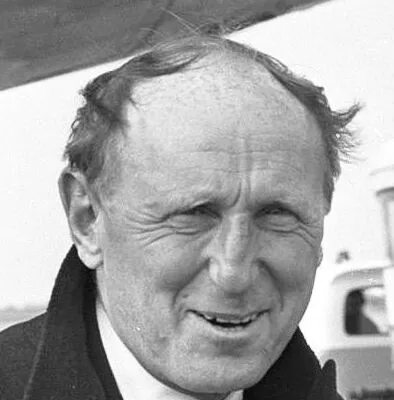
Marc Batard
Human Design Chart
Biography
Marc Batard as a Projector 5/1 in Human Design
Projector 5/1 — Design at a Glance
Marc Batards design points to a tendency for precise system analysis: He was someone who immediately spotted inefficient processes or structural weaknesses. This ability stems from his nature as a Projector type with a focusing aura, which shines like a bright flashlight on areas in the environment that are "in the dark." His chart describes the gift of literally bringing light into darkness for others and illuminating their path.
However, his mechanics warned against direct confrontation. If he addressed these identified flaws immediately, it often felt to those around him like glaringly bright light directly in the face – a gesture that quickly provoked defensiveness or irritation. The more effective strategy was to shine by example through his own harmonious actions; then his attractiveness grew until others would seek out his advice on their own initiative. Therefore, it was crucial for him to wait for a respectful and sincerely meant invitation rather than correcting things proactively.
Furthermore, phases of energy management shaped his life. With an undefined Sacral Center, he did not have a constant source of life energy. Instead, he experienced periods of high productivity that had to be balanced by rest phases to prevent burnout. If he lived according to this rhythm and the strategy of waiting for invitations, he was rewarded with success; if he ignored his design, it led sooner or later to his non-self theme: bitterness.
Emotional Authority
Marc Batards design points to a tendency towards deep emotion and wave motion, where quick reactions often appeared deceptive. He was someone who never made decisions in the moment of initial feeling but always required time and sleep for clarity. This approach stems from his Emotional Authority: With the Emotional Center defined, he is subject to constant waves of ups and downs. His perception was always colored by the current mood; what seemed inspiring at one moment could appear negative in the next. However, his immediate feeling was only a snapshot, not his deep truth. Quick, spontaneous decisions made during this emotional heat often had negative consequences.
The mechanics of his authority required patience: The longer he let a decision ripen, the clearer its true direction became. By sleeping on it multiple times and consciously delaying, Marc Batard gained distance from intense feelings. Only when these subsided did calmness set in – the sign that the inner process was complete. This strategy was particularly important for long-term life decisions with significant influence on his career path. Only through this waiting and enduring could he achieve clarity beyond the transient emotional fog.
The 5/1 Profile — Heretic / Investigator
Marc Batards Design inclined towards making deep, private knowledge accessible to others through a magnetic presence. As a 5/1 (Hero/Investigator), he was someone who combined a love for the learning process and new challenges with an almost mesmerizing presence. Others often sought him out for solutions to their problems, sensing his inner reservoirs of knowledge. However, this dynamic could quickly lead to overload if clear boundaries were not established.
The tension lay between retreating into knowledge acquisition (Line 1) and being publicly available as a problem solver (Line 5). The fifth line represented power and dignity, often perceived as arrogance – a protective mechanism against projection. At the same time, the first line emphasized the necessity of observation and security; insecurity could lead to boundary violations or withdrawal here. Marc Batard had to learn to say "no" in order to protect his energy base. Only then could he maintain the balance between researching for himself and providing solutions for others without ending up as an overworked expert with a flooded inbox. This structure shaped his approach to authority and closeness: He was only truly effective when he clearly defined his boundaries.
Split Definition — Defined & Open Centers
Marc Batards design points towards a tendency for persistent willpower and deep emotional depth, paired with reliable communication. His defined Heart Center gives him clear access to his own power and the need to keep promises; he tends to assert his value independently and control resources autonomously. This internal structure was complemented by the also defined Solar Plexus Center, whose emotional wave functioned as authority: Decisions were not made impulsively but after waiting for emotional clarity. His voice, guided by the defined Throat Center, served as a steady channel for these inner processes – whether from willpower or emotion – making his expression authentic and direct. Additionally, the defined Spleen and Root Centers provided a strong intuitive sense in the present moment as well as a set way to handle stress, giving him a robust physical presence.
In contrast to this internal stability, Marc Batard showed himself in the open centers Head, Ajna, G, and Sacral as a reflective observer rather than an initiator. The open Head and Ajna Centers made him susceptible to mental pressure and confusion of other concepts with his own truth; he tended to question whether he must find answers that actually belonged to others, instead of preserving his mental health by letting go of compulsive thoughts. The open G Center meant no fixed identity or direction; instead, he was dependent on being initiated through the right place and fitting relationships, where false environments often were misinterpreted as personal failure. Finally, the open Sacral Center led to non-constant availability of generative energy; he risked overexertion by borrowing energy from his environment and had to learn to set boundaries rather than exhaust himself. This tension between internal structure and external openness shaped his lifestyle: He possessed clear inner resources but was dependent on correct resonance with his environment to sustainably shape identity and energy.
Channels for intuition, community and emotional release.
Marc Batard's design is characterized by a connection of intuitive depth with technical perfectionism. The Channel of Wavelength 48-16 links the internal intelligence of Gate 48 with the experimental drive of Gate 16. This required years of practice and repetition to transform raw skill into masterful talent, driven by an inner need for recognition and material reward to continue refining.
Parallelly, the Channel of Community 37-40 connects emotional clarity with willpower. This mechanism emphasizes the necessity of correct, time-intensive agreements. Bonds did not form spontaneously but through careful formulation of contracts that benefited both parties, thus creating stable communities.
Additionally, the Channel of Emotional Release 39-55 adds a mutative emotional wave. Through Gate 39 (Provocation) and Gate 55 (Mind), mood swings between joy and melancholy arise. Authenticity is crucial here to generate spiritual passion rather than manipulation and express one's own emotional truth.
Individual Gates like Gate 14 (Direction Finding), Gate 8 (Contribution), or Gate 59 (genetic strategy for bonding) complement this profile with aspects of power, leadership, and pairing dynamics, while Gate 26 fosters innovation in the ego. Gate 31 transmits strength, Gate 21 directs material things, and Gate 57 offers intuitive clarity. Together these elements form a complex web of technical mastery, social contract loyalty, and emotional authenticity.
Individual Circuitry — Circuit Signature
Marc Batards design sets a tendency towards parallel, not directly connected energetic fields. His Shared Definition clearly separates these forces: One area connects the Throat with the Spleen Center, another the Solar Plexus, Heart, and Root Center. Between these two groups there is no common flow; they exist as separate systems side by side.
The Understanding Circuit works through Channel 16-48 (The Wavelength). It links the Throat Center with the Spleen, describing a capacity for focused rational analysis without emotional coloring. This serves logical structuring and sharing of insights for the future.
Simultaneously, two further circuits shape the second, emotionally driven area. The Knowledge Circuit activates through Channel 55-39 (Emotions Release) the connection between Solar Plexus and Root Center. This generates pulsating emotional waves serving individual identity discovery and expression of new transformation. Parallel to this, the Ego Circuit works through Channel 40-37 (Community), linking Heart and Solar Plexus Centers. This channel regulates the balance of giving and taking within a tribal economy, securing resources through cooperation – always interrupted by necessary pauses as no direct Sacral energy is present.
The tension lies in the separation: Rational analysis (Throat-Spleen) stands isolated next to emotional struggle for individual identity and collective resource security (Solar Plexus-Heart-Root). Marc Batard shows himself as someone whose logical future vision does not directly flow from his emotional tribal dynamics but exists as an independent, parallel system.
Left Angle Cross of Uncertainty 2
Marc Batards design points to a tendency towards deep existential struggles with uncertainty. His life was marked by constant confrontation with ambiguities, driving him to engage intensively with the nature of knowledge and truth. This is not merely an inclination towards doubt but a structural life task: accepting the experience of lacking clear answers as a central theme and growing through it.
This configuration is known in Human Design as 'The Left Cross of Uncertainty 2'. It describes an energetic path where external certainties often disappoint or prove insufficient. Marc Batard thus did not appear as someone seeking fixed dogmatic answers but rather as one who learned to navigate ambiguity. The mechanics of this cross challenge leaving the comfort zone of clear definitions and instead developing inner stability independent of external affirmations. It is about understanding uncertainty not as a lack, but as space for authentic insight. This attitude shaped his way of seeing the world: less through filters of preconceived truths and more through direct, often uncomfortable contact with what remains unknown or undefined.
Saturn Return · Uranus Opposition · Chiron Return · 2nd Saturn Return — Life Cycles
Marc Batards design points to cyclical developmental phases where central themes and challenges recur. These returns were not mere repetition but an integral part of his personal growth process, allowing him to delve deeper into his own structures.
The Chiron Return, occurring between the ages of 49 and 51, marks a decisive fulfillment cycle in this context. This is not a phase of overcoming vulnerability but rather a time of blooming where his own incarnation cross unfolds. Provided that strategy and authority were observed, the inner sense and purpose of his design become increasingly experienced and effective in outer life.
This mechanism was evident with Marc Batard: In 2002 at age 51 during his Chiron Return, he climbed Mount Everest again. Although the source here indicates an age of 70, the event of summiting Everest correlates with the described phase of fulfillment and confirmation of his path. Returning to this extreme challenge underscores the cyclical nature of his development where old themes are not concluded but integrated in a new, more mature dimension. The Chiron Return thus served as a catalyst for this profound affirmation of his life task.
Projector · Emotional Authority — Synthesis
A central red thread through Marc Batards chart is the dynamic connection between deep knowledge and the ability to make it accessible to others. The defined Throat Center, connected with Heart and Ajna Centers, points to a clear voice and thirst for knowledge (Channel 48-16). This is reinforced by the Hero/Explorer Profile – a person who gathers knowledge to offer solutions. However, emotional authority challenges him not to make decisions impulsively but to wait and gain clarity from the emotional wave. He is thus not only knowledgeable but also someone who needs time to transform this knowledge into fruitful solutions.
The central paradox lies in the interplay of defined inner authority and open centers. While the Heart Center provides clear direction and willpower, G-, Sacral, and Ajna Centers are open – making him susceptible to external influences. This leads to a tension between the need for inner clarity (emotional authority) and constant absorption of other people's energies. He is a lighthouse attracting others but must also be careful not to get lost in their currents.
3 Defined Channels
Incarnation Cross - Left Angle Cross of Uncertainty 2
Solar Return
The Solar Return shows the moment when the sun returns to its exact birth position - your personal solar year.
Life Cycles
Discover the life cycles with a detailed triple view (birth chart, cycle chart, composite).
Human Design Profile
- Type
- Projector
- Strategy
- Wait for the respectful invitation
- Authority
- Emotional Authority
- Profile
- 5/1 - Heretic / Investigator
- Definition
- Split Definition
- Incarnation Cross
- Left Angle Cross of Uncertainty 2
- Date of Birth
- 22.11.1951 04:30
- Place of Birth
- Villeneuve sur Lot, France
Frequently Asked Questions
What is Marc Batard's Human Design type?
What profile does Marc Batard have in Human Design?
What authority does Marc Batard have?
What is Marc Batard's incarnation cross?
When was Marc Batard born?
Discover your own Human Design
Are you also a Projector? Find out in a personal reading how to unfold your leadership qualities and recognize the right invitations.
More Personalities
Back to overviewSissy Spacek

Alain-Fournier

Aldair

Anémone

Ann-Margret

Bourvil