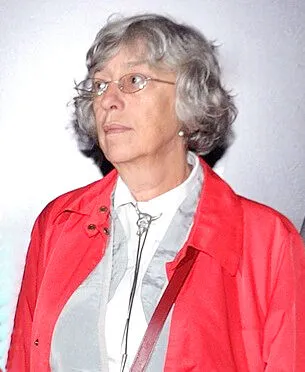
Photo: Wikimedia Commons
Maria Franziska von Trapp
Human Design Chart
Biography
Her siblings were Rupert von Trapp (1911–1992), Agathe von Trapp (1913–2010), Werner von Trapp (1915–2007), Hedwig von Trapp (1917–1972), Johanna von Trapp (1919–1994), and Martina von Trapp (1921–1951). Along with her six siblings, father, and stepmother, Maria Augusta von Trapp, she was part of the Trapp Family Singers. Von Trapp sang second soprano in the choir, together with her sister Martina von Trapp.
The family fled Austria after the German annexation of Austria, fearing reprisals resulting from declining to sing at Hitler's birthday party and Georg von Trapp's refusal to accept a commission in Nazi Germany's Kriegsmarine.
They emigrated to the United States in 1938, settled in Vermont in 1942, and performed throughout the country. Baron von Trapp died in 1947. Maria Franziska became a naturalized U.S. citizen in 1948 and lived at her family's lodge in Stowe, Vermont. The family continued to tour until their last concert on 26 January 1956, at which time Maria Franziska and her stepmother became lay missionaries in Papua New Guinea where Maria Franziska adopted a son, Kikuli Mwanukuzi.
From 22 July 2008 to 27 July 2008, she visited her childhood home in Salzburg/Aigen and her birthplace in Zell am See. Accompanying her were her half-brother Johannes and her sister-in-law Erika (Werner's widow). During their visit, the group met with Ernst Florian Winter, the husband of her sister Johanna (1919–1994).
She was the last survivor of the seven original von Trapp children.
Maria Franziska von Trapp — Projector with Profile 1/3
Projector 1/3 — Design at a Glance
Maria Franziska von Trapp was someone who had a strong, focused aura that influenced her surroundings. As a Projector, she did not have the constant internal energy source of a Generator but rather acted like a bright flashlight: She directed her light beam precisely onto areas in her environment that were still 'in the dark'. Her strength lay in immediately recognizing errors in systems or relationships of others.
When she directly addressed these deficiencies, it often felt like glaring into someone's face and triggered defensiveness. For Maria Franziska von Trapp, a more elegant and effective strategy was to live harmoniously herself. By demonstrating how functional connections could look, she became attractive. Other people then automatically came to her to ask for her insider tips instead of feeling attacked.
Her design required patience: The best approach was to wait for a respectful invitation from others before taking on a leadership role. Additionally, she had to deal with her undefined Sacral Center. She experienced phases of high energy and rapid productivity, followed by necessary rest periods to avoid burnout. If Maria Franziska von Trapp lived according to this rhythm and the strategy of waiting for an invitation, she was rewarded with success. Ignoring these needs threatened the non-self theme of bitterness, a feeling of injustice towards a world that did not recognize or accept her leadership.
Emotional Authority
Maria Franziska von Trapp showed a basic attitude of emotional patience: Her inner authority was the defined Emotional Center. In this design, she was subject to natural waves of feelings that colored her perception of the world through the current mood. What appeared inspiring in one moment could seem negative in the next; however, this first impression was only a snapshot and not necessarily her deeper truth. Quick, spontaneous decisions from such an emotional state often had negative consequences. Instead, her system required patience and multiple nights to consider choices. The longer she took time, the deeper she could understand the situation. Over time, intense feelings subsided, emotional distance set in, and clarity as well as calmness emerged. This process was especially important for long-term decisions that significantly influenced her life path. She needed to be properly dressed up and asked multiple times before acting. Only when the emotional highs and lows had subsided did she know through the process and make a decision on a stable foundation.
The 1/3 Profile — Investigator / Martyr
Maria Franziska von Trapp showed herself as someone who not only collected knowledge theoretically but also tested it through personal action. Her design tended to hold insights valid only after they were both understood in her mind and proven in practice. This attitude stemmed from her Profile 1/3: Line 1 brought a desire for stable foundations and conservative principles, while line 3 demanded the urge to experiment and learn through trial and error. Often she faced the challenge that the wish for complete planning (line 1) delayed the step towards implementation. Yet only in action, sometimes even under external pressure or through forced inactivity that promoted concentration, did she find her confirmation. When Maria Franziska von Trapp declared something as correct, she had previously tested it thoroughly. Her judgment thus was not based on mere assumption but on a synthesis of traditional knowledge and personal experience. She corrected old patterns while preserving essential structures. This process of learning through mistakes was for her no failure but the only way to true understanding. Her authority arose from having herself taken the hard path of verification before she accepted her results as stable.
Single Definition — Defined & Open Centers
Maria Franziska von Trapp's Human Design profile indicated a tendency towards self-determined willpower and emotional depth. Her defined Heart Center gave her the ability to independently manage resources and time; she preferred following her own rhythm and only made promises that she could keep, which strengthened her self-esteem through reliable actions. At the same time, her defined Solar Plexus acted as an internal authority: decisions required time to clarify within the emotional wave. She tended to practice patience until emotional clarity emerged rather than reacting impulsively to highs or lows of mood.
Her defined Spleen Center fostered spontaneous intuition and physical well-being in the present moment. Combined with her also defined Root Center, which provided existential pressure for maintaining life force, she could transform stress into constructive survival energy while remaining mindful of her health.
In contrast, open centers made her susceptible to conditioning. Her open Head Center allowed her to be easily distracted by foreign questions or mental confusion; she tended to wonder if she needed answers that weren't her problem. Similarly, the open Ajna and Throat Centers: She could adopt others' ideas without identifying them as her own truth, avoiding forcing attention through unconsidered speech. Instead, she waited for invitations to communicate. The open G Center meant no fixed identity; she did not actively seek direction or love but let herself be initiated by the environment. Finally, in her open Sacral Center, there was a lack of constant energy; she had to learn to set boundaries and rest rather than running on borrowed energy from others to avoid exhaustion.
Channels for logic, principles and interpersonal bonds.
Maria Franziska von Trapp's design emphasized structural order and the cohesion of her social unit. Her inner drive lay in questioning and perfecting patterns to ensure quality of life for those around her. This occurred through the Judgment Channel 58-18, which combined insatiable logic with a desire for correction. She constantly checked if existing processes were still healthy and efficient, preventing collective stagnation.
Simultaneously, she sought emotional security through clear belonging. The Synthesis Channel 19-49 conveyed her strong sense of tribal connection and loyalty. She sharply distinguished between what supported her values and what had to be rejected to maintain the integrity of her community. This emotional frequency served as glue determining who belonged in the inner circle.
The implementation of this bond happened through the Community Channel 37-40. Here, she linked her emotional belonging with practical willpower and fair agreements. She built bridges between individuals by insisting on reciprocity and respectful functions within the group rather than hierarchy.
Additionally, individual Gates acted as supportive energies: Gate 17 promoted logical teaching and concern for human rights through service. Gate 52 brought moments of silent concentration for pattern correction. Gate 55 led to emotional awareness often accompanied by mood swings while Gate 32 protected material success and the continuity of the tribe. Gate 50 ensured everyday awareness through traditional values and protective reflexes. Together, these elements formed a personality that combined structure with deep emotional connection.
Tribal Circuitry — Circuit Signature
Maria Franziska von Trapp's design showed her as someone who combined logical clarity with emotional intuition. Her Spleen and Root Centers were directly connected, signaling an ability for intuitive judgment formation. She could quickly discern what worked or didn't in a situation and immediately translate this insight into tangible energy. This flow allowed her to make rational decisions free from excessive emotional conditioning but still based on deep inner knowledge.
Parallel to this was a separate yet equally significant connection between her Heart, Solar Plexus, and Root Centers. This configuration linked her willpower with her emotional depth. She had the capacity to take on commitments and support them through emotional resonance. The exchange of giving and receiving as well as the ability to synthesize different perspectives characterized her actions. Given her simple definition, these centers formed a cohesive energetic flow. Her strength lay in connecting strategic visions with the power of implementation and the warmth of togetherness, enabling both structured and empathetic solutions.
Right Angle Cross of Service 3
Maria Franziska von Trapp's Human Design profile was characterized by the presence of the right Service Cross. This configuration established a specific inner orientation that did not aim for personal dominance or the forceful imposition of one's plans. Instead, her system tended to find strength and effectiveness primarily in contexts of support and service to others.
In Human Design, the right Service Cross describes an energy that unfolds best when it does not act in isolation but stands in relation to the welfare of others. It is a structure where power is not defined as control over others but as the ability to use resources and influence so they benefit the whole. For Maria Franziska von Trapp, this meant her natural potential lay in becoming effective through dedication and practical help. Her design supported an attitude of humility in action, where authority was not exerted through loudness or command but through reliable presence and promoting others. This mechanism shaped her way of interacting with her environment: she sought no isolated leadership role but found confirmation in acting as a supporting pillar that enabled others to unfold themselves. Thus, her path was marked by a quiet yet steady power that found its greatest expression in service to the community.
Saturn Return · Uranus Opposition · Chiron Return · 2nd Saturn Return — Life Cycles
Maria Franziska von Trapp showed herself in the late 1930s as someone who reorganized their life structure. Her design indicated a tendency towards strategic realignments often coinciding with her first Saturn Return – a cycle where inner values meet outer reality and long-term stability is required.
In 1942, at age 28, she moved to Vermont and gave concerts across the country. This event marked the peak of this Saturn phase: years of groundwork condensed into a viable public appearance. For her Human Design, this was no coincidence but the natural outcome of a strategy that relied on inner confirmation before action. The move and concert activity were expressions of finding balance between private retreat and public presence.
The mechanics of the first Saturn Return often require clear definition of one's boundaries and resources. Maria Franziska von Trapp used this time to transfer her artistic expression into a new geographical and social context. The concerts served not only for entertainment but also solidified her identity as an artist in a stable environment. Through this step, the abstract energy of the Saturn Return became concrete: a phase of uncertainty transformed into an era of visible recognition and structural security.
Projector · Emotional Authority — Synthesis
Maria Franziska von Trapp was a Projector distinguished by a pronounced ability to recognize potential and weaknesses in her surroundings (Gate 18/58). This judgmental capacity, fueled by a defined Heart Center, led her always towards improvement and correction. Her profile as an Investigator and Experimenter (Line 1/3) reinforced this drive by creating a deep need for self-discovered insights – she had to try things out herself before making judgments. This combination of perceptiveness and the desire for perfection shaped her approach to the world, leading her to focus on areas where she could contribute.
A central paradox lay in how Maria Franziska von Trapp projected her energy. As a Projector, she possessed the ability to bring 'light into darkness' for others, yet the emotional wave of her authority required time for decision maturation. This led to tension between immediate recognition of errors and the necessity of communicating these insights only after thorough examination – a process that might not always align with expectations from her environment. A documented event showed she was in a phase of change where she publicly shared her abilities (Saturn Return in 1942).
3 Defined Channels
Incarnation Cross - Right Angle Cross of Service 3
Solar Return
The Solar Return shows the moment when the sun returns to its exact birth position - your personal solar year.
Life Cycles
Discover the life cycles with a detailed triple view (birth chart, cycle chart, composite).
Human Design Profile
- Type
- Projector
- Strategy
- Wait for the respectful invitation
- Authority
- Emotional Authority
- Profile
- 1/3 - Investigator / Martyr
- Definition
- Single Definition
- Incarnation Cross
- Right Angle Cross of Service 3
- Date of Birth
- 28.09.1914 05:45
- Place of Birth
- Zell am See, AUS
Frequently Asked Questions
What was Maria Franziska von Trapp's Human Design type?
Which Profile did Maria Franziska von Trapp have?
What Authority did Maria Franziska von Trapp possess?
What incarnation cross did Maria Francesca von Trapp have?
When was Maria Francesca von Trapp born?
Discover your own Human Design
Are you also a Projector? Find out in a personal reading how to unfold your leadership qualities and recognize the right invitations.
More Personalities
Back to overviewSissy Spacek
Aaliyah

Alain-Fournier
Alexia

Alizée

Anémone