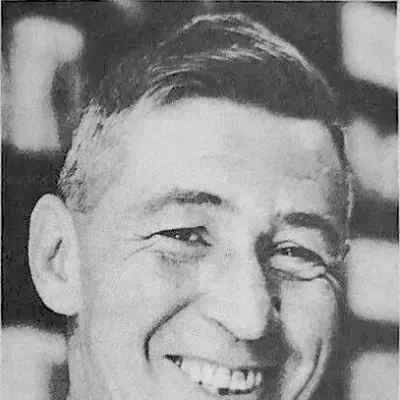
Matthias Platzeck
Human Design Chart
Biography
Matthias Platzeck as a Projector 4/6 in Human Design
Projector 4/6 — Design at a Glance
Matthias Platzeck appeared through a dense, focusing aura that directly addressed his surroundings. As a Projector, he had the ability to immediately recognize where problems lay in systems or with other people – comparable to a bright flashlight illuminating darkness. This intuitive diagnostic skill was, however, a double-edged sword: Direct confrontation with faults could be perceived as unpleasant and provoke resistance. His most effective strategy therefore did not lie in actively enforcing solutions but rather in attracting others through his own harmonious actions. When he radiated this influence, people automatically sought his advice. His design required him to wait for an honest invitation before taking on a leadership role. Without this embedding, frustration threatened; living by this principle rewarded him with success. Since Projectors do not have a constant source of life energy, phases of intense activity needed to be complemented by necessary rest periods to prevent exhaustion. Ignoring this rhythmic need or acting without an invitation could lead to feelings of non-self and bitterness. His influence thus relied less on continuous motor drive than on the quality of his perception and the ability to set the right impulses at the right time when asked.
Splenic Authority
Matthias Platzeck showed a decision-making strategy based on immediate inner resonance: His design indicated that he had to rely on himself in the moment of decision. This mechanism is determined by authority in the Spleen, which is active for him because his Emotional and Sacral centers are open – a configuration only Projectors or Manifestors exhibit.
The defined Spleen center functions here as a health and alarm system with pronounced survival intelligence. It provides spontaneous inner knowledge about whether a situation, environment, or society is right. This impulse serves immediate physical health and enables rigorous separation from harmful influences. Since this first impulse is very subtle and only comes once in the moment, its use requires high vigilance; it can easily be drowned out by external influences. A brief retreat for decision-making was therefore often helpful to hear this fine signal tone.
Since knowledge of what is right becomes available only in the current moment, plans could change short-term. Long-term commitments were difficult for this design; instead, there was a need for much space and flexibility. Spontaneous agreements fit better with the nature of this authority than rigid, long-term obligations. The strategy consisted of not anticipating what might be right in the future but following the immediate impulse of the Spleen center, which always prioritized the well-being of his own system.
The 4/6 Profile — Opportunist / Role Model
Matthias Platzeck's design set a tendency towards experimental behavior in the first three decades of life before deeper reflection took place. During this early phase, the sixth profile line still acted like a third one, making him prone to trying various approaches particularly in the areas of relationships and friendships. Later on, however, the characteristic conflict of the Four-Six Profile emerged: The heart seeking belonging (Line 4) often stood in opposition to the head questioning higher meaning (Line 6). This led to inner confusion between the need for community and the desire for detached observation.
Over time, it was expected that he would take on the role of a wise role model emerging through cooperation with others. His large heart remained cautious to avoid opening up to the wrong people and getting hurt. The fourth line required constant focus to maintain health as well as externalizing pressure. Simultaneously, the sixth line brought an attitude of completion; it saw solutions in the next step and felt correction as a pleasant process since everything was fundamentally in order. This combination shaped him as someone who could engage in public opinion formation while simultaneously working on the propagation of a specific kind of correction supported by the energy to explore new horizons.
Split Definition — Defined & Open Centers
Matthias Platzeck revealed himself as someone with a consistent, trustworthy mental function and a clear sense of personal identity. His defined Ajna Center generated continuous mental activity; he processed data and creativity in the same way every time and was not easily influenced by others present. This inner strength was reinforced by his defined G Center, which gave him reliable self-love and a deep sense of his own direction. He could love others without becoming dependent and radiated a magnetic presence based on his higher self.
His defined Spleen Center ensured that he made decisions in the here and now, guided by intuition and instinct rather than rational analysis. He had a strong survival consciousness and used his body intelligence to protect himself and radiate well-being. His also defined Root Center provided constant pressure to move forward, while his defined Throat Center ensured that he could reliably translate his thoughts and impulses into communication and action.
At the same time, Matthias Platzeck was vulnerable to external conditioning through several open centers. His open Head Center lacked a consistent way of processing mental information; he tended to take on the mental pressure of others or deal with questions that were not his own. The lack of constant willpower in his open Heart Center made him susceptible to the urge to prove his worth through promises or competition – a cycle that ended in self-doubt if he ignored his inner authority. His open Sacral Center amplified the vital energy of his environment without generating it himself; he risked overexertion if he did not listen to his own energy source. Finally, his open Solar Plexus absorbed the emotions of others, which led him to learn to distinguish between foreign moods and his own feelings in order to remain emotionally stable.
Channels for intuitive elegance, curious analysis and critical judgment.
Matthias Platzeck's Design points towards a tendency for intuitive, self-referential action that aims less at external recognition and more at inner fulfillment. This is shown through the Channel of Perfect Form 57-10, connecting the Spleen Center with the G Center. Here, the intuitive insight of Gate 57 works together with the behavior of Self in Gate 10, resulting in a spontaneous adaptation to "now". This behavior is based on a deep appreciation for one's own existence and primarily serves individual survival through authentic being, which is often perceived as an aesthetic or harmonious presence.
Parallel to this, there was a pronounced curiosity that made gathering experiences its own purpose. The Channel of Curiosity 11-56 links Gate Ideas (11) in the Ajna Center with Gate Inspiration (56) in the Throat Center. This configuration drives a continuous search process where information is not processed as dry facts but as narrative stories. The goal is to discover new perspectives and pass them on through storytelling, where the magic of story-telling takes center stage to inspire others and provoke thought.
Furthermore, a logical drive towards structuring characterized Matthias Platzeck's thinking style. The Channel of Acceptance 17-62 connects Gate Opinions (17) with Gate Details (62). Here visual pattern recognition is translated into precise language to mentally organize and clarify information. Anything that cannot be integrated into this logical system remains incomprehensible; however, those invited find clear explanations presented. This was complemented by the Channel of Judgment 58-18, linking Root Energy (Gate 58) with the correcting impulse of the Spleen (Gate 18). This created an insatiable drive to question and perfect patterns in order to make life in the collective more functional and satisfying – yet only effective when this correction is explicitly requested.
Collective Circuitry — Circuit Signature
Matthias Platzecks Design points towards a tendency for rational clarity and strategic focus, paired with a deep intuition for the essential. His structure showed two separate energetic poles: on one side, the connection between Ajna (Thinking) and Throat Center (Expression), on the other side, the linking of Spleen (Intuition) and Root Center (Survival Energy). This separation meant that logical analysis and intuitive security did not automatically flow into each other but rather worked as parallel forces.
The Understanding Circuit connected his Ajna with the Throat Center through Channels "Acceptance" and "Judgment". This promoted sharing clear, emotion-free logical insights aimed at future structures. Parallel to this, the Meaning Circuit also flowed between Ajna and Throat, however via Channel "Curiosity". Here it was about cyclically reflecting on past experiences in order to learn collectively from them – an emotional wave that stood out against the cool intellect.
A third aspect was the Integration Circuit, which connected Identity and Spleen Centers (Channel "Perfect Form"). This ensured a strong individual self-affirmation in the here and now, guided by intuitive knowledge. Since it was a Shared Definition, these systems existed as independent blocks: The cognitive expression pole (Ajna/Throat) did not flow directly with the intuitive survival pole (Spleen/Root/Identity). Thus, Matthias Platzeck used rational strategy and emotional reflection separately while his action security drew from the direct connection of Identity and Intuition.
Right Angle Cross of Service 4
Matthias Platzeck's Design establishes a fundamental disposition characterized by the "Right Cross of Service." This configuration describes a deeply rooted orientation towards the well-being of others, not as an external duty but as an inner driving force. In Human-Design, this cross marks a specific energetic focus: energy flows where it is needed to provide support and stabilize structures that serve the collective.
For Matthias Platzeck, this means his actions are often guided by the question of how he can best care for others. It is not a strategy of egoism or personal recognition but rather a mechanism of surrender. Those who carry this cross find their validation not in fame but in the effective support they provide to their fellow humans. The energy works in a supportive and connecting manner; it seeks ways to bear burdens and foster community.
This orientation shapes the way Matthias Platzeck responds to challenges: not through confrontation or withdrawal, but through active engagement for the greater good. The "Right Cross of Service" does not show a passive stance of sacrifice here, but rather an active, powerful readiness to take on responsibility – as long as it serves the service to others. It is a pattern of reliability and commitment that works in the background to create stability.
Saturn Return · Uranus Opposition · Chiron Return · 2nd Saturn Return — Life Cycles
Matthias Platzeck's Human Design profile reveals a clear structure that becomes active during phases of life marked by high responsibility. The first Saturn return often marks the transition to binding structures; in 1978 he married Ute Bankwitz, underscoring this stabilizing tendency. Later, he experienced the Uranus opposition, a cycle of sudden change and testing of loyalties. In 1994 he retained his ministerial position by leaving the Bündnis 90 faction—a concrete manifestation of this disruptive energy that redefines established commitments.
The Chiron return brings the incarnation cross to fruition; it is not a healing process but the realization of one's true purpose. In 2002, he was elected Minister-President of Brandenburg, a moment when his strategic alignment reached its full impact. The second Saturn return solidifies these achievements through further institutional affirmation. In 2009, he formed a coalition with the Left and was confirmed in office. This sequence illustrates how Platzeck's design transforms external crises into structural anchoring: from private alliances to political realignment, culminating in long-term power consolidation, revealing a pattern that gains stability through conscious, often conflict-ridden decisions.
Projector · Splenic Authority — Synthesis
A central red thread in Matthias Platzeck's design is the ability to recognize patterns and use this intuitively for the well-being of others (Channel 57/10). As a Projector, he projects his consciousness to highlight weaknesses in the system, with the defined Ajna Center providing a consistent way of thinking. This gift of intuitive insight is enhanced by the Spleen Authority, which allows a fine sense of one's own well-being and the appropriate environment – an inner navigation system to recognize where he can usefully apply his energy. The Profile as Networker/Role Model indicates that this process of recognizing and sharing gains significance over time, with early years serving for experimentation.
At the same time, a tension between the desire for connection (Line 4 in the Profile) and the necessity to act from a distanced perspective (Line 6) becomes apparent. The need to be part of a community seems linked to an inner drive to contemplate the meaning of life and define one's own values. Recurring crisis and success experiences in certain cycles suggest that balancing these forces – finding the right balance between closeness and distance, engagement and reflection – is a lifelong process.
4 Defined Channels
Incarnation Cross - Right Angle Cross of Service 4
Solar Return
The Solar Return shows the moment when the sun returns to its exact birth position - your personal solar year.
Life Cycles
Discover the life cycles with a detailed triple view (birth chart, cycle chart, composite).
Human Design Profile
- Type
- Projector
- Strategy
- Wait for the respectful invitation
- Authority
- Splenic Authority
- Profile
- 4/6 - Opportunist / Role Model
- Definition
- Split Definition
- Incarnation Cross
- Right Angle Cross of Service 4
- Date of Birth
- 29.12.1953 12:00
- Place of Birth
- Potsdam, GER
Frequently Asked Questions
What is the Human Design type of Matthias Platzeck?
What Profile does Matthias Platzeck have in Human Design?
What authority determines Matthias Platzeck's decisions?
What incarnation cross does Matthias Platzeck have?
When was Matthias Platzeck born?
Discover your own Human Design
Are you also a Projector? Find out in a personal reading how to unfold your leadership qualities and recognize the right invitations.
More Personalities
Back to overviewSissy Spacek

Alain-Fournier

Anémone

Ann-Margret

Bourvil
Hergé