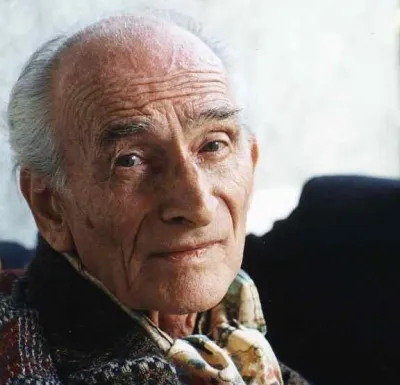
Matthieu Pigasse
Human Design Chart
Biography
What does Manifesting Generator 5/1 mean for Matthieu Pigasse?
Manifesting Generator 5/1 — Design at a Glance
Matthieu Pigasse's design features a hybrid energy structure: He had the constant power of a Generator but also the ability to skip steps and quickly draw results into his life. This configuration described him as someone who not only reacted to impulses but followed these reactions with a speed that bypassed traditional processes.
As an Manifesting Generator, he adhered to the Generator's strategy: He should not initiate but wait until life posed a question or impulse, then respond accordingly. Crucial was confirming his sacral center – a clear 'yes' signaling that the path was right. Without this inner approval, his speed tended to overlook important intermediate steps, often leading him to backtrack and make up for it later, causing frustration as his non-self theme lay in fighting against the natural flow or feeling blocked by false initiatives.
Additionally, his chart showed a tendency towards multitasking. As long as he responded to various impulses and his inner authority agreed, this ability was not a burden but a source of deep satisfaction. He found his creative power in 'play mode', where variety and fun drove motivation. The pressure to complete one thing before starting another contradicted his nature; instead, he thrived when remaining engaged with different tasks.
Emotional Authority
Matthieu Pigasse exhibited a decision-making culture characterized by conscious delay and emotional detachment. His design featured Emotional Authority, meaning the Solar Plexus Center was defined and thus always took precedence over all other defined centers – regardless of further configurations in his chart. This mechanism subjected him to constant mood swings, coloring his perception of the world through current emotions. What seemed inspiring at one moment could turn negative in another; these fleeting impulses were mere snapshots, not necessarily the truth.
Quick, spontaneous decisions from such emotional waves often had negative consequences for him. Instead, his inner structure required patience and multiple 'sleeping on it' sessions to make choices. Over time, intense feelings subsided, allowing him to gain emotional distance. This process led to clarity and calmness, guiding him through the decision-making cycle. Especially with long-term questions significantly impacting his life path, this waiting was essential. The more time he took, the deeper and more comprehensively he could perceive the situation. His design suggested that he should hesitate appropriately to ensure actions were based on a stable inner truth rather than transient emotional waves.
The 5/1 Profile — Heretic / Investigator
Matthieu Pigasse's design is marked by an apparent tension: on one hand, his magnetic presence attracts others, while on the other, there is a deep need for withdrawal and independent research. As a 5/1 (Hero/Researcher), he acts like an expert who first delves into himself to deepen knowledge before offering it as solutions for others' problems. However, this dynamic can be burdensome when boundaries between personal development and public expectations blur.
Line 5 projects expectations; others seek answers from him, akin to a celebrated scientist exhausted after a strenuous conference while new inquiries pour in. Without clear 'no'-saying skills, he risks overloading due to constant availability for external concerns. Simultaneously, Line 1 demands harmony and sensitivity in private surroundings as the basis for his guideline formation. The key to balance lies in switching between serving others (Line 5) and necessary isolation for personal insights (Line 1). His design shows that true effectiveness does not lie in constant availability but in selective sharing of deep understanding, protected by conscious boundaries.
Single Definition — Defined & Open Centers
Matthieu Pigasse's design highlighted willpower and vital energy. His defined Heart Center enabled him to keep promises and use resources autonomously; he preferred working independently and sought recognition for his contributions. This inner strength was fueled by his defined Sacral Center, a constant source of vital energy that waited for reactions to find satisfaction. His expression was clear: the defined Throat Center served as a reliable channel to translate these internal impulses into words and actions, while the also defined Spleen Center gave him spontaneous, intuitive awareness of health and well-being in the present moment.
At the same time, his system was characterized by open centers that made him vulnerable to external influences. His open G Center meant he did not carry a fixed, unchanging identity but reflected himself in relationships and environments; his direction crystallized only within the context of correct places. The open Ajna and Head Centers allowed him to be mentally flexible but also vulnerable to the pressure of seeking answers or inspiration from outside rather than being fixated on his own conceptual truths. Additionally, his open Root Center absorbed stress from the environment, leading to misinterpreting external pressure as a personal urge for action. His mechanics therefore required that he only apply willpower and energy when confirmed by inner authority, rather than reacting to mental or adrenaline-driven pressures from the outside world.
Channels for powerful presence, intimacy, insight and connection.
Matthieu Pigasse's design was characterized by an intense search for deep intimacy, yet always underpinned by emotional clarity. The Channel of Union 59-6 connected sacral sexuality with the emotional wave of the Solar Plexus, making relationships fertile only when nourished over time as friendship. This mechanism required patience, as true closeness was allowed only after the highs and lows had subsided; spontaneous approaches risked misunderstandings or confusion.
At the same time, Matthieu Pigasse possessed a powerful, charismatic presence. The Channel of Charisma 34-20 drove him to act through sacral reactions and communicate in the present moment. This energy allowed him to be self-assured and active as long as he focused on things that truly fulfilled him. Without this inner guidance, his energy risked appearing chaotic or obsessive. His design thus promoted a vitality that arose from focusing on himself and inspired others rather than serving them through constant availability.
This individual strength was supported by intuitive insight. The Channel of Flash of Insight 57-20 connected spleen-based intuition with the Throat, enabling Matthieu Pigasse to speak the truth in the moment and convey existential clarity. This ability for spontaneous self-recognition helped him overcome fears of the unknown by relying on the present. Additionally, the Channel of Power 34-57 strengthened his survival awareness through a combination of sacral energy and spleen intuition. This created a protective mechanism that kept him physically fit and acoustically alert to recognize dangers and react spontaneously.
In interpersonal contexts, Matthieu Pigasse sought meaningful connections. The Channel of Community 37-40 emphasized the need for contracts and mutual recognition within a group. He waited for genuine invitations to find his place in a larger whole, with willpower and emotional clarity ensuring that these alliances were sustainable for all involved. This pursuit of structured cohesion formed the foundation of his social interactions.
Individual Circuitry — Circuit Signature
Matthieu Pigasse's design exhibited a tendency towards impulsive, creative intelligence that directly impacts the present moment. This was evident through the Flash of Insight Channel (20-57), which connected the Throat Center with the Spleen. This connection allowed him to express intuitive insights immediately verbally or in action – an energy of 'now' that relies on spontaneous inspiration.
Parallel to this, there was a clear flow between Heart and Solar Plexus through the Community Channel (37-40). This described a dynamic of giving and taking, marked by emotional waves in the rhythm of a council. Here it was about mutual support and the joint creation of resources within a tribe or network, with pauses necessary as there was no direct connection to the constant life force of the Sacral Center.
Another separate piece connected the Sacral with the Solar Plexus through the Union Channel (59-6). This brought in primal energies of protection and preservation, focused on securing one's own genetics and family.
Finally, he integrated Charisma (20-34) and Power (34-57), which linked Throat, Sacral, and Spleen Centers. This strengthened his ability to draw strength from reacting to life through intuitive knowledge and making an impact in the present moment. All these defined centers formed a cohesive energetic structure without separate islands, promoting coherent alignment of his actions and emotions.
Left Angle Cross of Duality 1
Matthieu Pigasse's design points to a tendency towards a deep, almost fateful connection with others. His chart shows the left cross of Duality 1, a configuration that does not allow for an isolated existence but rather compels the person into a constant, dynamic exchange with their environment. For Matthieu Pigasse, this was not optional social behavior but a fundamental life task: he sought out the other to solidify his own identity through these encounters and generate energy.
This mechanism describes a process of polarity. The left cross of Duality 1 means that the self is not understood as a closed unit but only fully reveals itself in the mirror of the Other. Matthieu Pigasse thus showed himself particularly alive in relationships and interactions; distance to others felt paralyzing rather than liberating for him. His nature was to recognize the familiar through contact with the foreign, and vice versa. This was not about superficiality but an essential necessity to locate oneself in the duality of self and other. This configuration shaped his way of experiencing the world: as a continuous dialogue where every encounter had the potential to bring new facets of his personality to light. The search for connection thus served as the motor of his design, driving him to remain in exchange with life rather than withdrawing.
Saturn Return · Uranus Opposition · Chiron Return · 2nd Saturn Return — Life Cycles
Matthieu Pigasse's design shows a clear structure marking institutional education and later structural power shifts as central life phases. This is evident from the sequence of his planetary cycles, each accompanying concrete career milestones.
The first Saturn return around age 26 marks the condensation of foundations and the conclusion of a learning phase. In 1994, Pigasse attended ENA until this year, confirming this cycle as a moment of institutional anchoring. Here it shows how early discipline transitions into sustainable structures.
Later comes the Uranus opposition around age 41, a time when established patterns often need to be broken or redefined. In 2009, Pigasse became owner of Les Inrockuptibles. This step underscores his design's inherent ability to take on new ownership and responsibilities during phases of revolutionary energy rather than passively observing.
The Chiron return around age 46 marks the beginning of a bloom phase where one's inner purpose increasingly unfolds in outer life – provided that one’s own strategy has been observed. In 2014, Pigasse received 65% shares of Le Nouvel Observateur. This is no coincidence but an expression of how his design fully comes into play during this life phase: through the assumption of control and influence over existing media structures, merging personal path with public role. The mechanics here show a consistent line from education to ownership change to dominant positioning.
Manifesting Generator · Emotional Authority — Synthesis
A central red thread in Matthieu Pigasse's chart is the dynamic connection between inner perception and outer expression. Emotional authority (Sacral Center, Channel Pairing) anchors a deep, resonant energy that only gains clarity through navigating the emotional wave. This sacral foundation is expanded by the manifesting generator configuration – a hybrid of initiatory power and reaction to impulses. The profile as Hero/Researcher (Line 5/1) further strengthens this process by combining a natural tendency towards knowledge acquisition and problem-solving with a magnetic attraction to others. Reoccurring career events suggest that Pigasse plays a transformative role through recognizing patterns and sharing his knowledge (Duality Cross 1).
The central paradox lies in the tension between the need for emotional maturity and the ability to make quick decisions. Emotional authority requires time to gain clarity, while the manifesting generator configuration favors skipping steps. This leads to an inner dynamic where Pigasse oscillates between waiting for full emotional wave (Channel 59-6) and seizing opportunities swiftly – a give-and-take that can both unleash creative energy as well as lead to unnecessary detours.
5 Defined Channels
Incarnation Cross - Left Angle Cross of Duality 1
Solar Return
The Solar Return shows the moment when the sun returns to its exact birth position - your personal solar year.
Life Cycles
Discover the life cycles with a detailed triple view (birth chart, cycle chart, composite).
Human Design Profile
- Strategy
- To respond - wait for something to respond to
- Authority
- Emotional Authority
- Profile
- 5/1 - Heretic / Investigator
- Definition
- Single Definition
- Incarnation Cross
- Left Angle Cross of Duality 1
- Date of Birth
- 25.05.1968 02:00
- Place of Birth
- Clichy, France
Frequently Asked Questions
What is Matthieu Pigasse's Human Design type?
What Profile does Matthieu Pigasse have in Human Design?
What authority does Matthieu Pigasse possess?
What incarnation cross does Matthieu Pigasse have?
When was Matthieu Pigasse born?
Discover your own Human Design
Are you also a Manifesting Generator? Find out in a personal reading how to unfold your multi-talents and direct your energy wisely.
More Personalities
Back to overviewAldair

Alizée

Angeli
Arletty
Artus

Balthus