
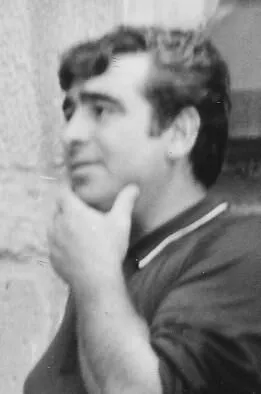
Photo: Wikimedia Commons
Maurice André
Human Design Chart
Biography
He died on 25 February 2012.
What does Projector 6/3 mean for Maurice André?
Projector 6/3 — Design at a Glance
Maurice André revealed himself as a person with a focused, dense aura that immediately recognized systemic errors. His Human Design type was Projector, which made his energy act like a bright flashlight, directing its light to areas in the environment still in darkness or not functioning optimally. This configuration allowed him to identify weaknesses in systems directly.
However, this ability required a specific strategy. Addressing the found faults head-on would have provoked resistance, akin to shining a bright light directly into another's face. Instead, Maurice André attracted others through his harmonious self-glow. People came to him on their own and sought his advice because his example was more convincing than direct criticism. His most effective approach involved waiting for a respectful and honest invitation before taking on a leadership role.
This approach was essential since Projectors lack constant intrinsic life energy due to their undefined Sacral Center. Maurice André therefore experienced phases of high efficiency that had to be followed by rest periods to prevent burnout. Ignoring this rhythm would have led to his non-self theme of bitterness. By waiting for the invitation and protecting his energy, however, he was rewarded successfully – the natural consequence of living in alignment with his design.
Emotional Authority
Maurice André exhibited an inner decision-making structure that required time and distance to find clarity. His inner authority was emotional, meaning that his defined Emotional Center set the standard for his truth – regardless of which other centers were also defined in his design. This configuration subjected him to a constant wave of emotions: The world appeared colored by his current mood state. A moment of intense enthusiasm could turn into deep skepticism in the next, with both states only representing fleeting snapshots, not the ultimate truth. Spontaneous reactions or quick decisions based on immediate emotion were therefore unreliable and risked negative consequences.
The mechanics of his authority required patience. To reach a well-founded insight, he had to take time and reconsider decisions multiple times. Only when the intense emotional waves subsided and he gained enough distance from the original impulse did calmness set in. This process of waiting and inner distancing was essential, especially for long-term decisions that would have lasting effects on his life course. Maurice André learned to let himself be delayed and not to yield to external pressure for immediate reaction, as his true answer only became visible after going through the emotional cycle.
The 6/3 Profile — Role Model / Martyr
Maurice André was marked by Profile 6/3, which divided his lifespan into two distinct phases. In the first thirty years, he lived as an Explorer, driven by the line of the Adventurer. This period was characterized by numerous self-experiments and constant curiosity. The inner restlessness arose from a desire for an extraordinary life far beyond ordinary standards; the quest for perfection often seemed unfulfilled since it never aimed at the 'normal'.
After Saturn's return, around age thirty, this dynamic fundamentally changed. Experimentation slowed down but never ended completely due to the permanent presence of Line 3. Instead, the role of Role Model came to the fore. His earlier unusual experiences now became a foundation for wisdom and humor. As an ancient soul, he used his authenticity to avoid hypocrisy – a central aspect of the sixth line that requires mutativity and proper social timing.
The development from restless seeker to wise model was not a sudden break but a deepening. The ability to adapt and learn from failure, typical of the third line, enabled him to individually align with group goals. Thus, he became a figure who harmoniously influenced through his authentic stance and understanding of the collective without denying his experimental core.
Split Definition — Defined & Open Centers
Maurice Andre was characterized by a persistent inner pressure to question and form concepts. His defined Head and Ajna centers generated constant mental activity that could not be directly translated into action due to the lack of a defined generative or manifesting energy. This led him to learn to accept this mental pressure as inspiration rather than trying to balance it with hasty actions. His willpower, fueled by his defined Heart Center, provided him with the strength for self-direction and the need to keep promises. However, this power was in conflict with his emotional nature: The defined Solar Plexus Center acted as an inner authority that required following the wave-like movement of emotions before making decisions. Impulsive actions from the heart or head often proved frustrating, as they ignored the emotional clarity that only emerged over time.
At the same time, Maurice Andre was strongly influenced by his environment through five open centers. His open Throat Center meant communication was situational; he tended to feel pressured to demand attention rather than waiting for invitations to speak. His open G Center made identity and direction fluid, influenced by those around him – spontaneous life decisions here were risky. The open Sacral Center led him to absorb energy from his surroundings, which could lead to exhaustion when overloaded due to the lack of a constant personal generative force. Additionally, his open Root Center absorbed external stress while his open Spleen Center made it difficult to make spontaneous health or well-being decisions as these were often driven by conditioned fears. The challenge was not to exchange defined inner processes (thinking, willpower, emotion) for reactive fields but to practice patience and trust the right timing of the environment.
Channels for community feeling and abstract comprehension.
Maurice Andre's design linked emotional connection with intense mental processing. His structure tended towards building relationships based on reciprocity while simultaneously seeking patterns in experience.
The Community Channel 37-40 connected his Solar Plexus Center with the Heart Center, creating a basis for relationships that relied on emotional clarity and willpower. Maurice Andre sought his place within the whole through direct personal invitation rather than impersonal contacts. It was about 'good deals' – agreements of the form 'I do this for you if you do that for me.' Hierarchy did not play a role; loyalty to the group and contribution to the common good were paramount. These connections needed time to formulate and become beneficial for both sides.
Parallel to this, the Abstraction Channel 64-47 connected his Head with Ajna Center, creating an extremely active experience-based mind that constantly sought connections. Maurice Andre often experienced mental confusion – the feeling of a 'drunken monkey.' This unrest was not a mistake but a process; through patience, space between points condensed until a clear perspective or inspiring story emerged. His mind did not serve as his inner authority for life but to open new perspectives for the collective and share insights.
Additionally, Gates like the Gate of Contribution (8) and the Gate of Skilled Power Handling (14) shaped his expression while emotional fluctuations (55) and genetic bonding strategies (59) influenced deeper motivations. Doubt (63) drove his mental process forward, and strong willpower (51) allowed adaptation to shocks. Together these elements formed a profile oriented towards relationship building through clear agreements and sharing insights after navigating mental turbulence.
Collective Circuitry — Circuit Signature
Maurice Andre was marked by two separate energetic streams. On one hand, the Meaning Circuit connected his Head with Ajna Center (Channel 64-47), directing his attention to emotional processing of past experiences. Rather than applying cool logic, he followed wave-like feeling cycles from the past to gain insights and share them with the collective.
Parallel to this, the Ego Circuit worked through the Heart and Solar Plexus Centers (Channel 40-37). This area emphasized cooperation and balance between giving and taking within a community. Since Maurice Andre lacked a connection to his Sacral Center, he lacked constant life energy for uninterrupted action in social contexts. Instead, this configuration required regular rest periods for regeneration to build resources for the tribe and enable mutual support.
This split definition created tension between inner emotional meaning-making from past experiences and structured building of communal resources. While the right chart side generated cyclical emotional waves, the tribal group demanded traditional cooperation and balance. Maurice Andre had to learn to integrate these two areas as coexisting forces: deep reflection on personal history on one hand and pragmatic management of social relationships on the other, always considering his need for rest.
Left Angle Cross of Uncertainty 1
Maurice André's Human Design profile featured the Left Cross of Uncertainty. This configuration shaped his life span through a specific foundational stance derived from the energies contained within it. Since no further mechanical details such as defined channels or centers are specified in the raw content, a detailed behavioral profile cannot be deduced. The cross itself represents a particular archetypal challenge that accompanied Maurice André throughout his life. Without specific information about how this uncertainty manifested in his chart, the description remains limited to naming the configuration. No assumptions will be made regarding his reaction to uncertainty or his actions during such moments, as these cannot be inferred from the given facts. The focus is strictly on identifying the design as a structural aspect of his Human Design chart. No biographical events are included since none were provided. The presentation remains neutral and confines itself strictly to the information contained in the raw content regarding the presence of this cross in Maurice André's profile.
Saturn Return · Uranus Opposition · Chiron Return · 2nd Saturn Return — Life Cycles
Maurice André exhibited phases where inner maturity met external validation. His design indicated a tendency to mark significant life stages through cyclic return points that embodied structure and fulfillment.
The first Saturn Return around the age of 30 acted as a phase of crystallization. Here, years of groundwork often solidified into a viable result. In 1963, at the age of 30, Maurice André won the International Music Competition of ARD in Munich. This success was no coincidence but aligned with the mechanical pattern: The Saturn Return demands and rewards discipline as well as the ability to synthesize learned knowledge into a coherent performance. It marked a moment when his professional identity solidified.
Later, the Chiron Return occurred between the ages of 49 and 51, a cycle of bloom where one's incarnation cross unfolds increasingly if lived according to strategy and authority. In 1981, at age 48 – just before this peak – Maurice André recorded the Toot Suite with pianist Claude Bolling. This career development reflected his transition into a phase where the essence of his design fully manifested. It was not about healing old wounds but realizing the deepest purpose: Music became an expression of mature, self-actualizing energy. Both events underscore how Maurice André's life was shaped by these mechanical rhythms.
Projector · Emotional Authority — Synthesis
Maurice André was a Projector who, through his defined mental and heart centers, possessed a strong ability to recognize patterns and offer inspiration. This mental clarity combined with profound emotional wave movement influenced his approach to life and interaction with others. He was designed to uncover errors by observation but his success depended on receiving the right opportunity to share his knowledge – an inherent wait for invitation. His profile as 6/3 points towards a search for extraordinary experiences and a drive to gain wisdom through experimentation, making him a role model who taught from personal experience.
Central in Maurice André's design is a paradox between his ability for deep analysis (defined head and Ajna centers) and the need for emotional maturity (emotional authority). While his mind constantly sought understanding, his emotional wave required time to gain clarity. This tension between mental acuity and emotional process led him to view the world through a unique lens but also demanded patience and acceptance of ups and downs in decision-making. The combination of an urge for inspiration and deep analytical ability created a person who was intellectually stimulating as well as emotionally resonant.
2 Defined Channels
Incarnation Cross - Left Angle Cross of Uncertainty 1
Solar Return
The Solar Return shows the moment when the sun returns to its exact birth position - your personal solar year.
Life Cycles
Discover the life cycles with a detailed triple view (birth chart, cycle chart, composite).
Human Design Profile
- Type
- Projector
- Strategy
- Wait for the respectful invitation
- Authority
- Emotional Authority
- Profile
- 6/3 - Role Model / Martyr
- Definition
- Split Definition
- Incarnation Cross
- Left Angle Cross of Uncertainty 1
- Date of Birth
- 21.05.1933 17:00
- Place of Birth
- Alès, France
Frequently Asked Questions
What was Maurice André's Human Design type?
What Profile did Maurice André have in Human Design?
Which Authority guided Maurice André in his decisions?
What incarnation cross characterized Maurice André?
When was Maurice André born?
Discover your own Human Design
Are you also a Projector? Find out in a personal reading how to unfold your leadership qualities and recognize the right invitations.
More Personalities
Back to overviewSissy Spacek

Aaliyah

Alain-Fournier

Alexia

Alizée

Anémone
