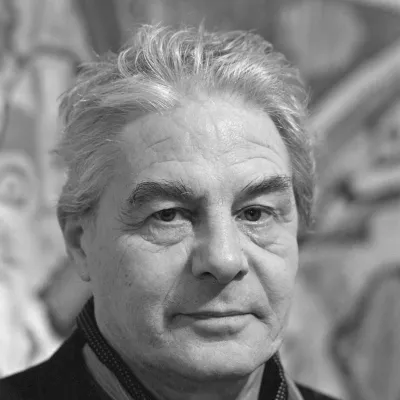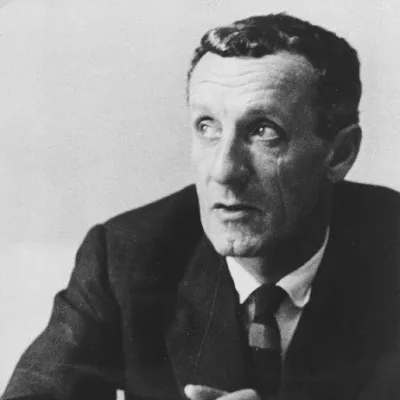
Maurice Merleau-Ponty
Human Design Chart
Biography
Died of a stroke on May 3, 1961, Paris, France.
Maurice Merleau-Ponty as a Manifestor 2/4 in Human Design
Manifestor 2/4 — Design at a Glance
Maurice Merleau-Ponty's design inclined towards a pioneering stance, presenting him as someone who could show new paths without walking them alone. As a Manifestor, he acted like a visionary who should steer the world into a new direction, similar to a king sending his soldiers to conquer territories rather than fighting the wars himself. This configuration often led him to think ahead of his environment, inevitably causing misunderstandings and polarization. While some people loved his big dreams and followed him, others rejected or even hated him because of these far-reaching visions. His greatest pain point was not being understood. To find the right followers, it was crucial for him to inform others about his intentions early and precisely. This was his ideal strategy. Living by this strategy and his inner authority rewarded him with a feeling of inner peace. Acting against his design, however, he felt a persistent, deep-seated anger. His path, therefore, was to attract the right people through clear information and thus maintain the inner peace his design promised when he acted correctly.
Emotional Authority
Maurice Merleau-Ponty was someone whose inner compass was guided by the defined Solar Plexus Center. This emotional authority was subject to a constant wave of ups and downs, coloring the perception of the world through the current mood. What appeared as inspiring in one moment could be seen as negative in the next. For Maurice Merleau-Ponty, however, this immediate feeling was only a snapshot, not a final judgment. Spontaneous decisions that emerged directly from this emotional heat often proved problematic, as they reflected the moment's unresolved truth.
The mechanics of his inner authority required time. The longer he let a decision mature, the deeper and more comprehensive he could see the situation. This demanded patience and the conscious reflection of important questions. Through this hesitation and repeated questioning, intense feelings subsided. Maurice Merleau-Ponty gained emotional distance, leading to clarity and calmness. Only then was the decision-making process complete. This mechanism was particularly crucial for long-term life decisions. Independent of other defined centers, this emotional authority took precedence; it determined the rhythm in which Maurice Merleau-Ponty found his true truth by letting the initial waves of emotion subside before acting.
The 2/4 Profile — Hermit / Opportunist
Maurice Merleau-Ponty was characterized by a constant interplay between the need for withdrawal and the drive towards community. His design set a tension between Line 2, the Hermit, and Line 4, the Community. This meant that he would periodically delve deeply into his internal processes to gain clarity and calm. During this 'Me-Time,' he reflected on the knowledge of his network and developed new ideas from it. Once this inner work was complete, he actively sought contact with his favorite people.
This dynamic required clear communication of his boundaries: he signaled when he sought company and when he wanted to be left alone. Line 2 gave him the ability to help others in times of crisis by releasing emotional energy, often without conscious control. At the same time, Line 4, particularly through Gate 11, allowed him to see transpersonal connections. This helped him convey complex ideas in a way accessible even to those without prior knowledge. His talent lay in condensing what he learned in isolation and then making it effective in the community.
Split Definition — Defined & Open Centers
Maurice Merleau-Ponty was characterized by a persistent mental pressure that raised questions and challenged the understanding of consciousness and confusion. His defined Head and Ajna Centers created a trustworthy, specific form of conceptual thinking. He constantly processed data and creativity, leading to a stubborn tendency to make decisions from the mind. This mental activity was always 'on,' making meditation difficult as he could neither stop nor control his thoughts.
His defined Throat served as a pivot point, translating these mental concepts into communication and action. He spoke what his mind thought, inspiring or pressuring others to think. His defined Root provided an adrenalized push to move forward in the world and determined his way of dealing with stress.
At the same time, his vulnerability was revealed through several undefined centers. His open G Center meant he had no fixed identity. He tended to blend with his environment and sought direction and love by waiting for external initiations. The question 'Who am I?' could preoccupy him when he tried to fill this gap through the mind.
His open Heart Center made him vulnerable to the pressure to prove his worth. He tended to make promises to find recognition, often leading to a cycle of self-doubt when he could not keep them. His open Sacral Center left him operating on 'borrowed' energy from others, which could lead to overexertion and exhaustion as he had no consistent boundaries for his vital energy. Finally, his open Spleen Center revealed a fundamental fear of survival. He tended to cling to people or situations that radiated a sense of security and well-being, even if they were not healthy for him, and avoided spontaneous decisions, often made out of conditioned fear.
Channels for logic, emotional openness and feeling release.
Maurice Merleau-Ponty was someone whose mind was marked by a permanent, healthy skepticism. His design inclined him to not simply accept patterns but to filter them through doubt to test their consistency. This attitude stemmed from the Channel of Logic 63-4, embodying the doubting mind. Here, the pressure of the Head Center was combined with the formulation in the Ajna Center. For Maurice Merleau-Ponty, logic was only valid if it was practically testable and consistent; unfounded belief found no place in this mechanism. His answers were always provisional until a reliable pattern emerged.
Parallel to this, a strong emotional dynamic was at work, steered by his inner wave. The Channel of Openness 22-12 connected his Solar Plexus with the Throat Center. This meant that his social articulation and ability to move others through voice and expression were strongly dependent on his current mood. He had the potential to transform through his words, but only if he was in the right emotional state. Coercion here led to harshness, while authentic openness allowed for a deep connection.
This emotional depth was further strengthened by the Channel of Emotional Release 39-55, linking the Root Center with the Solar Plexus. This channel set the pulsating wave of moods in motion, a mix of passion and melancholy. Maurice Merleau-Ponty was designed to live this emotional alchemy and touch the minds of his surroundings through provocation. His impact depended on whether he was authentically in his mood or not.
Additionally, Gates like 36 (Crisis as Movement), 6 (Emotional Friction), and 11 (Visual Memory) contributed to his experiences being marked by cyclical movements and a harmonious assessment of the situation. Gate 31 (Transmission) and 45 (Tribe Level) underscored his role in collective contexts, while Gate 33 (Reflection) and 38 (Boundaries) marked his need for withdrawal and defense of individual integrity. Gate 54 connected worldly success with mystical insight.
Individual Circuitry — Circuit Signature
Maurice Merleau-Ponty's design inclined him toward emotional authenticity, paired with a clear, logical thought structure. These two forces existed as separate, parallel systems, as he had a split definition.
In the Knowledge Circuit, his Throat, Solar Plexus, and Root Centers were connected. Through the Channel 'Openness' (Gates 12, 22), he was open to new impulses, while the Channel 'Emotional Release' (Gates 55, 39) created a pulsating, acoustic energy. This allowed him to directly translate inner emotional waves into expression, emphasizing his unique identity. The Awareness Stream of Emotions in the Solar Plexus Center shaped his individual perception.
Independently, but as a second, independent piece, the Understanding Circuit was at work. Here, the Channel 'Logic' (Gates 63, 4) connected the Head Center with the Ajna Center. This conveyed focused, visual and rational insights, free from emotional coloring. Maurice Merleau-Ponty used this connection to develop logical structures and share them strategically.
While the first stream aimed at emotional transformation and individual expression, the second served clear, future-oriented analysis. Both systems did not flow together but as separate fields of force: one for feeling and speaking, the other for pure thinking and planning. This separation created a tension between impulsive creativity and cool rationality, characterizing his inner experience.
Right Angle Cross of Eden 1
Maurice Merleau-Ponty's Human Design configuration indicated a tendency towards a specific kind of internal tension that arose from the right cross of Eden 1. This structure characterized a person whose energy flow was marked by a deep need for meaning and a simultaneous, often unconscious search for validation. The right cross of Eden 1 described a dynamic where the ability to intuitively grasp complex connections went hand in hand with a certain vulnerability to external evaluations. Maurice Merleau-Ponty was someone who was able to construct a coherent inner truth from seemingly contradictory experiences, though this process was always accompanied by the necessity of anchoring this truth in a safe, accepting environment. The mechanics of this cross implied that his greatest strength – the deep, almost mystical connection to the essence of things – could also be his greatest weakness, as it made him vulnerable to disappointment when the external world failed to recognize or value this depth. His design promoted a way of life aimed at making the invisible visible, while simultaneously requiring a protective space to integrate these revelations without losing oneself. This configuration shaped his way of experiencing the world: as a continuous dialogue between inner insight and external validation.
Saturn Return · Uranus Opposition · Chiron Return — Life Cycles
Maurice Merleau-Ponty's Human Design indicated a tendency towards profound structural shifts that crystallized into clear life phases. In 1935, at the age of 27, he worked as a repetitor at the École normale supérieure. This period fell within his first Saturn Return, a cycle in which years of groundwork often condense into a solid professional foundation and solidify one's positioning in the social fabric.
Another turning point occurred in 1948 when he became a co-founder of the Comité français d’échanges avec l’Allemagne nouvelle in Paris. At 40 years old, he was in the Uranus Opposition, a phase often characterized by the need to break old ties and create new, independent structures that reflect the grown identity.
Especially significant was the year 1955 when Maurice Merleau-Ponty broke with Sartre and Beauvoir. At 47 years old, he approached his Chiron Return, a fulfillment cycle in which one's incarnation cross unfolds. This break did not mark a wound but rather the necessary differentiation of his path so that the individual meaning and purpose in life could be clearly experienced, free from foreign expectations.
Manifestor · Emotional Authority — Synthesis
He was a Manifestor, who through the defined Head and Ajna Centers (Channel 63-4) felt a constant mental pressure to ask questions and filter patterns. This inner drive to understand and formulate things shaped his thinking and led to a deep engagement with the world. The profile as a natural talent and networker (Line 2/4) intensified the need to navigate between phases of isolation and withdrawal and the need for exchange and community. Through emotional authority, clarity only matured through allowing and experiencing his own emotional wave, which required a patient approach to decision-making. This combination of initiating power, intellectual depth, social need, and emotional maturity formed the red thread of his work.
Simultaneously, a central paradox was revealed: The ability to generate new insights and initiate changes through the knowledge circuit stood in tension with experiences of separation and rupture (Eden 1 Cross, Chiron Return). While he inspired others through his visions and ideas, the cycles showed that these processes were often accompanied by personal conflicts and the letting go of bonds. Thus, he lived a dynamic of creative unfolding and emotional challenge, where the pursuit of knowledge and individuality went hand in hand with loss and new beginnings.
3 Defined Channels
Incarnation Cross - Right Angle Cross of Eden 1
Solar Return
The Solar Return shows the moment when the sun returns to its exact birth position - your personal solar year.
Life Cycles
Discover the life cycles with a detailed triple view (birth chart, cycle chart, composite).
Human Design Profile
- Type
- Manifestor
- Strategy
- To inform others before acting
- Authority
- Emotional Authority
- Profile
- 2/4 - Hermit / Opportunist
- Definition
- Split Definition
- Incarnation Cross
- Right Angle Cross of Eden 1
- Date of Birth
- 14.03.1908 23:00
- Place of Birth
- Rochefort, France
Frequently Asked Questions
What is Maurice Merleau-Ponty's Human Design type?
What Profile did Maurice Merleau-Ponty have in Human Design?
What Authority did Maurice Merleau-Ponty have?
What incarnation cross did Maurice Merleau-Ponty have?
When was Maurice Merleau-Ponty born?
Discover your own Human Design
Are you also a Manifestor? Find out in a personal reading how to use your initiation power peacefully and dissolve resistance.
More Personalities
Back to overviewAlain-Fournier

Angeli

Christian-Jaque
Juninho
Kesha

Lucebert