
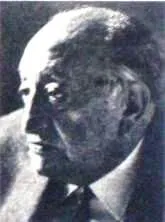
Miguel Ángel Asturias
Human Design Chart
Biography
Asturias was raised in Guatemala though he lived a significant part of his adult life abroad. He first lived in Paris in the 1920s where he studied ethnology. Some scholars view him as the first Latin American novelist to show how the study of anthropology and linguistics could affect the writing of literature. While in Paris, Asturias also associated with the Surrealist movement, and he is credited with introducing many features of modernist style into Latin American letters. In this way, he is an important precursor of the Latin American Boom of the 1960s and 1970s.
One of Asturias' most famous novels, El Señor Presidente, describes life under a ruthless dictator. Asturias' very public opposition to dictatorial rule led to him spending much of his later life in exile, both in South America and in Europe. The book that is sometimes described as his masterpiece, Hombres de maíz (Men of Maize), is a defense of Mayan culture and customs. Asturias combined his extensive knowledge of Mayan beliefs with his political convictions, channeling them into a life of commitment and solidarity. His work is often identified with the social and moral aspirations of the Guatemalan people.
After decades of exile and marginalization, Asturias finally received broad recognition in the 1960s. In 1966, he won the Soviet Union's Lenin Peace Prize. The following year he was awarded the Nobel Prize for Literature, only the second Latin American to receive this honor. Asturias spent his final years in Madrid, where he died on 9 June 1974 at the age of 74. He is buried in the Père Lachaise Cemetery in Paris.
What does Generator 6/2 mean for Miguel Ángel Asturias?
Generator 6/2 — Design at a Glance
Miguel Ángel Asturias demonstrated immense endurance and the ability to transform ideas into tangible reality. However, his inner drive was not an impulse for self-initiative but rather a deep need to respond to external signals. This aligned with his design as a Generator, a type rich in sacral energy, comparable to a workhorse that is extremely strong—provided he works on things that truly resonate with him.
The central mechanics of his nature lay in responding rather than initiating. His energy was only released when the Sacral Center positively responded to an impulse from life and signaled a clear “yes.” Acting from this place brought deep satisfaction and a sense of fulfillment.
If he deviated from this strategy by trying to initiate or do things that lacked internal resonance, he faced two hard obstacles. Either he burned out through activities without joy, leading to rapid energy depletion, or he suffered frustration when kept away from his heart project despite still being full of power. Only in harmony with this reactive strategy could no one stop him; otherwise, persistent frustration was the result. His success thus depended less on action itself than whether that action was a response to an inner signal.
Sacral Authority
Miguel Ángel Asturias showed a clear tendency towards decision-making through internal confirmation. His design established Sacral Authority as the central instance—a mechanism exclusive to the Generator type and whose strategy aligns with the inner voice, simplifying the decision process.
His responses did not arise in his head but as physical resonance to external stimuli. Miguel Ángel Asturias learned to interpret this “gut feeling”: sounds like grunts, hums, or a spontaneous “mm-hm” signaled agreement. When his sacral motor was engaged, he felt an energy surge and vital force. This allowed him to tackle tasks with great enthusiasm and without obsessive purpose; he lived life with joy and could immerse himself fully in activities.
Additionally, the activated Spleen Center served as a supportive instance. It gave him the ability to react particularly quickly and spontaneously. Through immediate access to instinctive perception and physical well-being, he made decisions based on deep, reliable intuition. This combination of sacral confirmation and spleen-induced quickness shaped his way of actively and enthusiastically designing life.
The 6/2 Profile — Role Model / Hermit
In his youth, Miguel Ángel Asturias appeared as an experimental seeker whose path was marked by trial and error. This early stage of his design followed the dynamics of Line 3 within his 6/2 profile. Here, collecting diverse life experiences was paramount, with errors and setbacks understood not as dead ends but as necessary steps in learning.
Around age thirty, a fundamental shift occurred internally: The activation of Line 6 marked the transition from active experimentation to deep reflection. Miguel Ángel Asturias metaphorically withdrew to look back on past years with distance. This phase was no passive pause but a time of intense healing and self-discovery. It served to integrate previously gathered experiences and distill wisdom from them.
This process was influenced by the theme of impermanence. The associated fear of material failure or feelings of instability had to be transformed into calmness. Only then could transformation succeed, with change experienced not as a threat but as preservation of essence.
From this inner work emerged Miguel Ángel Asturias as a figure who inspired and connected others. His ability to transform isolated genius through recognition into continuity allowed him to appear as a wise mentor. People now sought his advice to learn from his deep introspection and resulting clarity. He became a role model showing how personal experience turns into universal life wisdom.
Split Definition — Defined & Open Centers
Miguel Ángel Asturias had a stable internal infrastructure: defined Ajna, Throat, G, Sacral and Root centers created a constant basis for thinking, expression, identity, vital energy, and stress management. This contrasted with four open centers – Head, Heart, Solar Plexus, and Spleen – which functioned as situational antennae and only absorbed energy through external conditioning.
The defined Sacral Center was the central motor: It provided a constant reactive energy source ("humming") that became available only upon receiving correct yes/no responses. Initiation led to exhaustion; reaction allowed for satisfaction and endurance. This dynamic fundamentally shaped his approach to commitments.
The open centers harbored specific pitfalls. The open Head Center tended to get entangled in mental pressure and doubts of others rather than seeking its own inspiration. Miguel Ángel Asturias had a tendency to question whether he needed to find answers that were not his own. The open Heart Center lacked consistent willpower; there was no internal driving force to keep promises or prove worth through performance. Instead, the risk arose of spiraling into self-doubt when external expectations were unmet.
The open Solar Plexus Center absorbed emotional moods from the environment. Miguel Ángel Asturias was vulnerable to personalizing other people's moods and feelings, which could lead to emotional instability if he did not release these vibrations. The open Spleen Center carried a fundamental survival fear and instinctively sought security through others. It tended to cling to things that were not good just to simulate a sense of well-being rather than making spontaneous decisions based on his own intuition – which was unreliable here.
The tension lay in not connecting the defined Sacral energy with the fleeting impulses from the open Spleen or the open Solar Plexus. False commitments arose when he reacted before his Sacral Center could respond, or if he misunderstood emotional or intuitive signals from the open centers as his own truth. His strength lay in endurance through correct reaction; his weakness in conditioning by foreign emotions and fears.
Channel 3-60: Mutation — Channels & Gates
Miguel Ángel Asturias propelled evolutionary transformation not through linear progress but through a pulsating rhythm of chaos and order. This dynamic was primarily shaped by the Channel of Mutation 60-3, which connects the Root Center with the Sacral Center. This format channel brings unpredictable energy that generates inner tension or melancholy when the pulse stops. The key lies in accepting this limitation and patiently waiting underground until new mutations take hold rather than trying to rationalize them.
Parallel to this, the Channel of Exploration 34-10, which links the Sacral Center with the G Center, was influential. Through Gate 34 (Power) and Gate 10 (Self Behavior), this design fosters deep self-love and independence. Miguel Ángel Asturias lived his inner convictions authentically, giving others through his reactions the opportunity to honor and strengthen their own uniqueness. This power unfolds correctly only when it reacts to external impulses rather than being forced.
Communication occurred via the Channel of Curiosity 11-56 between Ajna and Throat Centers. Here abstract ideas (Gate 11) merged with a drive for stimulation (Gate 56). Miguel Ángel Asturias used this configuration to transform facts into magical life parables. His creativity lay less in dry fact-finding than in telling stories that stimulated the imagination of listeners and made complex philosophical perspectives accessible.
Additionally, influences from Gate 32 (Continuity) and Gate 42 (Completion), emphasizing a need for stability and process completion, as well as Gates like 1 (Uniqueness) and 9 (Detail Work), were present. While Gates 45 (Tribe Level) and 43 (Breakthrough) brought attraction in the personality area and a desire for recognition of new insights, gates such as 15 (Collective Rhythm) and 4 (Formulation) facilitated adaptation to social structures. The combination of provocative analysis (Gate 39), finding meaning in the past (Gate 47), creative restraint (Gate 12), and transformation through interaction (Gate 35) rounded out a profile deeply rooted underground, telling transformative stories at the surface.
Individual Circuitry — Circuit Signature
Miguel Ángel Asturias exhibited a tension-charged duality: A deep-rooted, almost silent inner conviction met an urgent impulse towards transformation and emotional reflection. His design did not contain a continuous line from internal identity to external expression but rather separate energetic islands.
The Centering Circuit connected his Sacral with the Identity Center (Channel 10-34). This created a fortified, courageous personality with strong individual convictions and high self-worth. However, since this circuit did not lead to the Throat Center, these firm inner positions often remained linguistically elusive or unarticulated. Parallel to this, the Knowledge Circuit operated via Channel 3-60 between Sacral and Root Centers. Here, the energy of mutation – deviating from the known – drove an original creative path aimed at change in the world.
A third, spatially separated area was the Meaning-Finding Circuit (Channel 11-56), connecting Ajna and Throat Centers. This circuit stood for cyclical processing of emotional waves from the past. Miguel Ángel Asturias had to reflect on these experiences to gain insights that he could then pass on to the collective.
The challenge lay in separating these systems: The strong inner identity (Centering) and transformative drive (Knowledge) were not directly connected with the expression center (Meaning-Finding). He had to learn to channel his deepest convictions through the filter of emotional past reflection before they could become effective. It was not a linear flow from "I think" to "I say," but rather a process of gathering, condensing, and finally sharing in wave-like cycles.
Left Angle Cross of Limitation 2
Miguel Ángel Asturias was characterized by an energy that worked through recognizing boundaries and operating within defined frameworks. His design inclined towards structure, focus, and the ability to concentrate on what is essential by filtering out or setting aside the unnecessary. This attitude stemmed from the mechanism of the left cross of Definition 2, a configuration requiring precision and exclusion of distractions to achieve efficiency and clarity.
The emphasis was on inner discipline and the clear definition of what is relevant versus what is not. It was an energy that functioned through delineation: Only by excluding the superfluous could attention be directed towards the core. For Miguel Ángel Asturias, this meant his effectiveness depended on setting clear boundaries and strictly adhering to these frameworks. This wasn't about expansive expansion but targeted penetration within set parameters.
This mechanism promoted a work style that minimized distractions to ensure maximum concentration on what is essential. The ability to define oneself was not a limitation in the negative sense but a tool for sharpening impact. Through this precise focus, Asturias could efficiently deploy his energy without scattering it diffusely. Thus, the left cross of Definition 2 shaped a lifestyle that sought and found clarity through exclusion.
Saturn Return · Uranus Opposition · Chiron Return · 2nd Saturn Return — Life Cycles
Miguel Ángel Asturias’ design was marked by a clear sequence of maturation phases fostering structural stability and inner clarity. His first Saturn Return signified the transition into a phase of responsibility where earlier impulses were condensed into sustainable structures, laying the groundwork for his later work.
The Uranus Opposition then brought necessary changes and liberation from old patterns. This cycle promoted the ability to adopt new perspectives and break free from limiting conditions. It was a time of release and renewal crucial for further development.
Especially influential was the Chiron Return. During this fulfillment cycle, spanning between ages 49 and 51, his incarnation cross unfolded increasingly in life. If Miguel Ángel Asturias had lived according to his strategy and authority, his purpose became experiential during this phase. It was a time of bloom where deeper life tasks came into prominence and inner clarity about one's path emerged.
The second Saturn Return rounded off this development. It confirmed the achieved maturity and solidified gained insights in a new stable form. This cycle brought definitive anchoring of personal truth, dignifying and stabilizing a significant part of his life journey.
Generator · Sacral Authority — Synthesis
A central red thread through the design runs from sacral authority (and the associated responding rather than initiating) over the circuit energy and the connection between Sacral and Root Centers. This points to a lifestyle deeply rooted in physicality, where energy is released by external impulses, with a strong need for authentic expression – yet always in harmony with present moment boundaries. The emphasis on experience (Gate 42) and the ability to mutate (Channel 3-60) underscore a dynamic, adaptable nature navigating life by responding to inner signals and forging new paths.
The central paradox lies in the combination of defined inner authority (Sacral Center), delivering clear yes/no signals, with open centers for emotions, intuition, and willpower. This creates tension between the need for authentic response to impulses and vulnerability to external influences and conditioning. The design seems to imply a continuous process of self-discovery and delineation – recognizing and letting go of foreign elements to perceive one's inner truth more clearly and live by it.
3 Defined Channels
Incarnation Cross - Left Angle Cross of Limitation 2
Solar Return
The Solar Return shows the moment when the sun returns to its exact birth position - your personal solar year.
Life Cycles
Discover the life cycles with a detailed triple view (birth chart, cycle chart, composite).
Human Design Profile
- Type
- Generator
- Strategy
- To respond - wait for something to respond to
- Authority
- Sacral Authority
- Profile
- 6/2 - Role Model / Hermit
- Definition
- Split Definition
- Incarnation Cross
- Left Angle Cross of Limitation 2
- Date of Birth
- 18.10.1899 22:00
- Place of Birth
- Guatemala, Guatemala
Frequently Asked Questions
What is the Human Design type of Miguel Angel Asturias?
What Profiles does Miguel Angel Asturias have?
What Authority does Miguel Angel Asturias possess?
Which incarnation cross is active for Miguel Ángel Asturias?
When was Miguel Ángel Asturias born?
Discover your own Human Design
Are you also a Generator? Find out in a personal reading how to use your sacral energy correctly and discover deep satisfaction.
More Personalities
Back to overviewAaliyah

Alexia

Angèle

Anne-Marie

Arcángel

Arno
