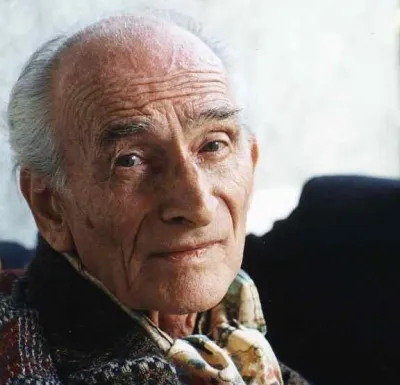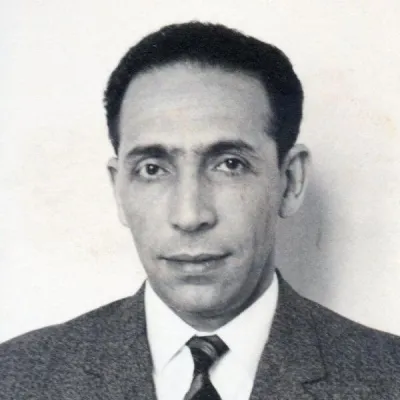
Mohamed Boudiaf
Human Design Chart
Biography
In July 1954, Boudiaf survived an assassination attempt by his former comrades-in-arms, wounded and left for dead on an Algiers sidewalk.
Boudiaf was exiled in Morocco soon after Algerian independence, and did not go back to Algeria for 27 years. He returned in 1992 to accept a prominent position from the military dictatorship, and was assassinated four months later, on 29 June 1992 at age 73.
The assassin was said to have acted as a lone gunman due to his Islamist sympathies. He was sentenced to death in a closed trial in 1995, but the sentence was not carried out. The murder has, unsurprisingly, been subject to significant controversy and a major magnet for Algerian conspiracy theories, with many suggesting that Boudiaf was in fact assassinated by the military establishment responsible for the coup (and for his installment as HCE chairman). These theories have centered on the fact that Boudiaf had recently initiated a drive against the corruption of the Algerian regime, and stripped several important military officials of their posts.
Mohamed Boudiaf as a Manifesting Generator 4/6 in Human Design
Manifesting Generator 4/6 — Design at a Glance
Mohamed Boudiaf showed himself to be someone who could act swiftly by skipping steps. His design as an Manifesting Generator combined the constant energy of the sacral center with the ability for direct implementation. This hybrid nature allowed him to quickly draw things into his life, differing from pure Generators.
However, this speed carried risks: He tended to skip important stages or take on multiple projects simultaneously. If he did not respond to inner impulses, this pace often led to frustration – the specific non-self theme of his type. The solution lay in waiting and reacting first. Only when his sacral center gave a clear "yes" should he act.
Through this strategy of reaction, he could effectively channel his energy. Instead of fighting against the current, he used confirmation of his inner authority as a compass. This allowed him to enter into a productive play mode. In this state, multitasking was not an obstacle but a source of deep satisfaction and creative power. His efficiency thus depended less on sheer speed and more on whether his actions were guided by inner consent. Thus, potential frustration transformed into sustainable satisfaction with his work.
Sacral Authority
Mohamed Boudiaf oriented himself in his decisions based on a deep physical resonance rather than intellectual planning. His design featured Sacral Authority as the primary instance, meaning he waited for external stimuli and then responded to the immediate feedback of his body. This "gut feeling" manifested as bursts of energy or internal sounds like grunting or an affirming hmm. Such signals marked moments of energetic agreement that gave him vitality and inexhaustible energy. In these states, he acted with great enthusiasm and fully immersed himself in his activities without them needing to be bound by external purpose. The joy in the action itself was crucial. Since the Emotional Center was open, this clear physical response could work unfiltered. This mechanism greatly simplified his decision-making process: He did not need to think but only had to trust the spontaneous energetic response of his system. This allowed him a direct connection to his well-being and an instinctive perception that he could reliably rely on. His life energy thus ignited not through strategic thinking, but by grasping what made him feel alive and propelled him forward in the moment.
The 4/6 Profile — Opportunist / Role Model
Mohamed Boudiaf's design is characterized by the dynamic of Profile 4/6, the Networker/Role Model. In his first half of life, up to around age thirty, he was experimental and searching, particularly in interpersonal relationships. This phase was marked by high social activity, though the later wisdom had not yet come into full play.
Over time, an inner conflict deepened: The profound desire for belonging and connection (Line 4) stood in tension with the wish for spiritual distance and higher discernment (Line 6). Mohamed Boudiaf moved between the feeling of being an outsider, protecting his heart from hurt through humility, and the role of observer. Line 6 prompted him to analyze and judge the actions of others, often with a critical eye on excesses.
This balance between the heart-shaped desire for cooperation and the head-driven urge towards wise superiority shaped his development. He learned to enter into relationships selectively to protect himself from false contact. In later years, he was expected to function as a wise role model. His strength did not lie in blind activism but in the ability to stabilize his environment through cooperation and reflective distance. The constant oscillation between closeness and distance formed the core theme of his character.
Single Definition — Defined & Open Centers
Mohamed Boudiaf was a person with immense, constant energy and clear identity. His design featured five defined centers: Sacral, Heart, G-Center, Throat, and Root. The defined Sacral Center provided permanent vitality that felt like an inner hum, guiding him to react rather than initiate actions. Combined with the defined Heart Center, he had strong willpower and a drive to determine his life path and consistently fulfill promises. The defined G-Center gave him a firm self-identity and a sense of being lovable, helping him clearly recognize his own direction in life. The defined Throat enabled him to reliably communicate and act on this inner truth and will, while the defined Root Center provided a steady pressure to move forward and endure stress.
This massive internal structure contrasted with his open centers. The open Spleen Center meant a lack of spontaneous intuition; he was prone to survival fears and tended to cling to environments or people that gave a false sense of security and well-being, increasing the risk of unhealthy dependencies. Additionally, Head, Ajna, and Solar Plexus were open. This led him not to derive consistent mental clarity from his own mind but rather to absorb ideas and opinions from the environment without identifying them as his truth. Emotionally, he was unstable internally due to the open Solar Plexus Center, absorbing others' moods, making him vulnerable to emotional reactivity when personalizing these foreign feelings. His challenge lay in not blocking his powerful defined energy through mental over-analysis or by absorbing emotional waves from the environment but rather using it through reacting to external impulses.
Channels for leadership, focus, execution and personal maturity.
Mohamed Boudiaf exhibited leadership qualities based on logical pattern recognition and collective invitation. His design suggested that he exercised authority not through coercion, but through understanding social trends. This aligned with Channel of the Alpha Animal 7-31, which describes logical leadership with a view towards the future. Here, the majority must choose and invite their leader; his voice gains influence by being recognized as trustworthy.
This collective orientation was reinforced by an intensive ability for detail work. The Channel of Concentration 9-52 connected Root to Sacral Center, promoting a calm pressure to stay still and focus on facts. Supported by Gate 62, which emphasized patience and excellence in pattern correction, Mohamed Boudiaf perfected processes step-by-step. This format energy helped him logically organize complex connections and systematically correct errors.
His influence also stemmed from deep authentic self-love. The Channels of Awakening 10-20 and Exploration 34-10 anchored this stance. Gate 10 initiated behavior based on self-acceptance, while Gate 34 provided the inner strength to hold onto these beliefs. By simply being himself, he unconsciously inspired others to live their unique qualities without resistance.
Charismatic presence in the now complemented this profile. The Channel of Charisma 34-20 connected the generative power of Sacral authority with expression through Throat Center. This allowed him to wait for reactions and then act quickly but correctly. His material level was actively shaped by the Channel of the Money Line 21-45, which emphasized willpower and control over resources; he sought independence to take responsibility while serving the tribe.
Learning occurred cyclically at Mohamed Boudiaf. The Channel of Maturation 42-53 demanded a complete run through experiences followed by reflection. Gate 33 supported this process through withdrawal and memory, gaining wisdom from past cycles before new paths were taken.
Individual Circuitry — Circuit Signature
Mohamed Boudiafs design was characterized by a highly individual, courageous personality with strong inner convictions. This energy was inwardly directed, reinforcing his own individuality while encouraging others in their uniqueness. The Centering Circuit connected his Identity and Sacral Centers (Channel 10-34). This created pulsating power in the now, but lacked direct connection to Throat Center, so these deep convictions were often not verbally expressed.
The Integration Circuit connected Throat, Sacral, and Identity Centers (Channels 20-10, 20-34). Here arose the ability to gain strength through reacting to life and making an impact in the now. This complemented the inner firmness of the Centering Circuit with a dimension of action.
In the Understanding Circuit, there were two separate segments: Throat connected to Identity (Channel 31-7) enabled sharing logical insights, while Sacral and Root Centers (Channel 9-52) provided focused energy. The Meaning-Finding Circuit also connected Sacral and Root Centers (Channel 42-53), promoting a cyclical processing of past experiences for learning.
The Ego Circuit connected Throat to Heart Center (Channel 45-21). This supported cooperation and the joint creation of resources through balanced giving and taking, with pauses necessary for regeneration as no Sacral Channel fed this circuit. Overall, his design worked as a synthesis of individual integrity and the ability to unfold power in the now, while simultaneously challenging him to carry this inner firmness outward verbally.
Right Angle Cross of the Vessel of Love 2
Mohamed Boudiaf's Human Design chart pointed to an existential commitment that was not defined by romantic affection but rather as a profound and often painful connection with life itself. His chart included the right cross of Love Vessel 2, which described a path to spiritual maturity through letting go of dependence on others and relinquishing the ego.
The mechanics of this cross highlighted a paradoxical nature of love in Human Design: True connection often required suffering. The 'vessel' had to either overflow or break for this transcendent experience to be possible. This was not about superficial feelings but rather a fundamental commitment to existence and fellow humans. Mohamed Boudiaf, through this structure, showed himself as someone whose inner development was closely linked with the readiness to give oneself completely – even if it came with pain. This energy shaped his way of experiencing relationships and life overall: not as an ownership claim, but as space for a deep, unconditional connection that could only be accessed by overcoming personal ego.
Saturn Return · Uranus Opposition · Chiron Return · 2nd Saturn Return — Life Cycles
Mohamed Boudiaf's Human Design chart indicated a phase of radical realignment marked by breaking established patterns. This tendency towards sudden change and rebellion against existing structures became active around the age of 43 when the Uranus opposition reached its peak. This astrological cycle marks a turning point where external reality and identity must undergo necessary renewal.
In 1962, exactly at this age of 43 years, Boudiaf founded the Parti de la Révolution Socialiste (PRS). This action was not an isolated event but rather the concrete expression of dynamics triggered by the Uranus cycle: a proactive break with the status quo. The subsequent imprisonment underscores the disruptive power of this life phase. His design showed how the pressure for transformation was not only felt internally but also manifested in concrete political measures and their consequences. It was about the necessity to dissolve old bonds to make room for a new identity. Thus, the Uranus opposition served as a catalyst for this fundamental shift that profoundly shaped Boudiaf's path and forced him into a position challenging established order, even if it came with significant personal risks.
Manifesting Generator · Sacral Authority — Synthesis
Mohamed Boudiaf's Human Design reveals a deep thread of dynamic adaptation fueled by the combination of an Manifesting Generator with Sacral Authority, defined G Center, and numerous channels connecting these centers. He was a person whose energy was consistently available to respond to life (Sacral), but also capable of skipping steps and acting quickly (Manifesting Generator). This ability for rapid reaction coupled with a strong inner compass (G Center) and logical thinking (Channel 52-9) points to someone who could act both impulsively and purposefully – a dynamic interplay of energy and direction. The numerous connections between his defined centers strengthened this capacity for adaptation and action in the world.
Parallel to this, however, existed a central paradox: the tension between the need for autonomy and the desire for connection. His profile as Networker/Role Model (4/6) indicates an inner conflict, between wanting to belong to the community (Line 4), and longing for independent thought and action (Line 6). This is further emphasized by the open definition of Head and Solar Plexus Centers, making him vulnerable to external influences while simultaneously possessing a strong internal identity. The tension between inner freedom and social engagement shaped his path and revealed a personality that was both independent and deeply connected with the world.
7 Defined Channels
Incarnation Cross - Right Angle Cross of the Vessel of Love 2
Solar Return
The Solar Return shows the moment when the sun returns to its exact birth position - your personal solar year.
Life Cycles
Discover the life cycles with a detailed triple view (birth chart, cycle chart, composite).
Human Design Profile
- Strategy
- To respond - wait for something to respond to
- Authority
- Sacral Authority
- Profile
- 4/6 - Opportunist / Role Model
- Definition
- Single Definition
- Incarnation Cross
- Right Angle Cross of the Vessel of Love 2
- Date of Birth
- 23.06.1919 23:59
- Place of Birth
- M'Sila, Algeria
Frequently Asked Questions
What is Mohamed Boudiaf's Human Design type?
What Profile did Mohamed Boudiaf have in Human Design?
What authority did Mohamed Boudiaf have?
What incarnation cross did Mohamed Boudiaf have?
When was Mohamed Boudiaf born?
Discover your own Human Design
Are you also a Manifesting Generator? Find out in a personal reading how to unfold your multi-talents and direct your energy wisely.
More Personalities
Back to overviewAldair

Alizée

Angeli

Arletty

Artus

Balthus