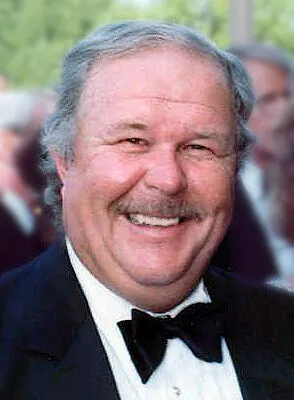
Ned Beatty
Human Design Chart
Biography
Beatty was nominated for an Academy Award, two Emmy Awards, an MTV Movie Award for Best Villain, and a Golden Globe Award; he also won a Drama Desk Award.
Ned Beatty as a Manifesting Generator 6/2 in Human Design
Manifesting Generator 6/2 — Design at a Glance
Ned Beatty lived as a Hybrid being that constantly combined sacral energy with the ability to skip steps. This design marked him as someone who could quickly pull things into his life without having to go through the usual linear process. As an Manifestor Generator, he had the endurance of a Generator but acted not only passively in response to impulses but also at a speed typical for Manifestors.
This combination brought specific challenges with it. Often Ned Beatty was too quick and skipped important intermediate steps, which led him to have to return later to fill in gaps. This could cause frustration as the non-self theme of this type lies precisely there. Additionally, his design tended to tackle multiple projects simultaneously, driven by various impulses. If he did not listen to the inner approval of his sacral center, his joy in creation quickly turned into dissatisfaction.
The solution for him lay in strictly reacting to life and only starting when his Inner Self gave a clear "yes". With correct application of this strategy, Ned Beatty found deep satisfaction in his work. For him, it was no problem to work on different tasks simultaneously; rather, the so-called "play mode" and variety were sources of his energy. Only when he felt this inner resonance could his high speed serve him well instead of overwhelming him.
Emotional Authority
Ned Beatty's decision-making process was marked by a necessary waiting period; spontaneous impulses proved unreliable. His inner authority lay in the defined Emotional Center, meaning he was subject to a constant emotional wave. This mechanism generated an ongoing up-and-down of feelings: The world appeared to him either enthusiastically positive or strongly negative depending on his current mood.
A crucial aspect of this configuration was the priority of the Emotional Center. Regardless of other defined centers in his design, this center always determined his inner guidance. However, the immediate feeling at the moment of activation only provided a temporary snapshot and not necessarily the deeper truth. Quick reactions to these initial impressions could therefore be misleading and have negative consequences.
Clarity arose for Ned Beatty only through gaining distance. He needed time to let decisions mature, often supported by several sleep cycles. This process of "sleeping on it" allowed intense feelings to subside. Only when the emotional wave had ebbed and calmness set in did the true direction become visible. This patience was not a lack of determination but an essential strategy of his design to make long-term, life-changing decisions on a stable foundation, free from the deception of passing moods.
The 6/2 Profile — Role Model / Hermit
Ned Beatty's Human Design presents a clear developmental line: from the experimental phase of youth to detached wisdom in later life. Before his thirtieth year, the sixth line of his Profile appeared as a third line. This indicated that his earlier life was marked by the principle of "trial and error." He accumulated numerous personal experiences, learned through direct confrontation with reality, and withdrew after failures to process them. This process served as fundamental training for his later role.
The sixth line itself represents altruistic problem-solving and a mutative force meant to enable others the right spirit. Since this gift was often not yet accepted or desired in that time, it initially appeared provocative or unwelcome. Only after his thirtieth year, with the activation of this line, did his approach fundamentally change.
Ned Beatty now tended towards strategic withdrawal to gain distance and protect his ego. This retreat, supported by the second line, was not a flight but a necessary phase of recovery and intense reflection. In this "cave," his earlier experiments condensed into deeper self-awareness. Eventually, he emerged as a wise mentor from this state. Others sought him out to partake in his life wisdom and learn the ability for deep introspection from him. His transformation from an experimenting novice to a sought-after advisor was thus a direct result of this mechanical transition from action to reflective distance.
Triple Split Definition — Defined & Open Centers
Ned Beatty revealed himself as someone whose strength lay in reacting to life rather than initiating it. His design threw him into a constant mental pressure: the defined Head and Ajna Centers created an endless source of questions, concepts, and inspiration. However, this mind did not generate energy for direct implementation; instead, it inspired others to act while Beatty himself had to wait until his environment responded. His communication through the defined Throat Center was reliable but spoke from the intellect rather than willpower or identity.
The real driving force came from his defined Sacral Center. As a Generator, he possessed an enormous vital energy that was only available upon correct reaction – an inner “yes”. Initiated actions led to frustration and exhaustion as they interrupted this sacral source. His decisions also required emotional clarity. The defined Solar Plexus Center as internal authority demanded patience: He had to wait out the emotional wave to avoid impulsiveness. Immediate reactions to highs or lows of his mood would have created chaos; only after going through the cycle did true clarity emerge.
Simultaneously, his defined Spleen Center offered a moment-to-moment authority for health and well-being. This instinct was spontaneous and intuitive, a reliable compass in the present that protected him from danger and gave him a deep sense of the right timing in everyday situations.
In contrast, his open centers shaped his vulnerabilities. The open G Center meant a lack of firm identity; he adapted to his environment and sought the “right place” to meet the right people. Without this external initiation, he tended to feel lost or directionless. His open Heart Center lacked constant willpower; failing to keep promises often led to self-doubt as he tried to prove worth through performance rather than trusting his inner authority. Additionally, his open Root Center absorbed external stress and adrenaline from the environment. This foreign pressure could be misinterpreted as his own drive, pushing him into a cycle of hyperactivity and burnout if he did not learn to recognize and release this non-native stress.
Channels for clarity, intuitive power and emotional transformation.
Ned Beatty revealed himself as someone whose mind was uncontrollable but based on sudden inspirations. This tendency resulted from the Channel of Awareness 24-61, which connected his Head Center with his Ajna Center. Here, the pressure to know the unknown transformed through Gate 61 (Secrets) and Gate 24 (Rationalizing) into rational answers. His thinking did not seek logical patterns but waited for a moment of “Satori”, spontaneous knowledge that he could inspire others with.
At the same time, Ned Beatty possessed strong intuitive survival intelligence. The Channel of Power 34-57 connected his Sacral Center (Gate 34) with the Spleen (Gate 57). This configuration created an archetype of the individualized human whose energy aimed to survive through spontaneous reactions to danger. Gate 57 constantly scanned the environment for vibrations, while Gate 34 prepared sacral power to actively and selectively engage. This kept him physically fit and acoustically attentive, often extremely selective towards verbal input to protect his well-being.
Emotionally, he was driven by the Channel of Transience 35-36, which connected his Solar Plexus Center (Gate 36) with his Throat Center (Gate 35). This channel sought new experiences and resisted restrictive patterns. Gate 36 perceived unfamiliarity as a crisis, prompting him to set things in motion, while Gate 35 manifested the urge for change. His wisdom emerged through experiencing these emotional waves and accepting their transience.
As a driving force, his Sun was in Gate 39 (Mutation). This energy focus utilized provocation and analysis to trigger internal mutations. The adrenaline generated by such confrontations served as fuel for his development. Through this combination, Ned Beatty was geared towards gaining new insights through provocative encounters and integrating them into his life.
Individual Circuitry — Circuit Signature
Ned Beatty showed a driving force toward developing a unique identity through conscious deviation from the known. His design included three separate, parallel existing energetic groups without direct flow between them. The first group connected the Head and Ajna Centers via the Channel of Awareness in the Knowledge Circuit. This generated innovative flashes of insight and new knowledge content, acoustically and pulsatingly formulated. A second, independent group linked the Throat with the Solar Plexus Center through the Channel of Transience in the Meaning Circuit. Here, emotions worked wave-like; past experiences were emotionally filtered and then expressed to enable collective learning. The third group connected the Sacral with the Spleen Center via the Channel of Power in the Integration Circuit. This ensured intuitive reactions to life events that generated strength for self-assertion and acted in the present. Since no channels linked these three groups, cognitive innovation, emotional expression, and intuitive survival existed as separate, parallel forces within his system. The mechanics described a person who created new knowledge through mutation but processed it emotionally along separate paths and handled it instinctively without these areas directly overlapping.
Left Angle Cross of Individualism 1
Ned Beatty's Human Design profile established a foundational disposition characterized by pronounced independence and the drive for personal determination. He was someone who sought his own structure not to separate himself from others but to be authentic. This configuration corresponds to what is known as the Individualism 1 Left Cross.
In Human Design mechanics, this cross describes an archetypal energy aimed at self-discovery and personal integrity. It's not about egoism in a negative sense, but rather the necessity of trusting one's inner compass and living it consistently. For Ned Beatty, this meant an internal orientation where the question 'Who am I really?' took precedence over 'What do others expect from me?'
This energy worked as a constant background process. It shaped his way of making decisions and positioning himself in relationships. It was a driving force that led him to seek paths aligned with his personal truth, even if these paths were off the beaten path. The Individualism 1 Left Cross thus formed a personality whose strength lay in staying true to oneself while radiating a clear, unmistakable presence. This structure created the foundation for a life marked by the search for individual significance and the courage of self-definition.
Saturn Return · Uranus Opposition · Chiron Return · 2nd Saturn Return — Life Cycles
Ned Beatty's Human Design profile was characterized by recurring astrological cycles marking phases of professional transformation and redefinition. This structure shaped his career path as a sequence of upheavals in which his role in the field continually reshaped itself.
In 1976, at age 39, the Uranus opposition became active. This cycle stands for sudden changes and breaking old structures. That year, Ned Beatty took on leading roles in 'All the President's Men' and 'Network'. The mechanics of the opposition promoted a professional realignment where established patterns were broken to find new expression.
Another crucial stage was his Chiron return in 1986 at age 49. In Human Design, this cycle does not mark healing old wounds but rather a blooming phase of incarnational purpose. If strategy and authority have been lived up to this point, the deeper meaning unfolds here. Ned Beatty took on the lead role in 'Back to School' that year. This was a moment when his professional identity increasingly aligned with and became experiential of his inner design.
The second Saturn return followed in 1993 when he was 56 years old. This cycle condenses years of groundwork into solid results and demands a re-evaluation of one's structures. Ned Beatty took on the role in 'Rudy'. This phase confirmed the direction previously taken and anchored his professional positioning on a new, stable foundation. Through these three cycles, a clear path of career development emerged, from upheaval to meaning unfolding to consolidation.
Manifesting Generator · Emotional Authority — Synthesis
Ned Beatty was a person who through the combination of manifesting generator energy and emotional authority showed a unique dynamic in his life. A central red thread runs through his essence: the pursuit of authentic expression fueled by constant sacral drive (defined Sacral Center) and the ability for deep inner transformation (defined Centers Head, Ajna, and Solar Plexus). This combination allowed him to receive inspiration, filter it through emotional maturity, and ultimately bring it into the world – often impulsively but always with an underlying power that came from his deepest self. The connection between Head and Throat Center points to a natural ability to express personal insights, while the defined Solar Plexus Center endowed him with the capacity to process experiences and develop wisdom.
A central paradox in Ned Beatty's design lies in the interplay of speed and depth. As a manifesting generator, he possessed the energy to tackle things quickly (manifesting component), yet his emotional authority required simultaneously a phase of maturation and waiting for clarity. This tension between the drive for rapid manifestation and the need for emotional alignment shaped his life path by compelling him both to seize the opportunities of the moment and find time for inner reflection.
3 Defined Channels
Incarnation Cross - Left Angle Cross of Individualism 1
Solar Return
The Solar Return shows the moment when the sun returns to its exact birth position - your personal solar year.
Life Cycles
Discover the life cycles with a detailed triple view (birth chart, cycle chart, composite).
Human Design Profile
- Strategy
- To respond - wait for something to respond to
- Authority
- Emotional Authority
- Profile
- 6/2 - Role Model / Hermit
- Definition
- Triple Split
- Incarnation Cross
- Left Angle Cross of Individualism 1
- Date of Birth
- 06.07.1937 13:00
- Place of Birth
- Louisville, Kentucky, United States
Frequently Asked Questions
What was Ned Beatty's Human Design type?
What Profiles did Ned Beatty have in Human Design?
Which Authority guided Ned Beatty?
What incarnation cross did Ned Beatty have?
When was Ned Beatty born?
Discover your own Human Design
Are you also a Manifesting Generator? Find out in a personal reading how to unfold your multi-talents and direct your energy wisely.
More Personalities
Back to overviewSissy Spacek
Aldair
Alizée

Anémone

Angeli

Ann-Margret