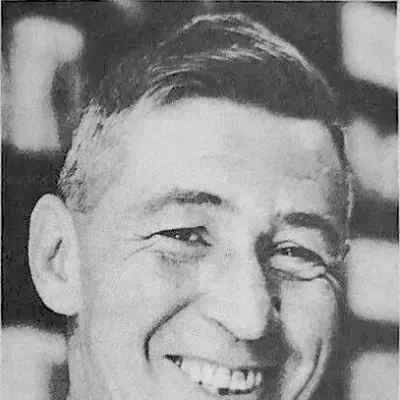
Nicolas Sarkozy
Human Design Chart
Biography
What does Projector 1/4 mean for Nicolas Sarkozy?
Projector 1/4 — Design at a Glance
Nicolas Sarkozy had an aura that worked like a focused flashlight, revealing systemic errors immediately. However, this ability to directly identify failures in the system brought with it a central dilemma: Direct intervention often led to resistance from others, as if he were shining bright light inappropriately into their faces. To avoid bitterness and remain effective, his design required him to wait for an honest invitation rather than acting independently.
As a Projector, Nicolas Sarkozy did not have a constant intrinsic energy source due to his undefined Sacral Center. Instead, he experienced phases of high intensity followed by necessary rest periods for regeneration to prevent burnout. Social structures often failed to accommodate this rhythm. His true effectiveness came from radiating his own harmonious light rather than illuminating others' problems. When he projected this inner harmony, it naturally attracted others who would seek his counsel. Living in accordance with this dynamic rewarded him with success; ignoring it brought the non-self theme of bitterness to the surface. His design suggested that leadership through attraction and patient waiting for recognition was more efficient than forced correction.
Emotional Authority
Nicolas Sarkozy's basic approach involved not making decisions immediately but requiring time for emotional maturation. His design indicated that spontaneous actions were risky, with clarity only arriving after calmness. This resulted from his emotional authority: The defined Solar Plexus Center provided this inner guiding structure. In Human Design mechanics, emotional authority always takes precedence over other defined centers regardless of further configurations in the chart.
This mechanism meant that Sarkozy was subject to an emotional wave showing permanent ups and downs in feelings. His perception of the world was always colored by his current mood: Total enthusiasm for something at one moment, a negative view on exactly the same matter the next. Immediate feeling was only a snapshot, a first impression not necessarily representing truth. Quick, spontaneous decisions based on such emotion could have negative consequences.
Instead, his system required patience and multiple reconsiderations of choices. The longer Sarkozy let a decision rest, the deeper and more comprehensive he could see. Over time, intense feelings subsided, emotional distance was gained. Only then did necessary clarity set in. This process was especially important for long-term decisions that could significantly impact life's course. Through waiting, he went through the necessary maturation process before acting.
The 1/4 Profile — Investigator / Opportunist
Nicolas Sarkozy demonstrated a tendency to use deep knowledge only when he felt secure in a familiar environment. His design indicated a pattern of thoroughly researching information before sharing it – not out of lack of interest but from fear of exposure. If his own understanding still had gaps, existential fear and heartache threatened as this jeopardized group belonging.
This dynamic stems from his Profile 1/4 (Researcher / Networker). Line 1 brings a drive for deep, individual knowledge; line 4 longs to share this knowledge within a network of familiar people. For Sarkozy, a loving environment with a deep trust base was essential. Only there could his potential for networking and knowledge dissemination come into full effect, making him an authority in his heart themes.
Additionally, the energy from Gate 19 (Line 1) emphasized mutual dependence and successful approach under recognition of individual uniqueness. One-sided dependencies threatened to endanger his identity. Simultaneously, Gate 44 (Line 4) marked a fixed honesty and directness. This line communicated without hypocrisy and rooted itself in the trunk. In matters of survival, this impartiality became strongly rejecting while it abandoned its neutral stance in extreme situations to receive necessary support. Sarkozy used this honest, direct communication to influence within his circle, always mindful that his knowledge was solid enough not to be exposed before his loved ones.
Split Definition — Defined & Open Centers
Nicolas Sarkozy was characterized by a constant inner willpower and instinctive intelligence. His defined Heart Center gave him the ability to shape his life actively and use resources self-determinedly, creating a foundation of self-worth and the readiness to keep promises, which fostered trust. This was complemented by the defined Spleen Center, giving him a reliable instinct for health and well-being – an intuitive security in the „now“, warning him of dangers.
His emotional process followed its own dynamics: The defined Solar Plexus Center made his feelings into inner authority. Nicolas Sarkozy had to learn to wait out the emotional wave before acting; only then did true clarity reveal itself; impulsive decisions on waves of peaks or valleys led otherwise to confusion. His also defined Root Center provided a steady pressure to cope with stress and material ascent, which only worked healthily if it didn’t become obsessive.
At the same time, Nicolas Sarkozy strongly reflected his environment through several open centers. His open Head Center made him susceptible to mental confusion; he tended to engage with questions that did not belong to him and sought inspiration from outside rather than inner peace. The open Ajna Center meant that his concepts were flexible – he could take in many ideas but should not misinterpret them as absolute truth.
Communication and identity also fluctuated. His open Throat Center naturally attracted attention when he waited; the attempt to actively seek approval often led to unpredictable statements. His open G Center showed no fixed identity or direction; Nicolas Sarkozy adapted himself to the people and places around him. The right environment was crucial, as false locations caused a feeling of being lost. Finally, lacking a defined Sacral Center meant that he lacked constant generative energy. He absorbed the vitality of others and risked exhaustion if he did not pause and set boundaries.
Channel 26-44: Surrender — Channels & Gates
Nicolas Sarkozy instinctively recognized what people needed before they knew it themselves, combining this insight with an insatiable search for new emotionally charged experiences. His design laid a tendency towards entrepreneurial action that was not based solely on rational calculation but on a deep physical intuition for markets and tribes.
This attitude was shaped by the channel of Devotion 44-26. As a connection between Spleen Center (instinctive intelligence) and Heart Center (willpower/ego), it created the ability to selectively use historical memories to convincingly sell or manipulate. This channel grants the role of capitalist: He used his fine nose to identify threats or improvement potentials for the tribe, using his willpower to acquire resources. He was designed to bring money in as promoter at the forefront, which was then distributed among the team – a dynamic that often led him to act only when the market or tribe actively asked him to engage.
At the same time, he was driven by the channel of Recognition 30-41. Through the connection between Root Center (pressure/restlessness) and Solar Plexus Center (emotions), an intense need for new experiences arose. The pressure from Gate 41 generated restlessness that was intensified by the emotional intensity of Gate 30. This resulted in a relentless urge to immerse himself in new situations to avoid boredom and find emotional satiation. This combination of instinctive selling and emotional restlessness shaped his actions: He constantly sought out the next experience, which he then transformed into resources or support with his manipulative salesmanship.
Collective Circuitry — Circuit Signature
Nicolas Sarkozy showed a design with two separate, parallel operating power fields. On one hand, he was marked by emotional waves from the past; on the other hand, he acted structured in the area of cooperation and resource generation. This split definition meant no continuous energy flow between these areas but rather two independent mechanisms.
In the Sense-making Circuit, the channel „Recognition“ connected Solar Plexus with Root Center, creating a cyclical emotional processing: Feelings and insights from past experiences rose wave-like and sank again to be shared. It was less about cool logic than intuitive grasping of meaning in retrospect.
At the same time, the Ego Circuit worked through the channel „Devotion“, connecting Heart and Spleen Centers. Here stood the ability to devote and cooperate to create resources together. Since this circuit lacked a connection to Sacral Center, constant life force was missing. The design therefore required necessary rest pauses to bring energy for giving and taking in relationships. Without these breaks, exhaustion threatened as the resources did not flow from an inexhaustible source but had to be built up through conscious effort and tradition.
Right Angle Cross of the Four Ways 4
Nicolas Sarkozys Human-Design chart indicates a tendency towards a complex, multi-layered life approach. His chart is marked by the right cross of the four paths. This configuration does not describe a linear development but rather a process that unfolds across multiple levels and often unites contradictory impulses.
In Human Design, this cross marks a specific archetypal structure. It points to a nature that does not follow a single path but walks various ways simultaneously or in succession. This can manifest as internal tension when different needs and strategies clash. The person is faced with the task of integrating this diversity rather than simplifying it.
For Nicolas Sarkozy, this means his life path was determined by constant confrontation with different roles or perspectives. It's not about seeking a single truth but navigating a web of possibilities. This structure requires flexibility and the ability to unite seemingly incompatible elements. It shapes how he approaches challenges – not as obstacles but as part of a larger, complex pattern. The energy of this cross works subtly yet persistently, creating depth that goes beyond superficial solutions. Nicolas Sarkozy thus exhibited dynamics characterized by multi-layered complexity and adaptability.
Saturn Return · Uranus Opposition · Chiron Return · 2nd Saturn Return — Life Cycles
Nicolas Sarkozys Human-Design chart points towards structural turning points marked by cycles. The Chiron Return, a fulfillment cycle between the ages of 49 to 51 years where one's incarnation cross unfolds and meaning becomes tangible, was for him a phase of taking on responsibility. This became concrete in 2004: At age 49, Sarkozy was elected as party leader of UMP and took responsibility for economy, finance, and industry. This moment aligned with the characteristic pattern of the Chiron Return, where life purpose and meaning are anchored in everyday reality.
The second Saturn Return, a maturity test or crisis often accompanied by a reevaluation of structures, occurred later. In 2012, at age 57, Sarkozy received 27.18% in the first round of presidential elections but lost in the runoff against Hollande. This event illustrated the challenge of the second Saturn Return: A confrontation with the limits of previous structures and a necessary transformation. The mechanics here do not show healing of old wounds but rather phases where one's orientation is either confirmed or fundamentally changed. Sarkozy moved through these cycles as someone whose life was marked by such structural tests, with the Chiron Return representing bloom and the second Saturn Return critical reevaluation.
Projector · Emotional Authority — Synthesis
A central red thread in this design is the ability to recognize patterns and selectively apply them (Channel 44-26), coupled with a deep need for recognition from a familiar community (Profile 1/4). The energetic projection (Projector type) finds expression here in the ability to identify weaknesses and highlight potential growth – yet always within the context of emotional reactions and cyclical evaluations (emotional authority, sense-making circuitry). This points to a personality that is both perceptive and concerned with community welfare, where the desire for validation serves as a driving force.
The central paradox lies in the tension between the need for deep analysis and the associated risk of experiencing rejection. Line 1 seeks thorough knowledge while line 4 wants to share this knowledge with others – yet quick judgment (Gate 11) and emotional waves can lead to advice being perceived as unpleasant. The right cross of the four paths intensifies this dynamic by hinting at a tendency towards hasty decisions, underlined by the cyclical nature of perception circuits and events of career success and crisis.
2 Defined Channels
Incarnation Cross - Right Angle Cross of the Four Ways 4
Solar Return
The Solar Return shows the moment when the sun returns to its exact birth position - your personal solar year.
Life Cycles
Discover the life cycles with a detailed triple view (birth chart, cycle chart, composite).
Human Design Profile
- Type
- Projector
- Strategy
- Wait for the respectful invitation
- Authority
- Emotional Authority
- Profile
- 1/4 - Investigator / Opportunist
- Definition
- Split Definition
- Incarnation Cross
- Right Angle Cross of the Four Ways 4
- Date of Birth
- 28.01.1955 22:00
- Place of Birth
- Paris, United States
Frequently Asked Questions
What is Nicolas Sarkozy's Human Design type?
What Profile does Nicolas Sarkozy have in Human Design?
What authority determines decision-making in Nicolas Sarkozy?
What incarnation cross is assigned to Nicolas Sarkozy?
When was Nicolas Sarkozy born?
Discover your own Human Design
Are you also a Projector? Find out in a personal reading how to unfold your leadership qualities and recognize the right invitations.
More Personalities
Back to overviewSissy Spacek

Alain-Fournier

Anémone

Ann-Margret

Bourvil
Hergé