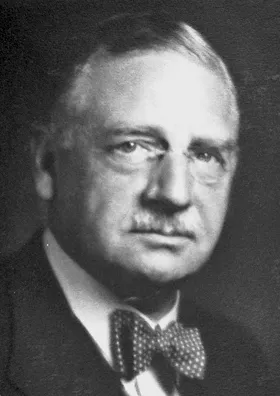
Otto Loewi
Human Design Chart
Biography
After Loewi graduated in medicine (1896) from the German University (now the University of Strasbourg), he studied and taught in European universities, becoming professor of pharmacology at Graz, Austria, in 1909.
After being arrested, along with two of his sons, on the night of the German invasion of Austria, 11 March 1938, Loewi was released on condition that he "voluntarily" relinquish all his possessions, including his research, to the Nazis. Loewi moved to the United States in 1940, where he became a research professor at the New York University College where he remained until his death.
His neurological researches (1921–26) provided the first proof that chemicals were involved in the transmission of impulses from one nerve cell to another and from neuron to the responsive organ. He and his colleagues, by stimulating the nerves in the heart of a frog, slowed the heart’s rate of contraction. The fluid perfusing this heart was allowed to perfuse a second heart in which the nerves were not stimulated; the second heart slowed in rate also, indicating the presence of a reactive substance in the fluid. This substance was shown to be acetylcholine, whose physiological properties Dale had described comprehensively in 1914. Acetylcholine was subsequently isolated from animal tissue by Dale and Harold Dudley in 1929.
In addition to researches on the nervous system, Loewi studied diabetes and the action of the drugs digitalis and epinephrine. He devised Loewi’s test for the detection of pancreatic disease.
He died on 25 December 1961, aged 88, in New York City.
What does Manifesting Generator 2/4 mean for Otto Loewi?
Manifesting Generator 2/4 — Design at a Glance
Otto Loewi's design shows a tendency towards hybrid action: He has the constant energy source of a Generator, but also the ability to skip steps and quickly draw results into his life. This configuration as an expressing generator created a specific tension field between the necessity of reacting to inner impulses and the urge for immediate implementation.
His strategy was not to initiate himself but to respond to life. Only when his Sacral Center confirmed with a clear 'yes' after the first reaction should he act. This condition was essential, as his natural speed tended to skip important intermediate steps. If this happened, he often had to return and make up for what was missing, which quickly led to frustration – the typical non-self theme of this type.
At the same time, Otto Loewi frequently reacted to multiple impulses simultaneously. Instead of focusing on a single project, he liked to start several things at once. This was not a mistake but part of his nature as long as his inner authority agreed. Under these conditions, he found deep satisfaction in creation. The advice to finish one thing before starting another did not fit him; instead, his creativity flourished in a playful mode that demanded variety and parallel activities. His energy was most effective when he followed this rhythm.
Emotional Authority
Otto Loewi's design shows a tendency towards emotional wave and readiness to wait. His inner authority is the Emotional Authority, carried by the defined Solar Plexus Center. In Human Design mechanics, this configuration is prioritized: It always takes precedence over other defined centers or strategies regardless of additional chart features. This meant for him that decisions were not made in the first impulse. Instead, he was subject to a permanent up and down of feelings; the world was always colored by the current mood. What appeared inspiring at one moment could be negatively evaluated in the next. However, these fleeting impressions did not count as final truth but only as initial reactions. Quick, spontaneous decisions from such an emotional state would often have had negative effects on his system. Instead, his mechanics required patience and conscious hesitation. By allowing time for decisions to mature – often through multiple nights of reflection – intense feelings gradually subsided. Only then did he gain emotional distance. Clarity and calmness only set in after this process. This approach was particularly crucial for long-term, life-defining decisions. Otto Loewi thus showed himself as someone who reached deeper insight by waiting out emotional fluctuations rather than insisting on immediate certainty.
The 2/4 Profile — Hermit / Opportunist
Otto Loewi's design shows a tendency towards constant oscillation between withdrawal and community. As a 2/4 Profile, he constantly fluctuated between two needs: the urge for solitude (Line 2) and the desire to spend time with his favorite people (Line 4). This required clear communication of his boundaries – when he sought company and when he wanted to be left alone. In his 'Me-Time', Loewi immersed himself in internal processes to calm down and gain clarity. Once the need for isolation was satisfied, he emerged from his 'cave' to maintain his network. This structure allowed him to reflect on and evaluate the knowledge of his network during solitary times, developing brilliant ideas from it.
This dynamic was shaped by specific energies. Gate 35 (Line 2) represented a blocked creative force with phases of ebb and flow. Loewi showed a strong desire for change and progress, driven by an aura of boredom and fear of stagnation. At the same time, Gate 63 (Line 4), which promotes memory and externalization, was active. Here there was a fixation on details, precision, and comparisons. Loewi externalized doubts to his environment to get answers. This precise questioning served to shape a secure future by considering the entire background knowledge. However, there was pressure to forget details once doubts were resolved – a risk for later problems. The combination of creative energy and detailed documentation shaped his work style.
Split Definition — Defined & Open Centers
Otto Loewi's Human Design shows a tendency towards constant mental pressure to ask questions and seek answers. This trait stems from the definition between Head Center and Ajna Center: an ongoing internal impulse to understand things, but without direct energy for implementation. Instead of acting himself, his aura inspired others to think. His communication was marked by the defined Throat Center; he spoke reliably from the mind about what he conceptualized.
As a Generator, Otto Loewi had immense vital energy in his Sacral Center. This energy was only available when he responded to questions or situations rather than initiating them. His inner authority lay in the Solar Plexus Center; decisions required an emotional wave to gain clarity. He tended to exercise patience until the emotional mood calmed before acting. The defined Root Center provided the necessary pressure to push this process forward and materialize it.
At the same time, his Heart Center was open. This made him vulnerable to conditioning by the ego of his environment. He tended to prove himself or make promises he couldn't keep to demonstrate his worth. A healthy self-esteem therefore had to come from recognition rather than willpower, that his open heart didn't need to prove anything.
The Spleen Center was also open. This led to a fundamental fear of survival and a lack of spontaneous well-being. He was sensitive to the health vibrations of others and tended to cling to people with defined spleens for security. Spontaneous decisions were risky for him; wisdom developed only through conscious confrontation with these fears and distinguishing between his own needs and absorbed environmental factors.
Channels for change, logic, structure, emotion and expression.
Otto Loewi's Human Design shows a tendency towards exemplary leadership, less through words than by consistently living out his unique individuality. This attitude came from Channel of Inspiration 1-8, connecting the G Center to the Throat Center. Through Gate 1 of Self-expression and Gate 8 of Contribution, he was designed to gain attention by demonstrating his personal direction. His impact lay in opening new perspectives for others through authentic presence without needing to explain them.
Simultaneously, his system carried the tension of evolutionary change. Channel of Mutation 60-3 connected Root Center with Sacral Center and brought unpredictable energy into play. Gate 60 of Limitation met Gate 3 of Order here, describing a process that accepted limitation to move beyond confusion towards new possibilities. This channel created internal pressure phases felt as melancholy until a sudden mutation occurred and order was established.
His intellectual approach was marked by healthy skepticism. Channel of Logic 63-4 connected Head Center with Ajna Center. Gate 63 of Doubt constantly filtered patterns for their consistency, while Gate 4 of Formulation sought verifiable answers. For him, an answer was only valid if it was logically flawless and practically functional; unfounded belief found no place here.
Additionally, he possessed the ability to efficiently structure complex insights. Channel of Structuring 43-23 connected Ajna Center with Throat Center. Gate 43 of Insight received spontaneous breakthroughs that were processed through Gate 23 of Assimilation and clearly expressed. This allowed him to formulate innovative perspectives in a way that promoted efficiency and changed the thinking of others, provided he waited for the right timing for his statements.
Emotionally driven, he was motivated by the search for experience. Channel of Transience 36-35 connected Solar Plexus Center with Throat Center. Gate 36 of Crisis and Gate 35 of Change drove him to experience new things and explore emotional depth. This restless longing served to gain wisdom through direct experience, which he could then pass on.
Individual gates complemented this picture: Gate 5 in Sacral Center emphasized the basic rhythm and necessity of habits for energy building-up. Gate 64 in Ajna Center processed past experiences into clear concepts. Gate 29 represented persistence in correct saying yes, while Gate 14 described skillful power preservation and direction.
Individual Circuitry — Circuit Signature
Otto Loewi's Human Design shows a tendency towards structured emotional communication. It is a Split Definition: two energetically separate groups exist parallel without direct flow between them. The first group connected Identity, Ajna, and Throat Center with Head and Solar Plexus Centers; the second included Sacral and Root Centers.
In the Knowledge Circuit, two isolated segments worked. One segment connected Ajna, Throat, and Identity Centers through channels for Structuring, Inspiration, and Mutation. This promoted the expression of a unique, mutating identity through words. The other segment connected Sacral and Root Centers, providing pulsating acoustic energy but not directly linked to the verbal expression structure.
The Understanding Circuit showed only Channel Logic between Head and Ajna Centers in Otto Loewi. This generated focused visual energy for rational analysis of future-oriented connections, free from emotional influence.
In the Meaning-Finding Circuit, only Channel Transience was active, connecting Throat with Solar Plexus Center. This allowed cyclical reflection on past emotional experiences and passing these insights wave-like to others. Overall, these separated but internally coherent systems shaped his impact: rational analysis on one hand, emotional expression of individual transformation on the other.
Right Angle Cross of Consciousness 2
Otto Loewi's Human Design configuration indicated a tendency towards strategic and long-term thinking. The configuration 'The right cross of consciousness 2' described an internal architecture oriented toward patience and precise planning. This structure promoted the ability not only to recognize complex connections but also to organize them within a clear, logical framework. It was a mechanism that inclined towards systematically processing information and deriving well-founded conclusions before taking action.
Otto Loewi directed his energy towards understanding deeper principles and structuring these insights in ways comprehensible to others. The right cross configuration in consciousness acted as a filter channeling spontaneous impulses into a thought-out strategy. This did not necessarily mean quick actions but rather careful consideration of possibilities and consequences. As a result, his approach was characterized by a calm persistence in handling information and decisions. Loewi's Human Design supported a path based on clarity and inner order rather than impulsive reactions or superficial impressions. This trait defined how he interacted with his environment and developed solutions grounded in solid foundations.
Saturn Return · Uranus Opposition · Chiron Return · 2nd Saturn Return — Life Cycles
Otto Loewi's life path was marked by structural anchoring intertwined with profound professional shifts. In 1900, at the age of 27, he habilitated himself at the Pharmacological Institute of Marburg University. This marked his first Saturn Return: a phase where years of groundwork condensed into a stable professional position and laid the foundation for his further career.
Another crucial turning point occurred in 1921 when Loewi, aged 48, began his neurological research. This timing fell within the Chiron Return, a fulfillment cycle between the ages of 49 and 51. During this phase, one's incarnation cross increasingly unfolds; if an individual has lived according to their strategy and authority, their purpose becomes tangible. Loewi's entry into neurology was an expression of this blooming period where his specific life task fully manifested.
In 1929, at his second Saturn Return aged 56, acetylcholine was isolated by Dale and Harold Dudley. This external milestone underscored the significance of his own work in a scientific context. The second Saturn Return often serves to review and affirm what has been achieved so far. That his research results were internationally recognized and continued during this phase confirmed the substance and relevance of his life's work within this cyclical pattern.
Manifesting Generator · Emotional Authority — Synthesis
He was a person marked by the combination of sacral energy (manifesting generator) and emotional depth (emotional authority). This constellation led to an internal dynamic where he was carried by a constant flow of life force, yet always had to filter it through careful emotional consideration. The defined Head Center (Inspiration) further strengthened this process by continuously driving him to ask questions and seek understanding – an inner pressure that moved him into creative engagement with his environment. His nature as a networker (Line 4 in Profile) suggests he defined himself through relationships and shared his insights, while Line 2 simultaneously signaled the need for withdrawal and inner clarification.
A central paradox lay in the tension between his ability to quickly initiate things (manifesting generator) and the need for emotional maturation before making decisions (emotional authority). He could develop and implement ideas swiftly, yet the quality of these impulses depended on whether he gave himself sufficient time for thorough emotional scrutiny. This may have led him to oscillate between the urge for rapid realization and the necessity of inner clarity – a dynamic that shaped his work style and life path and was evident in verifiable career moments.
5 Defined Channels
Incarnation Cross - Right Angle Cross of Consciousness 2
Solar Return
The Solar Return shows the moment when the sun returns to its exact birth position - your personal solar year.
Life Cycles
Discover the life cycles with a detailed triple view (birth chart, cycle chart, composite).
Human Design Profile
- Strategy
- To respond - wait for something to respond to
- Authority
- Emotional Authority
- Profile
- 2/4 - Hermit / Opportunist
- Definition
- Split Definition
- Incarnation Cross
- Right Angle Cross of Consciousness 2
- Date of Birth
- 03.06.1873 10:00
- Place of Birth
- Frankfurt am Main, Germany
Frequently Asked Questions
What was Otto Loewi's Human Design type?
What Profile did Otto Loewi have in Human Design?
Which Authority guided Otto Loewi?
What incarnation cross determined Otto Loewi's design?
When was Otto Loewi born?
Discover your own Human Design
Are you also a Manifesting Generator? Find out in a personal reading how to unfold your multi-talents and direct your energy wisely.
More Personalities
Back to overviewAldair

Alizée

Angeli

Arletty

Artus
Balthus