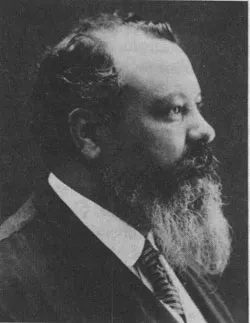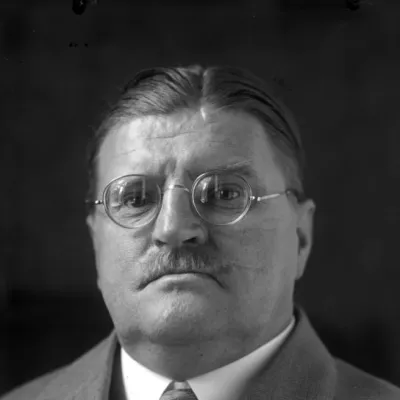
Otto Meissner
Human Design Chart
Biography
Meissner began his career as a law student, and in 1908, joined the Civil Service. In 1915 he served in the Infantry, and joined the Foreign Office in 1918. He became an influential advisor of President von Hindenburg, but when Hitler assumed power his loyalties shifted to the Nazi party. At the end of the war the Tribunal failed to establish him as a war criminal and, in January 1952, all proceedings were dropped.
His 1950 memoirs were titled, "Hindenburg and Hitler." He died on 27 May 1953, Munich, Germany.
Otto Meissner — Manifestor with Profile 1/3
Manifestor 1/3 — Design at a Glance
Otto Meissners Human Design profile established the foundational structure of a Pioneer and Leader. As a Manifestor, his nature was geared towards taking initiatives and leading others without having to fight every single battle himself. This configuration worked similarly to an Emperor in ancient Rome: He had the vision for the big picture but delegated the concrete implementation to those around him.
This kind of leadership inevitably polarized people. Because his perspective often reached further than that of his surroundings, he was not understood by everyone. Some followed him enthusiastically, others rejected him due to this different orientation or even with aversion. This pain point of being misunderstood was an integral part of his design.
To minimize resistance and find the right followership, his strategy lay in informing others. By keeping people timely and precisely informed about his intentions and visions, he could avoid friction. If he lived by this strategy, his system rewarded him with a feeling of inner peace. Acting against this mechanism, without informing or leading, resulted in lasting, deep anger. His design thus demanded clear communication as a prerequisite for harmonious functioning and internal alignment.
Emotional Authority
Otto Meissners inner authority resided in the Defined Emotional Center. This meant that his decision-making was always influenced by an emotional wave, regardless of which other centers were defined in his design. His perception of the world was subject to constant ups and downs; he saw situations colored by his current mood. In one moment, he could be totally enthusiastic about something, in the next view the same matter negatively. However, this immediate feeling was just a snapshot, a first impression that did not necessarily reflect his truth yet. Quick, spontaneous decisions based on such emotion often had negative consequences for him. Instead, his design required patience: He took time to let decisions mature. This happened through multiple nights of reflection and allowing questions to arise. Over time, intense feelings subsided, he gained emotional distance, clarity and calmness set in. Only then was he through the process. This mechanism was particularly important for long-term decisions that could have a significant impact on his life course. Otto Meissner thus showed himself as someone who did not find his inner truth in the first impulse but achieved it through waiting and condensing his emotional states.
The 1/3 Profile — Investigator / Martyr
Otto Meissners design leaned towards a dual approach to the world: he was both the deep researcher and the practical experimenter. This profile of Researcher/Experimentor (1/3) shaped his essence through constant alternation between theoretical learning and the urge to negotiate and test things out. Often, the energy of Line 1 took control; Otto Meissner then appeared hesitant in implementation, driven by the worry of not having accumulated enough knowledge yet. However, this resistance against action stood in conflict with Line 3, which demanded trial and error to learn from mistakes. His path was thus a continuous process of adaptation. He tested ideas both intellectually and practically on their merits. Only when he had worked something out himself and validated it in reality did his judgment hold credibility. The mechanics of his design emphasized that without the willingness to face crises and uncertainties (Line 1), no real progress was possible. At the same time, he recognized the impermanence of concepts; ideas needed to be tested to prove their validity or be discarded. This combination of deep analysis and pragmatic experimentation created a life mission in which self-earned insights held the highest value. Otto Meissner lived this dynamic by not relying solely on pure theory but reinforcing his convictions through concrete experiential steps.
Single Definition — Defined & Open Centers
Otto Meissner's Human Design profile indicated a tendency towards a strong, will-driven expression characterized by emotional depth. His defined Heart Center provided him with a constant source of determination and the need to take control over his life; he acted from a clear sense of self and kept promises to build trust. This energy flowed into his also defined Throat Center, making his communication not only reflective but also a reliable manifestation of his intentions. He spoke with the authority of the heart: „I want this, I will do it.“
At the same time, his defined Solar Plexus served as an inner emotional authority. Decisions were made after going through an emotional wave rather than impulsively. He waited patiently for clarity before acting, which gave him a deep sensitivity and the ability to view situations from various perspectives until the true direction was revealed.
In contrast, his open Head Center showed a vulnerability to mental pressure. He tended to engage with others' questions or seek inspiration to resolve inner confusion rather than trusting his own emotional clarity. His open Ajna Center amplified this; he absorbed concepts and opinions from his environment without identifying them as personal truth, making him flexible but also susceptible to conditioned thinking.
His open G Center meant that he did not carry a fixed, unchanging identity. He adapted to the people and places he encountered in order to find direction and love. This required patience since he waited for external initiation rather than asserting his own path. Finally, his open Sacral Center was sensitive to the energy of others; he could easily be overwhelmed when trying to keep up with the generative power of his environment instead of respecting his own boundaries and listening to his inner authority.
Channels for emotional transformation and connecting community.
Otto Meissner's Human Design profile indicated a tendency towards emotional unrest and a drive for new experiences, paired with a deep need for binding community structures. This constellation was shown through Channel Ephemeral 36-35, connecting the Solar Plexus Center with the Throat Center. This channel pushed him to go beyond pure logic and generate movement through emotional intensity or even self-induced crises. The search for the „New“ was paramount; he learned through experiencing highs and lows and later shared this wisdom as advice. Simultaneously, Channel Community 37-40 shaped his actions by linking the Solar Plexus Center with the Heart Center. Here it was about building stable bonds through fair agreements: „I do this for you if you do that for me.“ This energy required time and direct contact to build trust rather than spontaneous decisions. It secured loyalty within a group through mutual support and the will to achieve progress together.
Additionally, individual Gates influenced his personality. Gate 51 brought in a strong, adaptable willpower capable of transforming shocks into development, while Gate 21 linked the control of material resources with the claim for respect in service to the community. Gate 49 demanded obedience to principles and a sensitive reaction to upheavals within the tribe. On the cross side, Gate 6 formed an emotional basis for growth through friction, Gate 11 the harmonious assessment of the situation before acting, and Gate 12 the restrained, mutative creativity in communication. This mix created a person navigating between the impulse for change and the need for stable, fair community order.
Collective Circuitry — Circuit Signature
Otto Meissner's Human Design profile indicated a tendency towards an emotional, wave-like way of processing experiences. His chart showed someone who did not just logically analyze experiences but lived them emotionally and reflected on them. This attitude arose from his simple definition: Throat, Solar Plexus, and Heart Centers formed one directly connected energetic group.
The Finding Meaning Circuit linked his Throat Center with the Solar Plexus through Channel Ephemeral. This created a flow in which emotional waves from the past were processed and verbally shared. It was not about cold logic but finding meaning behind events and sharing these insights with others.
Parallel to this, the Ego Circuit, linking Heart with Solar Plexus – also via Channel Community – stood out. Here mutual support was key: a principle of give-and-take based on cooperation and building resources together. Since there was no connection to the Sacral Center, this configuration required necessary pauses for regenerating energy for such social alliances.
Both circuits used the Solar Plexus as an emotional hub. Thus, Otto Meissner's Human Design linked processing past experiences with the need for social support and exchanging these felt truths in the collective.
Right Angle Cross of Eden 1
Otto Meissner's Human Design profile carried the signature of the right cross of Eden. This configuration established a specific inner dynamic: the drive to reach a profound truth through personal experience and intuition, and then share this with others. It was not just knowledge but lived understanding that emanated from within.
Otto Meissner exemplified someone who bore this dual task within him. On one hand, he sought authentic insights based on personal experience. On the other hand, there was a strong need to disseminate these insights to help or inspire others. The right cross of Eden precisely describes this flow: first shaping his own life so that it becomes a source of truth and then sharing this source with the outside world.
For Otto Meissner, this meant that his authority grew not through external titles but through the authenticity of his message. The mechanics of this cross require a clear separation between the private process of discovery and the public act of sharing. His chart indicated that he lived this structure: he gathered experiences, condensed them into wisdom, and then made it accessible. This shaped how he interacted with his environment – always with the intention to contribute through personal example and clear communication. The energy of this design worked stable and focused as long as Otto Meissner followed this natural rhythm from within to without.
Saturn Return · Uranus Opposition · Chiron Return · 2nd Saturn Return — Life Cycles
Otto Meissner's Human Design profile indicated a tendency towards structured, constructive work that manifested in clear hierarchies and official functions. This orientation was evident early on: in 1906, at the age of 26, he entered the judiciary service as an assessor in Alsace-Lorraine. This step marked his first Saturn return, a cycle where long-term commitments and establishing a stable life foundation are central. For his system, this was the beginning of a phase of consolidation, seeking and finding his role within a fixed framework.
However, the mechanics of his design also demanded adaptability to changing external circumstances. This became clear in 1920 at age 40 when Meissner took over as head of the office of the Reich President. This period fell into his Uranus opposition, a phase often marked by unexpected turns and the need to question or reorder old structures. Here, he demonstrated his ability to exercise authority not just from position but also through flexible responses to political changes.
Later in 1937 at age 57, he was appointed State Minister with the rank of Reichsminister. This corresponded to his second Saturn return, a moment of maturation and confirmation. In this phase, decades of work condensed into an ultimate recognized position. His path thus followed the pattern of his design: first laying the foundation, then reacting to crises, and finally pouring the achieved authority into a solid official form.
Manifestor · Emotional Authority — Synthesis
Otto Meissner was a Manifestor who throughout his life was marked by a strong drive for change and the need to experience new things (Channel 36-35). His emotional authority required time to let decisions mature, yet the connection to the Throat Center indicated an ability to translate these feelings into clear communication and action. The profile as researcher and experimenter underscored this process of testing and discarding, generating deep understanding through personal experience – a judgment others could trust.
A central paradox lay in the combination of this inner emotional wave with the manifesting impulse to set things in motion. While he felt the need to gather experiences and bring about changes, his authority required a certain maturation time before action could be taken. Evidence from professional steps into key positions (1906, 1920, 1937) shows that this tension between the desire for innovation and emotionally grounded decision-making was a defining element of his work.
2 Defined Channels
Incarnation Cross - Right Angle Cross of Eden 1
Solar Return
The Solar Return shows the moment when the sun returns to its exact birth position - your personal solar year.
Life Cycles
Discover the life cycles with a detailed triple view (birth chart, cycle chart, composite).
Human Design Profile
- Type
- Manifestor
- Strategy
- To inform others before acting
- Authority
- Emotional Authority
- Profile
- 1/3 - Investigator / Martyr
- Definition
- Single Definition
- Incarnation Cross
- Right Angle Cross of Eden 1
- Date of Birth
- 13.03.1880 01:00
- Place of Birth
- Bischwiller, France
Frequently Asked Questions
What was Otto Meissner's Human Design type?
What profile did Otto Meissner have in Human Design?
What authority did Otto Meissner have?
What incarnation cross was assigned to Otto Meissner?
When was Otto Meissner born?
Discover your own Human Design
Are you also a Manifestor? Find out in a personal reading how to use your initiation power peacefully and dissolve resistance.
More Personalities
Back to overviewChristian-Jaque
Kesha

Laurent-Eynac
Lucebert
Masaccio
Papus