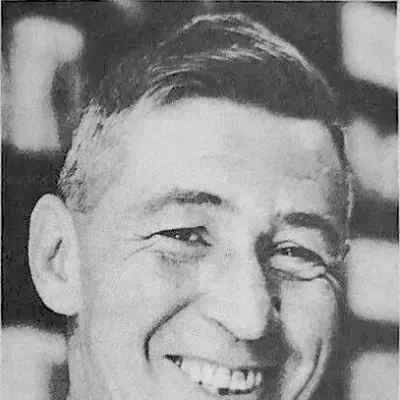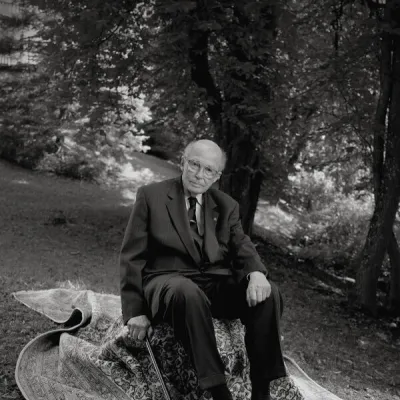
Otto von Habsburg
Human Design Chart
Biography
The eldest son of Charles I and IV, the last emperor of Austria and king of Hungary, and his wife, Zita of Bourbon-Parma, Otto was born as Franz Joseph Otto Robert Maria Anton Karl Max Heinrich Sixtus Xaver Felix Renatus Ludwig Gaetan Pius Ignatius von Habsburg, third in line to the thrones, as Archduke Otto of Austria, Royal Prince of Hungary, Bohemia, and Croatia. With his father's accession in 1916, he was likely to become emperor and king. As his father never abdicated, Otto was considered by himself, his family and Austro-Hungarian legitimists to be the rightful emperor-king from his father's death in 1922. Otto was exiled in 1919 and grew up mostly in Spain. His devout Catholic mother raised him according to the old curriculum of Austria-Hungary, preparing him to become a Catholic monarch. During his life in exile, he lived in Austria, Belgium, France, Madeira (Portugal), Spain, Switzerland, the US, and from 1954 until his death, in Bavaria (Germany), in the residence Villa Austria.
What does Projector 4/6 mean for Otto von Habsburg?
Projector 4/6 — Design at a Glance
Otto von Habsburg revealed himself as someone with a dense, focused aura that strongly influenced his surroundings. As a Projector, he acted like a bright flashlight: He directed his light precisely onto areas in others' systems that were still in the dark or not functioning optimally. This ability allowed him to immediately recognize errors in structures and bring 'light into the darkness'.
However, this direct perspective carried the risk of being perceived as unpleasant by his environment. If he addressed his observations right away, he risked resistance, similar to a light beam shining directly into someone's eyes. The more elegant expression of his design was to attract others through his own harmony and clarity, so that people would come to him on their own and ask for his insights. His strategy therefore lay in waiting for appreciative, honest invitations rather than pushing forward independently.
Since his sacral center was undefined, he did not have a constant, intrinsic source of life energy. Instead, he went through phases of high activity and fast work, followed by necessary rest periods to prevent burnout. If he lived according to this design, he was rewarded with success; if he deviated from it, the theme of non-self bitterness would eventually become apparent.
Self-Projected Authority
Otto von Habsburg revealed himself as a Projector with rare authority in Self, implying extreme openness and at the same time the risk of being distracted by external motoric energies. The central challenge was not to sink into this openness or constantly chase after energy. His inner truth rooted in his identity. Decisions were made on two paths: through self-dialogues or dialogical exchange processes if he was invited to do so. Crucial was listening to himself to separate the spontaneous voice of true essence from reflective thought. This unfiltered expression made his uniqueness recognizable to others. Alternatively, a physical feeling that drew him geographically or thematically in a certain direction could take effect. By following this inner orientation faithfully, he could become a directional guide for others; there lay his specific potential for success. This mechanism emphasized that his leadership function did not arise through his own actions but through the clear identification and expression of himself. The definition of authority in Self demanded constant differentiation between authentic impulse and intellectual construction to avoid falling into the trap of energy pursuit.
The 4/6 Profile — Opportunist / Role Model
Otto von Habsburg's design laid a tendency towards strategic action: He sought security by building solid foundations, where power had to be controlled to ensure financial stability. Characteristic was a certain opportunism; he waited for the right moment to use influence, supported by practical intelligence and skills that served as protection. Without this appropriate ability, security would have remained an empty promise.
This behavior corresponded to Profile 4/6, known as 'Networker/Role Model'. In the first thirty years, he often acted like a Line 3, experimenting frequently and widely, especially in relationships and friendships. Once Line 6 became active, an inner conflict emerged: the desire to belong to the community (Line 4) stood in opposition to the need to think reflectively about the meaning of life (Line 6). His life revolved around this tension between heart and head.
In later years, it was expected that he would meet high standards as a wise role model through cooperation. At the same time, his large heart remained cautious; it only opened partially to avoid being hurt by false people. Parallel to this, Gate 29 on Line 6 marked a transition towards a process of finding meaning. Here, it was about whether experiences led to development or could not be sustained. In the second generation, the strength for perseverance was called upon, even if the meaning was not immediately apparent. Sometimes he retreated in confusion and acted cautiously before taking on commitments.
Single Definition — Defined & Open Centers
Otto von Habsburg's Human Design profile indicated a tendency towards clear, identity-defining communication. His defined Throat Center connected with his also defined G Center, meaning that his voice spoke directly from his higher self and personal direction. He articulated not just thoughts or emotions but a consistent truth about his essence and life path. This configuration gave him the ability to show others new perspectives as he acted from a deep sense of connection and self-love.
At the same time, Otto von Habsburg was marked by numerous open centers that made him susceptible to external conditioning. His open Head Center tended to misinterpret mental pressure as inspiration; he might wonder if he had to find answers that were not actually his own. The open Ajna Center provided intellectual flexibility but also the risk of holding foreign opinions as personal truths. Especially, his open Heart Center drove him into a cycle of needing to prove his worth through promises and willpower despite not consistently possessing this energy.
His open Sacral Center was sensitive to environmental vital energy; he could overextend himself by using borrowed power rather than trusting his own rhythms. The open Solar Plexus Center absorbed and amplified foreign emotions, leading him to avoid emotional confrontations to maintain stability. Finally, his open Root Center was constantly exposed to external stress that he often sought to compensate for through hyperactivity instead of simply recognizing the pressure as not his own and letting it go. These mechanisms showed up as a tension between his clear inner voice and the burden of absorbed environmental dynamics.
Channels for recognizing principles in the present moment.
Otto von Habsburg's Human Design profile indicated a tendency towards a clear, self-determined presence. He inspired others to be themselves through his simple existence and way of speaking. This effect was based on the Awakening Channel 10-20, connecting the G Center with the Throat Center. This channel transformed individual knowledge into right action in the here and now (Gate 20), tempered by an underlying code for successful interaction (Gate 10). The result was constant awareness: simply being himself radiated self-love and trust. Others felt this clarity and responded with genuine invitations rather than resistance, protecting him from taking criticism personally or retreating into isolation.
Additionally, his design featured Gates that promoted skilled power application (Gate 14) and the recognition of feelings as well as fate patterns (Gate 30). Gate 8 steered group contribution through individual identity, while Gate 29 in the Sacral Center stood for persistence and correct saying no. These configurations shaped a stance of self-control in maintaining influence and the ability to remain life-affirming despite challenges. The mystical innocence (Gate 25) and logical detail work (Gate 62) rounded out the profile, with collective adaptability (Gate 15) supporting natural rhythms in social structures. Together, these elements formed a system based on authentic leadership through his own essence without needing external validation.
Individual Circuitry — Circuit Signature
Otto von Habsburg's Human Design profile indicated a tendency towards clear, authentic communication. His energetic structure connected the Throat Center with the Identity Center via the Awakening Channel (Gates 20 and 10). This connection created a direct flow between his inner essence—who he truly was—and his ability to express this verbally. Gate 57 in the Identity Center provided intuitive knowledge about one's nature, while Gate 10 in the Throat Center channeled this knowledge through right action. Gate 20 in the Throat Center ensured that these messages landed here and now, acoustically perceivable and individually marked.
As Otto von Habsburg had a simple definition, these connected centers formed a single coherent energy circuit without separate segments. This allowed him to immediately express his identity in words without internal contradictions or delays through other unconnected centers. The mechanics of the integration circuit served to secure survival: power from reacting to life was channeled and effective here and now by this intuitive knowledge and right action. Thus, Otto von Habsburg appeared as someone whose expression sprang directly from his core, making his communication appear authentic and self-affirming. This configuration shaped a lifestyle in which the conveyance of one's truth in the present moment was central.
Right Angle Cross of Contagion 4
Otto von Habsburg's Human-Design profile featured the right-hand incarnation cross. This configuration established a specific psychological structure where emotional security and a sense of belonging were closely tied to one's judgment of others. In Human Design, this cross describes a pattern in which the ability to emotionally connect or distance oneself is heavily dependent on how one assesses the integrity and authenticity of their environment. It was not a conscious choice but rather a deeply rooted energetic tendency: if one's judgment of a person or situation turned out positively, access to trust and closeness would open up. Conversely, negative or critical judgments often led to emotional withdrawal, frequently accompanied by feelings of misunderstanding or isolation.
This mechanism acted as a filter for interpersonal relationships. Otto von Habsburg was characterized by an attitude in which personal judgment served as the key to emotional openness or protection. It was not about whimsical moods but rather an automatic process of self-protection and bonding regulation. The energy of this cross demanded constant evaluation: is this environment safe? Do these people share my values? Only if the answers were satisfactory could deeper emotional engagement develop; otherwise, distance would be maintained to protect his emotional center from potential disappointment or overreach. This dynamic shaped his approach to building relationships and setting boundaries, always guided by an internal barometer of judgment.
Saturn Return · Uranus Opposition · Chiron Return · 2nd Saturn Return — Life Cycles
Otto von Habsburg's Human Design profile indicated a tendency towards strategic turning points structured around external recognition or necessity. In 1940, at the age of 28 during his first Saturn return, he fled to the United States. This cycle often marked the transition from preparation to concrete life reality; here, the escape solidified into a new, stable foundation.
The opposition with Uranus around the age of 39 brought unexpected recognition or status changes. In 1951, Otto von Habsburg received the Grand Cross of the Order Carlos III of Spain. This event confirmed his position in a new international order, far from old power structures.
The Chiron return around the age of 49 is a fulfillment cycle where life purpose becomes concrete. In 1961, he signed the declaration renouncing claims to sovereignty. This was not an act of defeat but rather a clear alignment with his true mission: political work for Europe instead of monarchical claims. The meaning of his path became experiential and guiding.
The second Saturn return around the age of 58 solidified this newly found identity through long-term recognition. In 1970, he received the European Karl Prize from the Sudeten German Landsmannschaft. This award confirmed the viability of his commitment and firmly anchored him as a European figure whose work built upon previous cycles.
Projector · Self-Projected Authority — Synthesis
Otto von Habsburg was a projector whose essence was marked by the ability to recognize patterns and shed light on darkness (Gate 11). This focus on uncovering errors and imbalances connected with profound inner authority, rooted in self-dialogue and spontaneous expression. Through defining his communication and manifestation centers, he could articulate insights, while the awakening channel (Gates 10 & 20) prompted him to recognize principles and express them in the present moment. The profile as a networker/role model suggests that he defined himself through relationships and collaborations, always oscillating between the desire for belonging (Line 4) and the search for deeper meaning (Line 6).
This life was characterized by a central paradox: the openness of the projector and his ability to conduct deep analysis stood in tension with an inner necessity to affirm oneself and act from one's G Center (Integration Circuit). While he had the potential to lead others and show what could be improved, his authority required self-reflection and expression of personal truth to avoid being distracted by external influences. The documented events – flight, awards, renunciation declaration – reflect this internal conflict: working in the outer world always connected with turning points in personal definition.
1 Defined Channel
Incarnation Cross - Right Angle Cross of Contagion 4
Solar Return
The Solar Return shows the moment when the sun returns to its exact birth position - your personal solar year.
Life Cycles
Discover the life cycles with a detailed triple view (birth chart, cycle chart, composite).
Human Design Profile
- Type
- Projector
- Strategy
- Wait for the respectful invitation
- Authority
- Self-Projected Authority
- Profile
- 4/6 - Opportunist / Role Model
- Definition
- Single Definition
- Incarnation Cross
- Right Angle Cross of Contagion 4
- Date of Birth
- 20.11.1912 02:45
- Place of Birth
- Reichenau, Germany
Frequently Asked Questions
What was Otto von Habsburg's Human Design type?
What Profile did Otto von Habsburg have in Human Design?
Which Authority determined Otto von Habsburg's decisions?
What incarnation cross characterized Otto von Habsburg?
When was Otto von Habsburg born?
Discover your own Human Design
Are you also a Projector? Find out in a personal reading how to unfold your leadership qualities and recognize the right invitations.
More Personalities
Back to overviewSissy Spacek

Alain-Fournier

Anémone

Ann-Margret

Bourvil
Hergé