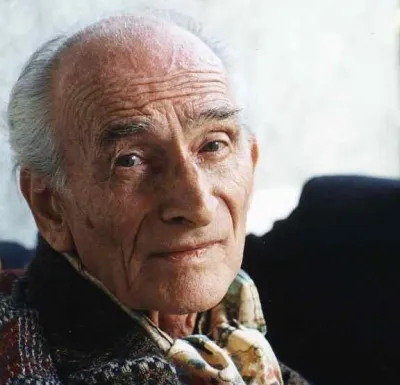
Otto von Mendelssohn Bartholdy
Human Design Chart
Biography
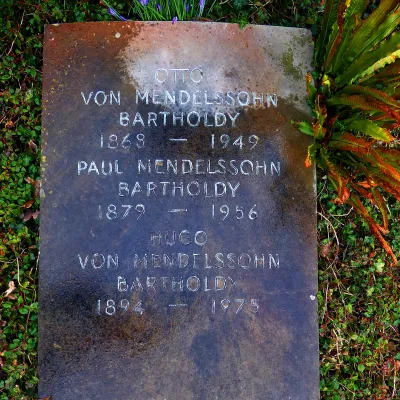
Otto Mendelssohn Bartholdy was the oldest child of Paul Mendelssohn Bartholdy the Elder and his first wife, Else Mendelssohn Bartholdy (née Oppenheim, 1845–1868). His mother died of typhus five months after Otto was born. Five years after the death of his first wife, his father married her younger sister Enole Oppenheim (1855–1939) in 1873, with whom he had four more children. Otto's youngest brother from his father's second marriage was Paul (1879–1956), who, as a doctor of chemistry and AGFA director, was to follow in his father's footsteps. Their paternal grandfather were the composer Felix Mendelssohn Bartholdy.
On 8 April 1893, Otto Mendelssohn Bartholdy married his two-year-younger cousin Cécile (1870–1943), née Mendelssohn Bartholdy, in Baden-Baden at the age of 25. They had two children, the son Hugo Mendelssohn Bartholdy and the daughter Cécile Mendelssohn Bartholdy, born in Berlin in 1894 and 1898 respectively.
Otto Mendelssohn Bartholdy became an influential banker, first as an authorized signatory, later as a partner in the Berlin private bank Robert Warschauer & Co. In 1905, Robert Warschauer & Co was taken over by the Darmstädter Bank, and Mendelssohn Bartholdy was able to live on the purchase price as a rentier. In 1907 he was ennobled on his own initiative and from then on bore the name Otto von Mendelssohn Bartholdy. His ennoblement was viewed critically by some relatives and considered unsuitable for a citizen from a respected bourgeois family.
In 1908 he became a member of the AGFA supervisory board, and from 1926 after the merger with Bayer and BASF he was on the supervisory board of I.G. Farben.
What does Manifesting Generator 2/4 mean for Otto von Mendelssohn Bartholdy?
Manifesting Generator 2/4 — Design at a Glance
Otto von Mendelssohn Bartholdy revealed himself as a hybrid being, combining the constant energy of a Generator with the lightning-fast assertiveness of a Manifestor. His design inclined him towards rapid action, allowing him to skip steps to quickly pull things into his life. However, this speed was a double-edged sword: Often he was too quick and had to backtrack to complete missing steps, leading to frustration. Additionally, he tended to pursue multiple projects simultaneously, reacting to many different impulses.
The mechanics of his Manifesting Generator required him to respond to impulses rather than initiate actions. Only when his Sacral Center gave a clear "yes" could he effectively use his creative power. Without this inner agreement, his energy quickly shifted into exhaustion. With proper application – that is, by responding rather than initiating and regularly checking his inner resonance – he found deep satisfaction. He thrived in the Play Mode, where variety and parallel work were his strength, rather than overwhelming him. His path lay in channeling his speed without ignoring necessary processes, thereby drawing sustainable fulfillment from his efforts.
Emotional Authority
Otto von Mendelssohn Bartholdy revealed himself through an inner decision-making structure based on the emotional wave. His defined Solar Plexus Center carried inner authority, meaning he did not make decisions in his head but waited for the resonance of his emotional life. This authority was subject to constant ups and downs; his perception was always colored by the current mood. What appeared inspiring in one moment could be felt as negative in the next. Therefore, his immediate feeling was often just a snapshot, not the final truth. Quick, spontaneous judgments from this emotional heat often proved misleading.
The mechanics of his emotional authority required patience. He needed time to let a decision mature. Sleeping on questions and pausing multiple times allowed intense emotions to subside. Only when emotional distance was gained did clarity and calmness set in. This process was essential for long-term realignments that significantly influenced his life course. By hesitating and not reacting immediately, he utilized the full depth of his emotional intelligence to reach a comprehensive understanding.
The 2/4 Profile — Hermit / Opportunist
Otto von Mendelssohn Bartholdy revealed himself through a constant interplay between the deep desire for withdrawal and the wish to connect with his closest confidants. His design inclined him to periodically retreat into an inner "cave" to gain clarity in solitude before re-emerging to engage with his community. This dynamic arose from the tension between Line 2, the Hermit, and Line 4, the Networker.
Line 2, rooted in doubt and questioning, challenged him to maintain control over his inner research process. He used this solitude to develop his own questions and evaluate answers, often driven by a second-generation doubt that surfaced only after achieving goals. Simultaneously, Line 4 guaranteed his survival by strictly adhering to his personal rhythm. Rather than actively pursuing opportunities, he waited for passive experiences to transform into active performance.
For Otto von Mendelssohn Bartholdy, it was crucial to clearly communicate these needs: when he needed company and when he needed to be left alone. Only by reflecting on and brilliantly processing the knowledge of his network during his solitary time could he later return to his community with renewed energy and new ideas. His success depended on accepting this rhythm of withdrawal and connection, as rejecting it would have endangered his survival.
Split Definition — Defined & Open Centers
Otto von Mendelssohn Bartholdy revealed himself as someone who possessed a firm inner direction and a clear will, driven by a constant energy source. His design was characterized by defined centers: The G Center gave him a reliable self-identity and the feeling of being lovable, while the Heart Center provided him with willpower and the desire to control his resources. His defined Sacral Center generated a steady vital energy that he used by reacting to life, not through initiatives. The connection to the open Throat Center allowed him to communicate this power and his will clearly and bring it into the world.
At the same time, he was open to external influences in the areas of the mind and intuition. His open Head Center made him vulnerable to mental pressure and the questions of others, which he often took on as his own, leading to confusion. His open Ajna Center meant that he absorbed concepts and opinions from the environment without having a firm intellectual structure of his own. This required him not to accept every idea as truth. His open Spleen Center made him sensitive to the health and well-being of his environment, but he tended to cling to people who radiated a sense of security, even if these relationships were not healthy.
This configuration created a person who was internally strong and goal-oriented but could be easily influenced by mental unrest and the emotional states of others externally. His challenge was to use his inner authority to avoid falling into the trap of excessive thinking or unhealthy dependencies. By waiting and reacting to his Sacral Center, he could effectively use his energy while learning to filter mental and intuitive signals from the environment rather than internalizing them. This allowed him to express his truth with clarity and honesty without being overwhelmed by external expectations.
Channels for resources, emotional dynamics and community bonding.
Otto von Mendelssohn Bartholdy showed himself as someone who created new directions through authentic reactions and connected material and emotional dynamics. His design was characterized by the connection of generative energy with identity. The Beat channel 14-2 connected the Gate of Competence (14) with the Gate of Higher Knowledge (2), giving him the ability to translate innovative impulses into material reality through trust in his inner reaction and help others find their own direction. Additionally, the channel of Exploration 34-10, connecting the Gate of Inner Strength (34) with the Gate of Self Behavior (10), promoted deep self-acceptance and the ability to act independently without being guided by external expectations, thus encouraging others through his example to self-love.
His interpersonal and material interactions were structured by the channel of the Money Line 21-45, which connected the Gate of the Hunter (21) with the Gate of the Gatherer (45), suggesting that he took responsibility to control and distribute resources while mastering the balance between service and the need to determine independently. Emotional depth and the search for experience were shaped by the channel of Transience 36-35, connecting the Gate of Crisis (36) with the Gate of Change (35), driving him to collect new experiences to gain emotional wisdom, even if this meant accepting the impermanence of feelings.
Social bonds and community feeling were influenced by the channel of Community 37-40, connecting the Gate of Friendship (37) with the Gate of Solitude (40), showing a tendency to build correct contracts and relationships based on mutual benefit and emotional clarity. The emotional wave itself was modulated by the channel of Emotion Release 39-55, connecting the Gate of Provocation (39) with the Gate of the Mind (55), generating a capricious but creative energy that allowed him to touch and provoke the minds of others through authentic emotional expression. Additional nuances were provided by Gates like 63 (Doubt) and 64 (Past), which stimulated mental processes of security seeking and interpretation, as well as Gate 5, emphasizing the basic rhythm and the importance of habits for energy building.
Individual Circuitry — Circuit Signature
Otto von Mendelssohn Bartholdy's design tended towards inner strength paired with the need to express emotional perceptions. His chart showed a Split Definition, meaning his energy worked in two separate, not directly connected blocks.
The first block connected the Identity and the Sacral Center. Here, the Knowledge Circuit (channels 'The Beat' and 'Emotion Release') and the Centering Circuit (channel 'Exploration') were active. This configuration promoted a pulsating, creative individuality and the pursuit of one's own path, combined with solid convictions and self-worth. As there was no connection to the Throat Center, these inner certainties often remained unspoken.
The second block included Throat, Heart, Solar Plexus, and Root Centers. Here, the Meaning Circuit (channel 'Transience') and the Ego Circuit (channels 'The Money Line' and 'Community') were active. This shaped a cyclical, emotional reflection of the past, shared through the Throat Center. Parallel to this, the Ego Circuit promoted cooperation, mutual support, and the creation of material resources, but required pauses for regeneration, as the Sacral Center was not integrated into this block.
These two energetic islands existed parallel: an inner, silent power of identity and an outer, communicative system of emotional processing and social cooperation.
Right Angle Cross of Consciousness 1
Otto von Mendelssohn Bartholdy was characterized by a fundamental disposition rooted in a deep, often unconscious search for meaning and inner truth. His design featured the right cross of consciousness, indicating that his life was not primarily defined by external goals or social recognition, but rather by an inner compass seeking authenticity and spiritual understanding. This configuration suggested that he found himself in situations where he had to learn to rely on his own inner voice rather than orienting himself towards external expectations.
The right cross of consciousness describes a life task focused on the development of a strong inner foundation. It is about establishing one's identity independently of the environment and finding a clear, personal truth. For Otto von Mendelssohn Bartholdy, this meant that his path was often accompanied by a necessary distinction from superficial societal norms. He sought a way of existence that was in harmony with his deepest self, which drove him to choose situations that offered space for this inner clarification. His energy was directed towards maintaining and deepening this inner integrity, regardless of how the outside world perceived this stance.
Saturn Return · Uranus Opposition · Chiron Return · 2nd Saturn Return — Life Cycles
Otto von Mendelssohn Bartholdy's design indicated a tendency towards structural anchoring followed by later, sudden expansion. This dynamic was evident in his life through two prominent astrological cycles that shaped his development.
The first Saturn return occurred around the age of 25. This cycle marks, in Human Design mechanics, the transition from youth to serious life responsibility, where inner values become visible externally. For Otto von Mendelssohn Bartholdy, this phase crystallized in 1893 with his marriage to his cousin Cécile. This event underscores the saturnine quality of binding and building a stable private foundation that served as a basis for future developments.
Thirteen years later, around the age of 40, the Uranus opposition took effect. This cycle often brings unexpected turns, liberation from old structures, or new, innovative impulses in career. For Otto von Mendelssohn Bartholdy, this expansive energy became active in 1908 when he became a board member at Agfa. This career step illustrates the uranian ability to establish oneself in new, often technologically or organizationally advanced fields after the earlier phase of consolidation was completed. The sequence from saturnine binding to uranian career expansion characterizes the pattern of his life unfolding.
Manifesting Generator · Emotional Authority — Synthesis
He lived a life marked by a profound inner rhythm. The connection of a manifesting generator (with constant sacral energy) and emotional authority points to a person capable of quick action (Channel of the Beat), but also committed to the necessity of allowing decisions to ripen in the depth of their feelings. This interplay of quick reaction and emotional maturation formed a continuity in his essence, driving him to both innovative paths and the thorough weighing of the consequences of his steps. The definition in the Throat Center underscored the importance of communication as the expression of these inner processes.
A central paradox lay in the tension between the need for solitude and the desire for community (Profile 2/4). He oscillated between retreating into internal processes to gain clarity and the desire to spend time with loved ones. This was reflected in the transitions he experienced – from private bindings (a marked event at the age of 25) to public roles (a marked event at the age of 40) – and revealed a personality seeking both individuality and connectedness.
6 Defined Channels
Incarnation Cross - Right Angle Cross of Consciousness 1
Solar Return
The Solar Return shows the moment when the sun returns to its exact birth position - your personal solar year.
Life Cycles
Discover the life cycles with a detailed triple view (birth chart, cycle chart, composite).
Human Design Profile
- Strategy
- To respond - wait for something to respond to
- Authority
- Emotional Authority
- Profile
- 2/4 - Hermit / Opportunist
- Definition
- Split Definition
- Incarnation Cross
- Right Angle Cross of Consciousness 1
- Date of Birth
- 02.03.1868 19:45
- Place of Birth
- Berlin, Germany
Frequently Asked Questions
What was Otto von Mendelssohn Bartholdy's Human Design type?
What Profile did Otto von Mendelssohn Bartholdy have in Human Design?
What Authority guided Otto von Mendelssohn Bartholdy's decisions?
Which incarnation cross characterized Otto von Mendelssohn Bartholdy?
When was Otto von Mendelssohn Bartholdy born?
Discover your own Human Design
Are you also a Manifesting Generator? Find out in a personal reading how to unfold your multi-talents and direct your energy wisely.
More Personalities
Back to overviewAldair

Alizée

Angeli

Arletty

Artus
Balthus