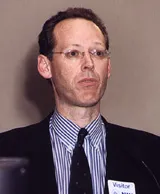
Paul Farmer
Human Design Chart
Biography
Second-oldest of six children, his upbringing was unconventional, with much of his childhood spent in an old school bus that became a mobile home in a trailer park in Birmingham, Alabama. His strong-willed father, nicknamed "The Warden", later moved the family onto a rebuilt boat, moored in a Florida Gulf Coast bayou. A brilliant student, Farmer won a scholarship to Duke University where he studied anthropology and became interested in Haiti. When he traveled there in 1983, he committed himself to doing something about the destitute conditions he found. After earning his bachelor’s degree from Duke in 1982, he went to Harvard Medical School, graduating in 1984. In 1987, he co-founded Partners in Health to treat the sick and train health workers in the poorest part of central Haiti. With his doctorate in medicine and medical anthropology from Harvard, he became professor of social medicine at the university as well as chairman of the division of social medicine at Brigham and Women’s Hospital. He learned French, Haitian Creole and Spanish, and in 1993, he won a $250,000 MacArthur Foundation "genius grant" which he gave to Partners in Health. In 2002, he did the same with a $250,000 Heinz Foundation Award.
Human Design Analysis: Paul Farmer as Manifesting Generator 1/3
Manifesting Generator 1/3 — Design at a Glance
Paul Farmer revealed himself as someone marked by a hybrid energy configuration: He possessed the constant power of a Generator, yet also had the ability to skip steps and quickly draw results into his life. This duality as a Manifesting Generator meant that he did not simply react to impulses but could implement them at a speed that often seemed surprising.
His life task was to respond to what actually spoke to him, rather than initiating things on his own. Once his sacral center gave a clear "yes," he could push projects forward with great intensity. However, this speed also carried risks: Paul Farmer tended to pursue multiple things at once, which sometimes led him into situations where he had overlooked important intermediate steps. In such moments, he had to backtrack and do catch-up work, which served as a source of frustration when he did not listen to his inner consent.
He only found deepest satisfaction when he lived out his creative power in "play mode" – that is, with fun and variety, rather than fixating on a single thing. His energy worked best when he had the freedom to switch between different interests, as long as these were confirmed by his inner authority. Thus, he transformed potential overextension into a dynamic, multifaceted productivity that was based on resonance and not rigid planning.
Sacral Authority
Paul Farmer, as a Generator, had sacral authority, which simplified his decision-making process, as strategy and inner guidance were the same. His design required that the emotional center remain open to allow this direct physical intuition. Decisions did not come through long analysis but as an immediate reaction to external stimuli. He was shown through a noticeable "gut feeling" or a sudden surge of energy. Physical signals like a soft grunting, humming, or an affirming "mm-hmm" served as reliable indicators. When his sacral motor engaged with a topic, he felt vital and alive. Then, he had an almost inexhaustible energy at his disposal, allowing him to tackle his work with great enthusiasm. This design predisposed him to go through life with joy and satisfaction, fully immersed in activities without the need for external purpose. The connection to an activated spleen center further supported his sacral authority. It gave him the ability to react particularly quickly and spontaneously. He had immediate access to his physical well-being and instinctive perception. This combination allowed him to reliably guide himself from these deep physical impulses, making his actions direct and authentic.
The 1/3 Profile — Investigator / Martyr
Paul Farmer's Human Design indicated a tendency towards an intensive learning process characterized by trial and error. He was someone who inseparably linked theoretical foundation with practical application. His profile as a researcher and experimenter (1/3) defined this approach: Line 1 demanded careful risk assessment and detailed work before he acted. Often, this led to internal tension as the need for complete planning clashed with the urge of Line 3 to actively try things out. Yet, it was precisely this combination that was his strength. Paul Farmer tested ideas both intellectually and in real-world application. When he deemed a method or approach valuable, he had rigorously put it to the test. His judgment was thus based on earned experience, not mere speculation. The mechanics of his lines also emphasized the importance of leadership through quality rather than quantity. He sought clear criteria to choose the right influences and used his intuition to evaluate the feasibility of his plans. He rejected aesthetic concepts without practical viability. His path was marked by the necessity of learning from mistakes to reach robust, tested insights. This created a basis of trust for his judgment, which rested on a synthesis of preparatory analysis and living practice.
Single Definition — Defined & Open Centers
Paul Farmer's Human Design indicates a tendency towards clear, identity-driven communication, fueled by a deep, reliable energy source. His defined G Center gave him a firm sense of self and direction; he knew who he was and where he stood without imposing this on others. This inner security flowed into his defined Throat Center, which served as a pivot point to translate this identity and the resulting impulses into the world. His voice was thus not just a product of the mind, but an expression of a constant inner truth.
The driving force behind this was his defined Sacral Center. As a Generator, he had an enormous vital energy, but it was only correctly activated by reacting to external stimuli. His energy was not available for arbitrary initiatives, but only for what he responded to with an inner 'yes'. This protected him from exhaustion as long as he did not try to implement mental plans against his sacral resonance.
At the same time, Paul Farmer was vulnerable to external influences through several open centers. His open Head Center picked up mental pressure and confusion from the environment; he tended to engage with questions that were not his own and sought inspiration to relieve this pressure. The open Ajna Center amplified this by making him receptive to foreign concepts and opinions that he could not consider as his own truth.
His open Heart Center lacked consistent willpower; he was not designed to make promises or prove himself through competitive thinking. Instead, he risked getting caught in a cycle of overcompensation and self-doubt if he tried to demonstrate his worth through performance. The open Solar Plexus Center made him a mirror for the emotions of others; he absorbed and amplified foreign feelings, which could lead to emotional instability if he did not recognize these as not his own. Finally, his open Root Center took on external stress, which could lead to a feeling of pressing restlessness that he could not resolve through his own actions but only through distancing or correct reaction.
Channels for logical leadership and authentic self-expression.
Paul Farmer's design showed a tendency towards collective, logical leadership based on trust and understanding of existing patterns. This attitude was shaped by the Alpha Animal Channel 7-31. This channel connects the G Center with the Throat Center and grants the ability to act as a leader who must first be recognized and invited. It was not about absolute authority, but about influence from a position that understands trends and guides society by respecting its needs.
At the same time, a deep, individual integrity was revealed through the Research Channel 34-10. This channel links the Sacral Center with the G Center and relies on the inner strength to hold onto one's own convictions. Paul Farmer lived this self-love and independence through authentic reactions from his personal authority. This allowed him to honor himself and lead others through this centeredness, showing how to act with inner strength and without guilt.
Additionally, Gates emphasized care and self-preservation. Gate 27 brought a genetic role of care that enriched activities with warmth and cared for both one's own clan and the preservation of the species. Gate 41 advanced evolutionary development by focusing on specific experiences and crises needed to deepen human meaning. Gate 28 challenged the decision to take risks according to personal strategy to recognize one's life purpose. Gate 46 promoted dedication to the process and the care of the body as a temple, while Gate 25 brought a mystical stance of innocence and individualization. Gate 14 ensured skillful power preservation and direction finding. Finally, Gate 59 contributed a genetic strategy of bonding and unification that overcame barriers for relationships.
Individual Circuitry — Circuit Signature
Paul Farmer's design directly connected the Identity and Sacral Centers. This connection, part of the Centering Circuit, created inner stability and firmness. Energy flowed between divine identity and vital life force, leading to a strong, individual conviction. Since there was no connection to the Throat Center, these deep convictions often remained unspoken or difficult to verbalize. The personality thus appeared fortified and brave, carried by a pulsing, creative energy that colored the entire design.
Parallel to this, the Understanding Circuit in Paul Farmer connected the Throat Center with the Identity Center. This channel, 'The Alpha Animal', allowed logical and strategic insights to be directly translated into communication. It was a rational, emotionless ratio aimed at improving structures and guiding society towards a better future. This connection enabled the sharing of clear, focused visions.
Although both circuits were active, they formed two separate energetic streams. The Centering Circuit provided inner, individual confirmation and strength, while the Understanding Circuit steered outer, rational communication and strategic alignment. Thus, Paul Farmer's design showed a clear separation between the inner, silent strength of his identity and the outer, clear articulation of logical concepts. This configuration shaped an attitude that was equally influenced by deep inner conviction and clear strategic communication, without these two areas energetically directly overlapping.
Right Angle Cross of the Unexpected 3
Paul Farmer revealed himself through a fundamental attitude that integrated the unexpected as a central component of his experiential world. His design was characterized by the configuration of the right cross of the Unexpected, meaning that his life was not structured through linear planning but rather through sudden turns and unexpected encounters. This mechanism suggested that Paul Farmer often recognized a deeper order or meaning in situations that appeared chaotic or confusing to others.
The right cross of the Unexpected describes a life dynamics in which the individual learns to dance with the unforeseeable rather than trying to control it. For Paul Farmer, this meant that his identity and path were not defined by rigid goals but by the ability to respond to what presented itself suddenly and often unexpectedly. It was an attitude of openness towards the unforeseeable.
This configuration challenged him to relinquish control and embrace the flow of events. The challenge was not to fall into frustration when plans failed but to use the new opportunities that arose from them. Paul Farmer's design showed that his strength lay in remaining clear in the moment of surprise and seizing the opportunities presented, rather than clinging to past expectations. This shaped the way he experienced and shaped the world.
Saturn Return · Uranus Opposition · Chiron Return · 2nd Saturn Return — Life Cycles
Paul Farmer's design indicated a tendency towards strategic realignment when inner maturity met outer structures. His life path was marked by moments where personal development and institutional responsibility converged.
In 1990, at the age of 31, he completed his Master's and Ph.D. in Medical Anthropology at Harvard University. This corresponded to his first Saturn Return, a cycle often marking the crystallization of years of groundwork. At this point, his professional foundation stabilized; what had previously been a search or experiment became a recognized and stable position. The Saturn Return served as a catalyst, solidifying his academic identity and granting him the authority to apply his knowledge in practice.
Later, in 2002 at the age of 43, he donated the Heinz Foundation prize to 'Partners in Health'. This fell during the Uranus Opposition, a phase demanding deep changes and the release of old ties. Instead of keeping the prize for himself, he used this transformative pressure point to redirect resources. The Uranus Opposition forces a reevaluation of values and structures; Paul Farmer responded by transforming his own accolade into collective impact. This demonstrated his ability to use disruptive energies not as a threat but as an opportunity for systemic improvement. His design allowed him to gain clarity in these critical life phases and deploy his resources where change was most urgently needed.
Manifesting Generator · Sacral Authority — Synthesis
Paul Farmer was a Manifestor Generator, whose life was marked by an unstoppable drive to action and a deep need to learn through doing. The connection between the Sacral Center and the Throat Center (Channel of the Alpha) gave him a voice that not only reflected his own needs but also those of collective leadership. He lived the dynamics of Profile 1/3 fully: thorough research and theoretical preparation went hand in hand with relentless experimentation and the willingness to grow from experiences. This combination of inner sacral authority and the urge to explore the world led to a life where he quickly responded to impulses and set changes in motion, always considering the impact of his actions on the larger whole.
A central tension in his design lay in the speed with which he could set things in motion and the necessity of not skipping important steps. As a Manifestor Generator, he possessed the ability to act swiftly, yet the sacral authority challenged him to listen to his body and ensure that the energy was truly present before initiating. This interplay between skipping steps and the need for thorough examination, coupled with a focus on logical leadership (Channel of the Alpha) and inner individuality (Centering Circuit), shaped his work approach and his pursuit of sustainable solutions.
2 Defined Channels
Incarnation Cross - Right Angle Cross of the Unexpected 3
Solar Return
The Solar Return shows the moment when the sun returns to its exact birth position - your personal solar year.
Life Cycles
Discover the life cycles with a detailed triple view (birth chart, cycle chart, composite).
Human Design Profile
- Strategy
- To respond - wait for something to respond to
- Authority
- Sacral Authority
- Profile
- 1/3 - Investigator / Martyr
- Definition
- Single Definition
- Incarnation Cross
- Right Angle Cross of the Unexpected 3
- Date of Birth
- 26.10.1959 07:59
- Place of Birth
- North Adams, MA, United States
Frequently Asked Questions
What was Paul Farmer's Human Design type?
What profile did Paul Farmer have in Human Design?
What authority guided Paul Farmer's decisions?
What incarnation cross did Paul Farmer have?
When was Paul Farmer born?
Discover your own Human Design
Are you also a Manifesting Generator? Find out in a personal reading how to unfold your multi-talents and direct your energy wisely.
More Personalities
Back to overviewAldair

Alizée

Angeli
Arletty
Artus

Balthus