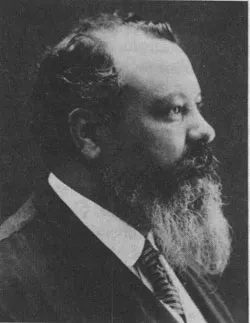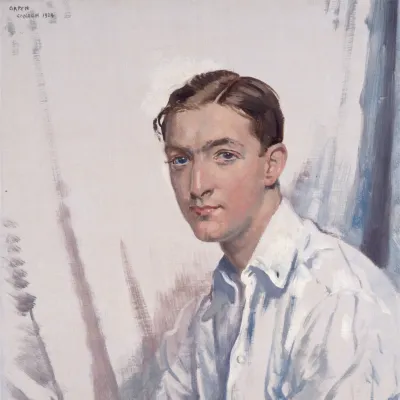
Paul Mellon
Human Design Chart
Biography
In 1957, when Fortune prepared its first list of the wealthiest Americans, it estimated that Paul Mellon, his sister Ailsa Mellon-Bruce, and his cousins Sarah Mellon and Richard King Mellon, were all among the richest eight people in the United States, with fortunes of between 400 and 700 million dollars each (around $3,500,000,000 and $6,100,000,000 in today's dollars).
Mellon's autobiography, Reflections in a Silver Spoon, was published in 1992. He died at his home, Oak Spring, in Upperville, Virginia, on 1 February 1999, aged 91.
Paul Mellon as a Manifestor 3/5 in Human Design
Manifestor 3/5 — Design at a Glance
Paul Mellon's Human Design marked him as a pioneer and visionary, destined to lead the world into a new future. Similar to an emperor in ancient Rome, he had the vision of a great whole but did not lead the necessary wars and battles himself. Instead, he sent others to conquer foreign lands for him. This style of leadership inevitably polarized: His great dreams were loved and followed by some, but disliked or even hated by others because of their grandeur. A central pain point was that he was often misunderstood because he thought beyond his environment.
To find the right followers, it was crucial for him to inform others about his visions at the right time and in detail. This strategy of informing was the key to minimizing resistance and gaining support. If Paul Mellon lived by this strategy and his inner authority, he was rewarded with a feeling of inner peace. If he deviated from this path, he felt instead a persistent, deep anger. His design suggested that clarity in communication and accepting polarization as part of his role as a leader were crucial for his inner balance.
Emotional Authority
Paul Mellon's inner authority was Emotional Authority, carried by his defined Emotional Center. This configuration fundamentally determined his decision-making: He was subject to a natural emotional wave that showed in a constant up and down of his feelings. The world always appeared colored by his current mood; in one moment, he could be totally enthusiastic about something, in the next, he could see the same thing negatively.
This first emotional impression, however, was not the final truth but only a snapshot. Quick, spontaneous decisions that directly stemmed from such an emotion often risked negative consequences. Instead, his mechanism required patience and the conscious taking of time to let a decision mature. It was about dressing up properly and asking oneself multiple times.
By sleeping on decisions multiple times, the intense feelings subsided. Paul Mellon thus gained emotional distance, which then allowed clarity and calmness to set in. Only then had he gone through the process and could make a well-founded choice. This mechanism was especially important for long-term decisions that significantly influenced his life path. His inner truth did not show in the first impulse but in the calm that remained after the emotional flood.
The 3/5 Profile — Martyr / Heretic
Paul Mellon's design was characterized by the Profile 3/5, which marked him as an experimental and later heroic figure. He primarily learned through his own experimentation and failure before offering his accumulated practical knowledge to others to solve their problems. This dynamic created a strong attraction, as others wanted to learn from his experiences, which flattered his role as a rescuer. At the same time, he carried the burden of public humiliation if experiments failed in front of many eyes.
Line 3 (Gate 45) emphasized personal connections and the urge to be included in the community. Failures here could lead to aggressive reactions, as he still wanted to be useful. Line 5 (Gate 22) gave him directness and the ability to find unconventional, mutative solutions in crises. This allowed him to break established rules when necessary, but also attracted negative projections.
Paul Mellon lived this tension between private experimentation and public heroism. He amassed a rich treasure of life experiences to present to others. His path was marked by constant boundary testing and the necessity to contribute despite possible rejection or humiliation. The combination of adventure and the expectation of being seen as a hero defined his fundamental interaction with the world. He was someone who had to know through his own actions to then help others, which made him both attractive and vulnerable.
Single Definition — Defined & Open Centers
Paul Mellon's design indicated a tendency towards deep emotional reflection before acting. His defined Solar Plexus Center served as an inner authority, meaning he did not make decisions in the moment but waited for the emotional wave to pass. This mechanism gave him a seductive aura; he used the time until emotional clarity arrived to carefully make well-considered agreements. His defined Throat Center also ensured a consistent, albeit limited, way of expression. His voice was reliable and honest, speaking directly from his emotional depth rather than reacting impulsively.
In contrast, Paul Mellon revealed through several open centers as being susceptible to external conditioning. His open Head Center tended to engage with questions that were not his own, leading to mental pressure and confusion if he did not trust his authority. His open Ajna Center also allowed for a flexible mind open to new ideas, but it could be conditioned to feel unsure or adopt the concepts of others as his own truth.
His open G Center meant he did not have a fixed, unchanging identity but rather one that he took on through relationships and places. He sought the right environment to flourish, as false places could lead to unhappiness. His open Heart Center made him vulnerable to the pressure to prove his worth, even though he did not actually need to prove anything. Finally, his open Sacral Center absorbed the energy of his environment, which could lead to exhaustion if he did not learn to set boundaries and rest, as he did not have a constant personal life force.
Channels for emotional openness and creative passion.
Paul Mellon's design indicated a tendency towards emotionally guided social interaction, heavily dependent on his inner mood wave. This dynamic was primarily shaped by the Openness Channel 22-12. This channel connected the Solar Plexus Center to the Throat Center, allowing him to creatively express passion, melancholy, and romance. Gate 22 brought in his individual emotional wave, while Gate 12 regulated openness with caution, directing it towards people with high mutational potential. Paul Mellon showed himself as someone who could not unfold his social impact impulsively but in accordance with his emotional state. When in the right mood, he could deeply touch others and inspire change through the quality of his voice and words. However, if forced into social situations against his emotional rhythm, this could lead to misunderstandings and harshness.
Additionally, other gates played a role in his design. Gate 47 in the Cross sought meaning in past experiences to gain clarity from confusion. Gate 45 in the Throat Center represented the tribal level and material attraction, connected with royal hierarchy. Gate 26 in the Heart Center promoted innovation and the ability to convince the conservative tribe. Gate 62 in the Personality emphasized logic, details, and patience in pattern recognition. Gate 23 allowed amoral understanding and the explanation of differences. Gate 36 stood for cyclical crisis movements and emotional development. Gate 56 in the Design Personality provided mental stimulation and figurative storytelling. Gate 37 connected friendship, organic communities, and mystical structures. These configurations showed a complex interaction between emotional depth, social impact, and intellectual structuring.
Individual Circuitry — Circuit Signature
Paul Mellon's design indicated a tendency towards emotional authenticity. He showed himself as someone who did not hide his inner truth but directly expressed it in words. This attitude stemmed from his simple definition: His Throat Center was directly connected to his Solar Plexus Center through the Openness Channel (Gates 12 and 22).
This connection formed the core of the Knowledge Circuit in him. While this circuit generally stands for new identity and transformation, in Paul Mellon only this specific channel was active. It connected exclusively the Throat and Solar Plexus Centers. Other centers of this circuit, such as the Head or G Center, were not part of this energetic chain in him.
The Openness Channel allowed him to express the waves of his emotions from the Solar Plexus unfiltered through the Throat Center. It was a pulsating, acoustic energy. Paul Mellon used this mechanism to confirm his own individuality. He translated his felt impulses into language, making his emotional wave audible and tangible for others. This was not a mental construct but a direct expression of his inner state. His identity thus showed in the ability to actually articulate what he felt.
Right Angle Cross of Rulership 2
Paul Mellon's Human Design profile featured the right cross of Governing, a configuration that points to a deeply rooted inclination towards authority and influence, not primarily defined by external titles or positions, but rather stemming from an internal, often unconscious dynamic of leadership and direction. Individuals with this expression tend to naturally assume leadership roles in their environment, without it always being a primary conscious intention. It was an energy that created structure and propelled decisions, focusing on the implementation of visions often carried by a sense of destiny or inevitable logic.
This mechanism meant that Paul Mellon often acted as a stabilizing force in situations requiring clear direction. The energy of this cross fostered a stance of taking responsibility, not out of a desire for control, but out of the necessity to bring order to chaos. It was about the ability to inspire and lead others through his own determination, with authority arising from the authenticity of his actions. This trait characterized his interactions and decisions, bringing a certain gravitas that commanded respect without the need for loud assertion. The dynamic was thus less a conscious act of ruling than a structural characteristic of his character, enabling him to point out clear paths in complex situations and encourage others to follow them.
Saturn Return · Uranus Opposition · Chiron Return · 2nd Saturn Return — Life Cycles
Paul Mellon's design was marked by a clear structuring into four critical life phases, each bringing specific developmental tasks. These cycles shaped his life path not as a random sequence but as rhythmic phases of maturation and reorientation.
The first Saturn Return marked the transition from youth to full responsibility. In this phase, early groundwork solidified into tangible results, creating a stable foundation for further life. It was a moment of consolidation, where Paul Mellon strengthened his position in the world.
The Uranus Opposition followed as a phase of necessary change. Here, tensions arose challenging established patterns, requiring a detachment from established norms. This cycle often brought unexpected turns, prompting Paul Mellon to explore new paths and free himself from limiting conditions.
The Chiron Return, the fulfillment cycle, appeared as a time of bloom. If Paul Mellon lived according to his strategy and authority, his incarnation cross unfolded increasingly. Meaning and purpose became experiential, and his life task came to the forefront. It was not a healing of wounds but the realization of his potential.
The second Saturn Return rounded off this process. It brought a deeper layer of responsibility and a final, mature integration of previous experiences. Paul Mellon used this time to secure his achievements and consolidate what had been accomplished. These four cycles together formed the architectural framework of his life, within which his individual nature could unfold.
Manifestor · Emotional Authority — Synthesis
Paul Mellon was a Manifestor, whose life was marked by a profound drive towards initiation and transformation. His design showed a strong ability to pioneer new paths and initiate changes through his visions (Manifestor Type, Channel of Openness 22/12). This trailblazing role was amplified by emotional authority, giving him time for decision maturation to fully grasp the implications of his initiatives. The profile as an experimenter and hero (3/5) indicated that he learned through personal experiences and used this knowledge to help others – a cycle of personal exploration and sharing insights.
A central paradox in his design lay in the tension between the desire for expression and the need for emotional clarity. The defined Throat Channel pointed to a strong voice, yet modulated by the emotional wave (Emotional Center, Channel 22/12). This led to a dynamic where he had impulses to act, but always had to weigh these in the context of his inner emotional world to act authentically and effectively. The combination of the Knowledge Circuit and the right cross of Governing pointed to an inner necessity to forge and share his own, innovative paths.
1 Defined Channel
Incarnation Cross - Right Angle Cross of Rulership 2
Solar Return
The Solar Return shows the moment when the sun returns to its exact birth position - your personal solar year.
Life Cycles
Discover the life cycles with a detailed triple view (birth chart, cycle chart, composite).
Human Design Profile
- Type
- Manifestor
- Strategy
- To inform others before acting
- Authority
- Emotional Authority
- Profile
- 3/5 - Martyr / Heretic
- Definition
- Single Definition
- Incarnation Cross
- Right Angle Cross of Rulership 2
- Date of Birth
- 11.06.1907 08:00
- Place of Birth
- Pittsburgh, PA, United States
Frequently Asked Questions
What was Paul Mellon's Human Design type?
What profile did Paul Mellon have?
What authority did Paul Mellon have?
What incarnation cross did Paul Mellon have?
When was Paul Mellon born?
Discover your own Human Design
Are you also a Manifestor? Find out in a personal reading how to use your initiation power peacefully and dissolve resistance.
More Personalities
Back to overviewChristian-Jaque
Kesha

Lucebert
Marilyn

Masaccio
Papus