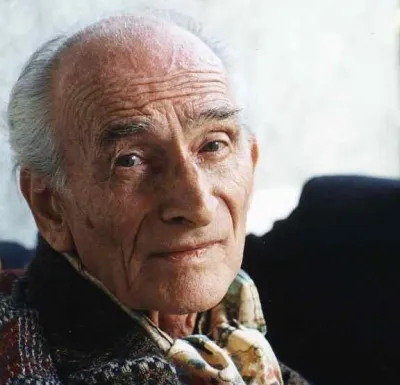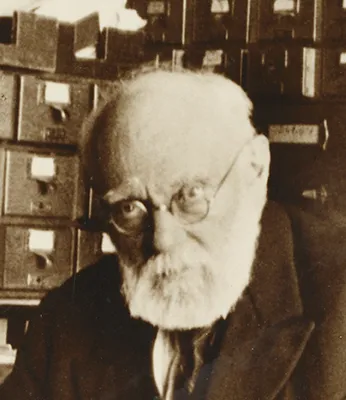
Paul Otlet
Human Design Chart
Biography
In 1907, following a huge international conference, Otlet and Henri La Fontaine created the Central Office of International Associations, which was renamed to the Union of International Associations in 1910, and which is still located in Brussels. They also created a great international center called at first Palais Mondial (World Palace), later, the Mundaneum to house the collections and activities of their various organizations and institutes.
Otlet and La Fontaine were peace activist who endorsed the internationalist politics of the League of Nations and itsInternational Institute of Intellectual Cooperation (the forerunner of UNESCO). Otlet and La Fontaine witnessed an unprecedented proliferation of information, resulting in the creation of new kinds of international organization. They saw in this organization the an emerging global polity, and wished to help solidify. La Fontaine won the Nobel Peace Prize in 1913.
He died 10 December 1944.
The Human Design of Paul Otlet: Manifesting Generator 1/3
Manifesting Generator 1/3 — Design at a Glance
Paul Otlet's design shows a tendency towards hybrid action: He possesses the constant, vital energy of a Manifesting Generator, yet also has the ability to accelerate processes and skip steps. This configuration combines endurance with lightning-fast implementation power.
As a Manifesting Generator, Paul Otlet was not destined to take initiative into an empty silence but rather to react to external impulses. His defined Sacral Center provided the necessary life force, yet the successful use of this energy strictly depended on inner consent. Only when the Sacral Center gave a clear 'yes' could he effectively utilize his speed without falling into frustration.
The danger lay in the tendency towards haste: Through his potential to skip important intermediate steps, Paul Otlet risked that results remained unstable and needed rework. Additionally, there was a preference for parallel activities; he reacted to various impulses simultaneously rather than proceeding linearly. This was not a lack of focus but a structural necessity of his design.
Deep satisfaction arose for Paul Otlet only through playful engagement with this multitasking ability. As long as he responded to life and regularly checked his projects against inner resonance, his speed became a tool of fulfillment instead of a source of friction. His creativity flourished in this mode of reactive playfulness, not through rigid planning or isolated initiative.
Emotional Authority
Paul Otlet's design shows a tendency towards strategic hesitation when making decisions. His inner authority was the defined Solar Plexus Center, meaning he was subject to a constant emotional wave. This mechanism generated an ongoing up and down of feelings; the world appeared colored by his current mood. In one moment, he could be enthusiastic about something, in the next see it negatively. However, this immediate feeling was only a snapshot, not necessarily the truth. Therefore, quick, spontaneous decisions often had negative effects.
For Paul Otlet, patience was essential. He needed time to let decisions mature, which frequently required multiple overnights. By hesitating and asking himself repeatedly, he gained emotional distance over time. The initial intense feelings subsided, allowing clarity and calmness to emerge. This process was particularly important for long-term decisions that influenced his life course. Since the Solar Plexus Center carried his authority, this emotional strategy took precedence over other defined centers in his chart. Only after the extreme mood swings had dissipated through time and sleep did true clarity set in.
The 1/3 Profile — Investigator / Martyr
Paul Otlet appeared as a synthesis of scientist and adventurer, whose design prescribed a constant cycle of theoretical learning and practical experimentation. His Profile 1/3 established a basic stance based on the tension between the drive for knowledge and the necessity of action. Line 1 drove him to learn more and more, which often resulted in a paralyzing uncertainty: the feeling of not knowing enough to act confidently. Simultaneously, Line 3 demanded that he simply start and gather experience through trial and error.
This mechanism compelled Paul Otlet to learn from his mistakes to escape the paralyzing fear of insufficient preparation. He tore down walls and crossed boundaries, not blindly but through a connection of observation and action. His judgments were particularly trustworthy as they were both theoretically grounded and practically tested in the field. The constant self-analysis of Line 3 ensured reflection in the here and now, while Line 1 provided strategic assessment of the situation. Thus, Paul Otlet developed unique competence: insights validated by his own practice, thus possessing high credibility. His path was marked by this continuous balancing between the desire for security through knowledge and the courage to act experimentally.
Split Definition — Defined & Open Centers
Paul Otlet's design established a tendency towards constant, willful presence, supported by defined Heart, G, and Sacral centers. His voice, guided by the defined Throat Center, served as a reliable anchor for communication; it spoke from identity (G), willpower (Heart) and vital energy (Sacral). This allowed him to articulate his direction and values clearly. The defined Solar Plexus center gave him emotional depth: He was designed to wait out the emotional wave before acting, fostering patience and clarity. The defined Root Center provided the necessary pressure for forward movement.
In contrast, open Head, Ajna, and Spleen centers revealed specific vulnerabilities. Paul Otlet tended to be distracted by external mental pressures or a search for inspiration rather than trusting inner answers. His open Ajna center made him receptive to foreign concepts that he did not always filter as his own truth. Particularly the open Spleen Center shaped his health consciousness: It generated latent fears of survival risks and a need for outer security. He was prone to clinging to people or situations that gave a false sense of well-being, tending towards spontaneous decisions to compensate for this insecurity – a trap of non-self as his intuition here was not reliable. His mechanics therefore required vigilance regarding environmental impulses concerning health and spontaneity while relying on his defined energy sources.
Channels & Gates
Paul Otlet's design established a tendency toward powerful, innovative direction-finding paired with the ability to shape material structures through willpower. This configuration combined creative life force with charismatic presence and emotional depth.
The Beat channel 14-2 connected the Sacral Center with the G Center. Gate 14 focused on the availability of material resources to drive mutation, while Gate 2 provided higher knowledge that directed movement through space and time. This combination created a powerful resource for creative life force that reinforced new directions. Paul Otlet was someone who could translate innovative impulses into material forms through sacral reactions without needing to plan ahead.
Parallelly, the Charisma channel 34-20 connected the Sacral Center with the Throat Center. Gate 34 delivered raw physiological energy which, via Gate 20 (the Now Gate), was quickly expressed. This allowed a charismatic manifestation in the here and now, where consciousness was crucial to avoid obsession. The speed of this generative power on manifestation made it difficult to sit still but created impressive achievements.
The material plane was marked by the Money Line channel 21-45. Gate 21 (the Hunter's Gate) sought control and service while Gate 45 (the Collector's Gate) represented authoritative voice and hierarchy. This channel emphasized responsibility for resources and survival in tribal context. Paul Otlet had to assert his will to earn money and master structures, with independence being a key factor.
Additionally, the Feelings Release channel 39-55 introduced an emotional wave of moodiness and provocation. Gate 39 provoked to strengthen mental perception while Gate 55 represented the mind. This connection promoted deep creativity and individual truth through living in the emotional wave between joy and sadness. Authenticity was central here to express spiritual depth.
Circuit Signature
Paul Otlet's design presented two separate, parallel operating energy fields. The Knowledge Circuit connected his Identity Center with the Sacral Center as well as the Solar Plexus Center with the Root Center. This configuration drove a pulsing urge towards individual innovation and transformation through new knowledge. The energy was acoustically effective in the present moment, marked by creative impulses and emotional waves.
Simultaneously, the Ego Circuit existed as a separate field connecting the Throat Center with the Heart Center. This circuit belonged to the tribal group and focused on cooperation and the joint creation of resources. As there was no connection to the Sacral Center here, constant life force was lacking; rest periods were therefore necessary for regenerating energy for collective resource creation. The energy was timeless and traditional.
A third aspect appeared in the Integration Circuit connecting the Throat Center with the Sacral Center. Here it was about gaining strength from reacting to life and expressing this through proper behavior and intuitive knowledge in the present moment. This supported the highest individuality.
The Shared Definition created a tension between the pulsing, individual urge for new knowledge (Knowledge Circle) and the traditional need for resource creation in the collective (Ego Circle). As these circles were not directly connected to each other, they existed as independent forces alongside one another. Paul Otlet had to learn to respect the rhythmic need for rest for resource-oriented work while simultaneously following the innovative impulse of his Identity and Sacral Centers.
Right Angle Cross of the Sleeping Phoenix 3
Paul Otlet's design carried the structure of the 'Right Phoenix Sleeping Cross'. This configuration laid a deeper, often unconscious layer of personality characterized by latent transformative power. It was not an obvious external feature but rather an archetypal identity in the background: the potential of the sleeping phoenix.
This mechanism pointed to internal dynamics linked with themes such as rebirth and profound transformation. The 'sleeping' aspect emphasized that this force did not necessarily manifest through visible actions or active deeds. Instead, it worked as a silent alignment of fate's thread, an inner stance preparing for major shifts without immediately initiating them.
For Paul Otlet, this meant his essential energy lay in this quiet, potential tension. The emphasis of his structure fell on this hidden capacity for transformation. It was there as a fundamental property of his design, ready to be activated but not forced by external pressure or conscious effort. It was a matter of inner alignment, an identity at the core waiting for renewal while maintaining outward calm and composure. This latent power shaped his existence as something containing more than it revealed – a sleeping potential forming the basis for deeper personal processes.
Saturn Return · Uranus Opposition · Chiron Return · 2nd Saturn Return — Life Cycles
Paul Otlet's design set a tendency towards structural responsibility-taking once the experimental youth phase ended. His first Saturn Return marked the transition to a phase where inner potential was captured by external reality and institutional form. This became concrete in 1895, at age 27, when he co-founded the Office International de Bibliographie with Henri La Fontaine. For his design, this was a typical moment: The first Saturn Return condensed years of groundwork into a viable result. Inner vision now received a firm shell enabling ideas to be organized sustainably and made effective in the world. This configuration describes translating abstract impulses into tangible structures that endure. Paul Otlet used this time to bring his intellectual approaches into an organized form going beyond personal experiments. The foundation was not an isolated event but the expression of mature development where responsibility for one's creation was taken up. Through this institutional anchoring, his influence could be sustained and a basis for future developments created.
Manifesting Generator · Emotional Authority — Synthesis
Paul Otlet was a Manifesting Generator whose life was marked by a constant interplay between the drive for rapid implementation and the necessity of emotional maturation. The connection of sacral energy (from the defined Sacral Center) with manifesting impulses (through active throat) gave him an impressive ability to set ideas in motion – a process often accompanied by an inner need for thorough examination and refinement. This dynamic was particularly evident in the interplay between the knowledge circuit and emotional authority: new insights were generated with energy from the Sacral Center but had to mature through the emotional wave before they could be communicated.
A central paradox in his design lay in the combination of experimental curiosity (Profile 1/3) and the tantric energy of the Beat channel. He was eager to learn by trial and error, exploring new paths while also carefully examining and directing the resulting insights into a coherent direction. This drive for innovation, coupled with the desire for validation and the capacity for transformation, shaped his approach to collecting and organizing knowledge – an endeavor that always presented him with the challenge of balancing rapid progress with sustainable quality.
4 Defined Channels
Incarnation Cross - Right Angle Cross of the Sleeping Phoenix 3
Solar Return
The Solar Return shows the moment when the sun returns to its exact birth position - your personal solar year.
Life Cycles
Discover the life cycles with a detailed triple view (birth chart, cycle chart, composite).
Human Design Profile
- Strategy
- To respond - wait for something to respond to
- Authority
- Emotional Authority
- Profile
- 1/3 - Investigator / Martyr
- Definition
- Split Definition
- Incarnation Cross
- Right Angle Cross of the Sleeping Phoenix 3
- Date of Birth
- 23.08.1868 15:00
- Place of Birth
- Brussel, BEL
Frequently Asked Questions
What was Paul Otlet's Human Design type?
What Profile did Paul Otlet have in Human Design?
Which Authority guided Paul Otlet's decisions?
Which incarnation cross did Paul Otlet carry?
When was Paul Otlet born?
Discover your own Human Design
Are you also a Manifesting Generator? Find out in a personal reading how to unfold your multi-talents and direct your energy wisely.
More Personalities
Back to overviewAldair

Alizée

Angeli

Arletty

Artus

Balthus