
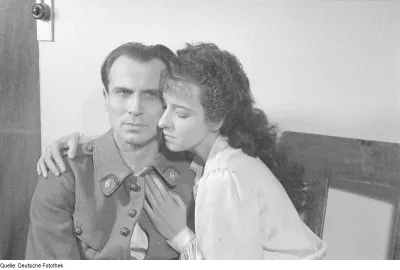
Paul Raynal
Human Design Chart
Biography
His plays are a triumphant success throughout the twentieth century and are replayed regularly in Paris.
He died 18 August 1971.
Paul Raynal — Generator with Profile 1/3
Generator 1/3 — Design at a Glance
Paul Raynal revealed himself as someone with remarkable inner endurance and a great potential for sustainable creative power. His design as a Generator endowed him with a wealth of sacral energy, making him appear like a strong workhorse – powerful and steady, provided he used this energy for tasks that truly engaged him. However, this energy was not available to him without limit but followed a specific rhythm: it only became effective when he responded to impulses from his environment.
The central dynamic in his life was to not initiate things himself but to wait until life sent a signal. When his sacral center then gave a clear „yes“, he could respond with full power and bring things into reality. Living by this principle led to a deep sense of fulfillment and satisfaction. If he went against this natural flow by forcing things or taking initiatives without feeling inner resonance, it often resulted in frustration and a noticeable energy drain. Two main challenges shaped his potential: on the one hand, the risk of wasting energy in inappropriate areas and thus overstepping boundaries, on the other hand, the obstacle of being held back from his true heart project, even though he was still full of drive. His path to effectiveness therefore always lay in reacting from the gut, not in planned pushing forward.
Emotional Authority
Paul Raynal revealed himself as someone who did not make decisions on the spot but let them ripen within him. His design carried Emotional Authority, meaning his defined Emotional Center was the inner guide for all important life decisions. This mechanism held true regardless of which other centers were defined in his graph; the emotional wave always took precedence.
His perception of the world was marked by a constant up and down of emotions. What seemed absolutely right in one moment could turn negative in the next. These fluctuations were merely snapshots, not an ultimate truth. Spontaneous decisions made out of immediate emotion often proved detrimental in his case, as they had not yet grasped the full scope of the situation.
Instead, his system required patience and time. He used the process of „sleeping on it“ to let intense emotions settle. Only when this emotional distance was gained did clarity and calmness set in. This journey through the emotional wave was crucial for long-term orientation. Only through this delay could he discern what his deeper, comprehensive truth was, rather than being guided by passing moods. His strength lay in the ability to trust the inner wave without immediately following it.
The 1/3 Profile — Investigator / Martyr
Paul Raynal's design showed a tendency towards pragmatic experimentation. He revealed himself as someone who combined theoretical knowledge with practical application to test insights through direct experience. This attitude stemmed from his Profile 1/3, the Researcher and Experimenter. Line 1 drove him to understand the fundamentals, while Line 3 compelled him to validate these through trial and error. Often, an inner conflict arose: the fear of not knowing enough held him back from implementation, yet only through actual testing and learning from mistakes did he gain confidence.
His Throat Center contained Gate 31, linking his communication with logical leadership. Here, it was about the interplay of light and darkness; leadership was not a one-sided directive but dependent on the reaction of followers. Simultaneously, Gate 27 in his Line 3 influenced him. This Gate addressed adaptation through bonds and dealing with abundance or greed. For Paul Raynal, this meant that he needed to know secret information or deep connections to care for others appropriately. His judgments were trustworthy because he had tested things both intellectually and practically to the core. His path was marked by the necessity of learning from his own mistakes to exercise grounded leadership.
Split Definition — Defined & Open Centers
Paul Raynal revealed himself as someone with a fixed, reliable self-identity and a clear sense of direction in life. His defined G Center gave him the ability to love himself and guide others to new paths without being dependent on them. This inner security formed the foundation of his presence.
As a Generator, he had a vast vital energy source, controlled by his defined Sacral Center. His design required him not to initiate but to wait for questions to respond with an enthusiastic "Yes" or "No". Only this way could he sustainably use his energy for fulfilling activities instead of falling into frustration and exhaustion.
His inner authority lay in his defined Solar Plexus Center. Paul Raynal needed to wait for the emotional wave before making decisions. Truth revealed itself to him only over time; spontaneous actions from emotional highs or lows led to chaos. Through patience, he achieved emotional clarity and strategically used the seductive depth of his feelings.
Additionally, his defined Spleen Center supported his existential consciousness. It provided intuitive, spontaneous warning signals in the "now" that protected his survival and well-being. This non-verbal recognition allowed him to make trustworthy judgments that the mind often overrode. His defined Root Center provided the constant pressure to move forward and manage stress, grounding him in the material world.
In contrast, his Head Center was open. Paul Raynal did not have a consistent way to process mental information. He tended to engage with doubts and questions that were not his own, or sought inspiration to relieve mental pressure. His open Ajna Center allowed a flexible mind open to new ideas but vulnerable to interpreting others' concepts as his own truth.
His open Throat Center meant he did not have a consistent way of communicating. He naturally attracted attention when he waited, rather than actively seeking it. Attempts to force attention led to stress and unpredictable expression. Finally, his Heart Center was open. Paul Raynal was not designed to prove willpower or make promises. He tended to fall into a cycle of self-disapproval through overcompensation and the attempt to prove his worth when he did not trust his inner authority.
Channels for intimacy, life purpose and inner determination.
Paul Raynal's design set a tendency towards intense, physical intimacy paired with a stubborn determination to follow his own path. This configuration showed someone who not only sought relationships but used them as a space for deep, emotional and creative fertility while being ready to fight for his individual integrity.
This character trait rooted in the Partnership Channel 59-6. This channel connected the sacral life energy with the emotional wave of the Solar Plexus. It created a powerful dynamic of intimacy that required patience. Paul Raynal had to wait for his emotional clarity to determine if a connection was truly fruitful. His intensity could quickly build trust but required time to avoid confusion and develop real closeness.
Parallel to this, the Life Struggle Channel 38-28 worked. It connected the pressure of the Root with the intuitive selection of the Spleen. This gave Paul Raynal the ability to find a deeper meaning in struggles. He did not seek conflict for its own sake but used resistance to define his individuality. His stubborn will to follow his own path served to discover a life purpose beyond mere survival.
A third aspect was the Discovery Channel 29-46. It connected the sacral Yes-Saying with the direction of the G Center. Here it was about fully immersing oneself in an experience without expectations. Paul Raynal learned through the complete living of processes. Only through this persistence and letting go of control could he make discoveries that ultimately made sense.
Additionally, gates like Gate 31 (Transmission of Leadership) and Gate 41 (evolutionary development through crisis) shaped his profile. Gate 27 brought genetic care, while Gate 36 understood the cyclical nature of crises as movement. Gate 15 organized collective behavior, Gate 18 corrected political structures, and Gate 3 created order from confusion through mutation. Together, these elements formed a design that learned and grew through experience, struggle, and intimacy.
Individual Circuitry — Circuit Signature
Paul Raynal revealed himself through a design with split definition, forming two parallel, not directly connected energy blocks. This created an inner tension between two different life areas that existed side by side without a common flow.
The first block connected the Solar Plexus, Sacral, and Identity Centers. Here the Meaning Finder Circuit worked through the Discovery Channel (Gates 46-29). It connected Identity and Sacral Center, fostering a cyclical, emotional search for the meaning of past experiences. These insights served to share with the collective to learn together. Parallel to this, the Archer Circuit worked through the Partnership Channel (Gates 59-6) in the same block. It connected Sacral and Solar Plexus Centers, activating primal energies of protection, care, and the preservation of one's genetics and family. This combination underscored the need for nourishment, care, and the defense of one's clan.
The second, separate block included Spleen and Root Centers. Here the Knowledge Circuit worked through the Life Struggle Channel (Gates 28-38). This connection linked instinctive intelligence with the energy of survival struggle. It served to strengthen one's unique identity through mutations and deviations from the known. This block stood for the primal path of gaining new knowledge and bringing change through the expression of individuality into the world.
Since the two blocks were not connected, these forces existed as separate, equal poles: on the one hand, emotional, social, and familial rooting, on the other hand, the instinctive, individual struggle for independent knowledge and transformation.
Right Angle Cross of the Unexpected 2
Paul Raynals design is characterized by a specific tension between the familiar and the sudden, unexpected change. This configuration, known as the Unexpected Right Cross, shaped a life dynamic in which routine was often interrupted by surprising turns. This was not arbitrary chaos but a deeper mechanical necessity to question and reorder the structure of everyday life.
For Paul Raynal, this meant that he might feel uncomfortable or constrained during phases of stability until an external event or an inner realization disrupted the status quo. This Cross configuration linked the energy of transformation with that of the sudden impulse. It called for a stance of open awareness, not passive waiting.
The mechanics of this design suggest that Paul Raynal experienced his greatest learning processes and personal breakthroughs precisely in these moments of surprise. What initially appeared as a disturbance or deviation from the plan often turned out to be a necessary step in his development. His path was less defined by linear planning than by the ability to integrate the unexpected and derive new directions from it. This dynamic required a certain flexibility to avoid getting stuck in frustration over the lack of predictability and instead to use the energy of the moment.
Saturn Return · Uranus Opposition · Chiron Return · 2nd Saturn Return — Life Cycles
Paul Raynals design indicated a tendency towards structural condensation, which was evident in clear life phases. The first Saturn return often marked the transition from preparation to established position. This was confirmed in 1912, when he was 27 years old and promoted in Paris – a moment when years of academic groundwork condensed into a solid, public result.
Later, the Uranus opposition, a cycle that generates inner tensions between established structures and the urge for new, often disruptive expressive power, came into play. This energy was evident in 1924, when he was 39 years old and wrote "Le Tombeau sous l'Arc de Triomphe". The work represented a creative breakthrough, leaving old forms behind and establishing a new, sharper voice.
However, the second Saturn return did not bring further stabilization but rather a confrontation with the fragility of these structures. In 1940, at the age of 55, his home in L’Oise was looted by German soldiers. This event reflected the harsh reality of this cycle: the previous order was violently called into question, initiating a phase of crisis and loss, in which external security crumbled.
Generator · Emotional Authority — Synthesis
Paul Raynal was a Generator whose life was marked by a profound, sacral energy. This energy, combined with his defined G Center, gave him a clear direction and the ability to inspire others—especially through the sharing of insights he gained through intensive research and experimentation (Profile 1/3). His drive lay in acquiring and transforming knowledge, which was evident in the recurring career moments marked by the cycles of Saturn Returns and Uranus Oppositions. Thus, he fully embodied the dynamics of the Knowledge Circuit by constantly exploring new paths and sharing his unique perspective.
At the same time, his emotional authority center revealed a central paradox. Although he possessed immense work capacity, he needed time to let decisions mature and to ride the emotional wave. The Channel of Union also pointed to a deep intimacy and the ability to form intense relationships, but these could be complicated by spontaneity and the ignoring of the sacral response. This led to a tension between his desire to immerse himself in his work and share his insights and the necessity of surrendering to emotional clarity to achieve authentic and lasting results.
3 Defined Channels
Incarnation Cross - Right Angle Cross of the Unexpected 2
Solar Return
The Solar Return shows the moment when the sun returns to its exact birth position - your personal solar year.
Life Cycles
Discover the life cycles with a detailed triple view (birth chart, cycle chart, composite).
Human Design Profile
- Type
- Generator
- Strategy
- To respond - wait for something to respond to
- Authority
- Emotional Authority
- Profile
- 1/3 - Investigator / Martyr
- Definition
- Split Definition
- Incarnation Cross
- Right Angle Cross of the Unexpected 2
- Date of Birth
- 25.07.1885 01:00
- Place of Birth
- Narbonne, France
Frequently Asked Questions
What was Paul Raynal's Human Design type?
What profile did Paul Raynal have in Human Design?
What authority guided Paul Raynal?
What incarnation cross did Paul Raynal have?
When was Paul Raynal born?
Discover your own Human Design
Are you also a Generator? Find out in a personal reading how to use your sacral energy correctly and discover deep satisfaction.
More Personalities
Back to overviewAaliyah

Alain-Fournier

Alexia

Angèle

Angeli

Anne-Marie
