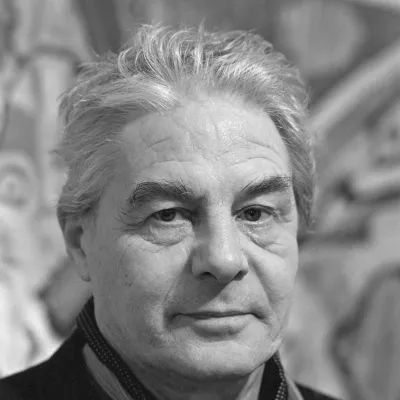
Photo: Wikimedia Commons
Paul Verlaine
Human Design Chart
Biography
His personal life was unhappy and disorganized. Verlaine's marriage to Mathilde Maute de Fleuville in 1870 was strained by his bohemian habits and homosexual relationship with Rimbaud. It ended in a legal separation in 1872 and divorce in 1885. One source of unhappiness for him was his lover, Rimbaud, whom he shot after a quarrel in 1873. Verlaine was imprisoned for two years for his crime.
His indulgences in alcohol and debauchery helped lead to his death on 8 January 1896, Paris, France.
Human Design Analysis: Paul Verlaine as Manifestor 1/3
Manifestor 1/3 — Design at a Glance
Paul Verlaine's design established him as a pioneer and visionary whose nature it was to actively influence his environment. He acted similarly to an emperor in ancient Rome: he had the grand vision of an empire but did not lead the necessary wars himself; instead, he sent others to conquer foreign lands for him. This structure brought with it a specific conflict. Because he often thought further ahead than his surroundings, Paul Verlaine was misunderstood and polarizing. His great dreams led some people to follow and love him while others rejected or hated him because of these visions. To control this dynamic, it was crucial that he proactively informed his environment. Only through timely and precise communication of his intentions could the right followers find him. If Paul Verlaine lived according to this strategy of informing and followed his inner authority, he was rewarded with a sense of inner peace. Ignoring this design and acting without information instead revealed an ongoing deep anger within him. His path involved avoiding misunderstandings through clear communication and thus achieving the state of peace as a natural consequence of his actions.
Emotional Authority
Paul Verlaine showed an internal decision-making structure that necessarily required time and distance. His design carried Emotional Authority, meaning his defined emotional center was the source of his inner truth. This configuration generated a constant wave of emotions: his perception of the world fluctuated strongly between enthusiasm and rejection depending on the current mood state. An intensely felt emotion in the moment was not a final realization but only a fleeting snapshot.
Quick, spontaneous actions that arose directly from this emotional heat often turned out to be faulty or harmful to his life path. The mechanics of his design therefore required patience and conscious waiting for clarity. Paul Verlaine had to let decisions mature ideally through sleeping on them to neutralize the influence of passing waves. This process of 'taking time' functioned as a protective mechanism against impulsive misconduct. Only when intense feelings subsided and emotional distance was gained did deep calm set in. This serenity marked the point where his true inner authority came into play. Especially for long-term, life-defining questions, this temporal buffer was indispensable to ensure that the decision made did not stem from a passing mood but rather aligned with his actual inner truth.
The 1/3 Profile — Investigator / Martyr
Paul Verlaine's design indicated a tendency towards an intensive process of theoretical preparation and practical experimentation. As a 1/3 profile (Researcher/Experimenter), he understood life through learning and the mechanism of trial and error. Line 1, fueled by Gate 21, brought a strong need for control, guidance, and earning respect through knowledge. This often created fear of not knowing enough before acting. At the same time, line 3, connected to Gate 38, drove him to simply start and learn from mistakes. This internal conflict between theoretical caution and impulsive drive towards practical testing shaped his experiential world. Mistakes were thus essential learning steps.
This configuration created a particular authenticity in his judgment. When Paul Verlaine considered something good, this assessment was the result of double-checking: theoretically through line 1 and practically through the experience of line 3. His design required him to form alliances to maintain vitality, with egoistic unions weakening energy. The tension between the desire for security through knowledge and the necessary risk of testing was constitutive for how he dealt with his environment. His insights were thus self-earned and tested thoroughly, forming a trustworthy judgment.
Split Definition — Defined & Open Centers
Paul Verlaine's Human Design profile indicated a tendency towards constant mental and emotional pressure that translated directly into communication. His Head Center and Ajna Center were defined, creating a steady internal dialogue of inspiration, questions, and conceptual thinking. This mental input flowed into his defined Throat Center, serving as the anchor to reliably convey these thoughts and concepts outward. Additionally, a defined Solar Plexus Center endowed expression with deep emotional wave motion; the truth of his words revealed itself over time rather than in the moment of speaking. Furthermore, a defined Root Center propelled this process forward with a constant, adrenaline-fueled survival drive.
At the same time, he lacked consistent inner resources for identity and generative energy. His G Center was open, meaning he did not have a fixed direction or identity but rather situational orientation from his environment. This led to questioning who he truly was or where true love could be found instead of having stable internal alignment. Similarly, his Heart Center was open; lacking consistent willpower, he was vulnerable to the pressure of needing to make promises to prove his worth, often ending in a cycle of disappointment due to the lack of energy for such commitments. His Sacral Center was also open, indicating no constant generative life force. He tended to drive himself with borrowed energy from others, leading to exhaustion when not listening to his inner authority and taking breaks. Moreover, his Spleen Center was open, making him mistrust spontaneous decisions and susceptible to fears absorbed from the environment rather than relying on a reliable intuitive health.
The core conflict lay in the separation of Thinking (defined) and Doing/Energy (open Sacral/Heart): there was strong mental and emotional pressure to act but no constant generative energy for it. The strategy involved waiting for an emotional wave for clarity and allowing initiation through the environment for direction and energy, rather than initiating from the mind.
Channel 63-4: Logic — Channels & Gates
Paul Verlaine's design showed a person where logical skepticism constantly clashed with emotional intensity and the drive for experience. His profile set up dynamics wherein intellectual clarity was often interrupted by passion or the desire for transformation. The Logic Channel 63-4 connected his Head Center to his Ajna Center; this doubting mind filtered patterns to test their consistency. Doubt here was essential in seeking truth, as logic without verification could be false. This process created an active mind searching for verifiable answers and rejecting unfounded beliefs.
Simultaneously, other channels were driven by different impulses. The Openness Channel 22-12 connected his Solar Plexus Center to his Throat Center; here expression depended on the emotional wave: mood, melancholy, and passion were articulated through voice. Gate 12 ensured caution while limiting openness to interactions with high mutative potential. This channel allowed touching or mutating others by tone and timing, provided one followed an inner rhythm rather than acting impulsively.
Parallel to this, the Recognition Channel 41-30 propelled energy forward. It connected his Root Center to his Solar Plexus Center and generated through Gate 41 a drive for new experiences to quell restlessness. This physiological pressure intensified in the Solar Plexus, creating an intense need for emotional satisfaction and jumping into the unknown. The tension lay in the logical filter of Channel 63-4 constantly working against the impulsive waves of Channels 22-12 and 41-30. Paul Verlaine lived in this friction: his mind sought consistent patterns while heart and voice yearned for emotional resonance and new experiences, leading to a complex, often contradictory inner landscape.
Collective Circuitry — Circuit Signature
Paul Verlaine's design presented a divided structure: two energetically isolated blocks existing parallel without direct exchange. One block connected the Head Center with the Ajna Center (Understanding Circuit). Here focused, future-oriented logic operated - pure ratio free from emotional coloring. The other block encompassed Throat, Solar Plexus, and Root Centers. These were linked through two circuits: the Knowledge Circuit (Openness Channel) and the Finding Meaning Circuit (Recognition Channel).
In the first part of this block, pulsating acoustic energy flowed from identity through emotional waves to expression in the Throat Center. It was about conveying unique individual insight. In the second part of the same block, cyclical downward-directed emotion drove energy from the Solar Plexus into the Root Center (Tension/Action). Here reflection on past experiences took precedence; felt experiences were shared to enable collective learning.
The dynamics lay in contrast: The isolated mind-block sought rational clarity and future perspective. The connected expression-block lived out of emotional cycles, melancholy, and processing past experiences. Paul Verlaine knew no direct bridge between cool strategy and emotional depth; they existed as separate forces. His expression in the Throat Center was either driven by this pulsating individuality or cyclical emotion - never from the isolated logic that rested parallel within him.
Right Angle Cross of Tension 1
Paul Verlaines design carried the signature of the right cross of tension 1. This configuration laid a fundamental dynamic of inner tension and pressure, without specific behavioral patterns or character traits being derived from it in the provided material. The mechanics of this cross were not further elaborated upon in the given facts; it remained at naming the name without detailed description of how this tension manifested in everyday life or what concrete challenges it brought.
Without additional character or behavior descriptions, no connection could be made to specific life events or typical reactions. The design merely pointed to the existence of this energetic structure without clarity on whether it expressed itself as a creative force, as a source of conflict, or otherwise. Without further information, the impact of this cross on Paul Verlaines personality and life path remained undetermined. The analysis was thus limited to noting the presence of this configuration in the chart without drawing conclusions about its practical relevance or significance for his experience. It amounted to a neutral naming of a structural fact that was isolated in this context and did not allow further interpretation.
Saturn Return · Uranus Opposition · Chiron Return — Life Cycles
Paul Verlaines life was marked by existential turning points condensed into planetary cycles. At 28 years old, in 1872, the first Saturn return occurred. This cycle often marks an identity crisis and confrontation with personal limits. Verlaine began a homosexual relationship with Arthur Rimbaud at this time and oscillated between his wife Mathilde, his mother, and Rimbaud. This turbulent phase showed the painful search for structure and belonging that the Saturn cycle typically demands.
Ten years later, in 1884 at age 40, Uranus opposition took effect. This cycle often brings creative emancipation and a desire to break free from old bonds. Verlaine published his poetry collection “Jadis et naguère” this year. The publication was an attempt to find artistic liberation and new forms of expression driven by the dynamic energy of Uranus, which forces change.
The Chiron return around age 49, here in 1893, is a fulfillment cycle of bloom. In this phase, the individual incarnation cross increasingly unfolds in life; meaning and purpose become experiential if one lives according to strategy and authority. Verlaine attempted to run for the Académie française that year. This step was not a sign of healing old wounds but an expression of striving for recognition and integration of his life task into established structures, a typical attempt to find ones place in the larger whole.
Manifestor · Emotional Authority — Synthesis
Paul Verlaines life was characterized by a profound drive towards knowledge and the desire to express this understanding. The combination of defined mental energy (Head-Ajna Center) and the profile of researcher/experimenter (1/3) points to a mind that constantly questioned, analyzed patterns (Channel 63-4), and sought stability. This process was not only intellectual but also emotionally charged, as emotional authority required deep engagement with personal feelings before decisions could be made. The recurring cycles – especially the Saturn return at age 28, which coincided with an intense relationship – showed phases of profound examination and realignment of personal expression.
Central to Paul Verlaines life was the tension field between the need for independent thinking and emotional reaction to the world. The Manifestor type, paired with the knowledge circuit, indicated a natural ability to chart new paths and inspire others. At the same time, emotional authority required a process of feeling maturation that tempered the impulsive nature of the manifestor and could lead to inner conflicts – particularly in relationships (documented event during Saturn return). This dynamic between the desire for free expression and the necessity of emotional clarity shaped his life approach.
3 Defined Channels
Incarnation Cross - Right Angle Cross of Tension 1
Solar Return
The Solar Return shows the moment when the sun returns to its exact birth position - your personal solar year.
Life Cycles
Discover the life cycles with a detailed triple view (birth chart, cycle chart, composite).
Human Design Profile
- Type
- Manifestor
- Strategy
- To inform others before acting
- Authority
- Emotional Authority
- Profile
- 1/3 - Investigator / Martyr
- Definition
- Split Definition
- Incarnation Cross
- Right Angle Cross of Tension 1
- Date of Birth
- 30.03.1844 21:00
- Place of Birth
- Metz, France
Frequently Asked Questions
What was Paul Verlaine's Human Design type?
What Profile did Paul Verlaine have in Human Design?
What Authority did Paul Verlaine possess?
What incarnation cross did Paul Verlaine have?
When was Paul Verlaine born?
Discover your own Human Design
Are you also a Manifestor? Find out in a personal reading how to use your initiation power peacefully and dissolve resistance.
More Personalities
Back to overviewAlain-Fournier
Angeli
Christian-Jaque
Juninho
Kesha

Lucebert