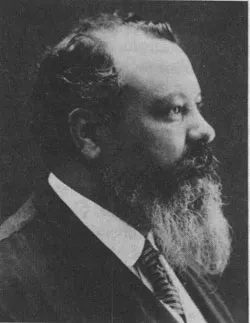
Philip Johnson
Human Design Chart
Biography
Before becoming one of architecture’s most potent forces, Johnson was a client, critic, author, historian, and museum director. He majored in philosophy at Harvard, 1927 where he earned his A.B. in architectural history in 1930. Upon graduation he became the first director of the Museum of Modern Art’s (MoMA) Dept of Architecture, 1932-34, returning to that post again in 1946-54. In between, Johnson became the co-founder of what he coined the "international style." Ushering in a new generation of glass towers, the post-war architects of this school followed a philosophy that people felt more secure behind glass walls and thus more connected with their environment.
He had returned to Harvard’s Graduate School of Design in 1940, receiving a B. Arch in 1943 and practicing in Cambridge, MA, until 1946. While back at MoMA, he designed a residence for himself in Connecticut in 1949 for his Masters degree thesis. This is his famous Glass House, a see-through frame structure that was the first of its type in America. He still lives in this home, one that has became a blueprint for Modern architecture. However, he would eventually become critical of the movement he pioneered – dubbing so-called Modern architecture and exemplified by his own home, as "too old and icy and flat."
With his mentor, Mies Van Der Rohe, he worked on New York’s Seagram Building, 1958, that has been called America’s finest high-rise building. He worked with Richard Foster from 1964 to 1967, and then with John Burgee.
What does Manifestor 1/3 mean for Philip Johnson?
Manifestor 1/3 — Design at a Glance
Philip Johnson's design inclines him towards proactive action and the initiative to change his environment. As a Manifestor, he is destined to set impulses and lead the world in new directions, much like an emperor in ancient Rome who pursued visions of a great empire without engaging in battle himself. His nature lies in conquering foreign territories for his ideas by leading others or utilizing their energy.
However, this configuration brings with it a specific pain point: the feeling of being misunderstood. Since Philip Johnson's thinking often extends beyond that of his surroundings, he inevitably polarizes people. Some love his grand vision and form an allegiance; others reject him precisely because of his visionary superiority, sometimes even hating him for it.
The strategy of his design involves minimizing this friction by informing others timely and accurately about his intentions. Through this communication, the right environment can be found to support him rather than resist him. If he follows this strategy, he is rewarded with a deep sense of inner peace. Conversely, if he acts against his design—without prior information—he experiences persistent, deep-seated anger. His chart thus describes a path from initial polarization to peace through clear communication of his visions.
Emotional Authority
Philip Johnson's design indicated a tendency towards emotional depth and wave-like decision-making. He was someone whose inner authority was shaped by the defined Emotional Center. In Human Design mechanics, the Emotional Center always carries authority once it is defined—regardless of other Centers in the chart. This configuration was subject to constant emotional waves, an up-and-down of feelings that colored his perception of the world through his current mood. What appeared inspiring at one moment could seem negative the next. His immediate feeling was only a snapshot and not necessarily his truth. Quick, spontaneous decisions made from such emotions could therefore have negative consequences.
The mechanics required patience: The more time Philip Johnson took to let a decision ripen, the deeper and more comprehensive he could see. This meant that he should sleep on decisions and ask himself multiple times. Over time, intense feelings subsided, emotional distance was gained, clarity and calmness emerged. This process was particularly crucial for long-term life decisions. By waiting, he gained the necessary distance from initial impulses to find his true direction.
The 1/3 Profile — Investigator / Martyr
Philip Johnson's design inclines towards intensive research and experimental learning. As a person with the Profile 1/3, the Researcher/Experimentor, he was someone who always had to validate theoretical knowledge (Line 1) through practical verification (Line 3). His life path was characterized by the principle of "trial and error". Line 1 gathered experiences as a foundation for development, while Line 3 demanded adaptability in unpredictable situations. Shocks or unexpected events served not as obstacles but as catalysts for spontaneous reactions and learning processes.
This profile combines scientific curiosity with adventurous implementation – much like a researcher who is also an explorer. When Philip Johnson made a decision or evaluated something, it was based on double-checking: both theoretically and practically. His judgment was thus secured by personal experience and maturity. The energy of Line 3 drove him to learn from mistakes and adapt quickly, while Line 1 ensured that these adaptations were based on accumulated knowledge. This interplay created a life task where self-acquired insights took center stage. Through this process of renewal and correct conclusion, he transformed old forms into new, valuable components, with each step legitimized by direct experience.
Split Definition — Defined & Open Centers
Philip Johnson's design indicated a tendency towards constant mental pressure and conceptual work. The definition between the Head Center and Ajna Center created a permanent impulse to question and understand connections. This mental process was his constant companion; he always thought in specific patterns. However, since these centers did not have their own energy for implementation, the challenge lay in not relieving the pressure through hasty actions but rather using it as inspiration for others. His defined Throat Center allowed him to reliably express these thoughts and transform them into communication or action when the right moment arrived.
At the same time, Philip Johnson possessed a firm willpower through his defined Heart Center. He controlled his resources himself, kept promises, and sought recognition for his contribution. This ego strength was linked with the defined Solar Plexus, which acted as an inner authority. Here lay the necessity to wait out emotional waves to gain clarity. Ideally, he avoided impulsive decisions at the highs or lows of these waves through patience, which gave him deep emotional intelligence.
In contrast, his vulnerable areas were revealed in the G and Sacral Centers. The open G Center meant a lack of firm identity; he tended to reflect himself in environments and sought direction through external initiations rather than asserting it himself. The open Sacral Center made him susceptible to others' energy. He could easily become overburdened since he did not have a constant vital force but responded to answers from the environment. There was a risk of depleting borrowed energy instead of setting clear boundaries and adequately recovering.
Channels for clear intuition, logical structure and courageous deeds.
Philip Johnson's design was characterized by a sharp, critical mind and a deep need for structural harmony. The Logic Channel 63-4 connected the Head Center with the Ajna Center; this created a doubting intellect that continuously filtered patterns to test their consistency. Skepticism here was not an obstacle but rather the prerequisite for logical proof – an answer was only considered true if it could be practically verified. This analytical drive merged with the Judgment Channel 58-18 between Root and Spleen Centers, driven by vitality (Gate 58) and a need for correctness (Gate 18), seeking perfection by comparing what is healthy and feasible to satisfy the collective in a perfect pattern.
Alongside this intellectual sharpness, the Synthesis Channel 19-49 between Root and Solar Plexus Centers worked. It connected the pressure of belonging (Gate 19) with emotional principles (Gate 49), regulating loyalty and tribal affiliation through emotional waves of acceptance or rejection. This created a fine sensitivity for one's position in the whole.
His expression was marked by the Brain Wave Channel 57-20, which translated intuitive insight (Gate 57) directly into the present moment (Gate 20). Here, deep, instinctive knowledge spontaneously expressed itself often faster than others could process it. Parallel to this, the Money Line Channel 21-45 between Heart and Throat Centers defined his relationship with the material world. As a Manifestor channel, it demanded control over resources (Gate 45) and active action (Gate 21), driving him to take responsibility and maintain his own rhythm at work.
Individual Gates like Gate 53 (Freedom/Pioneer Spirit) and Gate 54 (Connection of Worldliness and Spirituality) underscored his drive for new paths and success experiences as prerequisites for spiritual development, while Gate 37 emphasized the importance of organic community structures.
Collective Circuitry — Circuit Signature
Philip Johnson's design indicated a tendency towards innovative, impulsive insights that directly manifested in his communicative expression ability. The Knowledge Circuit connected his Throat Center with the Spleen through Channel 20-57 (Flash of Inspiration). This allowed spontaneous, creative intuitions which he immediately expressed verbally or action-oriented – a pulsating energy of 'now'.
Parallel to this, the Understanding Circuit worked in two separate strands. On one hand, it connected the Head Center with Ajna (Channel 63-4, Logic), promoting focused visual strategies and rational concepts. On the other hand, the Spleen was linked to the Root Center (Channel 18-58, Judgment), describing an instinctive ability for prioritization and logical filtering of information. These two parts were energetically not connected.
The Ego Circuit also presented two isolated areas. The connection between Throat and Heart Centers (Channel 45-21, Money Line) supported the joint creation of material resources through authoritative expression. Separately, the Solar Plexus linked to the Root Center (Channel 49-19, Synthesis), connecting emotional waves with the necessity of rest periods for regeneration. As Philip Johnson had a split definition, these energies existed as parallel, non-directly flowing energy fields: one strand from Head and Ajna, another broader block including Spleen, Root, Solar Plexus, Throat, and Heart.
Right Angle Cross of Penetration 2
Philip Johnson's design indicated a tendency towards profound and often painful breakthroughs. He was someone who found his authentic identity through intense internal conflicts and external collisions. This configuration, the right cross of penetration 2, described a process where old structures were not simply improved but radically broken through.
The mechanics of this design suggested that Philip Johnson had to learn how to use the power of resistance and crisis. Instead of retreating from challenges, he was encouraged to confront them head-on. This did not happen out of recklessness, but as a necessary step towards self-awareness. The penetration symbolized here the moment when illusions shattered, making way for an unvarnished truth.
For him, this meant that growth often came with loss or destruction. His strength lay not in harmonious progress, but in his ability to create something new from ruins. This path required courage to surpass personal limits and face uncomfortable realities. Only through this rigorous test could he recognize and live his true nature. The design thus illustrated a life path defined by crises leading ultimately to deeper integrity.
Saturn Return · Uranus Opposition · Chiron Return · 2nd Saturn Return — Life Cycles
Philip Johnson's design was characterized by a clear focus on structural integrity and public responsibility. His career followed a precise rhythm of consolidation and renewal, with external milestones marking phases of inner development. In 1932, at the age of 26, he became the first director of the architecture department at the Museum of Modern Art (MoMA). This coincided with his first Saturn return, a cycle in which years of groundwork often condense into a solid institutional position and long-term responsibility.
The following phase brought necessary renewal. In 1946, at age 40, he returned to the directorship of the architecture department at MoMA. This coincided with the Uranus opposition, a time when old structures often need to break open to make room for new impulses and changed perspectives. The return here signaled not stagnation but a conscious realignment within the same framework.
The peak of this development was in 1958, when he worked at age 52 with Mies Van Der Rohe on the Seagram Building in New York. This marked his Chiron return, a fulfillment cycle of bloom. During this period, one's incarnation cross increasingly unfolds in life; meaning and purpose become experiential. Collaboration on an iconic work was not just activity but concrete realization of his deepest design, where personal vision and public impact became one.
Manifestor · Emotional Authority — Synthesis
Philip Johnson was a Manifestor who sought consistency through constant questioning and filtering (Channel 63-4). This mental activity, fueled by a defined Head and Ajna Centers, shaped his approach as a researcher and experimenter (Profile 1/3). He developed insights through repeated testing and validation before sharing them – a process that allowed him to explore new paths and advance innovations. Emotional authority required time for decision maturation, modifying the impulsive nature of a Manifestor and demanding deeper engagement with inspirations.
A central paradox in his design lay in the interplay between the drive for innovation (Knowledge Circuit) and the need for emotional clarity. He was a pioneer whose visions often rested on doubts filtered through logical experimentation. At the same time, he needed time to emotionally process these insights before pouring them into concrete forms – a tension between quick thinking and slow decision-making that characterized his creative work and showed in documented professional events.
5 Defined Channels
Incarnation Cross - Right Angle Cross of Penetration 2
Solar Return
The Solar Return shows the moment when the sun returns to its exact birth position - your personal solar year.
Life Cycles
Discover the life cycles with a detailed triple view (birth chart, cycle chart, composite).
Human Design Profile
- Type
- Manifestor
- Strategy
- To inform others before acting
- Authority
- Emotional Authority
- Profile
- 1/3 - Investigator / Martyr
- Definition
- Split Definition
- Incarnation Cross
- Right Angle Cross of Penetration 2
- Date of Birth
- 08.07.1906 15:00
- Place of Birth
- Cleveland, OH, United States
Frequently Asked Questions
What was Philip Johnson's Human Design type?
What Profile did Philip Johnson have in Human Design?
What Authority did Philip Johnson possess?
What incarnation cross did Philip Johnson have?
When was Philip Johnson born?
Discover your own Human Design
Are you also a Manifestor? Find out in a personal reading how to use your initiation power peacefully and dissolve resistance.
More Personalities
Back to overviewChristian-Jaque

Kesha

Lucebert

Marilyn

Masaccio

Papus